Asset Forfeiture and Crypto Seizures: How Countries Handle Digital Confiscation
Imagine the government walks into your bank, takes your cash, and then-instead of auctioning it off immediately-they lock it in a vault because they think it might be worth more later. That is exactly what happened to over 207,000 Bitcoin seized by the United States in early 2025. This isn't just a quirky banking anecdote; it signals a massive shift in how nations handle digital crime proceeds. Asset forfeiture and crypto seizures are no longer simple legal footnotes. They have become strategic financial tools that reshape markets, fund agencies, and redefine property rights across borders.
The US Shift from Liquidation to Strategic Reserve
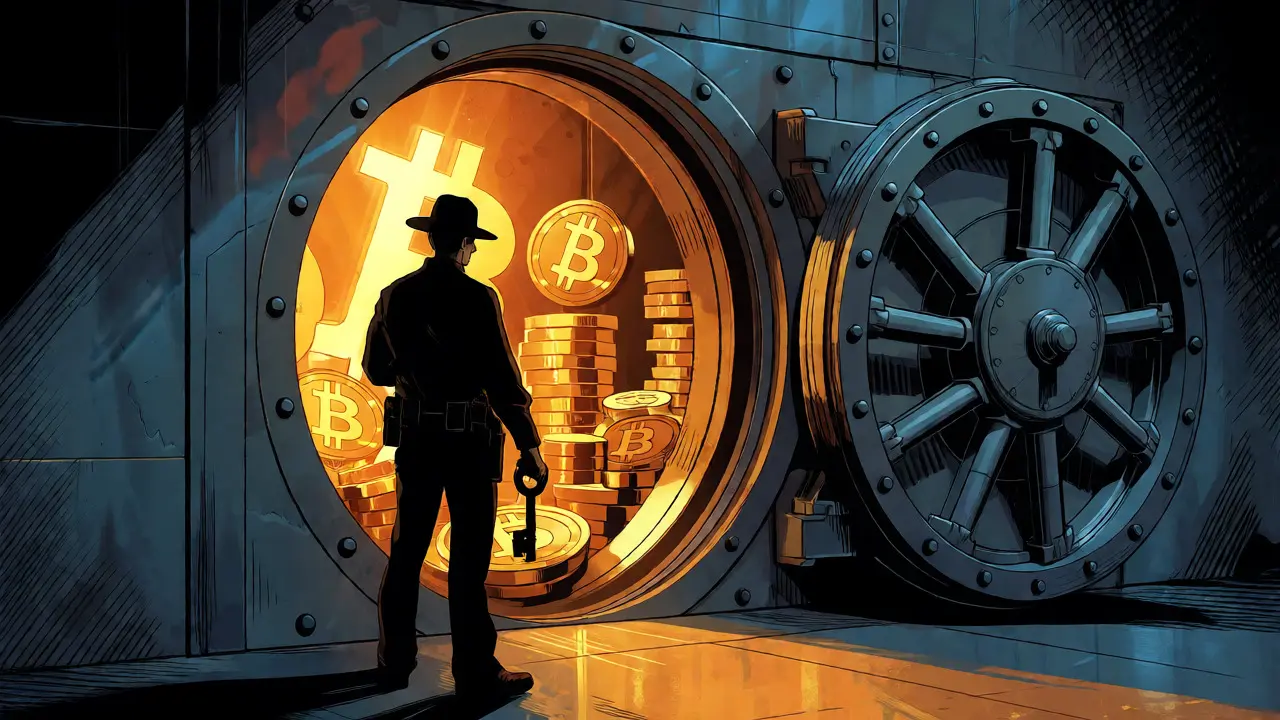
For years, if you had your Bitcoin seized by the US Marshals Service, it likely ended up at an online auction like Coinbase or Bitstamp within months. The government wanted cash, not volatility. But on March 6, 2025, everything changed. President Trump’s executive order established the Strategic Bitcoin Reserve, a sovereign holding of forfeited cryptocurrencies intended to serve as a hedge against inflation and a funding source for future enforcement actions. Instead of selling, the US now holds these assets. Why? Because flooding the market with billions in BTC depresses prices. By holding, the state acts less like a liquidator and more like a long-term investor, betting that the value of confiscated digital property will appreciate while covering restitution costs through yield or eventual strategic sales.
Global Enforcement Patterns and Victim Hotspots
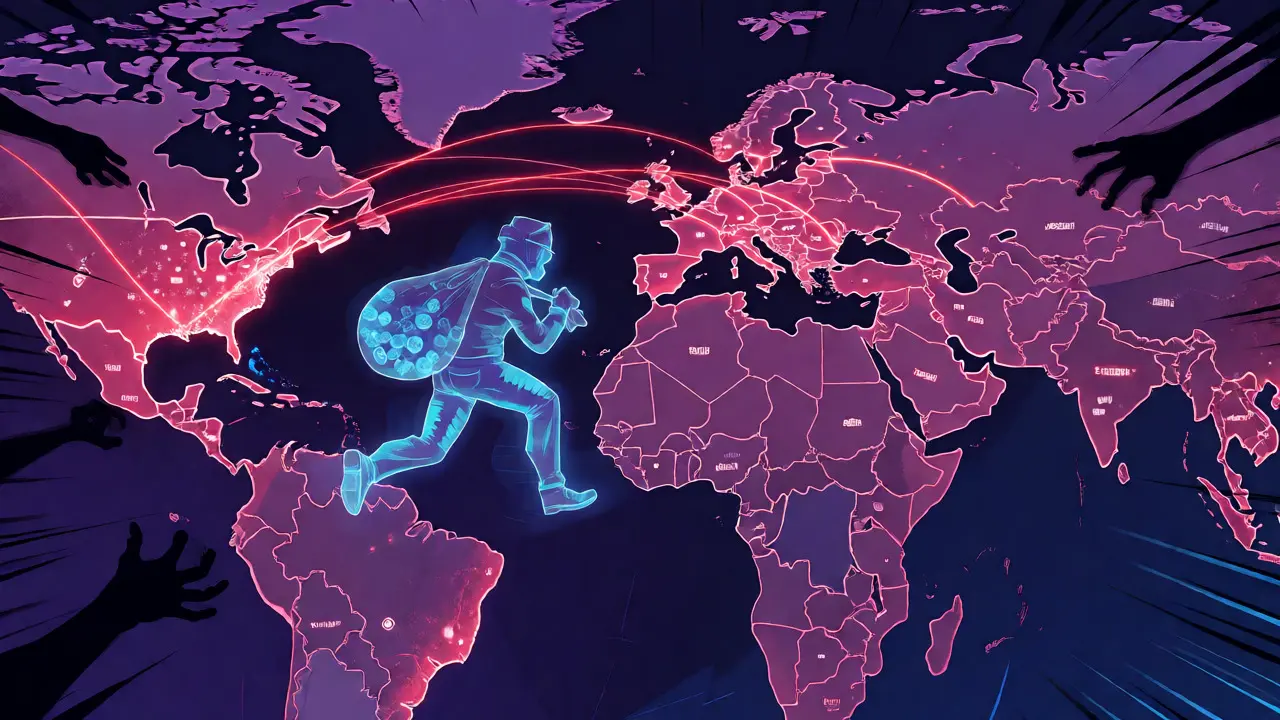
Crime doesn’t respect borders, but laws do. In the first half of 2025 alone, criminals stole over $2.17 billion in cryptocurrency from services and individuals globally. That figure exceeds the total thefts of the entire year of 2024. Where are these losses happening? The data shows clear geographic clusters. The United States, Germany, Russia, Canada, Japan, Indonesia, and South Korea top the list for raw victim counts. It makes sense: high adoption rates mean more targets.
But when you look at severity per victim, the map changes. Countries like the UAE, Chile, India, Lithuania, Iran, Israel, and Norway show some of the highest loss values per person. This suggests that in these regions, either wealthier individuals are targeted, or the sophistication of local criminal networks allows them to extract larger sums from fewer victims. Eastern Europe and the MENA (Middle East and North Africa) regions saw the most rapid growth in victim totals between 2024 and 2025, indicating that criminal infrastructure is catching up with adoption rates faster than regulatory frameworks can adapt.
Divergent Legal Frameworks: From Ban to Regulation
Not every country treats seized crypto the same way, mostly because they don’t even agree on what crypto is. The legal status of digital assets dictates whether a seizure is possible at all. In the US, digital assets are clearly "property," making them fair game for civil and criminal forfeiture statutes. Contrast this with South Africa, where the Reserve Bank declared virtual currencies have no legal status as of late 2014, though tax authorities treat Bitcoin as an intangible asset. This creates a gray zone for enforcement.
Then there are the outright restrictors. Namibia’s Bank of Namibia issued a position paper in 2017 declaring that cryptocurrency exchanges are not allowed and cannot be used for payment. If you hold crypto there, you’re operating outside the formal financial system, which complicates both usage and seizure. Meanwhile, countries like Mauritius treat cryptocurrencies as regulated Digital Assets under the Financial Services Act 2007, offering clarity but warning investors about the lack of statutory compensation schemes. Angola maintains full legality despite officials advising against use, showing that policy often lags behind reality.
| Country | Legal Status of Crypto | Seizure Strategy | Key Agency/Body |
|---|---|---|---|
| United States | Property / Commodity | Strategic Retention (Bitcoin Reserve) | DOJ, SEC, CFTC |
| Spain | Regulated Asset | International Cooperation & Auction | Guardia Civil |
| South Africa | No Legal Status (Intangible Asset for Tax) | Tax-based Recovery | SARS, SARB |
| Namibia | Banned for Payments/Exchange | Restrictive / Limited Formal Seizure | Bank of Namibia |
| Mauritius | Regulated Digital Asset | Regulatory Compliance & Fines | FSC Mauritius |

International Cooperation and Technical Challenges
Crypto crimes are borderless, so enforcement has to go global. A landmark operation in 2025 saw the Spanish Guardia Civil conduct a major cryptocurrency seizure supported by U.S. law enforcement. This wasn't just about catching a thief; it was a demonstration of how jurisdictions share blockchain analytics data. Without cooperation, a suspect could move funds from a Spanish exchange to a privacy coin mixer and vanish into the decentralized web.
Technical hurdles remain significant. Courts are still grappling with the applicability of traditional forfeiture laws to NFTs and Decentralized Finance (DeFi) tokens. Is an NFT a collectible? A security? Property? If a DeFi protocol is truly decentralized, who do you sue? Who holds the keys? These questions aren't theoretical. They determine whether a government can actually touch the assets sitting in a smart contract. The rise of specialized units, like the US Cyber and Emerging Technologies Unit, highlights the need for technical expertise alongside legal authority.
Market Impact and Future Implications
What does this mean for you as an investor or user? First, expect less immediate supply shock from government sales. When the US holds its 207,000 BTC rather than dumping it, it removes a persistent sell pressure point. Second, compliance is getting stricter. The US SEC and CFTC have shifted from "enforcement-first" to structured compliance, clarifying token classifications and tightening KYC/AML rules. Stablecoin issuers like Circle (USDC) are now navigating IPO waters, bringing traditional scrutiny to digital finance.
Governments are also looking for budget-neutral ways to acquire more digital assets. Proposals to sell US gold reserves to buy more Bitcoin suggest that states are competing for digital scarcity. For users, this means your digital footprint is permanent. Blockchain analysis firms track every move, and international treaties are closing the gaps where assets used to hide. The era of "wild west" crypto enforcement is ending, replaced by a sophisticated, coordinated, and financially motivated global apparatus.
Why did the US stop selling seized Bitcoin?
The US established the Strategic Bitcoin Reserve in March 2025 to avoid flooding the market with large sell-offs, which would depress prices. Holding the assets allows the government to potentially benefit from appreciation and use them as a hedge against inflation, rather than just converting them to fiat currency immediately.
Which countries have the highest crypto theft rates?
In terms of total volume, the United States, Germany, Russia, and Canada lead. However, regarding severity per victim, countries like the UAE, Chile, and Norway show higher average losses. Eastern Europe and MENA regions are experiencing the fastest growth in victim numbers.
Can governments seize NFTs and DeFi tokens?
Yes, courts increasingly recognize NFTs and DeFi tokens as property subject to forfeiture. However, technical challenges exist in seizing assets held in decentralized protocols without centralized custodians, requiring new legal interpretations and technical capabilities.
Is cryptocurrency legal in Namibia?
Namibia has a restrictive stance. The Bank of Namibia issued a position paper stating that cryptocurrency exchanges are not allowed and crypto cannot be accepted as payment for goods and services, effectively banning its use in the formal economy.
How does international cooperation help in crypto seizures?
Operations like those led by Spain's Guardia Civil with US support demonstrate that sharing blockchain analytics and legal warrants across borders helps track funds that move quickly between jurisdictions. This coordination prevents criminals from hiding assets in countries with weaker enforcement.