Bybit Crypto Geofencing and VPN Detection: What Traders Need to Know
If you’re trying to trade on Bybit and keep getting blocked, you’re not alone. Thousands of traders around the world hit the same wall: Bybit geofencing. It’s not a glitch. It’s not a bug. It’s a hard stop built into the platform to keep users out of places where regulators say they can’t operate-especially the United States.
How Bybit Knows Where You Are
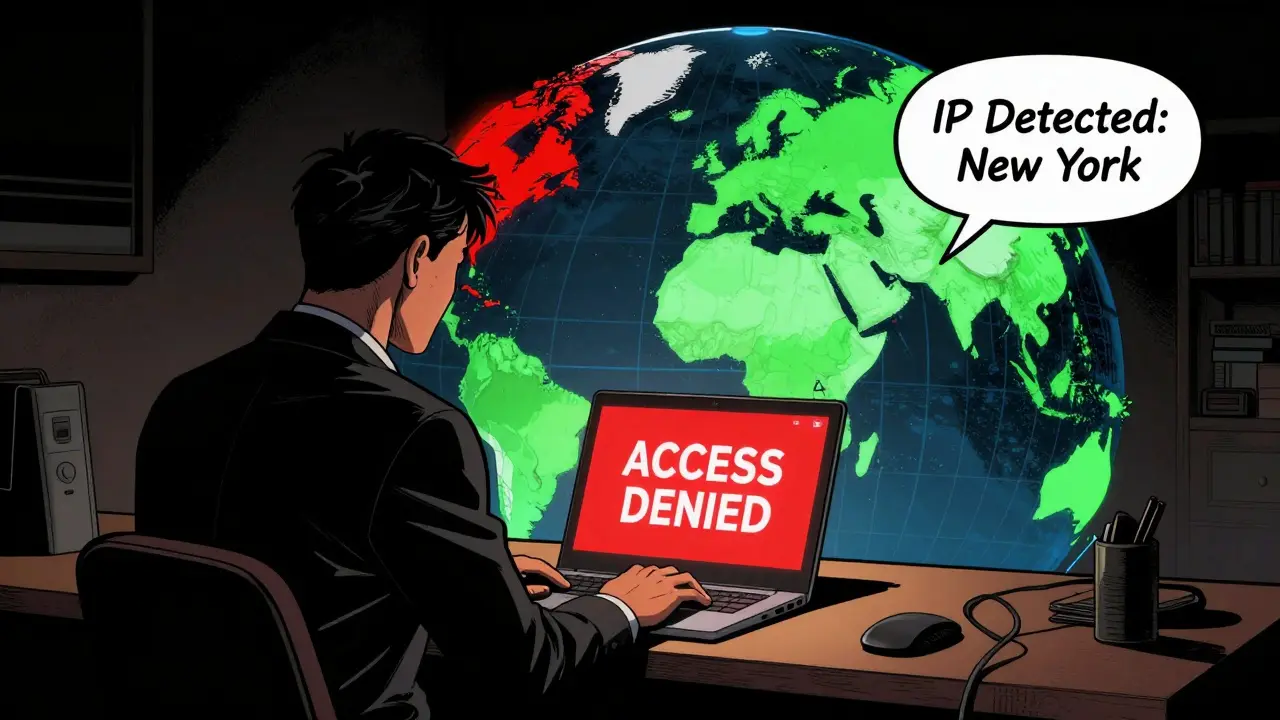
Bybit doesn’t guess where you are. It checks your IP address. Every time you connect to the internet, your device gets assigned an IP-a digital address tied to your location. Bybit uses this to draw a virtual fence around countries it doesn’t allow trading from. If your IP says you’re in New York, Los Angeles, or Texas, you’re blocked before you even see the login page. This isn’t just a simple filter. The system checks your IP at three key moments: when you sign up, when you log in, and sometimes even during active trading. If your location doesn’t match your ID documents during KYC, your account gets flagged. You might think you’re safe if you use a VPN, but Bybit’s system doesn’t just look at your IP-it cross-references your government-issued ID country with your connection location. If your ID says you’re from Canada but your IP says you’re in Florida, that’s a red flag.Can You Beat Bybit’s VPN Detection?
Yes. And no. Many traders use commercial VPNs like NordVPN, ExpressVPN, or Surfshark to switch their IP to a country Bybit allows-say, Germany or Singapore. Then they use a foreign ID, like a Canadian driver’s license or a German passport, to pass KYC. This works. A CoinDesk investigation in late 2024 showed real users doing exactly this and getting verified without issue. But here’s the catch: Bybit’s VPN detection is weak. It doesn’t use advanced fingerprinting. It doesn’t check your browser settings, device type, or timing patterns. It doesn’t analyze how your connection behaves. It just looks at the IP. That means any standard VPN with a clean server will slip through. So why do people still get banned? Because Bybit doesn’t need to catch everyone. It just needs to catch enough to satisfy regulators. If they block 80% of U.S. traffic and shut down a few hundred accounts flagged for mismatched IDs, they can say they’re trying to comply. The rest? They turn a blind eye-until something goes wrong.Why Bybit Doesn’t Just Block All VPNs
You might wonder: why not just block all VPN traffic? That’s what some platforms have tried. Sky Protocol (formerly Maker) did it in August 2024 and got slammed by users worldwide. Suddenly, traders from Brazil, Nigeria, and Argentina couldn’t access services just because they used a VPN to protect their privacy. Bybit chose a different path. It wants global users-just not from the U.S. And it knows that forcing every user to prove they’re not on a VPN would drive away legitimate customers. So it walks a tightrope: allow VPNs, but punish the ones who lie about their identity. This is why you can use a VPN in Singapore to trade on Bybit-but if you’re a U.S. citizen using a fake Canadian ID, you’re asking for trouble. The system isn’t perfect, but it’s designed to catch the obvious frauds, not the tech-savvy.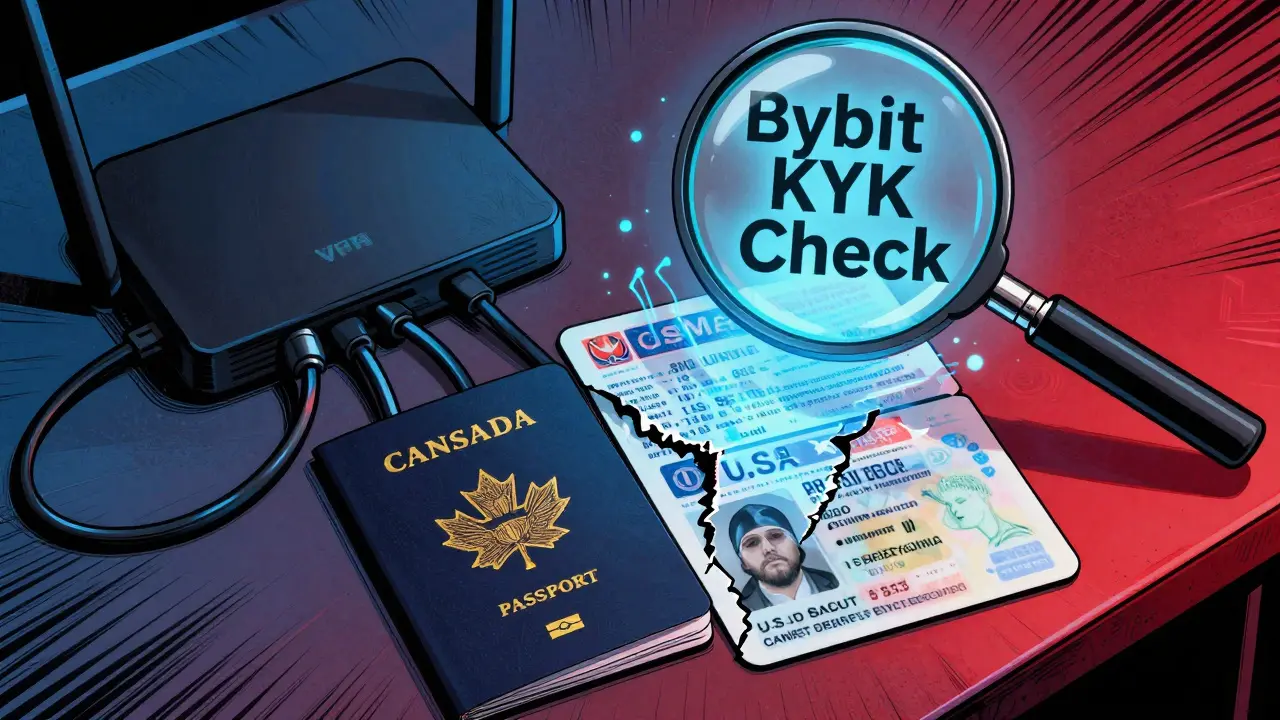
The Bigger Picture: Why Geofencing Exists
Bybit didn’t wake up one day and decide to block Americans. It was forced to. After Binance paid a $4.3 billion fine to U.S. regulators in 2023, every major crypto exchange had to pick a side. Coinbase and Kraken got licensed. They built U.S.-only versions with strict compliance. Bybit didn’t. Instead, it chose to stay global and block the U.S. outright. It’s a risky move. The U.S. market is huge. But getting licensed there means hiring lawyers, building reporting systems, and accepting constant oversight. For Bybit, it wasn’t worth it. So they built a wall instead. This strategy is becoming standard. According to TRM Labs, 17 countries representing 70% of global crypto activity tightened rules in 2023. Geofencing is now the default tool for exchanges that can’t-or won’t-play by local laws.The Security Risk: When Compliance Meets Hackers
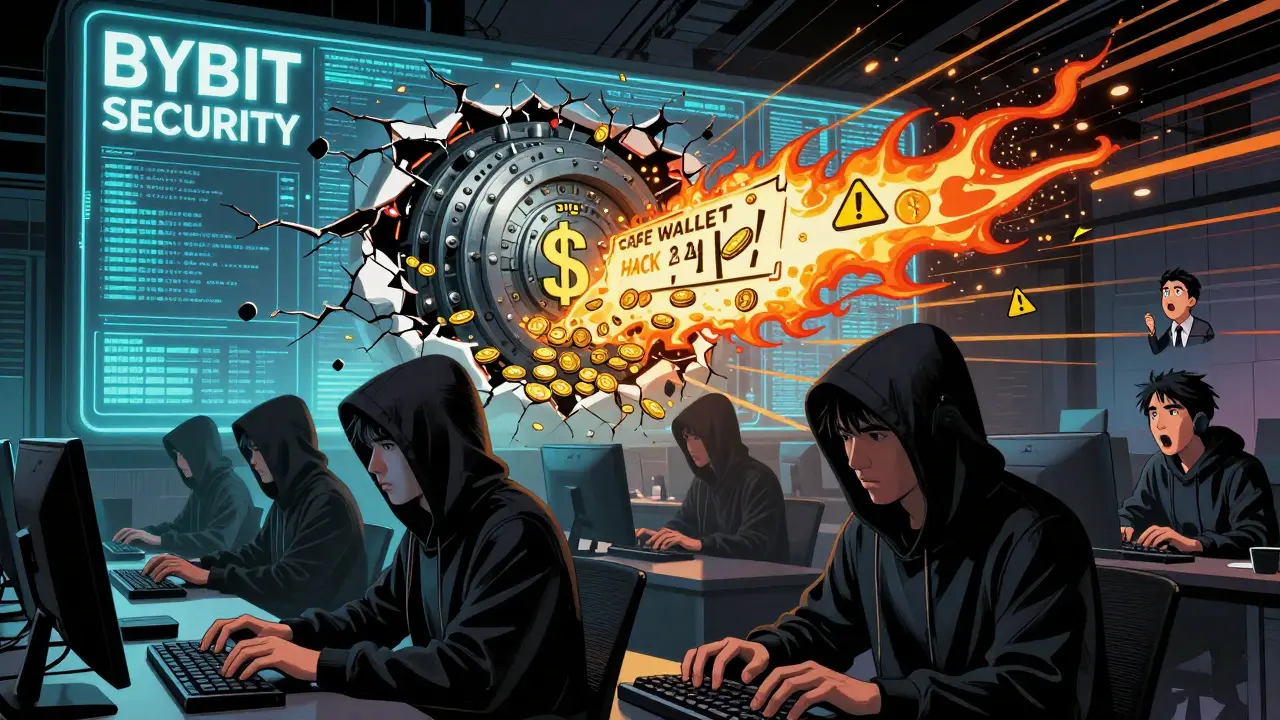
Here’s the dark side: geofencing doesn’t make you safer. In fact, it can make you more vulnerable. In early 2024, Bybit suffered a $1.4 billion hack linked to North Korea’s TraderTraitor group. The attackers didn’t break into servers. They didn’t steal private keys. They hacked the frontend-the user interface that traders see. They injected fake code into the SAFE Wallet system, making fraudulent transactions look like normal ones. CEO Ben Zhou approved them because the interface said they were legit. This wasn’t a flaw in geofencing. It was a flaw in security. And it’s a warning: if you’re using Bybit because you think it’s safer than other exchanges, you’re mistaken. Geofencing doesn’t protect your funds. It just keeps you out of certain countries. After the hack, Bybit hired Mandiant-the same security firm Google bought for $5.4 billion-to fix things. But fixing a hack doesn’t fix a flawed compliance strategy. Users still face the same restrictions. The same loopholes still exist.What Happens If You Get Caught?
If Bybit detects you’re using a VPN with mismatched documents, here’s what you can expect:- Your account gets flagged for review
- You may be asked to verify your identity again
- Your funds could be frozen while they investigate
- Eventually, your account may be closed
- Your assets might be held indefinitely or transferred to a third-party custodian
Who’s Really Affected?
The biggest victims aren’t U.S. traders. They’re people in countries with strict capital controls or unstable banking systems. In Nigeria, Argentina, Turkey, and Venezuela, Bybit is often the only way to hold crypto without risking bank seizure or hyperinflation. But if you’re from one of those places and you use a VPN to bypass local restrictions, you’re still breaking Bybit’s rules. The platform doesn’t care why you’re using a VPN. It only cares that you’re not where you say you are. So if you’re in a sanctioned country, or even just in a place with poor internet infrastructure, you’re stuck between a rock and a hard place.What’s Next for Bybit?
Experts believe Bybit will soon upgrade its detection system. Machine learning models are already being tested by other exchanges to spot VPN usage by analyzing:- How fast you connect
- Device fingerprint patterns
- Typing speed and mouse movements
- Time zones mismatched with ID documents
Should You Use Bybit?
If you’re in a country Bybit allows, and you’re not hiding your location, then yes-it’s one of the best platforms for derivatives trading. High liquidity. Low fees. Strong order books. But if you’re trying to sneak in from a restricted region, you’re playing a game with high stakes. You might get away with it for months. Or you might wake up one day to find your account gone and your funds locked forever. There’s no middle ground. Either you comply-or you risk it.And in crypto, risk doesn’t always pay off.


19 Comments
Heath OBrien
December 10 2025Why are Americans even trying to use Bybit? Just use Coinbase like everyone else. 🤦♂️
Sarah Luttrell
December 11 2025So let me get this straight-you’re mad because a company won’t let you break the law? Get a life. 🇺🇸✌️
Patricia Whitaker
December 12 2025Bro just use a VPN and a fake ID. Everyone does it. They’re not even trying to catch people. 😴
Vidhi Kotak
December 13 2025In India, we use Bybit because our banks freeze crypto. It’s not about cheating-it’s about survival. 🌏
Steven Ellis
December 13 2025The real issue isn’t geofencing-it’s that exchanges are being forced to act as border control agents. This isn’t security, it’s regulatory overreach disguised as compliance.
And yes, the hack happened because of frontend vulnerabilities, not because someone used a VPN. The two are unrelated, but people love to conflate them.
It’s like blaming a broken lock because someone used a fake key to get into a house that didn’t even have a door.
Bybit’s model is flawed, but not because of the tech-it’s because they’re trying to satisfy regulators without actually engaging with them.
Meanwhile, users in Nigeria, Turkey, and Argentina are getting punished for the same reason Americans are: they’re trying to access financial freedom.
There’s no moral high ground here. Just capitalism and bureaucracy playing tug-of-war with real people’s savings.
Taylor Fallon
December 14 2025It’s wild how we treat crypto like it’s a free-for-all, but then get mad when platforms enforce rules. 🤔
We want decentralization… but also want to bypass laws that protect us.
It’s like wanting to drive without a license but still expecting the highway to be safe.
Maybe the problem isn’t Bybit-it’s that we haven’t figured out how to build a global financial system that respects borders without crushing people who live outside them.
Also, I’ve used a VPN with a Canadian ID for 2 years. No issues. But I’m not a U.S. citizen. Just saying.
And yes, I cry a little every time someone says ‘they’re just blocking Americans’ like it’s a conspiracy. No, they’re just avoiding $4B in fines. 🙃
Toni Marucco
December 16 2025Let’s be real: the entire crypto regulatory mess is a farce.
The U.S. doesn’t want to ban crypto-it wants to control it. And if you’re not paying them for the privilege, you’re a threat.
Bybit didn’t choose to block the U.S. because they’re evil-they chose it because the cost of compliance is higher than the revenue.
Meanwhile, Coinbase and Kraken are basically state-sanctioned crypto banks with better PR.
And yes, I’ve used a clean Singapore IP with a German passport. Got verified in 48 hours.
But here’s the kicker: I didn’t lie about my nationality. I just used a legal entity from a jurisdiction that allows it.
There’s a difference between fraud and financial arbitrage.
Also, the hack? That was a frontend exploit. Not a geofencing failure. Stop blaming the wall for the door being unlocked.
And if you think regulators care about your ‘financial freedom’-you’re not a trader. You’re a tourist.
Alex Warren
December 16 2025Bybit’s detection is basic because advanced fingerprinting would break legitimate use cases.
Many users in Latin America and Southeast Asia rely on VPNs to access services due to censorship or poor local infrastructure.
Blocking all VPNs would hurt more people than it helps.
Bybit’s strategy is pragmatic: punish identity fraud, tolerate location obfuscation.
This isn’t a loophole-it’s a policy decision.
And yes, the system will get smarter. But it won’t become perfect.
Because perfect compliance means killing innovation.
And crypto’s entire value proposition is that it doesn’t need permission.
So we’re stuck between a rock and a hard place.
And that’s the point.
Kathryn Flanagan
December 16 2025I’ve been using Bybit since 2021 and I’ve never had a problem. I live in Texas but I use a VPN from Germany because my bank blocks crypto purchases. I’m not trying to cheat anyone. I just want to invest. I’ve had my ID verified, I’ve done KYC, I’ve paid taxes. I’m not a criminal. I’m just a regular person trying to build wealth. And now I’m scared I’ll wake up one day and my account will be gone. I don’t understand why they can’t just let people use it if they’re not breaking any laws in their own country. I’m not stealing. I’m not scamming. I’m just trading. Why is that so threatening? I just want to be able to keep my money safe. That’s all.
And I’m not even rich. I just have a little saved up. And now I’m terrified I’ll lose it all because of some corporate policy that doesn’t even make sense. I feel like I’m being punished for trying to be responsible.
It’s not fair. And I’m not the only one. I’ve talked to so many people like me. We’re not trying to break the rules. We’re just trying to survive in a broken system.
And now they’re going to make it even harder with AI and device fingerprinting? That’s not protecting anyone. That’s just making it impossible for normal people to use crypto at all.
I don’t know what to do anymore. I don’t want to move. I don’t want to lie. I just want to trade.
And I’m tired of being called a criminal for trying to take care of myself.
Kim Throne
December 17 2025There’s a critical misunderstanding here: geofencing is not a security feature. It’s a legal shield.
Bybit doesn’t need to detect every VPN user. They need to detect enough to demonstrate regulatory good faith.
They’re not trying to stop fraud-they’re trying to avoid fines.
Their system is designed to catch the obvious: U.S. IP + U.S. ID.
Anyone with a non-U.S. document and a clean server will slip through.
That’s not a flaw. That’s the design.
And yes, the $1.4B hack had zero to do with geofencing.
It had everything to do with insecure frontend code and lack of transaction verification protocols.
Blaming geofencing for a UI exploit is like blaming a speed bump for a car crash caused by drunk driving.
Focus on the real issue: exchanges are still building financial systems with the security of a cardboard box.
Kurt Chambers
December 18 2025U.S. citizens are the real problem. You think you’re entitled to everything but you won’t follow the rules. You want crypto but you don’t want to pay taxes. You want freedom but you want the government to protect you. You’re a joke. 🇺🇸💀
Kathleen Sudborough
December 18 2025I get why people are frustrated. I’m from a country where banks shut down accounts for holding crypto. I’ve used a VPN for years. I’ve never lied about who I am.
But here’s the thing: I don’t hate Bybit for blocking the U.S.
I hate that the world has to choose between compliance and access.
There should be a way for people to use crypto without being treated like criminals just because they live in the wrong zip code.
Maybe one day we’ll have a global standard. Until then, we’re all just trying to survive in a system that wasn’t built for us.
And yeah, I know some people are trying to cheat. But most of us? We’re just trying to protect our money from inflation, corruption, or banks that don’t care.
Let’s not punish the desperate because a few are dishonest.
That’s not justice. That’s fear.
Nicholas Ethan
December 19 2025Anyone using a VPN with fake docs is asking to get banned. End of story. Bybit’s system is fine. You’re just bad at hiding. 🤷♂️
Jeremy Eugene
December 20 2025While I understand the frustration, it’s important to recognize that Bybit operates under global regulatory pressure. Their actions are not arbitrary-they are reactive to legal risk.
Users who deliberately circumvent jurisdictional rules assume full responsibility for the consequences.
There is no ethical obligation for a private entity to serve users in violation of sovereign law.
That does not mean the system is fair. But fairness is not the same as legality.
And while the hack was tragic, it was unrelated to geofencing. Conflating the two undermines legitimate discourse.
Let’s focus on solutions: better global regulation, not better evasion.
Taylor Farano
December 20 2025So you used a Canadian ID with a U.S. IP? Congrats, you’re a fraud. And now you’re mad when you get caught? What did you think was going to happen? That Bybit would throw a parade? 🤡
Lloyd Cooke
December 21 2025Geofencing is the digital equivalent of redlining.
It doesn’t prevent crime-it prevents access.
It doesn’t protect users-it protects corporations from liability.
And yet we call it ‘compliance’ like it’s a virtue.
But what if the law itself is unjust?
What if the U.S. doesn’t want crypto because it can’t control it?
What if the real villain isn’t the trader with a VPN-but the regulator who refuses to adapt?
Bybit isn’t a hero. They’re a coward.
They chose the path of least resistance: block, don’t build.
And now they profit from the very chaos they pretend to contain.
They don’t want to be a bank.
They just want to be rich.
And we’re the ones who keep giving them our money.
So who’s really the criminal here?
Caroline Fletcher
December 22 2025Just got my account flagged after using a German IP. I’m from India. My ID is Indian. I’ve never lied. I just use a VPN because my internet is slow. Now my funds are frozen. No explanation. No timeline. Just silence.
Is this what crypto freedom looks like?
Joey Cacace
December 22 2025Thank you for this thoughtful breakdown. I’ve been using Bybit for 3 years and never had an issue until I switched ISPs. My IP changed and suddenly I was flagged-even though my ID and location are consistent. It’s frustrating when systems penalize technical changes, not intentional fraud. I hope they improve their logic to distinguish between accidental mismatches and deliberate deception. We’re all just trying to participate responsibly.
And yes, the hack was a separate issue. The fact that we’re still talking about geofencing instead of frontend security is telling.
Steven Ellis
December 22 2025You’re not alone. I’ve seen this exact scenario play out in Nigeria, Kenya, and Argentina. People get flagged for using a VPN to bypass local ISP throttling or censorship-not to hide their identity. The system doesn’t distinguish between intent and IP. That’s the real failure.
It’s not about cheating. It’s about infrastructure.
And until exchanges build intelligence into their compliance layers-not just IP matching-they’re going to keep punishing the wrong people.
Maybe the next upgrade should include a ‘why are you using a VPN?’ field. Not to spy, but to understand.
Because right now, we’re all just ghosts in their database.