
C-Patex Crypto Exchange Review: Is It Worth Your Time in 2026?
Imagine you’re in Buenos Aires or São Paulo, eager to dip your toes into the world of C-Patex is a centralized cryptocurrency exchange founded in November 2014 and owned by EHOLD Group. Operating as part of the Patex Ecosystem, it utilizes a Layer 2 blockchain infrastructure based on an Optimism fork.. You want low fees, local currency support, and maybe some help learning the ropes. C-Patex promises exactly that. But with a Trustpilot rating hovering around 1.9 out of 5 and trading volumes that make major exchanges look like bustling stock markets by comparison, should you trust them with your hard-earned pesos or reals?
This isn’t Binance. It’s not Coinbase. It’s a niche player targeting Latin America with a specific mission: education and regional accessibility. If you are looking for high-frequency trading tools, deep liquidity, or hundreds of altcoins, you might want to close this tab now. But if you are a beginner in Argentina or Brazil who wants a localized entry point, keep reading. We dug into the data, user reviews, and technical specs to see if C-Patex actually delivers on its promises or if those withdrawal delays are a dealbreaker.
Key Takeaways
- Niche Focus: Best suited for beginners in Latin America needing ARS/BRL fiat on-ramps and educational resources via Patex Campus.
- Limited Assets: Only 37 cryptocurrencies listed, compared to 350+ on Binance. No derivatives or futures trading.
- Fees: Flat 0.2% maker/taker fee. Competitive but lacks volume-based discounts found on larger platforms.
- Support & Reputation: Significant red flags include slow email-only support (7-11 days response time) and poor user ratings regarding withdrawals.
- Security: Uses cold storage and 2FA, but lacks Tier-1 global regulation. Withdrawal limits depend heavily on KYC verification levels.
Who Is C-Patex For? The Regional Reality
C-Patex doesn’t try to be everything to everyone. It exists because converting Argentine Pesos (ARS) or Brazilian Reals (BRL) to crypto can be a headache on global platforms due to banking restrictions or lack of local payment rails. C-Patex solves this by offering localized fiat conversion options. This makes it a viable option for users who struggle to move money from their local banks onto international exchanges.
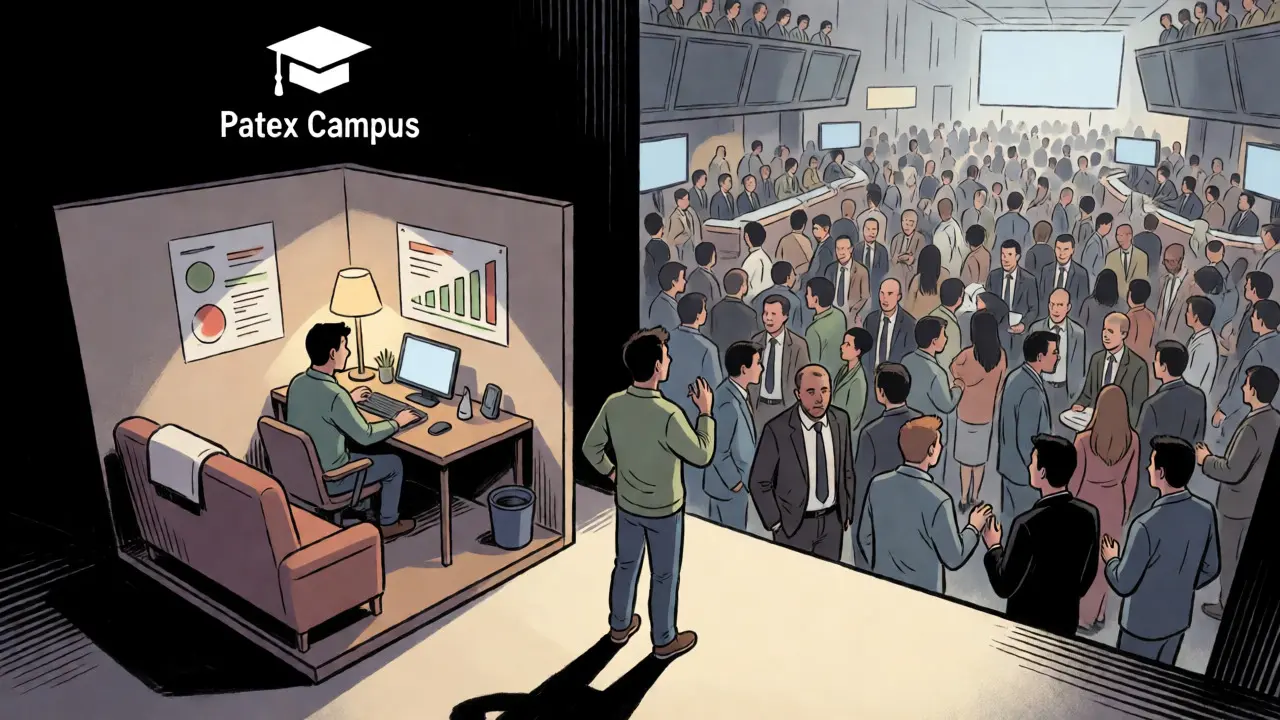
The platform also leans heavily into education through its Patex Campus initiative, which offers structured learning paths for cryptocurrency fundamentals. If you’ve never bought Bitcoin before and feel overwhelmed by candlestick charts, having tutorials in Spanish and Portuguese is a genuine benefit. However, don’t expect advanced technical analysis tools here. The interface is designed for simplicity, not power. Experienced traders often find the navigation clunky and the feature set sparse.
It’s worth noting that C-Patex restricts US-based investors entirely. So if you’re traveling or living in North America, you’re out of luck. The service is strictly tailored for the Latin American demographic, specifically focusing on Argentina and Brazil where regulatory landscapes are complex and changing rapidly.
Trading Options and Asset Selection
Let’s talk numbers, because this is where C-Patex struggles most against global giants. The exchange lists just 37 cryptocurrencies. Yes, you read that right. Thirty-seven. While this includes major assets like Bitcoin (BTC), Ethereum (ETH), Solana (SOL), XRP, Cardano (ADA), and its native PATEX token ecosystem., it misses out on thousands of other coins available elsewhere.
| Feature | C-Patex | Binance | Coinbase |
|---|---|---|---|
| Listed Cryptocurrencies | 37 | 350+ | 200+ |
| Maker/Taker Fees | Flat 0.2% | 0.10% - 0.02% (Volume tiered) | Variable (Spread + Fee) |
| Derivatives/Futures | No | Yes | Yes (Limited regions) |
| Local Fiat Support | ARS, BRL | Global (varies) | USD, EUR, GBP, etc. |
| Educational Resources | High (Patex Campus) | Moderate | Low |
You have three main ways to trade: Spot Market, Quick Exchange, and limited Buy/Sell options for select assets like BTC and various USDT tokens (ERC20, TRC20, BEP20). There are no margin trades, no futures, and no options. If you want to short the market or leverage up 10x, you’ll need to go elsewhere.
The liquidity is another concern. Historical data showed daily trading volumes as low as USD 240.50 in late 2021. While recent figures aren't always public, industry analysts suggest engagement remains modest compared to regional competitors like Mercado Bitcoin. Low liquidity means wider spreads and potential slippage when placing large orders. For small retail trades, this might not matter much. For anyone moving significant capital, it’s a risk.
Fees, Limits, and Hidden Costs
C-Patex charges a flat 0.2% trading fee for both maker and taker orders across all user tiers. This rate hasn’t changed since at least 2021. Is it competitive? Sort of. It’s higher than Binance’s best rates (which can drop to 0.02% for high-volume traders holding BNB) but lower than some credit card purchases on other platforms.
However, there are no volume-based discounts. Whether you trade $10 or $10,000 in a day, you pay the same percentage. Larger exchanges reward loyalty and activity; C-Patex does not. This structure favors casual users but penalizes active traders.
Withdrawal limits are strictly tied to your verification status:
- Unverified Accounts: Cannot withdraw funds.
- Basic KYC Verification: Allows up to $500 daily withdrawals.
- Full KYC + 2FA Enabled: Increases the limit to $100,000 daily.
Getting to full verification requires submitting identity documents and enabling Two-Factor Authentication. Without these steps, you’re effectively stuck with your funds on the platform unless you stay under the $500 cap. Keep in mind that while the trading fee is clear, deposit and withdrawal fees vary by network and asset type, so always check the current schedule before moving large amounts.
Security and Regulatory Status
Security is a mixed bag. On the positive side, C-Patex uses cold storage for the majority of user assets, wallet whitelisting, device tracking, and mandatory 2FA. There have been no widely reported successful hacks of the exchange itself, which is good news after ten years of operation.
But regulation? That’s murky. C-Patex operates without Tier-1 regulation from bodies like the SEC (US) or FCA (UK). Some user reviews claim FCA regulation, but authoritative sources like TradingFinder and Traders Union state the platform is unregulated globally. In Latin America, it navigates a gray area. Argentina’s Financial Information Unit (UIF) hasn’t clearly classified it, and Brazil’s Central Bank hasn’t explicitly authorized it for BRL transactions despite the service claiming support.
This lack of formal oversight means less protection if things go wrong. If the company faces financial trouble, there’s no insurance scheme like SIPC in traditional finance. You are trusting the EHOLD Group’s integrity and solvency. Given the low trading volume, some experts question the long-term viability of maintaining robust security infrastructure without massive revenue streams.

User Experience and Customer Support
If you encounter a problem, prepare to wait. Customer support is the biggest complaint among users. There is no phone line and no live chat. Support is handled exclusively via email, Telegram, and ticketing systems.
Documented response times average between 7 and 11 days for email inquiries. Imagine waiting two weeks for a reply when your withdrawal is stuck. That’s the reality for many users. Trustpilot reflects this frustration, with a score of 1.9/5 based on recent reviews. About 86% of negative reviews cite withdrawal delays, account issues, or unresponsive support.
Positive feedback usually comes from beginners who appreciate the educational content and the ability to use local bank transfers. One user noted, “The Spanish-language tutorials helped me understand crypto basics.” Another complained, “Withdrawal took 7 business days despite promised 24-48 hour processing.” The experience seems highly dependent on what you need: if you need teaching, they deliver; if you need urgent troubleshooting, they often fail.
The Patex Network Ecosystem
C-Patex isn’t just an exchange; it’s part of the broader Patex Ecosystem. This includes the Patex Network, a Layer 2 solution built on Ethereum designed to address scalability, speed, and transaction cost limitations of Layer 1 networks. By using an Optimism fork, they aim to reduce gas fees and increase transaction speeds for users within their ecosystem.
They also offer additional services like staking options, referral programs, a launchpad for new projects, and a ‘C-Freezer’ passive income feature. These extras add value beyond simple trading. For example, the launchpad allows early access to new tokens, potentially offering higher returns for those willing to take on more risk. However, these features are secondary to the core trading function and shouldn’t distract from the fundamental weaknesses in liquidity and support.
Final Verdict: Should You Use C-Patex?
C-Patex is a tool for a specific job. It’s not a general-purpose crypto hub. If you are a resident of Argentina or Brazil, new to crypto, and want to buy Bitcoin or Ethereum using your local currency without jumping through hoops, C-Patex works. The educational resources are genuinely helpful for novices.
But if you care about speed, variety, or professional-grade support, look elsewhere. The 37-coin limit is too restrictive for most serious investors. The 0.2% flat fee is okay, but the lack of volume discounts hurts active traders. And the customer support situation is a major red flag. Waiting over a week for a response during a volatile market event is unacceptable for many.
Consider using C-Patex as a secondary wallet or a learning platform rather than your primary exchange. Test it with small amounts first. Verify your account fully to avoid withdrawal headaches. And always keep an eye on your funds-don’t leave large balances on any unregulated, low-volume exchange indefinitely.
Is C-Patex safe to use?
C-Patex employs standard security measures like cold storage, 2FA, and device tracking. However, it lacks Tier-1 global regulation, meaning users have fewer legal protections compared to regulated entities. Its safety relies heavily on the operational integrity of EHOLD Group.
How many cryptocurrencies does C-Patex list?
As of late 2025, C-Patex lists approximately 37 cryptocurrencies, including major assets like Bitcoin, Ethereum, and Solana, along with its native PATEX token. This is significantly fewer than major global exchanges.
What are the trading fees on C-Patex?
C-Patex charges a flat 0.2% fee for both maker and taker orders. Unlike larger exchanges, there are no volume-based discounts or tiered fee structures.
Can I withdraw money immediately from C-Patex?
No, immediate withdrawal depends on your verification level. Unverified accounts cannot withdraw. Basic KYC allows up to $500 daily, while full KYC with 2FA enables up to $100,000 daily. Processing times can vary, with some users reporting delays.
Does C-Patex support US customers?
No, C-Patex currently restricts services for US-based investors. It primarily targets Latin American markets, specifically Argentina and Brazil.