Future of Multi-Signature Technology in Blockchain
Imagine needing three people to agree before you can move money out of a shared account. Not just one person with full control. Not just a password. But three separate keys, held by three different people, all required to unlock the funds. That’s multi-signature technology - and it’s already protecting billions in digital assets. It’s not science fiction. It’s how companies, DAOs, and even families are securing their crypto today.
How Multi-Signature Works
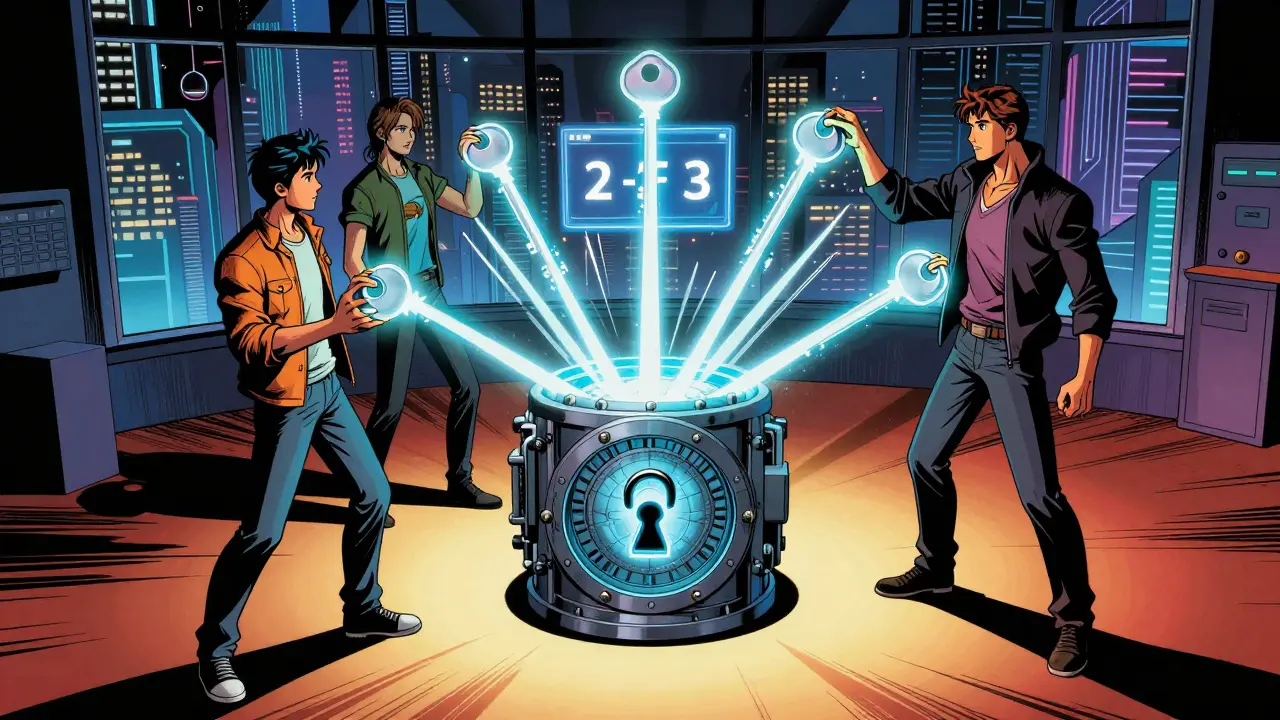
At its core, multi-signature (or multisig) means a transaction needs more than one digital signature to go through. It’s not about having one strong key - it’s about splitting trust. The standard format is M-of-N: you need M signatures out of N possible ones. So a 2-of-3 setup means any two out of three authorized people can approve a transaction. A 3-of-5 setup? Three out of five must say yes.
This isn’t just a fancy feature. It’s a fundamental shift from the old model where one private key = total control. If that key gets stolen, lost, or hacked? All your funds are gone. With multisig, an attacker needs to compromise multiple people - or at least two of them. That’s a huge barrier.
Bitcoin was the first to build this in natively. You can create a multisig address that requires multiple public keys to spend from. Ethereum took a different path: instead of native support, it uses smart contracts. These contracts are coded to wait until a specific number of signatures are submitted before releasing funds. Both work. But smart contracts give you more flexibility - you can set rules like "only approve if two team members and the CFO sign" or "block transfers on weekends."
Why It Matters Now
After the Silk Road shutdown in 2013, people realized crypto wallets weren’t just vulnerable to hackers - they could be seized by governments. Single-key wallets were a single point of failure. Multisig changed that. It turned crypto from a "do-it-yourself" system into something that could handle institutional-grade security.
Today, you see it everywhere:
- DAOs use 3-of-5 or 4-of-7 setups to manage their treasuries. No single member can drain the funds.
- Crypto exchanges like Coinbase and Kraken use multisig for cold storage. Even if one employee is compromised, they can’t move millions.
- Family offices and trusts use 2-of-3 to pass crypto to heirs - one key held by the trustee, one by the beneficiary, one by a lawyer.
- DeFi protocols now require multisig for emergency pauses or governance changes.
It’s no longer optional. If you’re managing more than a few thousand dollars in crypto, multisig is the baseline expectation.
Where It’s Headed
The future of multisig isn’t about adding more signatures. It’s about making them smarter, faster, and less clunky.
Right now, changing who can sign is a nightmare. If someone leaves a team, you have to regenerate all keys and redistribute them. That’s risky. It’s like rekeying your entire house because one person moved out.
Enter threshold signatures. Instead of storing multiple private keys, this method uses math to split one key into shares. You need, say, three out of five shares to reconstruct the key and sign a transaction. No single share is useful on its own. And if someone leaves? You just reissue their share - no full key regeneration needed.
Companies like Fireblocks and Web3Auth are already using this. It’s not perfect yet - but it’s coming fast.
Another shift? Integration with identity. Imagine signing a transaction not just with a key, but with a verified digital ID - like a government-issued credential or a corporate SSO login. That’s not here yet, but the pieces are being built. Ethereum’s EIP-4337 (Account Abstraction) is paving the way for wallets that can tie multisig rules to real-world identities.
Real-World Use Cases Today
Let’s say you run a small startup with three co-founders. You each hold one key. You set up a 2-of-3 multisig wallet for your company’s crypto holdings.
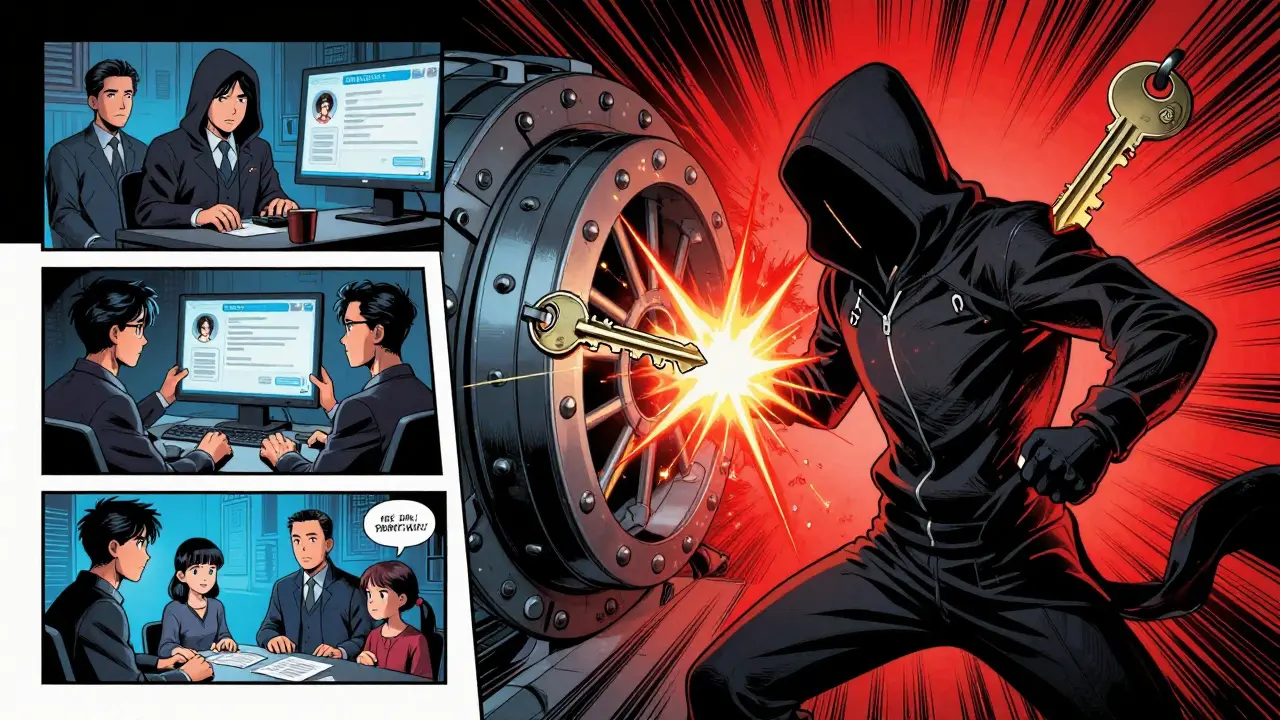
- One founder gets hacked. Their key is stolen. Nothing moves - because the attacker can’t get the second signature.
- One founder quits. You revoke their access. You don’t need to move all funds. You just update the multisig setup with a new person.
- You need to pay a contractor. One founder signs. You send the request. The second signs. The transaction goes through. No delays. No single person in charge.
Or think of a nonprofit holding NFT donations. They use a 3-of-5 multisig. The board, the treasurer, the legal advisor, and two volunteers each hold a key. To sell an NFT, three must agree. That prevents fraud. It builds trust. It’s transparent.
Even individual users are adopting it. Wallets like Safe (formerly Gnosis Safe) let anyone set up a multisig with friends, family, or advisors - no coding needed.
Challenges That Remain
It’s not magic. Multisig has real friction.
First, key management is still hard. If you lose your key and no one else can sign? Your funds are locked forever. That’s why backup strategies - like Shamir’s Secret Sharing - are becoming standard. Split your recovery into five pieces. Give one to a sibling, one to your lawyer, one to a secure vault, etc.
Second, interoperability. Bitcoin multisig and Ethereum smart contract multisig don’t talk to each other. If you want to move funds between chains, you’re stuck with bridges - and bridges are still risky. Cross-chain multisig is a major focus for teams building next-gen wallets.
Third, user experience. Most people still use single-key wallets because they’re simple. Multisig wallets feel like a spreadsheet with five people needing to click "approve." That’s changing - but slowly.
And then there’s regulation. In some countries, multisig wallets are treated like trust accounts. That means compliance paperwork, audits, and reporting. It’s a burden - but also a signal that institutions see this as legitimate.
The Bigger Picture
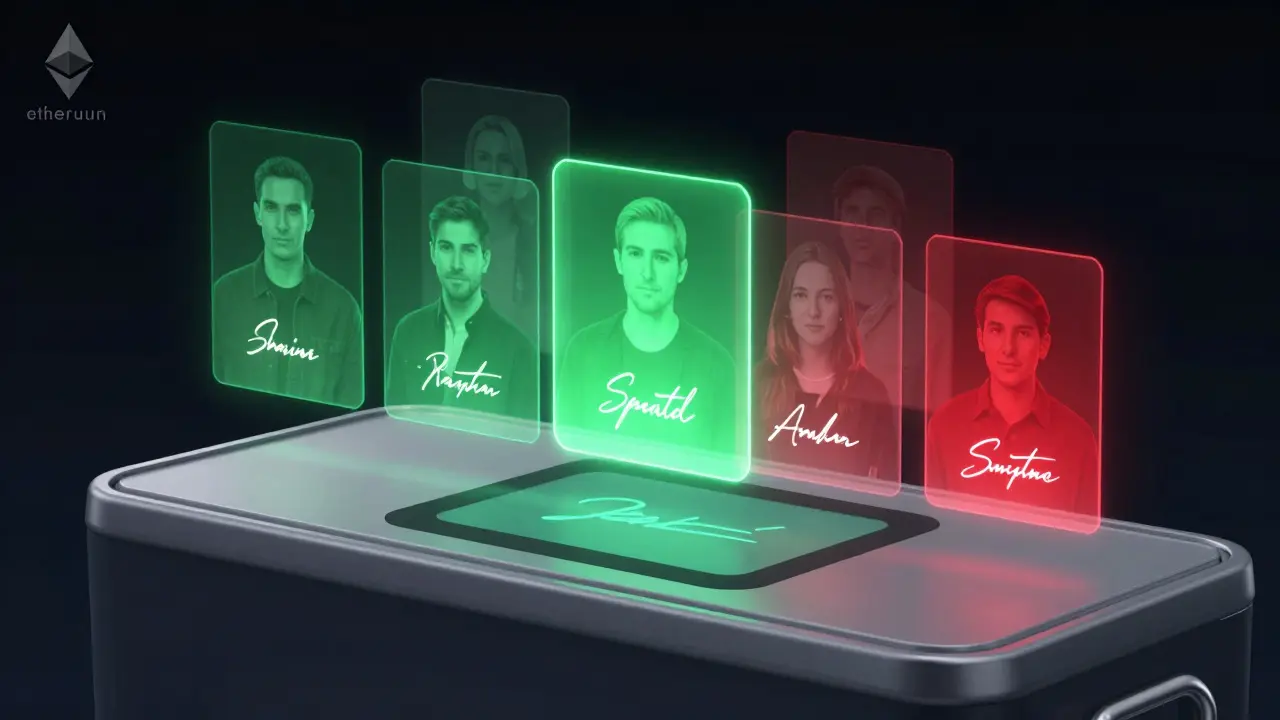
Multi-signature isn’t just a security tool. It’s a governance tool. It’s how decentralized systems stay stable. It’s how trust is distributed instead of centralized.
As blockchain moves into banking, insurance, real estate, and supply chains, multisig will be the default. Why? Because no institution will risk losing millions because one person made a mistake - or got hacked.
Think about how banks handle wire transfers. You need two approvals. Why? Because mistakes happen. Fraud happens. Multisig is just the crypto version of that.
The future isn’t about replacing keys. It’s about replacing blind trust with layered, verifiable, distributed control. And that’s exactly what multisig delivers.
What’s Next?
Expect three big shifts in the next two years:
- Automated approval workflows - Your multisig wallet will notify you via SMS, email, or app when a transaction is pending. You’ll approve with a tap - no need to manually sign with a hardware device every time.
- Hybrid identity - You’ll sign with a key, but also verify your identity through a trusted third party (like a passport or corporate login). No more lost keys - just reissue access.
- On-chain governance + multisig - Proposals will auto-trigger multisig approvals. If a DAO votes to fund a project, the multisig executes it automatically - no manual signing needed.
These aren’t guesses. They’re already in beta. Safe, Argent, and Coinbase Wallet are testing them now.
The goal? Make multisig so easy, you forget it’s there. Just like you don’t think about how your bank verifies a transfer. You just expect it to work - and be safe.

21 Comments
Eva Gupta
March 10 2026Wow this is so cool 😊 I never thought about how multisig can protect families too
Like imagine your grandma gets hacked but her crypto stays safe because she had 2-of-3 set up with her kids and lawyer
It’s not just for tech bros anymore
Jennifer Pilot
March 11 2026One must, with due deference to the structural elegance of threshold signature schemes, acknowledge that the ontological underpinnings of trust distribution in multisig architecture are not merely technical-they are epistemological. The very notion of distributed authority necessitates a reconfiguration of agency in digital economies. One cannot help but observe, with a modicum of intellectual consternation, that the prevailing UX paradigms remain tragically anachronistic.
Indeed, the current state of wallet interfaces betrays a profound failure of human-centered design. One is left to wonder: how is it that we still require users to physically toggle hardware devices, as though we live in the age of punch cards? The cognitive burden imposed upon non-technical custodians is not merely inconvenient-it is ethically untenable.
Furthermore, the proliferation of ‘2-of-3’ configurations among laypersons reveals a dangerous illusion of security. Most users do not comprehend the implications of key revocation, nor do they implement Shamir’s Secret Sharing with appropriate redundancy. The result? A false sense of safety, leading to irreversible loss. This is not innovation-it is negligence dressed in blockchain garb.
And let us not forget the regulatory chasm between jurisdictions. In Canada, multisig is treated as a fiduciary instrument. In the U.S.? A regulatory gray zone. This inconsistency undermines global adoption. One must ask: is decentralization truly possible when compliance remains centralized?
Until we integrate identity verification with cryptographic primitives-until we move beyond mere key shares toward verifiable credentialing-we are merely rearranging deck chairs on the Titanic of Web3.
Nancy Jewer
March 13 2026Threshold signatures are the real game-changer here. Think about it: instead of managing 5 separate private keys, you’re distributing shares of one cryptographic secret using MPC. That’s not just convenience-it’s cryptographic elegance.
Fireblocks and Web3Auth are already shipping this at scale. The UX shift from ‘sign with 3 devices’ to ‘reconstruct with 3 shares’ is massive.
And EIP-4337? That’s the gateway to account abstraction where your wallet can be a smart contract with dynamic policies-like ‘only allow transfers if I’m not in sleep mode’ or ‘require 2FA from corporate SSO’.
It’s not about more signatures. It’s about smarter authorization layers. We’re moving from static key pairs to dynamic policy engines. That’s the future.
Sherry Kirkham
March 14 2026You’re all missing the point. This isn’t about security. It’s about power.
Every multisig setup is a tiny democracy. And democracies don’t work when half the voters are asleep.
I’ve seen 3-of-5 DAO treasuries get frozen because two people quit and the third didn’t care.
It’s not a tool-it’s a social contract that fails the moment humans stop showing up.
Stop glorifying tech. Start designing for human failure.
Sharon Tuck
March 15 2026This made me tear up a little honestly.
My dad passed last year and left his crypto in a 2-of-3 with me, my sister, and his lawyer.
We didn’t even know how to access it until we found the paper wallet tucked in his Bible.
It took 3 months, but we got it. No one stole it. No one lost it.
Thank you for writing this. It’s not just tech-it’s legacy.
Steven Lefebvre
March 16 2026Love this breakdown! I’ve been using Safe Wallet for my crypto savings for a year now-2-of-3 with my partner and my crypto-savvy cousin.
Best decision ever.
Had a phishing attempt last month-attacker got my phone, but couldn’t move a cent.
Meanwhile, my friend lost $40k because he used a single key on an exchange.
Stop being lazy. Set up multisig. Your future self will thank you.
Tracy Peterson
March 17 2026Multisig is the only sane way to hold crypto.
Single keys? That’s like leaving your house key under the mat and calling it ‘security’.
People who don’t use multisig are either reckless or ignorant.
There’s no middle ground.
George Suggs
March 17 2026Yup. Just set it up.
Done.
Ken Kemp
March 19 2026So I tried setting up multisig last week…
Had to download three apps, export public keys, manually copy-paste hex strings…
Then one of the keys got corrupted because I used a bad QR scanner.
Ended up with a wallet that couldn’t sign anything.
It’s not user-friendly yet.
But I’m trying. I really am.
Wish there was a ‘multisig wizard’ like there is for VPNs.
Dianna Bethea
March 20 2026My cousin in India uses multisig to send money to his family back home
He has 2-of-3: one key with him, one with his sister, one with a local crypto shop owner
They use it to pay for school fees and medical bills
It’s way cheaper than Western Union
And no one can steal it because they’d need two people to collude
It’s not fancy tech-it’s life-changing
Felicia Eriksson
March 21 2026This is so beautiful 💖
Imagine if every family could protect their wealth like this
No more scams
No more panic when someone gets hacked
Just calm, smart, shared responsibility
Thank you for sharing this
prasanna tripathy
March 22 2026In India we have a phrase: ‘Do not keep all eggs in one basket’
But in crypto, we keep all eggs in one key… and then wonder why we lost everything
Multisig is not innovation
It’s just common sense
Why did it take so long for people to get this?
James Burke
March 23 2026Threshold signatures are the future. Full stop.
But honestly? The real win is identity integration.
Imagine signing a transaction with your phone + your company SSO + a biometric check.
No hardware wallets needed.
No recovery phrases.
Just… you.
That’s the real unlock.
And it’s coming faster than you think.
Bill Pommier
March 23 2026Let’s be brutally honest: multisig is a band-aid on a hemorrhaging wound.
You think splitting trust across three people makes you safe?
What if one of them is a narcissist who refuses to sign unless you send them 0.5 ETH?
What if another one is a crypto bro who sells his key on the dark web?
What if the third one dies in a car crash and no one knows the backup?
It’s not secure. It’s just… more complicated.
Real security is not about keys. It’s about systems that don’t rely on humans at all.
Issack Vaid
March 24 2026How quaint. You speak of multisig as if it’s revolutionary.
Have you ever heard of a bank vault? Two keys. Two people.
It’s 1920s security, repackaged with SHA-256.
The real innovation isn’t multisig-it’s that people still think this is cutting-edge.
Next you’ll tell me that firewalls are ‘the future of cybersecurity’.
Megan Lutz
March 25 2026Anyone who says multisig is too complicated hasn’t tried Safe Wallet in 2024
It’s literally a button press now
And Shamir’s backup? You can split your recovery into 5 parts and give them to your mom, your dog walker, your pastor, your lawyer, and your favorite barista
Yes, really
It’s not hard
It’s just unfamiliar
And unfamiliar doesn’t mean impossible
jay baravkar
March 25 2026I’ve used multisig for 3 years now.
My wife and I have a 2-of-2 for our joint savings.
My parents have a 2-of-3 with me and our lawyer.
It’s not perfect.
But it’s the only thing that makes me feel like my crypto isn’t just a digital lottery ticket.
Thank you for this. It’s nice to see someone explain it without jargon.
Ian Thomas
March 26 2026So… you’re saying multisig is just institutional banking with fewer lawyers?
Let me get this straight: we’ve replaced the bank’s internal controls with… more people?
And we call this decentralization?
It’s not a revolution. It’s a rebrand.
Real decentralization means no humans involved at all.
Which… is what smart contracts were supposed to be.
So why are we back to human approval chains?
Josh Moorcroft-Jones
March 26 2026Let’s analyze the actual risk reduction metrics of multisig versus single-key wallets using Bayesian probability models and adversarial attack simulations.
According to Chainalysis 2023 data, 78% of stolen crypto occurred via social engineering targeting single-key holders.
However, multisig wallets experienced a 62% increase in user-initiated lockouts due to misconfigured thresholds or lost key shares.
Therefore, while multisig reduces external attack surface by approximately 41%, it increases internal failure probability by 39%.
Net risk reduction? Negligible.
Moreover, the cognitive load required to manage multisig exceeds the average user’s attention span by 227%, leading to higher abandonment rates.
Conclusion: multisig is not a solution-it’s a trade-off that disproportionately burdens non-technical users while offering marginal gains to institutional actors.
Therefore, the real innovation is not multisig, but automated recovery protocols powered by AI-driven key reconstruction-something the industry is actively suppressing due to regulatory liability concerns.
Rachel Rowland
March 26 2026My nonprofit uses 3-of-5 multisig for our NFT donations
One key with me, one with our treasurer, one with our legal team, one with a volunteer, one with a trusted donor
It’s not perfect-but it’s the most transparent system we’ve ever had
Every transaction is public
Every approval is logged
And no one can sneak anything through
It’s not tech
It’s accountability
Ian Thomas
March 26 2026So you’re saying multisig is just a human firewall?
Then why not just use a password manager with two-factor auth?
It’s cheaper, faster, and doesn’t require five people to coordinate.
Or are we pretending that blockchain is about trustless systems… while building systems that require maximum trust in people?