How Mining Pools Share Rewards: Payout Models Explained
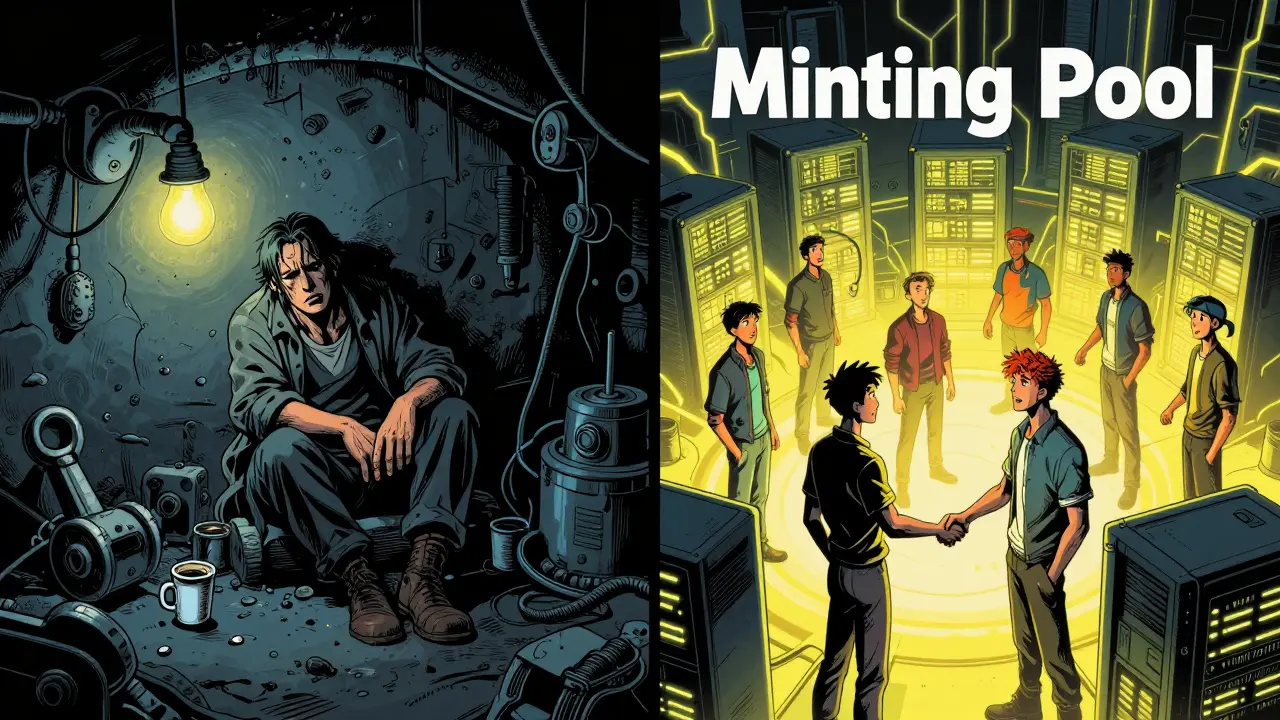
Imagine spending weeks of electricity and hardware wear-and-tear only to end up with absolutely nothing. That is the reality of solo mining for most people today. Because the network difficulty is so high, the odds of a single machine finding a block are astronomically low. This is why Mining Pools is a collaborative group of cryptocurrency miners who combine their computational power to increase the chances of finding a block and splitting the reward. By working together, miners turn a lottery-style gamble into a steady stream of income.
The Secret Ingredient: Understanding Shares
Before looking at how the money is split, you need to understand how a pool knows you're actually working. If a pool only paid you when you found a real block, you'd still be waiting weeks for a paycheck. To solve this, pools use Shares is valid proof-of-work submissions that meet a pool's internal difficulty setting but are not hard enough to actually mine a block on the main blockchain.
Think of it like a corporate job: you don't get paid only when the company signs a million-dollar deal; you get paid based on the hours you put in. Shares are your "hours worked." They prove to the pool operator that your Hashrate is active and contributing. The more shares you submit, the bigger your slice of the pie when the pool finally hits the jackpot.
Pay-Per-Share (PPS): The Steady Paycheck
If you hate volatility and love predictability, Pay-Per-Share (PPS) is a reward distribution method where miners are paid a fixed rate for every valid share they submit, regardless of whether the pool finds a block. This is the most "miner-friendly" option because it removes the element of luck entirely. You get paid for your effort, period.
However, there is a catch. PPS shifts all the risk from the miner to the pool operator. If the pool goes through a "dry spell" and doesn't find any blocks, the operator still owes you money. To cover this risk, PPS pools usually charge higher fees. You might also miss out on transaction fees, as the operator keeps those to offset their gamble. It is a great choice if you're budgeting for electricity costs and can't afford a zero-income day.
Pay-Per-Last-N-Shares (PPLNS): The Loyalty Program
Unlike PPS, Pay-Per-Last-N-Shares (PPLNS) is a payout system that calculates rewards based on shares submitted within a specific window of recently found blocks. Instead of paying you for every single share, the pool looks back at the last "N" blocks and sees who contributed.
This model is designed to stop "pool hopping"-the habit of miners jumping from one pool to another the second they see a different pool is "lucky." Because PPLNS rewards long-term consistency, a new miner will see very small rewards at first. Your earnings only climb to their full potential after you've been active for a while. If the pool finds five blocks in one hour, you're rich; if it finds none all day, you get nothing. Over months, however, the luck tends to average out.
Proportional (PROP): The Pure Percentage
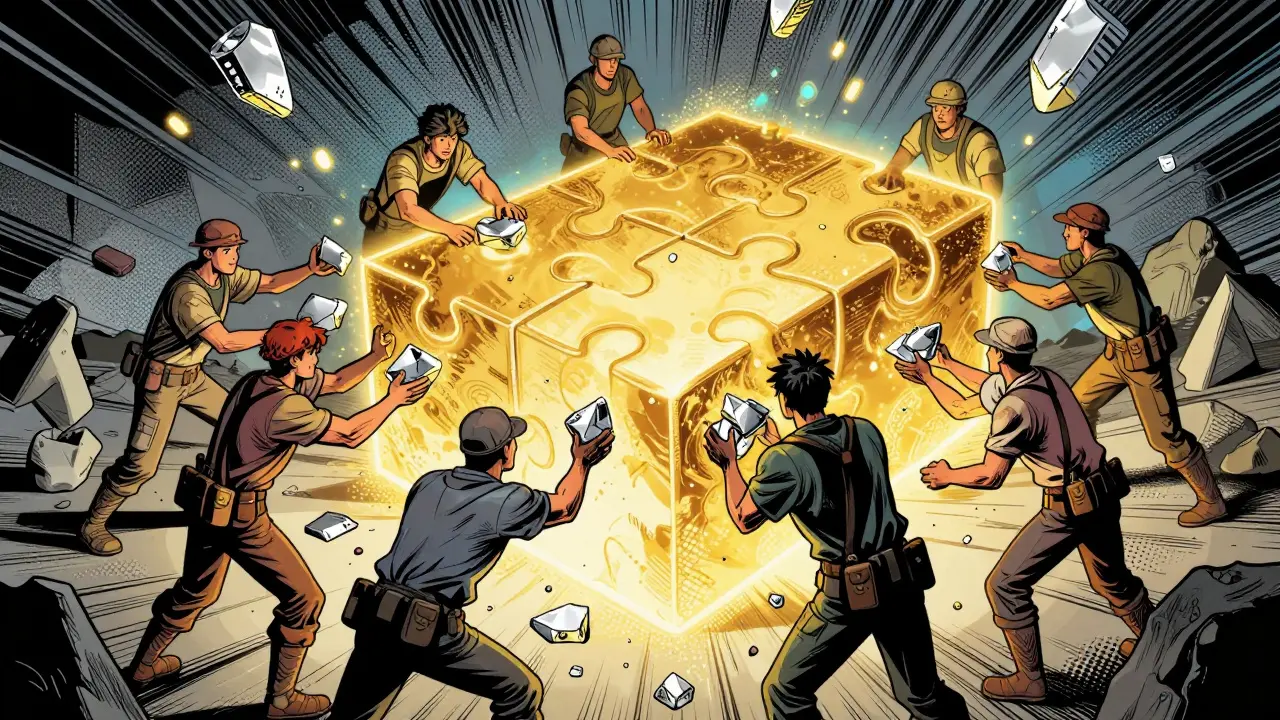
The Proportional (PROP) model is the most straightforward approach. It doesn't care about timing or loyalty windows. It simply looks at the total number of shares contributed by everyone since the last block was found. If you contributed 5% of the total shares, you get 5% of the reward.
This creates a direct link between your contribution and the pool's success. If the pool is lucky, you are lucky. If the pool is unlucky, you suffer. It is less volatile than solo mining but far more unpredictable than PPS. Most PROP pools have lower fees than PPS because the operator isn't taking on any financial risk-they only pay out when there is actually money in the bank.
| Model | Income Stability | Risk Level | Typical Fees | Best For... |
|---|---|---|---|---|
| PPS | Very High | Low (for miner) | Higher | Predictable budgeting |
| PPLNS | Medium | Medium | Lower | Long-term loyalists |
| PROP | Low | Medium/High | Low | Fair share participants |
| SOLO | None | Very High | N/A | High-risk gamblers |
The Hardware Reality: ASICs vs GPUs
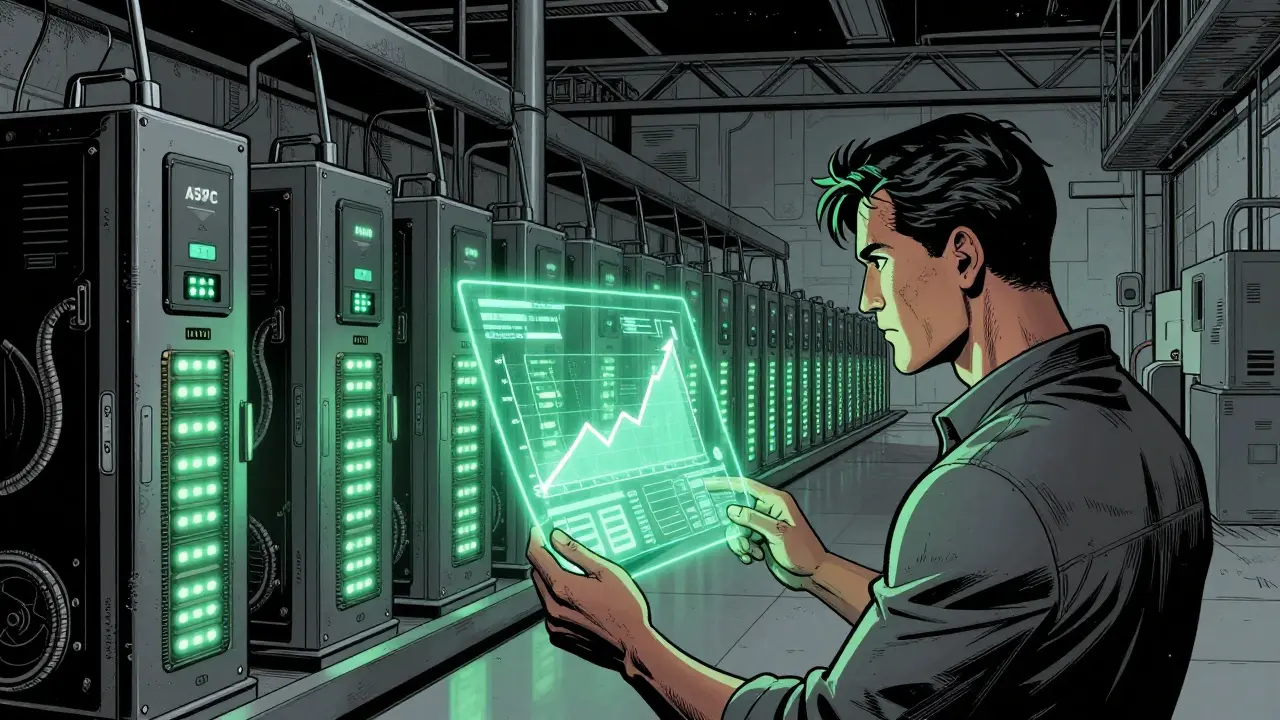
You can't just join a pool with a standard laptop anymore. For Bitcoin, you need ASICs is Application-Specific Integrated Circuits, which are hardware devices designed specifically for the sole purpose of mining cryptocurrency. These machines are exponentially faster than any general-purpose computer. While GPUs is Graphics Processing Units used for mining other coins or older versions of Bitcoin, they are now largely obsolete for the main Bitcoin network. The cost of these machines is a major factor in choosing a reward model; if you've spent thousands on an ASIC, you might prefer the stability of PPS to ensure you're covering your monthly power bill.
The Math of the Block Reward
To understand what is actually being shared, look at the current rewards. Since the halving on April 19, 2024, the Block Reward is the amount of cryptocurrency given to the miner(s) who successfully solve a block. For Bitcoin, this is currently 3.125 BTC. On top of this, the pool collects transaction fees from every single transfer included in that block. Depending on the pool's rules, these fees are either shared among miners or kept by the operator to pay for the pool's infrastructure.
Avoiding the Pitfalls of Pool Hopping
It is tempting to use tools like WhatToMine to see which pool is paying the most right now and switch every few hours. This is known as pool hopping. While it seems smart, the industry has fought back. As mentioned, PPLNS is specifically designed to punish this behavior. If you jump into a PPLNS pool just as they find a block, you'll likely get almost nothing because you haven't built up a history of shares in that pool's recent window. The most profitable strategy for most is usually to pick a reputable pool with a fair fee structure and stick with it.
Which reward system is the most profitable?
There is no single "most profitable" system because it depends on your risk tolerance. PPS is the most stable but has higher fees. PPLNS can be more profitable over the long run if you are a loyal miner and the pool has good luck. SOLO mining has the highest potential payout (the entire block reward), but the odds of actually winning are so low that most miners would earn nothing for years.
What happens to transaction fees in a PPS pool?
In many PPS models, the pool operator keeps the transaction fees to offset the risk of paying miners even when no blocks are found. However, some pools offer a variation called PPS+ which distributes a portion of these fees to the miners.
How often do pools pay out rewards?
Payout frequency varies by pool. Some pay out instantly as shares are submitted (common in PPS), while others have a minimum payout threshold (e.g., 0.005 BTC) that must be reached before funds are sent to your wallet.
Can I mine in multiple pools at once?
Technically, yes, by splitting your hashrate between them. However, this is usually inefficient. You are better off dedicating your full power to one pool to reach payout thresholds faster and maximize your standing in a PPLNS window.
What is a nonce in the context of mining pools?
A nonce is a "number used once." In a pool, the operator assigns different ranges of nonces to different miners. This ensures that two miners aren't wasting electricity by guessing the exact same puzzle solution. Each guess is a nonce attempt.
Next Steps for Miners
If you are just starting out, don't get bogged down in the math. Start by calculating your electricity costs-this is your primary overhead. If you have a tight budget, look for a PPS pool to keep your income flat. If you have a massive ASIC farm and can handle some volatility, PPLNS or PROP will likely give you a better return on investment over a year. Always check the pool's transparency logs to see if they are actually finding blocks as often as they claim.




16 Comments
Siddharth Bhandari
April 5 2026PPLNS is definitely the way to go if you're running a home rig and don't mind a bit of variance in your weekly payouts.
Matthew Wright
April 5 2026Actually... if you're looking at the long term... PPLNS usually beats PPS because you aren't paying that premium fee to the pool op... just gotta ride out the dry spells!!
Erica Mahmood
April 6 2026most people forget that share difficulty is adjusted by the pool to keep the load manageable on the server side so you aren't actually solving the chain block every time
Emma Pease-Byron
April 7 2026How quaint that people still believe they can make a meaningful profit with a few GPUs in their basement. The industrialization of mining has rendered these "guides" almost purely academic for the average person.
Diana Martín Prieto
April 7 2026If you're just starting out, I'd recommend checking out some of the smaller pools first to get a feel for how the dashboards work. It's a lot easier to learn the ropes when you aren't risking a huge amount of capital on high-fee PPS plans. Just keep an eye on your hash rate and make sure your hardware isn't overheating!
Trish Swanson
April 8 2026PPS is just safer!!!
Sharhonda Walker
April 10 2026I tried solo minning last year and it was a total waste of electricity... totaly recommend joinig a pool insted if u want to actualy see some coins in ur wallet
akash temgire
April 12 2026The distinction between PPS and PPS+ regarding transaction fee distribution is critical for maximum ROI.
Arwyn Keast
April 13 2026Absolute rubbish. This whole ecosystem is just a glorified energy sink that does nothing but waste electricity while some few whales in the US hoard the hash power. The efficiency of these ASIC machines is a joke compared to the environmental cost, and the jargon-filled reward models are just there to trick the naive into thinking they're "investing" when they're actually just paying for someone else's server costs. It's fundamentally a broken system from a moral standpoint, and any "expert" claiming otherwise is just shilling for the pool operators who take their cut regardless of whether the network actually provides any utility beyond speculation. We've moved from the dream of decentralization to a corporate-style power struggle where the only thing that matters is who has the cheapest electricity contract in a tax haven. It's pathetic, really, how people fall for this game of musical chairs with their hardware.
Krystal Moore
April 14 2026Omg I can't believe people actually argue about this stuff! Just pick a pool and stop stressing about the percentages, it's not that deep!
Suzanne Robitaille
April 15 2026There is something almost poetic about the struggle between the stability of a paycheck and the wild gamble of the solo mine. It reflects our own human desire for security versus the intoxicating hope of a sudden windfall!
Evan Borisoff
April 16 2026The sheer scale of the current hash rate makes solo mining a statistical impossibility for anyone not operating a massive industrial-grade facility in a region with subsidized power and we should be honest about the fact that the era of the hobbyist is dead because the network difficulty has scaled exponentially beyond the reach of any home-based setup regardless of the reward model chosen.
gladys christine
April 18 2026you guys just gotta stay positive and keep those rigs humming!! it's all about the journey to the moon baby!!
Bruce Micciulla Agency
April 18 2026look at the numbers and you see that pps is a scam for the long term because the pool op just eats the fees and you pay for the privilege of not having to wait for a block which is basically paying for insurance that costs more than the potential gain from a luck streak
Nicholas Whooley
April 20 2026It is wonderful to see new miners entering the space. Please remember to be patient with your earnings and support one another as we navigate these technical challenges together.
Siddharth Bhandari
April 21 2026I've found that diversifying across two PPLNS pools can actually smooth out the variance quite a bit without sacrificing as much as you would with PPS.