
No Capital Gains Tax on Crypto in Singapore: Rules, Limits & How It Works
Imagine making a profit of $50,000 from Bitcoin and owing absolutely zero dollars in taxes on that gain. For most people living in the US or Europe, this sounds like a fantasy. But for residents of Singapore, it is just Tuesday. Singapore stands out globally as one of the few major financial hubs with no capital gains tax on cryptocurrency investments. This policy has turned the city-state into a magnet for crypto traders, exchanges, and high-net-worth individuals looking to optimize their portfolios.
However, "no tax" doesn't mean "no rules." The Monetary Authority of Singapore (MAS) maintains a strict regulatory environment. While you might not pay tax on your profits, you must navigate complex licensing requirements if you run a business, and you need to understand exactly what counts as an investment versus income. Getting this wrong can lead to hefty fines or legal trouble, even if you aren't paying capital gains tax.
How Singapore Treats Cryptocurrency Taxes
To understand why Singapore is so attractive, you first need to look at how the government classifies digital assets. In many countries, cryptocurrencies are treated as currency, which complicates things. In Singapore, the Inland Revenue Authority of Singapore (IRAS) treats cryptocurrencies as intangible property. This classification is crucial because Singapore does not levy a general capital gains tax on the disposal of any asset, whether it's real estate, stocks, or Bitcoin.
This means that when you sell your Ethereum for a profit, the IRAS views it as a capital gain, not as income. Since there is no tax on capital gains, your profit remains yours. This applies regardless of how much you made or how long you held the asset. Whether you traded for five minutes or five years, the tax outcome for an individual investor is the same: zero percent.
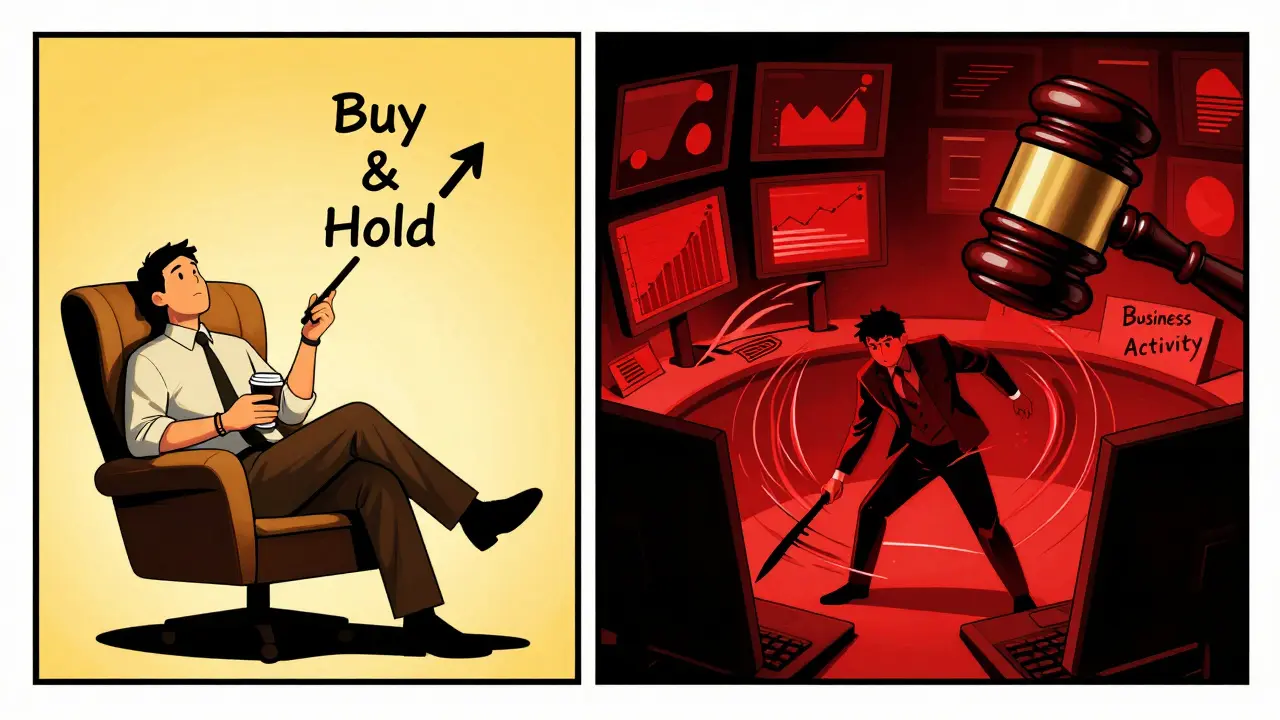
But here is where it gets tricky. The absence of a capital gains tax does not mean all crypto-related money is tax-free. If the IRAS determines that your activities constitute a trade or business, those profits become taxable income. The line between "investing" and "trading as a business" is thin and depends on several factors:
- Frequency of transactions: Do you buy and sell daily? High-frequency trading looks more like a business operation than passive investing.
- Volume of trades: Are you moving millions of dollars through multiple accounts?
- Organization: Do you have a dedicated office, employees, or specialized software setups typical of professional firms?
- Intent: Did you buy the crypto specifically to flip it for quick profit, or did you hold it as a long-term store of value?
If you answer yes to most of these, the IRAS may reclassify your gains as business income, subjecting them to corporate or personal income tax rates. For pure investors who buy, hold, and occasionally sell, this risk is minimal. For active day-traders operating like hedge funds, the risk is significant.
The Role of the Monetary Authority of Singapore (MAS)
While the IRAS handles the tax side, the Monetary Authority of Singapore (MAS) handles regulation. You cannot simply open a crypto exchange in Singapore and start taking payments without permission. The MAS enforces the Payment Services Act (PSA), which requires businesses dealing in digital payment tokens to obtain licenses.
For individual users, this regulatory framework provides safety. It ensures that the platforms you use-like Binance, Coinbase, or local players-are compliant with Anti-Money Laundering (AML) and Countering the Financing of Terrorism (CFT) standards. When you sign up for a licensed platform, they will perform Know Your Customer (KYC) checks. This isn't just bureaucracy; it's a legal requirement to prevent fraud and illicit flows.
If you are considering starting a crypto business in Singapore, expect a rigorous process. Licensed Digital Token Service Providers (DTSPs) face heightened scrutiny. You will need robust compliance systems, qualified personnel, and extensive documentation. The licensing process typically takes six to twelve months and can cost between SGD 50,000 and SGD 200,000 in legal and advisory fees. However, once licensed, you gain access to a stable, reputable market that attracts global capital.
Individual Investors vs. Business Entities
It is vital to distinguish between how individuals and companies are taxed. As mentioned, individual investors enjoy tax-free capital gains. But what about businesses?
If your company accepts cryptocurrency as payment for goods or services, that receipt is treated as income. You must declare it and pay corporate income tax on it. Similarly, if your core business model involves trading cryptocurrencies (e.g., you are a proprietary trading firm), those profits are taxable. Singapore’s corporate tax rate is competitive compared to other developed nations, often hovering around 17%, but it is certainly not zero.
There is also a nuance regarding spending crypto. If you use Bitcoin to buy a laptop, the IRAS may view this as a barter transaction. While you don't pay tax on the "exchange" itself, you might be liable for Goods and Services Tax (GST) on the item purchased, currently set at 8%. The crypto payment method doesn't exempt you from standard consumption taxes.
| Country | Capital Gains Tax (Individuals) | Key Regulatory Body | Business Income Tax |
|---|---|---|---|
| Singapore | 0% | MAS / IRAS | ~17% Corporate Rate |
| Cayman Islands | 0% | FSC | 0% (No Income Tax) |
| Portugal | 28% (Short-term) / 0% (Long-term) | AT | 21% Corporate Rate |
| Germany | 0% (if held >1 year) | BaFin | ~30% Corporate + Trade Tax |
| Thailand | 0% (5-year exemption) | SEC Thailand | 20% Corporate Rate |
How to Benefit: Residency and Practical Steps
You can't just fly to Singapore for a weekend and claim tax benefits. To benefit from the zero capital gains tax, you generally need to establish tax residency. The IRAS uses a "days present" test. Typically, you need to spend at least 183 days in Singapore within a calendar year to be considered a resident for tax purposes. Alternatively, you can demonstrate strong economic ties, such as having a job, family, or permanent address there.
For many high-net-worth individuals, this involves relocating or obtaining specific visa passes, such as the Global Investor Programme (GIP) or the Employment Pass. Once you are a resident, your worldwide income is taxed, but remember: capital gains are excluded. So, while your salary or business profits from outside Singapore might be taxed, your crypto portfolio growth remains untaxed.
Here is a practical checklist for individuals looking to move:
- Secure Residency: Apply for the appropriate visa pass and ensure you meet the 183-day physical presence rule.
- Open Local Bank Accounts: While not strictly required for trading, having local banking infrastructure helps with fiat on-ramps and off-ramps.
- Use Licensed Exchanges: Stick to platforms registered with the MAS to ensure compliance and ease of reporting.
- Keep Records: Even though you don't pay capital gains tax, keep detailed records of your transactions. If the IRAS ever questions whether you are an investor or a trader, your documentation is your best defense.
- Consult a Professional: Tax laws change. Hire a local tax advisor familiar with crypto to review your specific situation annually.

Why Singapore Stands Out Globally
Singapore isn't the only place with low taxes. The Cayman Islands offer 0% tax across the board, but they lack the institutional depth and connectivity of Singapore. Portugal offers tax breaks for long-term holders, but recent changes have made short-term gains taxable. Germany exempts gains after one year, but the bureaucratic hurdles can be steep.
Singapore’s advantage lies in its balance. It offers the tax freedom of a haven with the regulatory clarity of a mature financial center. Over 600 fintech companies have set up shop there since 2024, drawn by this stability. Major players like KuCoin and Phemex have established headquarters in Singapore, signaling confidence in the jurisdiction's long-term viability.
Furthermore, the government actively supports blockchain innovation. The MAS runs regulatory sandboxes, allowing startups to test new products under supervised conditions. This proactive approach means that while regulations are strict, they are also predictable. You know where the lines are drawn, which reduces uncertainty for investors and businesses alike.
Potential Pitfalls and Risks
No system is perfect. One major risk for businesses is the cost of compliance. The stringent AML and CFT requirements mean that operational costs are higher than in less regulated jurisdictions. Small startups might find the SGD 50,000+ setup fee prohibitive. Additionally, the MAS frequently updates its guidelines. What was acceptable last year might require additional safeguards today. Staying compliant requires constant vigilance and potentially ongoing legal counsel.
For individuals, the main risk is misclassification. If you treat your hobby trading as a serious business without realizing it, you could face back-taxes and penalties. Another subtle issue is the treatment of staking rewards. While selling Bitcoin for profit is tax-free, earning interest or staking rewards is often viewed as income. Therefore, staking rewards are likely subject to income tax if they are deemed part of a trade or business, or potentially taxable as miscellaneous income depending on current IRAS interpretations. Always check the latest guidelines on passive income derived from crypto.
Is crypto completely tax-free in Singapore?
Capital gains from selling cryptocurrency are tax-free for individual investors. However, if you run a crypto business or earn income through staking or mining, those earnings may be subject to income tax. Additionally, GST applies when you spend crypto on goods and services.
Do I need to live in Singapore to avoid crypto taxes?
Yes, generally you need to be a tax resident. This usually means spending at least 183 days in Singapore per year or having strong economic ties like employment or residence. Non-residents do not benefit from the same tax exemptions on local-sourced income, though capital gains remain untaxed regardless of residency status for non-business activities.
What happens if I trade crypto professionally?
If the IRAS determines that your frequent and large-scale trading constitutes a business, your profits will be treated as business income and taxed accordingly. Factors include transaction frequency, volume, and organizational structure. Professional traders should consult a tax advisor to ensure proper classification.
Are staking rewards taxable in Singapore?
Staking rewards are generally considered income rather than capital gains. If you receive staking rewards as part of a business activity, they are taxable. Even for individuals, passive income from staking may attract scrutiny, so it is advisable to report these earnings and seek professional advice.
Which crypto exchanges are safe to use in Singapore?
You should use exchanges licensed by the Monetary Authority of Singapore (MAS). These platforms comply with local AML and KYC regulations. Major international exchanges like Binance and Coinbase have operations in Singapore, along with local providers. Always verify the license status on the MAS website before depositing funds.