
Portugal Crypto Tax Benefits for Bitcoin Investors: The 2026 Guide
Imagine selling a Bitcoin you bought three years ago and paying zero tax on the profit. Sounds too good to be true? For many investors in Portugal, this isn't just a dream-it's the current reality of their tax code. While other European nations like Germany or France are tightening the screws on digital assets, Portugal has carved out a niche that rewards patience. If you're holding Bitcoin long-term, you might be sitting on a tax-free goldmine. But if you're trading daily, the story changes completely.
The landscape shifted significantly with the 2023 State Budget reform. Before that, crypto was essentially a tax haven because it didn't fit into existing income categories. Now, there is structure, but it’s still incredibly favorable compared to the rest of Europe. This guide breaks down exactly how the Portuguese tax system treats Bitcoin, why the one-year rule is your best friend, and where the hidden traps lie for active traders.
The One-Year Rule: Your Path to Zero Tax
Here is the core benefit that draws most people to Portugal: the 365-day holding period. Under the Personal Income Tax Code (PIT Code), specifically Category G, profits from selling Bitcoin are taxed at a flat rate of 28% if you held the asset for less than a year. However, if you hold your Bitcoin for more than 365 days, those gains are completely exempt from personal income tax.
This distinction is massive. Let's say you bought Bitcoin in early 2024 and sold it in late 2025. You owe nothing to the Portuguese state on that profit. Compare this to France, which slaps a 30% flat tax on almost everything, or Germany, which taxes short-term holdings progressively up to 45%. Portugal’s approach encourages long-term investing rather than speculative day-trading. It aligns perfectly with the "HODL" mentality prevalent in the Bitcoin community.
But there is a catch. This exemption applies only if the Bitcoin is not classified as a security and is held within the European Economic Area (EEA). Most standard Bitcoin transactions fall under this safe harbor. However, if you are using complex derivatives or tokens that look like securities, the rules get murkier. Always check the specific classification of your asset before assuming the exemption applies.
Crypto-to-Crypto Trades: No Immediate Tax Hit
One of the biggest headaches for crypto investors in countries like the US or Australia is the taxable event triggered by swapping one cryptocurrency for another. In Portugal, exchanging Bitcoin for Ethereum, or Bitcoin for USDT, does not trigger a tax liability at the moment of exchange. You only pay tax when you convert crypto back into fiat currency (like Euros) or goods/services, provided you are within the short-term holding window.
This allows for significant portfolio optimization. You can rebalance your holdings, move funds between wallets, or swap into stablecoins during market volatility without worrying about generating a tax bill that needs to be paid in cash. This feature alone makes Portugal attractive for sophisticated investors who manage diverse portfolios. It removes the friction of needing liquid cash to pay taxes on unrealized gains converted via swaps.
Passive Income: Staking and Airdrops
Not all crypto income comes from price appreciation. What about staking rewards, lending interest, or airdrops? These fall under Category E of the PIT Code, known as Capital Income. The tax treatment here is straightforward: a flat 28% rate applies to these passive earnings. There is no progressive bracket creep here; whether you make €1,000 or €100,000 in staking rewards, the rate remains 28%.
This simplicity is a double-edged sword. On one hand, it’s predictable and easy to calculate. On the other, it means you don’t get the lower rates that might apply to small amounts of regular employment income in some jurisdictions. However, since many other countries tax staking rewards as ordinary income (which can go up to 45-50%), Portugal’s flat 28% is often competitive, especially for high earners who would otherwise hit top marginal rates elsewhere.
The Professional Trader Trap: Category B
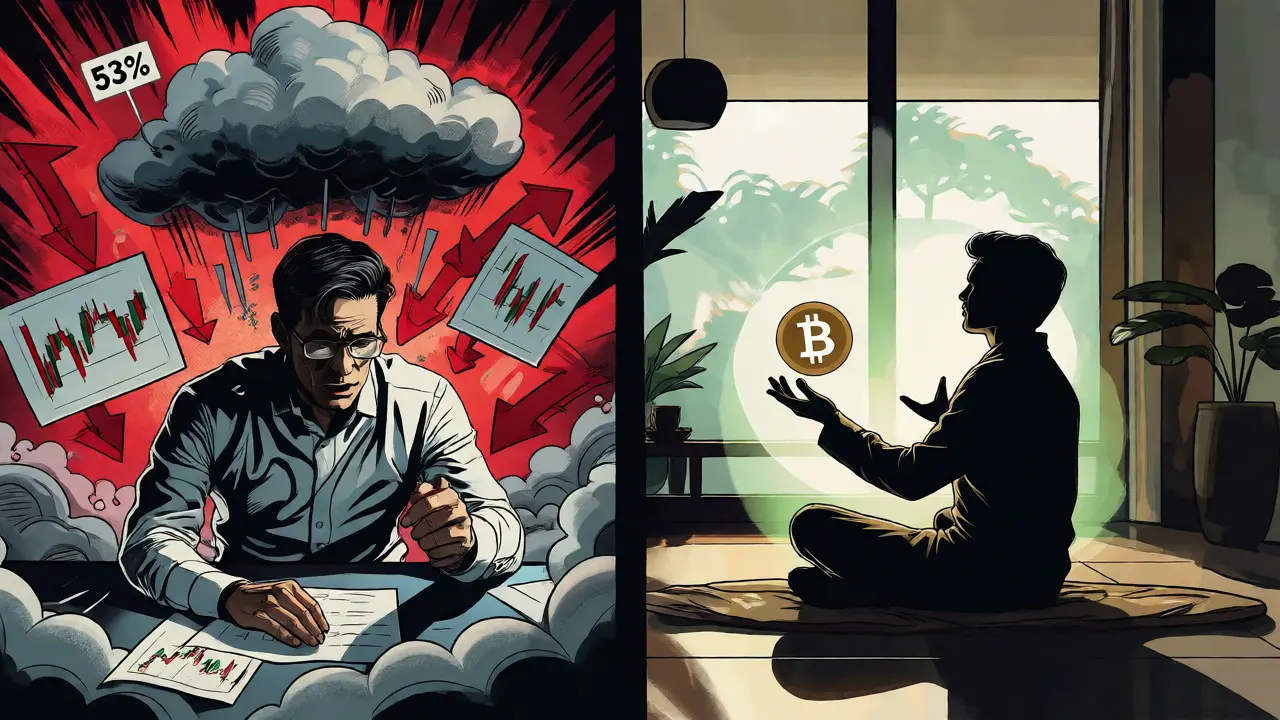
If you think you can day-trade Bitcoin all day every day and still enjoy the 28% rate, think again. The Portuguese tax authorities distinguish clearly between occasional investors and professional traders. If your activity resembles a business-high volume, frequent trades, systematic strategies-you may be classified under Category B (Self-Employment Income).
Category B subjects your profits to progressive tax rates ranging from 14.5% to 53%. Additionally, you might face social security contributions. This is where the "tax haven" reputation gets tested. For high-volume traders, the effective tax rate in Portugal can quickly exceed what they’d pay in jurisdictions with flat crypto taxes. The key differentiator is intent and frequency. Occasional trading is generally treated as capital gains (Category G), while habitual, business-like trading triggers the higher progressive rates.
| Feature | Portugal | Germany | France |
|---|---|---|---|
| Long-Term Holding Exemption | Tax-free after 365 days | Tax-free after 1 year | No general exemption |
| Short-Term Capital Gains Rate | Flat 28% | Progressive up to 45% | Flat 30% (PFU) |
| Crypto-to-Crypto Swaps | Non-taxable event | Taxable event | Taxable event |
| Staking/Airdrop Tax | Flat 28% (Category E) | Ordinary income tax | Ordinary income tax |
| Professional Trading | Progressive up to 53% | Business income rules | BIC/BNC regimes |
NHR Program and Digital Nomads
While the Non-Habitual Resident (NHR) program has undergone changes and new applicants have stricter criteria, its legacy benefits and similar residency pathways remain relevant for many. Historically, NHR offered a 20% flat rate on Portuguese-sourced income and exemptions on foreign income. For crypto investors, this created a powerful synergy. If you were a non-resident or structured your investments correctly, you could potentially minimize exposure even further.
Today, while the pure NHR regime is closing for new entrants, Portugal continues to attract digital nomads through its visa options. The combination of affordable living costs, high quality of life, and the crypto-friendly tax framework makes it a compelling destination. Even without the old NHR perks, the baseline crypto tax rules remain among the most favorable in Western Europe.

Compliance and Reporting Pitfalls
Don't let the low taxes fool you into ignoring compliance. The Portuguese tax authority, Autoridade Tributária e Aduaneira (AT), is improving its monitoring capabilities. You must keep meticulous records of acquisition dates, sale prices, and transaction histories. Since the tax exemption hinges on the 365-day rule, precise date tracking is critical.
Use specialized software like CoinTracking or CoinLedger to generate reports compliant with Portuguese standards. These tools help categorize transactions correctly under Category G or E. Failure to report correctly can lead to penalties, and while enforcement resources are currently limited, the trend is toward greater transparency and data sharing across the EU. Remember, the burden of proof is on you to demonstrate that you held the asset for over a year.
Frequently Asked Questions
Is Bitcoin tax-free in Portugal?
Bitcoin gains are tax-free in Portugal if you hold them for more than 365 days and are not classified as a professional trader. Short-term holdings (under one year) are subject to a flat 28% tax rate.
Do I pay tax on crypto-to-crypto swaps in Portugal?
No, exchanging one cryptocurrency for another (e.g., Bitcoin to Ethereum) is not considered a taxable event in Portugal. Taxes are typically triggered only when converting crypto to fiat currency or spending it on goods and services.
What is the tax rate for staking rewards in Portugal?
Staking rewards, airdrops, and lending interest are taxed at a flat rate of 28% under Category E (Capital Income) of the Portuguese Personal Income Tax Code.
Does the 28% tax apply to professional traders?
No. If you are classified as a professional trader (frequent, business-like activity), your income falls under Category B (Self-Employment). This subjects you to progressive tax rates ranging from 14.5% to 53%, plus potential social security contributions.
How do I prove I held Bitcoin for over a year?
You need detailed transaction records showing the exact purchase and sale dates. Using crypto tax software that imports exchange history is the best way to maintain this evidence. Keep wallet addresses and blockchain explorer links as backup documentation.