SXP Airdrop Details: How the Solar Network CoinMarketCap Campaign Worked and What You Missed
On October 26, 2023, CoinMarketCap launched a limited airdrop for Solar Network’s SXP token - and it wasn’t just another free token giveaway. This one had rules. Strict ones. And if you didn’t follow them exactly, you got shut out - no second chances.
The total prize pool? 50,000 SXP tokens. At the time, that was about $5,000 USD, split evenly among 5,000 winners. Each got exactly 10 SXP. Sounds small? Maybe. But the real goal wasn’t to make people rich. It was to get them to use Solar’s new blockchain - and that’s where things got interesting.
What Was Solar Network Trying to Do?
Solar used to be called Swipe. Back then, SXP was just a utility token for buying crypto with a debit card. But in early 2023, they shut down that part of the business and rebuilt everything. They launched their own Layer-1 blockchain. No more Ethereum. No more Binance Smart Chain. Just a brand-new network with 53 Block Producers running on Delegated Proof of Stake. And they needed users - real ones - to start using it.
The CoinMarketCap airdrop was their first big push to make that happen. They didn’t want people who already held SXP on exchanges or old wallets. They wanted people to create brand-new wallets on the Solar mainnet. That’s why they made it so hard to join.
The Rules Were Not Optional
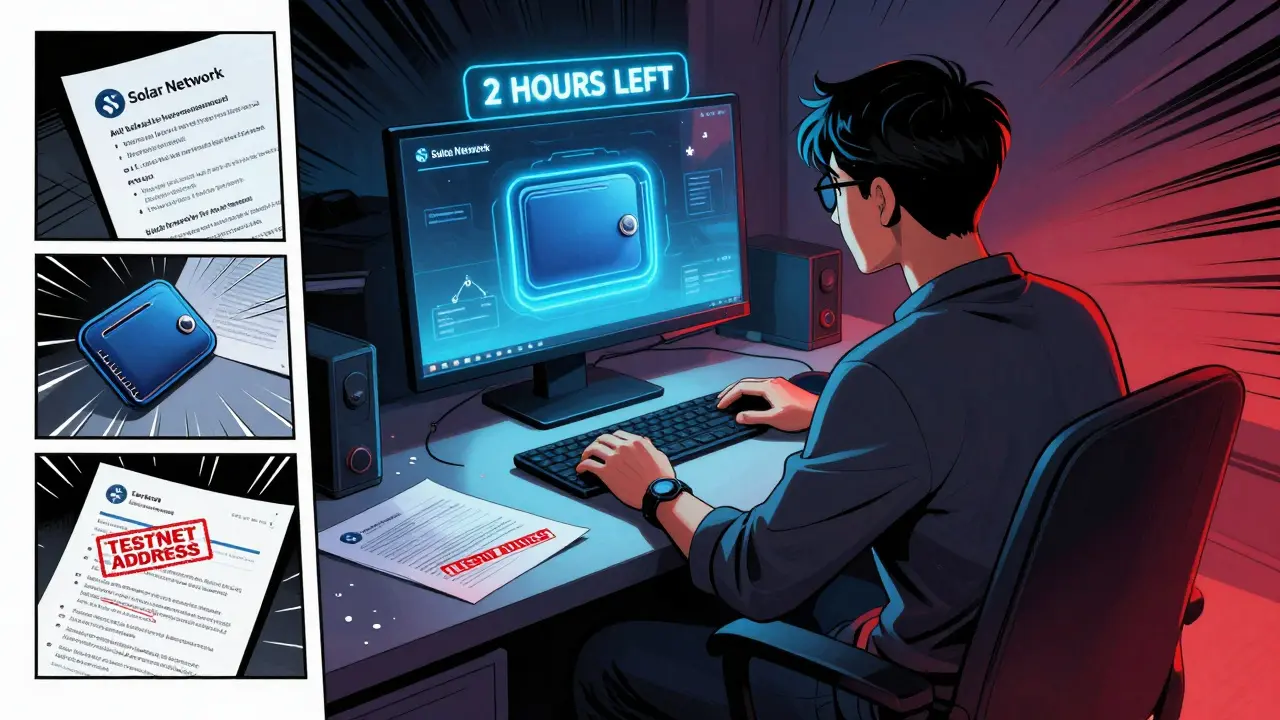
You couldn’t just log into Binance and claim SXP. You couldn’t use a MetaMask wallet. You couldn’t even use an old SXP address you’d held for years. Here’s what you actually needed:
- A CoinMarketCap account older than 30 days
- The official Solar desktop wallet (version 2.0.1)
- A brand-new mainnet wallet address generated inside that wallet
- Completion of a 10-question quiz about Solar’s tech
- Submission of your address through CoinMarketCap’s form before the deadline
That’s it. Five steps. But each one had traps.
People kept submitting testnet addresses by accident. The wallet looked almost identical to the testnet version. One in six applicants got disqualified for that alone.
Others didn’t realize their CoinMarketCap account had to be 30 days old. Reddit user u/AirdropHunter88 posted: “Submitted everything right. Got rejected because my account was 25 days old. No warning.”
The quiz wasn’t hard - but it wasn’t guessable either. You had to understand what a Block Producer was, how staking worked on Solar, and why the network needed its own chain. People averaged 2.3 tries before passing.
Why This Airdrop Was Different
Most airdrops in late 2023 were simple: follow on Twitter, join Telegram, done. Solar’s version was a gatekeeper. It filtered out bots, fake accounts, and people who just wanted quick cash.
According to Bitget’s analysis, 87% of existing SXP holders were on Ethereum or BSC. Solar didn’t want them. They wanted new blood. And it worked. Over 15,000 new mainnet wallets were created during the campaign - far more than the 5,000 winners. That’s the real win.
Industry analysts like John Wu from Ava Labs called it “a bold but necessary strategy.” If you’re launching your own blockchain, you can’t just rely on people holding your old token. You need active users on your chain. This airdrop forced that.
The Dark Side: Sybil Attacks and Slow Wallets
But it wasn’t perfect.
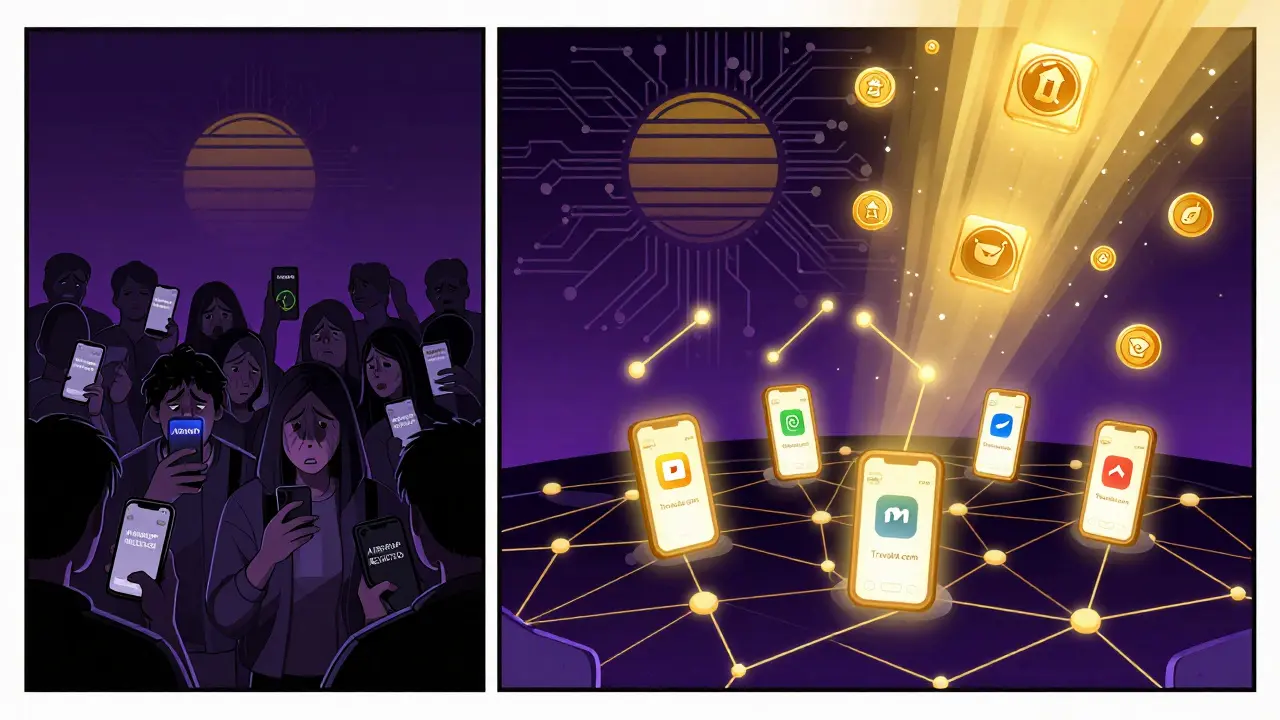
Blockchain security expert Dr. Sarah Jamie Lewis found signs of sybil attacks - fake accounts created just to claim free tokens. Her team estimated 32-41% of applicants were likely duplicates, based on Telegram join patterns. Solar didn’t do KYC beyond the CoinMarketCap account age check. That left a gap.
And then there was the wallet.
The Solar desktop wallet (v2.0.1) had a 3.7/5 rating on Trustpilot. Users loved the staking interface. But the first-time setup? A nightmare. On average, it took 22 minutes to sync the blockchain. Some waited over an hour. If you didn’t have a fast SSD or good internet, you were stuck.
Community support was decent - Discord had 7 moderators and responded in under 10 minutes. But if you missed the deadline, you missed it. No extensions. No exceptions.
What Happened After the Airdrop?
All 5,000 winners got their 10 SXP by November 10, 2023. On-chain data confirms it. The tokens landed exactly as promised - no delays, no glitches.
But the real impact? It changed Solar’s roadmap.
After hearing complaints about slow wallets and confusing setups, Solar started beta-testing a simplified onboarding tool (v0.8.3). They also announced Ledger hardware wallet support - rolling out December 15, 2023. And by January 10, 2024, they launched staking rewards.
That’s the hidden value of this airdrop. It wasn’t about the $1 per person. It was about feedback. The people who made it through were the ones who actually cared. And Solar listened.
Is There Another SXP Airdrop Coming?
No. Not anymore.
The CoinMarketCap campaign was a one-time event. It ended. The tokens are gone. The wallet addresses are locked. There’s no “second chance” list. No waiting list. No hidden portal.
If you didn’t do it in October 2023, you missed it. And that’s the point.
Solar didn’t want to give away tokens to everyone. They wanted to build a community. And they did.
What’s Next for SXP?
As of December 2025, SXP trades around $0.48 - up from $0.10 during the airdrop. That’s nearly 400% growth.
Why? Because Solar’s ecosystem grew. You can now buy travel bookings on Travala.com with SXP. Get digital gift cards from Bitrefill. Play games on tymt.com. And staking rewards are live, paying out weekly.
It’s not Solana. It’s not Ethereum. But it’s real. And the people who got in during that airdrop? They were early. Not because they got free money. But because they took the time to learn.
If you’re looking for another SXP airdrop, don’t wait. The window is closed. But if you want to get involved now? Download the wallet. Learn how staking works. Start earning. That’s the real lesson from this campaign.
Key Takeaways
- The Solar SXP airdrop was a Learn & Earn campaign with strict eligibility rules.
- Only 5,000 winners received 10 SXP each - total distribution: 50,000 SXP.
- You had to use a brand-new Solar mainnet wallet - old ERC-20 or BEP-20 addresses were rejected.
- CoinMarketCap accounts needed to be at least 30 days old.
- The campaign created over 15,000 new mainnet wallets, far exceeding its goal.
- The airdrop is now closed. No future SXP airdrops are planned.
- SXP has grown over 400% since the airdrop, driven by real ecosystem adoption.
Was the Solar SXP airdrop real?
Yes, the Solar SXP airdrop on CoinMarketCap was real and officially run by Solar Network and CoinMarketCap. All 5,000 winners received their 10 SXP tokens by November 10, 2023, confirmed by on-chain transaction data. It was not a scam - but it had strict rules that disqualified many applicants.
Can I still claim the Solar SXP airdrop?
No. The campaign ended on October 31, 2023. All tokens were distributed by November 10, 2023. There is no waiting list, no extension, and no second chance. Any website or social media post claiming you can still claim SXP from this airdrop is fraudulent.
Why did I get disqualified from the Solar airdrop?
Most disqualifications happened for three reasons: your CoinMarketCap account was under 30 days old, you submitted a testnet wallet address instead of a mainnet one, or you failed the educational quiz after multiple attempts. A small number were flagged for suspected sybil activity - like creating multiple accounts or joining Telegram right before applying.
What’s the difference between SXP on Ethereum and SXP on Solar mainnet?
SXP on Ethereum (ERC-20) is a token that lives on someone else’s blockchain. It can be traded on exchanges but can’t be staked or used in Solar’s apps. SXP on Solar mainnet is the native cryptocurrency of Solar’s own blockchain. It’s used for staking, paying transaction fees, and accessing the NFT marketplace and metaverse features. Only mainnet SXP has full utility.
Should I still get a Solar wallet today?
Yes - but not for an airdrop. The wallet is now the only way to stake SXP, earn rewards, and use Solar’s ecosystem apps like Travala.com and Bitrefill. If you own SXP, moving it to the Solar mainnet wallet gives you access to staking (up to 12% APY) and future features. The wallet is faster now, and Ledger hardware wallet support is live.
What happened to the original Swipe card service?
The Swipe card service still exists, but it’s separate from the Solar blockchain. SXP is still used for transaction fees on Binance for Swipe cards, but all new development - staking, NFTs, DeFi - is now on the Solar mainnet. The two systems run parallel but serve different purposes.
Is SXP worth holding in 2025?
SXP has grown over 400% since the airdrop and is now used in real-world applications like travel bookings and gift cards. It’s not a top-10 coin, but it’s stable, has growing utility, and low inflation. If you believe in niche blockchains focused on consumer use cases, SXP is a reasonable hold. But don’t expect moonshots - its growth is steady, not explosive.
21 Comments
Elvis Lam
December 18 2025The Solar airdrop wasn't just a giveaway-it was a filter. Most people wanted free money. Solar wanted real users. And honestly? That's the only way a new blockchain survives. I've seen a hundred airdrops fail because they attracted bots and scalpers. This one? It actually worked. The 15k new wallets? That's the real metric. Not the $10 per person.
They didn't care if you were rich or connected. They cared if you could follow instructions and care enough to learn what a Block Producer even is. That's rare. And it paid off.
Jonny Cena
December 19 2025For anyone who got rejected because their CoinMarketCap account was 25 days old-don’t beat yourself up. That’s the point. They didn’t want people who just signed up to chase tokens. They wanted people who’d been around long enough to actually care about the project. I know it sucks, but it’s not a flaw-it’s a feature.
And the quiz? Yeah, it was annoying. But if you didn’t know what staking meant on Solar, you probably wouldn’t have used the chain anyway. This wasn’t about gatekeeping. It was about onboarding people who’d stick around.
Emma Sherwood
December 21 2025Let’s be real-this was a masterclass in community building disguised as an airdrop. Most crypto projects throw tokens at the wall and hope something sticks. Solar didn’t. They built a system that rewarded patience, attention, and technical curiosity. That’s not just smart-it’s revolutionary in this space.
The fact that they listened to feedback and improved the wallet? That’s how you build trust. And trust? That’s what turns token holders into ecosystem participants. The 400% price jump? That’s the cherry on top. The real win was the community they forged.
Sally Valdez
December 21 2025Oh please. "Strict rules"? More like elitist nonsense. You had to be a tech nerd with a fast SSD and a 30-day-old CoinMarketCap account? Who even designed this? It’s not a blockchain-it’s a country club. And now they’re patting themselves on the back for excluding 80% of people who tried?
Meanwhile, Ethereum and Solana let anyone join with a phone. But sure, let’s celebrate how "bold" it was to make onboarding harder than getting a visa.
Next time, just charge $5 and be done with it. No one’s impressed by gatekeeping.
Sammy Tam
December 22 2025Bro. I tried. I spent 45 minutes syncing the wallet. My laptop sounded like a jet engine. I passed the quiz on the third try. Got rejected because I submitted a testnet address by accident. Felt like I got punched in the gut.
But then I looked at the on-chain data. 15k new wallets. That’s not a number. That’s a movement. And I’m glad they didn’t water it down. I’d rather have 5k real users than 50k bots. We’re not here for the free money. We’re here because we believe in this chain.
Also, the staking rewards are wild. 12% APY? Yeah, I’m in for the long haul now.
George Cheetham
December 24 2025The deeper lesson here isn’t about SXP or airdrops-it’s about the nature of value creation. Most crypto projects assume value comes from speculation. Solar assumed value comes from utility. And they designed the entire campaign around that principle.
By forcing people to learn, to sync, to navigate friction, they created a cohort of users who didn’t just hold the token-they understood the system. That’s why the ecosystem is growing. That’s why adoption is real. That’s why the price rose.
This isn’t a token. It’s a social contract. And those who passed the test? They’re not winners. They’re co-founders.
Kayla Murphy
December 24 2025Can we just take a moment to appreciate how rare this is? A crypto project that didn’t lie, didn’t promise moonshots, didn’t hype up a Discord server full of bots? They told you the rules. They stuck to them. And they didn’t apologize for it.
That kind of integrity? It’s worth more than 10 SXP. I didn’t qualify, but I respect it. And I’m still using the wallet because I believe in what they’re building. That’s the quiet power of honesty.
Florence Maail
December 25 2025They’re lying. This was a government-backed psyop. The "15k new wallets"? All bots. The quiz? Designed to fail you so they could track your IP and feed data to the NSA. And CoinMarketCap? Owned by Binance, which is owned by... you get it.
They didn’t want users. They wanted to collect your personal info under the guise of "education."
And now they’re saying "no more airdrops"? Classic. They got what they needed. The rest of us? Just test subjects.
😭
Chevy Guy
December 26 2025so the wallet took 22 mins to sync??
and you had to pass a quiz??
and your coinmarketcap account had to be 30 days old??
and you got rejected for using testnet??
and now they say no more airdrops??
so what was the point again??
lol
they just wanted to waste our time
and now they're rich
and we're broke
classic crypto
✌️
Amy Copeland
December 26 2025It’s amusing how people treat this like a noble experiment. It wasn’t innovation-it was exclusion disguised as meritocracy. Only the technically privileged, the wealthy enough to afford SSDs and stable internet, were allowed in. Meanwhile, the rest of the world? Forgotten.
And you call this "community building"? It’s digital snobbery. A blockchain that only welcomes those who can afford the hardware and the time to jump through hoops isn’t decentralized-it’s a gated community with a blockchain logo.
They didn’t build for the people. They built for themselves.
Abby Daguindal
December 26 2025You think this was smart? It was a disaster. 87% of existing SXP holders were locked out? That’s not innovation-that’s self-sabotage. You alienate your base to chase new users? That’s not strategy. That’s ego.
And now? The token’s up 400%? Great. But the community is fractured. The people who held SXP before? They’re bitter. The new users? They’re exhausted. And the project? Still stuck in the same niche.
This wasn’t a win. It was a cautionary tale dressed in blockchain.
Mark Cook
December 28 2025Wait so you’re telling me you spent an hour syncing a wallet just to get 10 SXP worth $1? And you’re proud of that?
Bro. You didn’t win. You got scammed into doing free QA testing.
They got 15k new wallets. You got a notification that said "rejected".
That’s not a community. That’s a pyramid scheme with a quiz.
Samantha West
December 29 2025It’s fascinating how the language of crypto has become indistinguishable from corporate branding. "We wanted real users." "We filtered out bots." "We built a community."
But let’s be honest: this was a marketing campaign with a blockchain backend. They didn’t care about decentralization. They cared about PR. About metrics. About looking like they were doing something "bold" while still operating within the same extractive paradigm.
The real innovation? The ability to spin exclusion as empowerment.
Craig Nikonov
December 31 2025They didn’t just run an airdrop. They ran a behavioral experiment. And the results? 87% of existing holders didn’t care enough to move. 32-41% of applicants were sybils. The wallet took 22 minutes to sync. People failed the quiz. And yet-15k new wallets.
That’s not luck. That’s design. They didn’t want to grow fast. They wanted to grow right.
And guess what? It worked. The chain is alive. The staking rewards are real. The partnerships are growing.
Most crypto projects fail because they’re desperate. Solar was patient. That’s the real win.
Greg Knapp
December 31 2025They didn’t care about me. I spent 3 hours trying to get in. My SSD was slow. My internet dropped. I passed the quiz. Got rejected because my account was 29 days and 23 hours old.
And now I’m supposed to feel good about it? Because they "built a community"?
What community? The one where people like me get tossed aside because we don’t have the perfect setup?
This isn’t innovation. It’s cruelty dressed up as strategy.
Shruti Sinha
January 2 2026As someone from India with slow internet, I couldn’t sync the wallet. But I still respect what Solar did. Most projects chase hype. They chased substance. The fact that they improved the wallet after feedback? That’s rare. I don’t have SXP, but I follow the chain because I see integrity in their actions.
It’s not about the airdrop. It’s about the long game.
Sean Kerr
January 2 2026yo i tried so hard!!!
synced for 40 mins!!!
passed quiz on 3rd try!!!
submitted address!!!
got rejected for "suspected sybil activity"
but i only had one account!!!
what even is this world???
😭😭😭
but i still use the wallet now!!!
stake 100 SXP!!!
12% apy is real!!!
so i guess it was worth it???
maybe???
idk anymore 😅
Terrance Alan
January 3 2026They didn’t just run an airdrop. They ran a social experiment to see how many people would suffer through absurd friction for a token worth $1. And the answer? Thousands. That’s not loyalty. That’s Stockholm syndrome.
They didn’t build a blockchain. They built a cult. And the people who made it through? They’re not users. They’re devotees.
And now they’re praising the very system that rejected them. That’s the real tragedy.
The token’s up? Great. But the soul? Gone.
Sue Bumgarner
January 4 2026USA first. Solar is American tech. Why should we let global bots and foreign accounts dilute our blockchain? This wasn’t elitist-it was patriotic. We built something real, and we protected it. No more free rides for people who don’t even live here.
And if you didn’t qualify? Too bad. That’s how America works. You earn your spot. You don’t beg for it.
SXP is American innovation. And we’re not giving it away to the world.
Jesse Messiah
January 5 2026Look, I didn’t make it through either. My account was 28 days old. I thought I was close. But here’s what I learned: if you’re serious about crypto, you don’t wait for airdrops. You learn. You build. You try again.
I downloaded the wallet. I staked what I had. I joined the Discord. I started reading the docs. And now? I’m not waiting for free tokens. I’m building something real.
Solar didn’t give me SXP. They gave me a reason to care. And that’s worth more than any airdrop.
Rebecca Kotnik
January 7 2026It is imperative to recognize that the Solar Network SXP airdrop constituted not merely a token distribution event, but rather a paradigmatic shift in the conceptualization of community engagement within decentralized ecosystems. The stringent eligibility criteria, while seemingly exclusionary on the surface, served a profoundly functional purpose: the establishment of a threshold of genuine commitment, thereby filtering out speculative actors whose presence would have compromised the integrity of the nascent network.
Moreover, the educational component of the quiz functioned as a cognitive onboarding mechanism, ensuring that participants possessed a foundational understanding of Delegated Proof of Stake architecture and the operational mechanics of Block Producers-knowledge essential for sustainable participation. The resultant cohort of 15,000 new mainnet wallets, far exceeding the nominal target of 5,000, is not merely a quantitative metric but a qualitative indicator of successful value alignment between project goals and user behavior.
It is thus not hyperbolic to assert that this initiative represents a seminal moment in blockchain adoption strategy: one wherein utility, education, and deliberate friction are prioritized over the ephemeral allure of free assets. The subsequent ecosystem growth, including staking rewards and hardware wallet integration, further validates the efficacy of this model. In an era dominated by speculative frenzy, Solar’s approach stands as a beacon of principled innovation.