Bullit token: What It Is, Why It Matters, and What You Need to Know
When you hear Bullit token, a lesser-known cryptocurrency token often discussed in niche crypto circles. Also known as BULLIT, it isn’t listed on major exchanges and lacks transparent documentation. Unlike Bitcoin or Ethereum, Bullit token doesn’t have a clear use case, team, or roadmap. Most people who mention it are either speculating on a potential airdrop or warning others about a possible rug pull.
It’s often grouped with other obscure tokens like WOR crypto, a fraudulent token tied to fake Hollywood partnerships, or NBX (BYN), a nearly dead DeFi token with zero adoption. These projects share one thing: they appear on forums and Telegram groups, spark hype with vague promises, then vanish. Bullit token fits that pattern. There’s no whitepaper, no official website, and no verified social media accounts. If someone tells you it’s going to explode, ask for proof—not a meme.
What makes Bullit token different from real projects? Real tokens like RDNT, Radiant Capital’s cross-chain DeFi token, have active development, locked liquidity, and clear governance. Bullit token has none of that. It’s not even clear if it’s built on Ethereum, BSC, or some obscure chain. You can’t stake it, you can’t use it in a DeFi protocol, and no exchange lists it for trading. That’s not innovation—that’s noise.
People search for Bullit token because they saw it mentioned in a Discord group or a TikTok video promising free tokens. But here’s the truth: if a token doesn’t have a working product or a public team, it’s not an investment—it’s a gamble with near-zero odds. The same people pushing Bullit token are likely also pushing fake airdrops like ECIO, a non-existent token advertised as a CoinMarketCap giveaway. They’re not building—they’re harvesting.
So what should you do? Don’t buy it. Don’t share it. Don’t even click on links promising you’ll get Bullit tokens for free. Instead, focus on tokens with real utility, like those powering DeFi platforms or governance systems. The posts below show you exactly how to spot the difference—between tokens that move markets and tokens that just move scams.
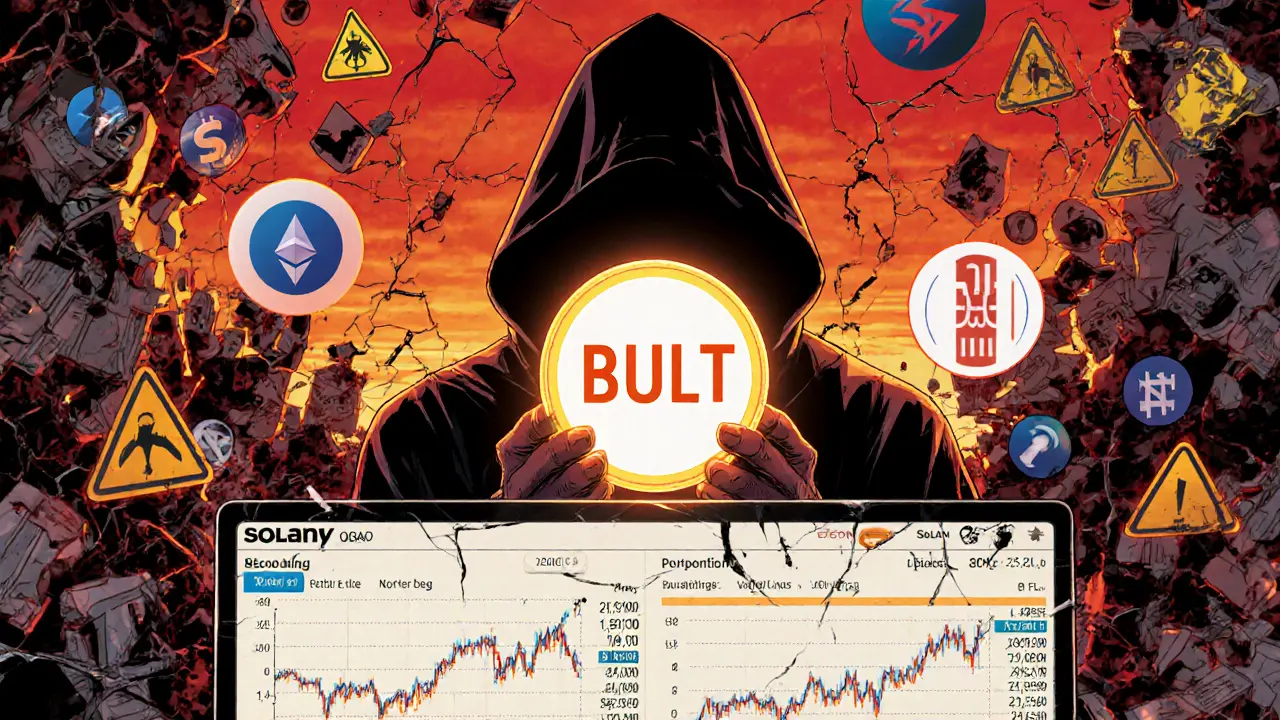
Bullit (BULT) claims to be a decentralized storage coin, but its data is inconsistent, trading volume is near zero, and its price includes impossible future highs. It lacks code, team, or real use - avoid this high-risk token.
Continue Reading