TOWER Airdrop: Is It Real? How to Spot Scams and Find Legit Crypto Drops
You’ve probably seen the hype on Twitter or Telegram. Someone is promising free tokens from a project called TOWER is a cryptocurrency project rumored to be distributing free tokens via an airdrop, but currently lacks verifiable official documentation or confirmed launch details. The promises sound too good to be true: huge allocations, zero effort, instant wealth. But here is the hard truth you need to hear right now: there is no credible, verified information about a legitimate "TOWER" airdrop in the current market landscape as of mid-2026.
This isn’t just bad luck; it’s a pattern. In the world of decentralized finance (DeFi), silence often means something is wrong. When major projects like Ethereum is the leading blockchain platform for smart contracts and decentralized applications or Solana is a high-performance blockchain known for its speed and low transaction costs announce token distributions, they do it through official channels with clear mechanics. They don’t hide behind vague rumors or anonymous DMs. If you are looking for TOWER tokens, you are likely walking into a trap designed to drain your wallet or steal your personal data.
The Anatomy of a Fake Airdrop
To understand why you should avoid this specific "TOWER" opportunity, we first need to look at how these scams work. Fraudsters create fake websites that mimic real projects. They use similar logos, copy-paste whitepapers, and even hire bots to generate fake excitement on social media platforms like X (formerly Twitter) and Discord.
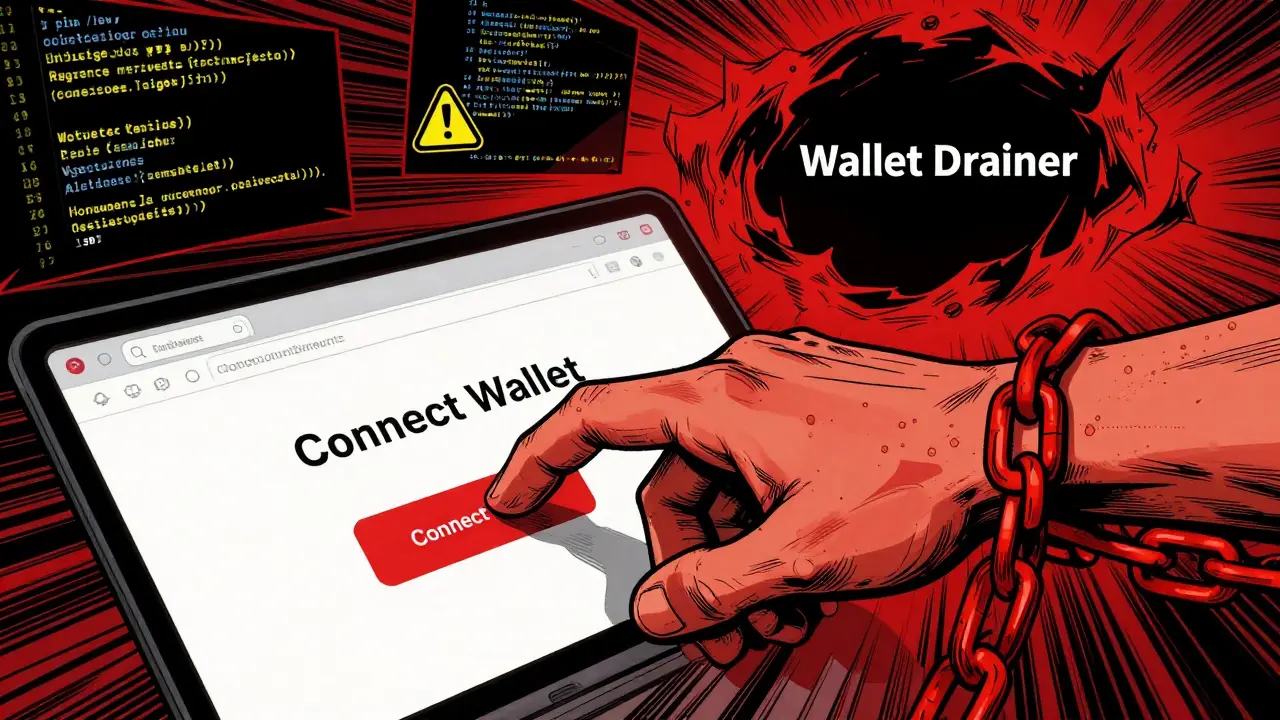
The goal is simple: get you to connect your Web3 Wallet is a digital tool like MetaMask or Phantom that allows users to store cryptocurrencies and interact with decentralized applications. Once connected, the malicious contract doesn’t send you tokens. Instead, it drains whatever value is already in your account. This is known as a "wallet drainer" attack. Alternatively, they might ask you to complete tasks-like following accounts or joining groups-which are actually just ways to build their own social engineering networks.
Why does this happen so often? Because greed is a powerful motivator. Scammers know that if they promise enough free money, people will ignore red flags. They rely on FOMO (Fear Of Missing Out). You see others claiming to have received tokens, so you assume it must be real. But those "others" are usually part of the scam team or paid shills.
How to Verify Any Airdrop Claim
Before you click any link labeled "TOWER Airdrop," you need a checklist. This applies to any crypto project, not just this one. Verification is your best defense against losing funds.
- Check Official Sources Only: Never trust a link sent via direct message. Go directly to the project’s official website or their verified social media handles. Look for blue checkmarks on X and official announcements on their Discord server. If the "TOWER" project has no official website or the site looks poorly designed, walk away.
- Analyze the Contract Address: Legitimate tokens have public contract addresses listed on block explorers like Etherscan is a block explorer and analytics platform for the Ethereum blockchain or Solscan is a block explorer for the Solana blockchain used to track transactions and wallet balances. If you can’t find the token contract on these platforms, or if the contract was created yesterday by an unknown developer, it is likely a honeypot or a scam.
- Review the Team: Anonymous teams are common in crypto, but they carry higher risk. Check if the founders are doxxed (publicly identified). Search their names for past controversies or rug pulls. A project with no visible leadership is a major red flag.
- Look for Community Engagement: Real communities ask questions and discuss technology. Fake communities only post screenshots of profits and spam links. Join the Discord and lurk for a day. If everyone is just shouting "To the moon!" without discussing the tech, it’s a pump-and-dump scheme.
Red Flags Specific to the TOWER Rumor
When analyzing the specific buzz around "TOWER," several critical gaps appear. First, there is no trace of the project on reputable tracking sites like CoinMarketCap is a leading aggregator of cryptocurrency prices, market capitalizations, and trading volumes or CoinGecko is a popular cryptocurrency tracker providing data on thousands of digital assets. While new projects aren’t always listed immediately, a complete absence combined with high-profile airdrop rumors is suspicious.
Second, the terminology is vague. Legitimate projects explain their utility. What does TOWER do? Is it a Layer 1 blockchain? A DeFi protocol? An AI agent? If the description is generic buzzwords like "revolutionizing Web3" without technical specifics, it lacks substance. Third, the distribution mechanism is unclear. Does it require staking? Bridging assets? Simply signing up? Ambiguity is a tactic used to confuse users into making mistakes.
| Feature | Legitimate Project | Suspicious / Scam Project |
|---|---|---|
| Official Website | Professional design, clear roadmap, team info | Poor grammar, broken links, anonymous team |
| Social Media | Verified accounts, active community discussion | Unverified accounts, bot-like comments, DM spam |
| Token Contract | Listed on Etherscan/Solscan, audited code | Newly created contract, no audit, hidden owner |
| Distribution Method | Clear criteria (e.g., hold specific NFT, use dApp) | Vague instructions, asks for private keys or seed phrases |
| Pressure Tactics | No urgency, transparent timeline | "Limited time only," "Claim now or lose out" |
Safe Alternatives for Airdrop Hunters
If your goal is to participate in legitimate airdrops, shift your focus to established ecosystems. Projects built on robust chains like Polygon is a network of blockchains that scales Ethereum with lower fees and faster transactions or Arbitrum is an Ethereum layer-2 scaling solution that offers fast and cheap transactions tend to have more transparent processes. These networks have strong governance and community oversight.
Instead of chasing rumors, engage with protocols that have working products. Use decentralized exchanges, provide liquidity, or vote in governance proposals. Many successful airdrops, such as those from Uniswap is a leading decentralized exchange protocol on Ethereum or Aave is a decentralized lending protocol allowing users to borrow and lend crypto assets, rewarded early users who genuinely utilized the platform. This approach requires effort, but it minimizes risk and maximizes the chance of receiving valuable tokens.
Remember, time is a resource. Spending hours verifying a fake TOWER airdrop takes time away from interacting with real projects. Focus on quality over quantity. One genuine interaction with a top-tier protocol is worth more than a hundred clicks on suspicious links.
Protecting Your Digital Assets
Security is not optional in crypto. Even if you never fall for a scam, adopting safe habits protects your portfolio. Always use a hardware wallet like Ledger is a manufacturer of hardware wallets for securely storing cryptocurrency private keys or Trezor is a brand of hardware wallets designed to secure cryptocurrency holdings offline for significant holdings. Keep your seed phrase offline, written on paper, never stored digitally. Enable two-factor authentication (2FA) on all exchange accounts using an authenticator app, not SMS.
Additionally, consider using a burner wallet for interacting with new or untrusted dApps. This isolates your main funds from potential vulnerabilities. If a site tries to drain your wallet, it only gets access to the small amount in the burner account. This simple step can save you from catastrophic losses.
Is the TOWER airdrop real?
As of July 2026, there is no verified evidence of a legitimate TOWER airdrop. Most references to it appear to be scams or misinformation. Always verify through official project channels before participating.
How can I spot a fake crypto airdrop?
Look for red flags like unsolicited DMs, poor website design, lack of official social media verification, and requests for private keys or seed phrases. Legitimate projects never ask for your secret recovery phrase.
What should I do if I already connected my wallet to a suspicious site?
Immediately transfer any remaining funds to a new, secure wallet. Revoke permissions for the suspicious contract using tools like Revoke.cash. Monitor your transaction history for unauthorized activity and report the incident to relevant authorities.
Are all anonymous crypto projects scams?
Not necessarily, but anonymity increases risk. Many legitimate privacy-focused projects have anonymous teams. However, you must evaluate their code audits, community trust, and product utility carefully before engaging.
Where can I find legitimate upcoming airdrops?
Follow reputable crypto news outlets, official project announcements, and community-driven trackers. Engage with established protocols on major blockchains like Ethereum, Solana, and Arbitrum, as they are more likely to distribute tokens fairly to early users.