What is Minidoge (MINIDOGE)? Tokenomics, Auto-Boost Mechanism, and Risks Explained
You’ve probably heard of Dogecoin. It’s the original meme coin that changed how we look at internet culture in finance. But if you scroll through crypto charts today, you’ll see dozens of spin-offs trying to capture that same energy. One of them is Minidoge. You might be wondering: is this just another copycat project, or does it actually have something new to offer? The short answer is that Minidoge tries to mix meme culture with some serious technical mechanics, specifically an automated buyback system and charitable giving. However, like most tokens in this space, it comes with significant risks that you need to understand before clicking "buy."
What Exactly Is Minidoge?
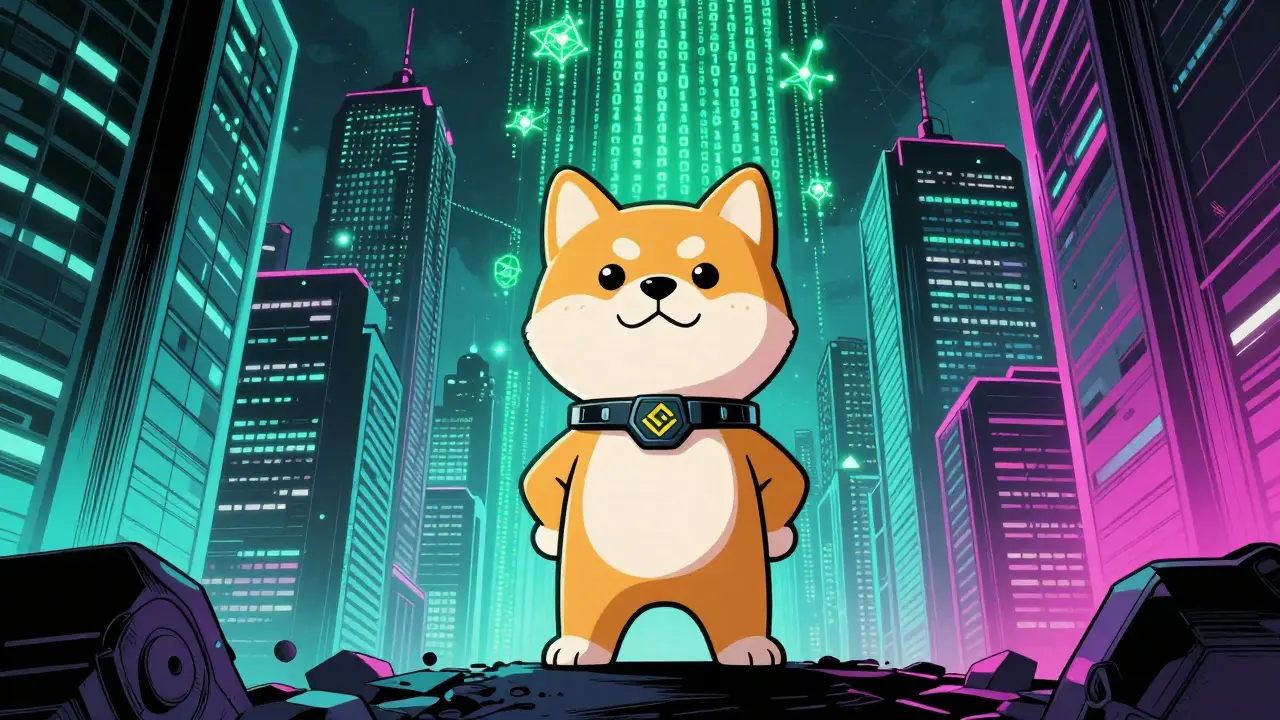
At its core, Minidoge is a cryptocurrency token built on the Binance Smart Chain (BSC) network. Unlike Bitcoin or even the original Dogecoin, which run on their own independent blockchains, Minidoge exists as a BEP20 token. This means it relies on the security and speed of the BSC infrastructure rather than maintaining its own ledger. The project launched in July 2021, positioning itself as the first "Auto-Boost" and "Hyper-Deflationary" token.
The name itself is a nod to the original Dogecoin community. In December 2024, Elon Musk posted imagery referencing "DogeFather" and "DogeSon," which helped cement Minidoge’s identity as a spiritual successor or companion to the original meme coin. But don’t let the cute branding fool you into thinking it works exactly like Dogecoin. While Dogecoin uses a Proof-of-Work consensus mechanism similar to Bitcoin, Minidoge operates entirely through smart contracts on Ethereum-compatible chains. This distinction matters because it changes how transactions are processed, how fees are paid, and what kind of wallets you can use.
The Auto-Boost Mechanism: How It Works
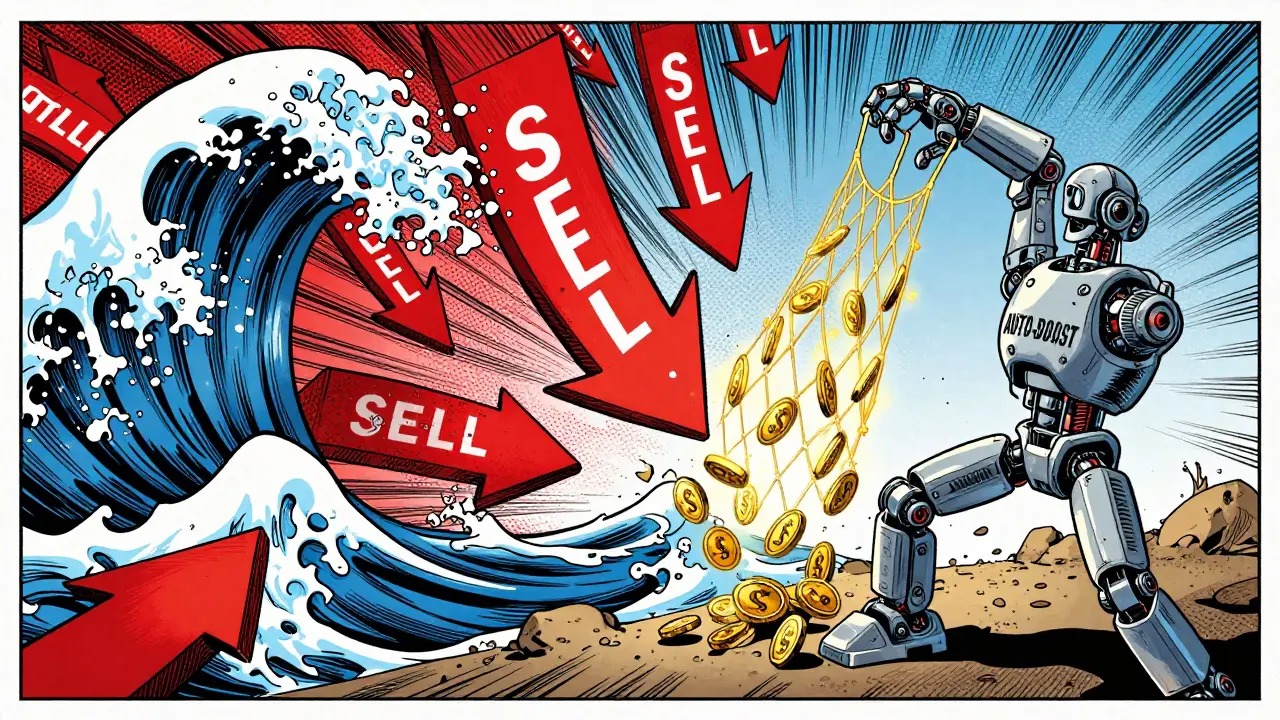
The biggest selling point for Minidoge isn’t the dog mascot; it’s the technology behind the scenes called Auto-Boost. Most tokens simply sit there until someone buys or sells them. Minidoge’s smart contract is designed to react automatically to market activity. Specifically, every time someone sells Minidoge, the protocol triggers a variable buyback. The system uses a portion of the transaction volume to purchase tokens from the open market, theoretically creating buying pressure that counteracts selling pressure.
This mechanism aims to stabilize the price during high-volatility events. If a large holder decides to dump their tokens, the Auto-Boost function kicks in to absorb some of that sell-side liquidity. The amount bought back isn’t fixed; it recalibrates based on the trading volume over the previous 24 hours. This dynamic adjustment is supposed to make the token more resilient than standard meme coins, which often crash violently when early investors exit. However, remember that this only works if there is enough liquidity in the pool to support these automatic trades. If the market dries up, the mechanism has less fuel to work with.
Tokenomics and Deflationary Supply
When Minidoge launched, the total supply was set at one quadrillion (1,000,000,000,000,000) tokens. That sounds like an astronomical number, but in crypto, supply size alone doesn’t determine value-it’s the circulating supply and demand that matter. Over time, the project has implemented hyper-deflationary measures. This means tokens are permanently removed from circulation through various mechanisms, including burns tied to transactions and strategic allocations.
As of May 2026, data suggests the circulating supply has decreased significantly due to these burn mechanisms. A smaller circulating supply, assuming demand remains constant, can lead to price appreciation. This deflationary model is designed to reward long-term holders. Instead of printing more tokens to fund development (which dilutes your holdings), the team relies on existing supplies and transaction fees. This aligns the interests of developers and holders: everyone benefits if the ecosystem grows and transaction volume increases.
Utility Beyond Memes: MiniPets and NFTs
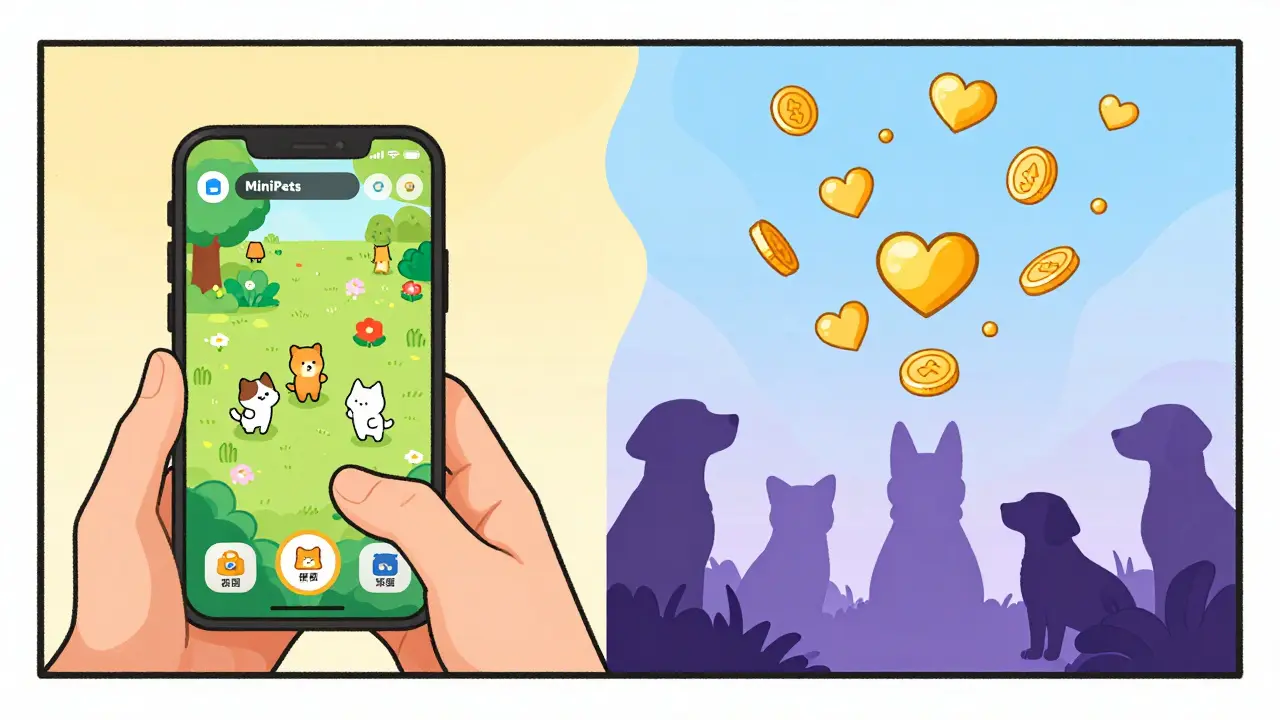
Meme coins usually fail because they lack real-world utility. Once the hype dies down, there’s nothing left to drive demand. Minidoge attempts to solve this by integrating with a mobile gaming platform called MiniPets. Available on iOS and Android, this game allows users to build and train virtual pets. As you engage with the game daily, you earn rewards. More importantly, you can convert these digital assets into Non-Fungible Tokens (NFTs).
This creates a secondary market for collectibles. Players aren’t just playing for fun; they’re potentially building a portfolio of tradable digital items backed by the Minidoge ecosystem. By embedding the token into a gaming loop, the project hopes to create consistent demand. Gamers need tokens to participate, trade, or upgrade their characters. This moves Minidoge away from being purely a speculative asset and toward a utility token with a defined user base. Whether the game attracts enough players to sustain this economy remains to be seen, but it’s a step beyond typical meme coin roadmaps.
Charitable Giving and Community Governance
Another pillar of the Minidoge mission is philanthropy. A portion of every transaction is allocated to a marketing wallet, which funds donations to animal shelters worldwide. This ties directly into the Doge aesthetic, appealing to pet lovers who want their crypto investments to do good. What makes this interesting is the governance aspect. The community gets to vote on which charities receive funding. This decentralizes decision-making and ensures transparency, as all donations are tracked on the blockchain.
This feature builds trust within the community. When holders see that their small contributions are aggregating into real-world impact, it fosters loyalty. It also differentiates Minidoge from projects where developer wallets hold vast amounts of tokens without clear usage plans. Here, the funds have a predefined purpose: supporting animal welfare. Of course, the scale of these donations depends on trading volume. Low volume means smaller donations, but the principle of community-driven charity remains intact.
Market Performance and Liquidity Risks
Let’s talk about the numbers. As of May 8, 2026, Minidoge trades at approximately $0.00002166 USD. The market capitalization hovers around $99,870, with a 24-hour trading volume of roughly $99.68. These figures paint a picture of a micro-cap asset with extremely low liquidity. For context, a volume-to-market cap ratio near zero indicates very little active trading. This means you could struggle to sell large amounts of MINIDOGE without crashing the price.
| Metric | Value | Implication |
|---|---|---|
| Price | $0.00002166 | High volatility potential |
| Market Cap | ~$99.8K | Micro-cap status; high risk/reward |
| 24h Volume | ~$99.68 | Low liquidity; difficult to enter/exit large positions |
| Blockchain | Binance Smart Chain (BEP20) | Fast transactions, low fees compared to Ethereum |
This lack of liquidity is a double-edged sword. On one hand, it’s easier to acquire tokens cheaply. On the other, exiting your position can be painful. If you try to sell $1,000 worth of MINIDOGE, you might move the price significantly against yourself. Always check the order book depth before investing. Also, be aware that low-volume tokens are susceptible to manipulation. A single large buy or sell order can skew prices dramatically, triggering stop-losses or FOMO among retail traders.
How to Buy and Store Minidoge Safely
If you decide to proceed, here’s how to navigate the process. First, you’ll need a wallet that supports BEP20 tokens. Trust Wallet or MetaMask are popular choices. Make sure you configure your wallet to connect to the Binance Smart Chain network. Next, you’ll need BNB (the native token of BSC) to pay for gas fees when swapping. You can buy BNB on major exchanges like Coinbase or Binance, then transfer it to your personal wallet.
To acquire MINIDOGE, you’ll likely use a decentralized exchange (DEX) like PancakeSwap. Connect your wallet to PancakeSwap, add the MINIDOGE token contract address (verify this carefully from official sources to avoid scams), and swap your BNB for MINIDOGE. Set your slippage tolerance appropriately given the low liquidity-usually between 5% and 10% may be necessary, though this eats into your capital. Never share your private keys or seed phrase with anyone. Official channels include minidoge.finance and verified social media accounts. Always double-check URLs, as phishing sites targeting meme coin enthusiasts are common.
Is Minidoge the same as Dogecoin?
No, they are fundamentally different. Dogecoin runs on its own blockchain using Proof-of-Work, while Minidoge is a BEP20 token on the Binance Smart Chain. Minidoge includes smart contract features like Auto-Boost and charitable donations, whereas Dogecoin is primarily a peer-to-peer digital currency.
What is the Auto-Boost mechanism?
Auto-Boost is a smart contract function that automatically buys back MINIDOGE tokens from the market whenever a sell transaction occurs. This creates artificial buying pressure to help stabilize the price during sell-offs, with the buyback amount adjusting based on recent trading volume.
Is Minidoge a safe investment?
Minidoge carries high risk due to its micro-cap status and low liquidity. Meme coins are highly volatile and speculative. Only invest money you can afford to lose entirely. The low trading volume means you may face difficulty selling your tokens without significant price impact.
How does the MiniPets game relate to Minidoge?
MiniPets is a mobile game integrated with the Minidoge ecosystem. Players can earn rewards and convert virtual pets into NFTs. This provides utility for the token, encouraging holders to use MINIDOGE for gaming activities rather than just holding it as a speculative asset.
Where can I buy MINIDOGE?
You can typically find MINIDOGE on decentralized exchanges like PancakeSwap using the Binance Smart Chain. Some centralized exchanges like LBank or BitMart may also list it, but availability varies. Always verify the contract address before trading to avoid counterfeit tokens.