1% TDS on Crypto in India Explained: Rules, Thresholds & Impact (2026)
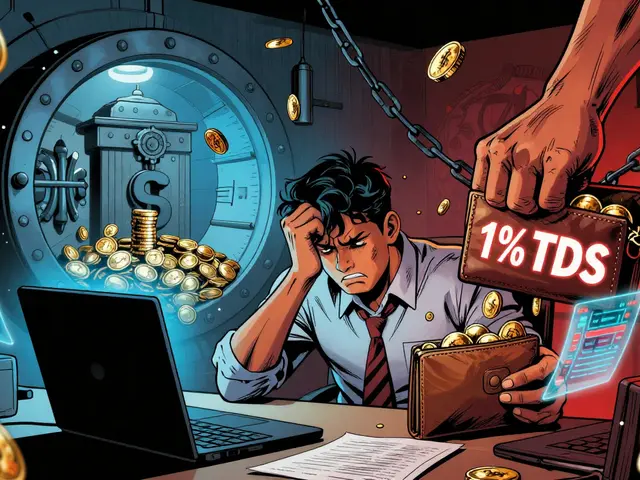
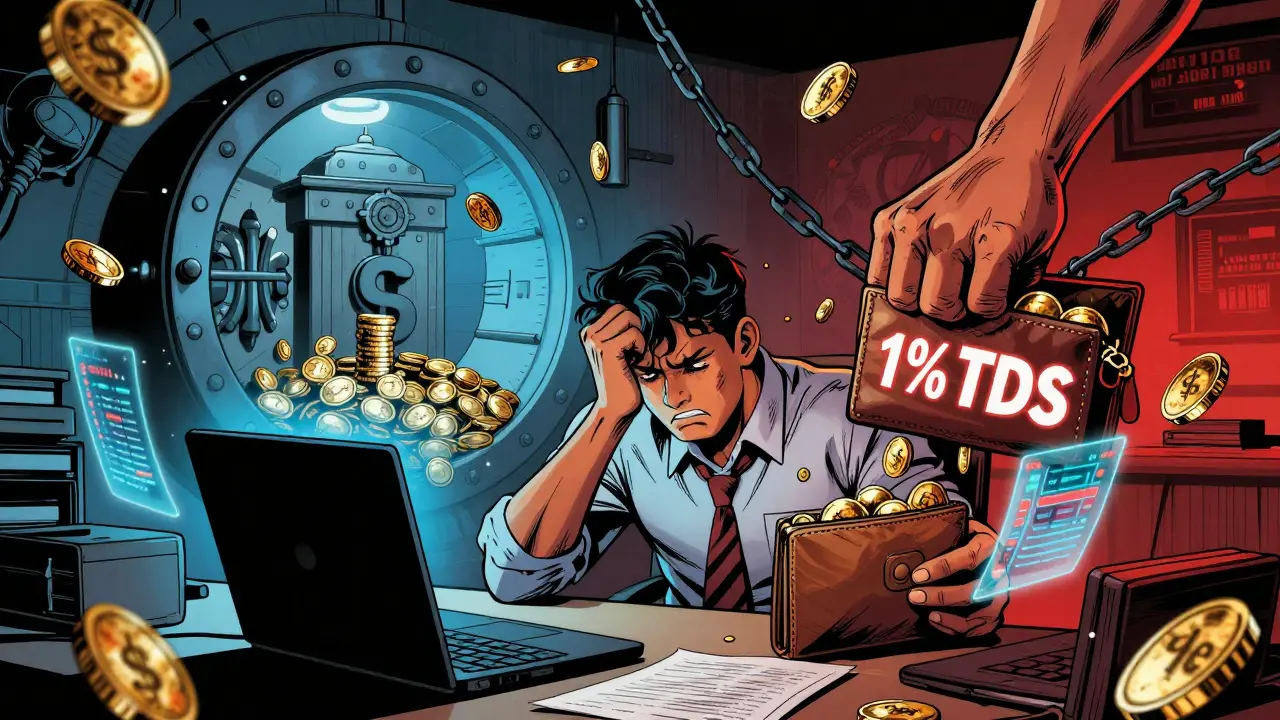
Buying or selling cryptocurrency in India isn't just about market prices anymore. Since July 2022, every trade comes with a hidden cost that eats into your capital before you even see the profit. This is the 1% Tax Deducted at Source (TDS), a mandatory deduction governed by Section 194S of the Income Tax Act. If you are an Indian resident trading crypto, this rule changes how you calculate returns, manage liquidity, and handle compliance.
The government introduced this measure not to ban crypto, but to track it. By forcing exchanges and traders to report every transaction, the Income Tax Department aims to bring transparency to a previously opaque market. But for you, the trader, it means higher costs and stricter paperwork. Let’s break down exactly how this works, who pays what, and how it affects your wallet in 2026.
What Exactly Is the 1% TDS?
Tax Deducted at Source (TDS) is a mechanism where tax is collected at the point of payment rather than waiting for the end of the financial year. For cryptocurrency, this applies to any "transfer" of Virtual Digital Assets (VDAs). The Income Tax Department defines a transfer broadly: it includes selling crypto for fiat currency, trading one crypto for another, and even spending crypto to buy goods or services.
Crucially, moving crypto from your own wallet to another wallet you control does not trigger TDS. It only kicks in when ownership changes hands. When you execute a trade on a platform like CoinDCX or WazirX, the exchange acts as the deductor. They withhold 1% of the transaction value and send it directly to the government. You receive the remaining 99%. This amount is credited to your tax account, meaning you can claim it back when filing your annual return, provided you have sufficient tax liability.
Who Has to Pay? Understanding the Thresholds
Not everyone pays TDS on every single trade. The rules distinguish between two types of taxpayers based on their audit status. This distinction determines when the 1% deduction starts applying.
- Specified Persons: These are individuals or Hindu Undivided Families (HUFs) who are not required to get their accounts audited under the Income Tax Act. For these users, TDS applies only if the total value of crypto transactions exceeds ₹50,000 in a financial year.
- All Other Taxpayers: This group includes companies, firms, and individuals liable for tax audits. For them, the threshold is much lower. TDS applies once the total transaction value crosses ₹10,000 annually.
If you fall into the "Specified Person" category, you can trade up to ₹50,000 worth of crypto without any TDS being deducted. Once you cross that limit, the 1% rate applies to the entire transaction value, not just the excess amount. For example, if you make a ₹60,000 trade after already hitting the threshold, you pay 1% on the full ₹60,000.
The Hidden Cost of Crypto-to-Crypto Trades
One of the most surprising aspects of Section 194S is its application to crypto-to-crypto swaps. In many other jurisdictions, swapping Bitcoin for Ethereum is considered a non-taxable event until you convert to fiat. In India, both parties in the swap are liable for TDS.
| Transaction Type | Buyer Liability | Seller Liability | Total Effective TDS |
|---|---|---|---|
| Crypto to Fiat (INR) | 1% | N/A | 1% |
| Crypto to Crypto Swap | 1% | 1% | 2% |
| P2P Trade (Manual) | 1% (Buyer deducts) | N/A | 1% |
In a peer-to-peer (P2P) or exchange-based swap, the buyer deducts 1% from the payment to the seller. Simultaneously, the seller might be viewed as transferring an asset, triggering another deduction depending on the platform's interpretation. However, standard practice on centralized exchanges usually results in the buyer paying the 1% TDS which is then credited to the seller's account. In direct P2P deals without an intermediary, the complexity increases significantly, often leading to a double burden if both parties attempt to comply independently.

Penalties for Non-Filers: The 5% Rate
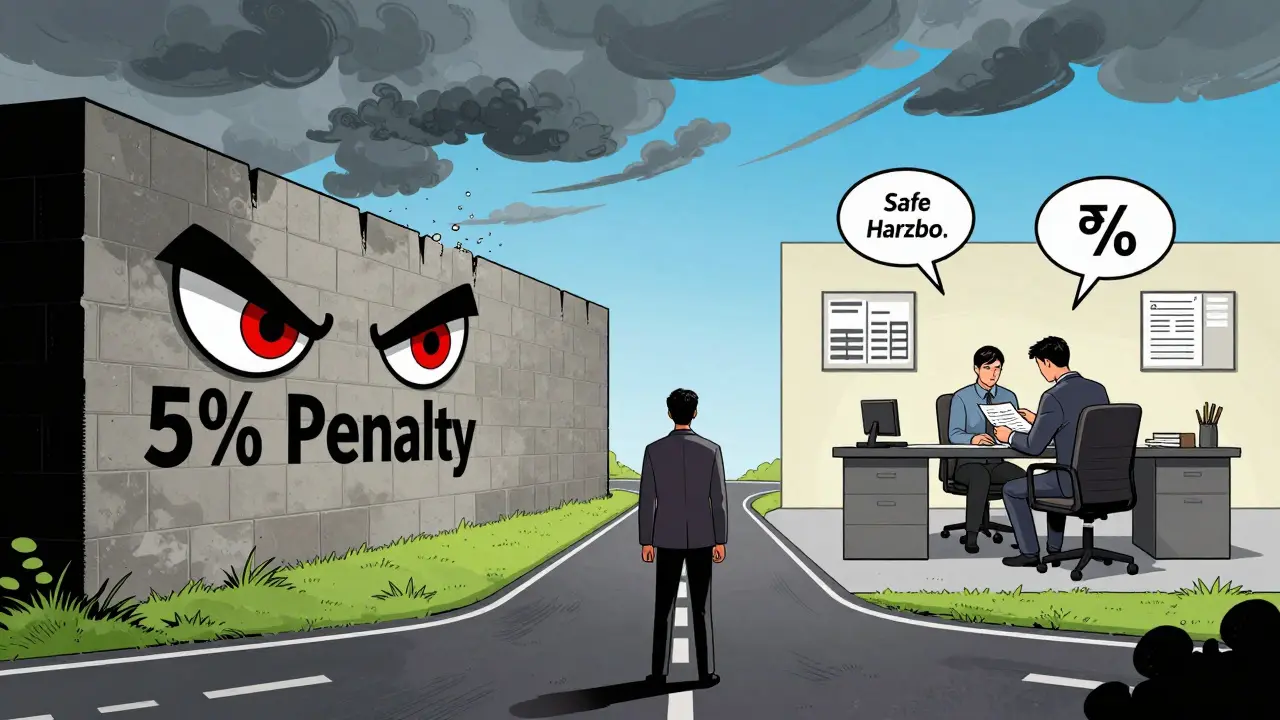
If you have failed to file your income tax returns for the last two years and your total TDS across all sources exceeds ₹50,000, you face a harsher penalty. Under Section 206AB, a punitive provision for defaulters, the TDS rate jumps from 1% to 5%. This applies regardless of the transaction threshold. For high-volume traders who neglect their tax filings, this 5% deduction can severely impact profitability and cash flow.
Impact on Trading Strategies
The introduction of TDS has fundamentally altered trading behaviors in India. High-frequency traders and day traders find themselves at a significant disadvantage. Consider a trader executing ten ₹10,000 trades per month. That’s ₹1,00,000 in monthly volume. Over a year, that’s ₹12,00,000. At 1%, they pay ₹1,20,000 in TDS. While this is creditable against their final tax bill, it ties up capital that could otherwise be reinvested.
Furthermore, this TDS sits alongside the flat 30% tax on crypto gains (under Section 115BBH) plus a 4% health and education cess. Unlike traditional stocks, you cannot offset losses from one crypto trade against profits from another. This combination creates a heavy tax burden that discourages active trading. Many retail investors have shifted to long-term holding strategies or moved toward decentralized finance (DeFi) platforms where enforcement is harder, though the legal risk remains.
Compliance Steps for Traders
If you trade on registered Indian exchanges, compliance is largely automated. The exchange deducts the TDS and files Form 26QE on your behalf. You need to ensure your PAN is linked correctly. Here is what you should do:
- Verify Your PAN: Ensure your Permanent Account Number is verified on the exchange. Unverified accounts may face restrictions or incorrect TDS application.
- Check Form 26AS: Log in to the Income Tax e-filing portal and check your Form 26AS (Annual Tax Statement). This document shows all TDS credits. It usually takes 7-10 business days after the trade for the exchange to reflect the deduction here.
- Reconcile Transactions: Keep records of all trades. If you trade on multiple platforms, aggregate the data to ensure you haven't crossed the ₹50,000 threshold unexpectedly.
- File Returns Early: To avoid the 5% penalty under Section 206AB, file your ITR consistently. Even if you have zero taxable income, filing a nil return keeps you compliant.
For P2P traders using international platforms, the responsibility falls on you. You must manually deduct TDS, obtain the seller's PAN, and file the TDS return yourself. This process is cumbersome and error-prone. Many users hire chartered accountants for this, costing between ₹1,500 and ₹5,000 annually.
Future Outlook: GST and New Regulations
The regulatory landscape continues to evolve. In July 2025, clarifications were made regarding Goods and Services Tax (GST). Exchange services now attract an 18% GST on fees. So, on top of the 1% TDS, you are paying GST on the trading fee charged by the platform. This dual taxation structure is unique to India and adds to the operational cost.
Looking ahead, the proposed Digital Asset Bill 2025 suggests a move toward a centralized transaction registry. This could replace the current TDS model with more direct reporting mechanisms. Additionally, pilots for the Account Aggregation Framework aim to auto-report crypto transactions to tax authorities by early 2026. As enforcement tightens, the window for unreported trading shrinks. Staying informed and compliant is no longer optional; it is essential for preserving your capital.
Is TDS on crypto refundable?
Yes, TDS is an advance payment of your tax liability. It is credited to your tax account and can be adjusted against your final tax due when you file your Income Tax Return. If the TDS exceeds your total tax liability, you can claim a refund from the government.
Does TDS apply to moving crypto between my own wallets?
No. Transferring crypto from one wallet to another that you own does not constitute a "transfer" under Section 194S. TDS is only triggered when ownership changes, such as selling, trading, or spending the asset.
What happens if I don't file my tax returns?
If you fail to file returns for the past two years and have had over ₹50,000 in TDS deducted elsewhere, the TDS rate on your crypto transactions increases to 5% under Section 206AB. This is a punitive measure to encourage compliance.
How does TDS affect crypto-to-crypto swaps?
In a crypto-to-crypto swap, the buyer is typically responsible for deducting 1% TDS from the payment to the seller. This means the effective cost of the trade increases, and the seller receives less crypto than the nominal value unless the price is adjusted to account for this deduction.
Can I claim TDS credit if I trade on foreign exchanges?
Only if you manually deduct and deposit the TDS yourself. Foreign exchanges do not deduct Indian TDS. As the taxpayer, you are responsible for calculating the 1% TDS on transfers above the threshold, depositing it to the government, and filing the relevant forms to claim the credit.