Crypto Exchange Restrictions for Nigerian Citizens: What’s Really Allowed in 2026
Back in 2021, if you were caught trading Bitcoin in Nigeria, you might’ve been questioned by police - not because it was illegal, but because no one knew what the rules were. Fast forward to 2026, and the story has flipped completely. Nigeria doesn’t ban crypto anymore. It’s trying to regulate it. But here’s the catch: just because the law changed doesn’t mean life on the ground has caught up.
The Big Shift: From Ban to Regulation
In March 2025, Nigeria passed the Investments and Securities Act (ISA 2025), and everything changed. For the first time, cryptocurrencies were officially recognized as securities under Nigerian law. This wasn’t just a tweak - it was a full policy reversal. The Central Bank of Nigeria (CBN), which had blocked banks from dealing with crypto exchanges since 2021, lifted that ban in December 2023. Now, licensed exchanges can open bank accounts. They can process withdrawals. They can operate legally. The Securities and Exchange Commission (SEC) became the main regulator. All crypto platforms operating in Nigeria - whether local like Quidax and Busha or international ones like Binance - must now apply for a license. The SEC doesn’t just want your business name. They want your AML (anti-money laundering) procedures, your KYC (know your customer) system, your data storage policies, and proof you’re working with the Nigerian Financial Intelligence Unit (NFIU) to track suspicious transactions. This new system isn’t perfect, but it’s a massive upgrade from the chaos of the past. Before, traders operated in the dark. Now, there’s a rulebook. It’s just not always followed.Who’s Licensed? Who’s Not?
As of January 2026, only a handful of Nigerian crypto platforms have received full licensing from the SEC. Quidax and Busha were among the first to pass the audit. They’ve built compliance teams, hired legal advisors, and redesigned their apps to meet SEC standards. Their users can now trade with more confidence - and they’re the only platforms legally allowed to advertise on Nigerian TV or radio. But here’s where things get messy. Many international exchanges - including giants like Binance, Kraken, and Coinbase - still operate in Nigeria without a local license. They don’t have Nigerian bank accounts. They don’t file reports with the SEC. They rely on peer-to-peer (P2P) networks and third-party payment processors. That’s not illegal for users - but it’s risky. If something goes wrong, you have no legal recourse. No regulator will step in to help you recover lost funds. If you’re trading crypto in Nigeria, always check if your exchange is on the SEC’s official list of licensed VASPs (Virtual Asset Service Providers). If it’s not, you’re playing outside the rules - even if millions of others are doing the same.Why the Confusion? Enforcement Is Still a Mess
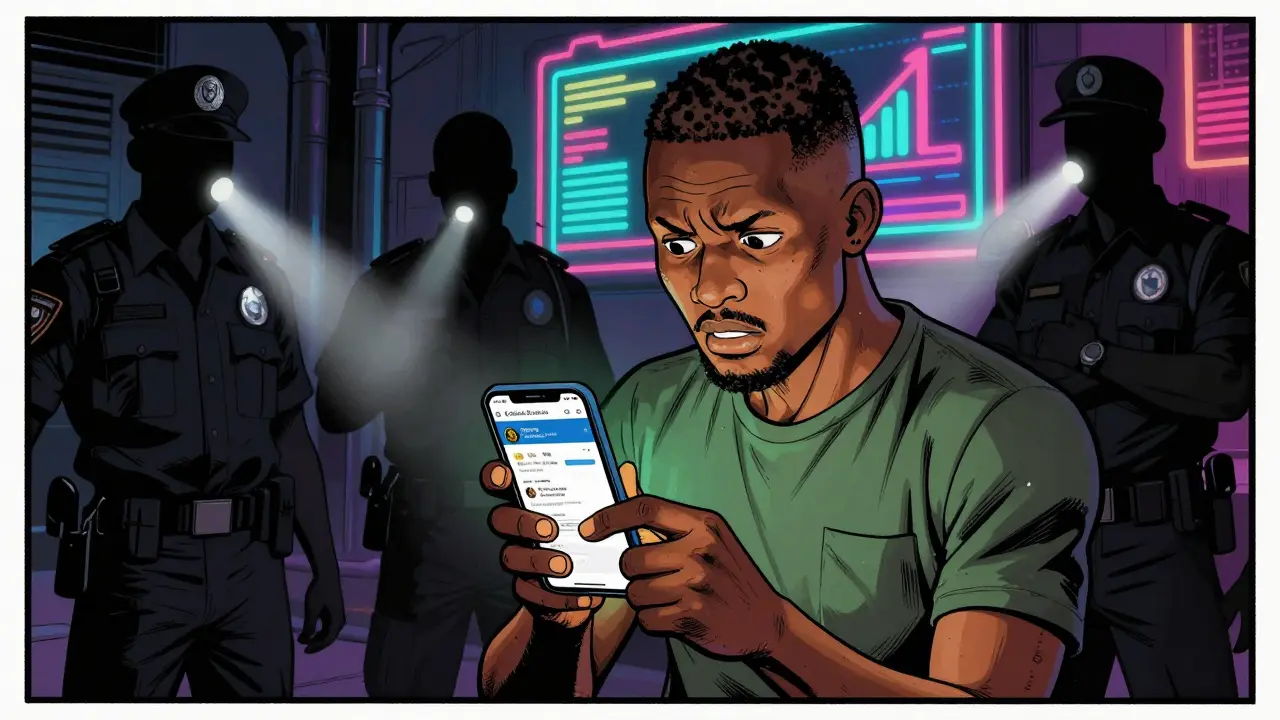
Here’s the biggest problem with Nigeria’s new crypto laws: enforcement is all over the place. The SEC says crypto trading is legal. The CBN says banks can work with licensed exchanges. But police officers in Lagos, Abuja, and Port Harcourt? Many still don’t know the difference. There are still reports of officers raiding homes, confiscating phones, and demanding bribes from people who own crypto wallets. Some victims are told to pay 50,000 to 200,000 Naira just to get their devices back - even though owning crypto isn’t a crime. Reddit threads from Nigerian traders are full of stories like this: “I bought ETH on Quidax. My phone got seized. Police said I was ‘illegally trading foreign currency.’ I had to pay 120,000 Naira to get it back.” The Economic and Financial Crimes Commission (EFCC) and NFIU have the power to investigate crypto fraud, but they’re stretched thin. They focus on big cases - Ponzi schemes, money laundering rings, fake ICOs. But the average trader? They’re left in the gray zone. It’s not that the law is wrong. It’s that the people enforcing it haven’t been trained. And until that changes, many Nigerians will keep hiding their crypto activity - even if it’s legal.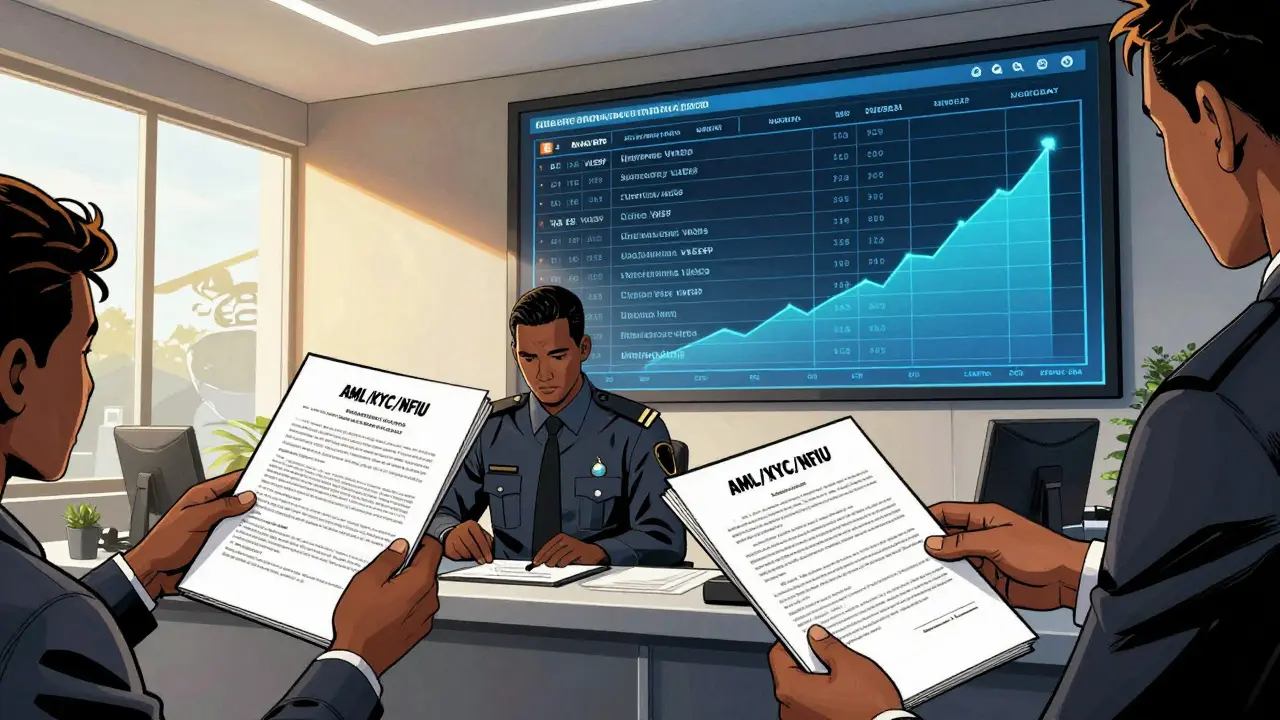
Banking Still Won’t Work for Most
One of the biggest promises of the 2023 CBN reversal was that Nigerians could finally bank with crypto businesses. But in reality, most banks still treat crypto users with suspicion. Even if you’re trading on a licensed platform like Quidax, your personal bank account might get flagged. You could get locked out of your account because “unusual activity” was detected. Banks don’t know how to handle crypto deposits. They don’t have clear internal guidelines. So they play it safe - and that means freezing accounts, asking for proof of income, or outright refusing service. Many traders now use P2P platforms like Paxful, LocalBitcoins, or even WhatsApp groups to buy and sell crypto. They pay in cash, use mobile money, or transfer through intermediaries. It’s slower. It’s riskier. But it’s the only way to avoid banking headaches. If you want to use traditional banking, you need to be extra careful. Only trade on SEC-licensed platforms. Keep records of every transaction. Never send money to unknown individuals. And if your bank blocks you, ask for a written explanation - it’s your right.What About Taxes?
Nigeria hasn’t officially taxed crypto yet. But everyone knows it’s coming. The SEC has confirmed they’re working with the Federal Inland Revenue Service (FIRS) to create a tax framework for digital assets. No official rates or rules have been announced, but insiders say the plan is to treat crypto gains like capital gains - meaning you pay tax when you sell, not when you buy. Some traders are already reporting crypto income on their annual tax returns, just in case. Others are waiting to see what happens. The government estimates that crypto transactions could bring in over $150 million in annual tax revenue - enough to fund schools, roads, and power projects. But here’s the catch: if you’re trading on unlicensed platforms, you’re invisible to the tax system. That means no tax - but also no protection. If the IRS comes knocking later, you won’t have proof of income or compliance. The smart move? Start keeping records now. Track every buy, sell, and transfer. Use free tools like Koinly or CoinTracker. It’s not required yet - but it will be soon.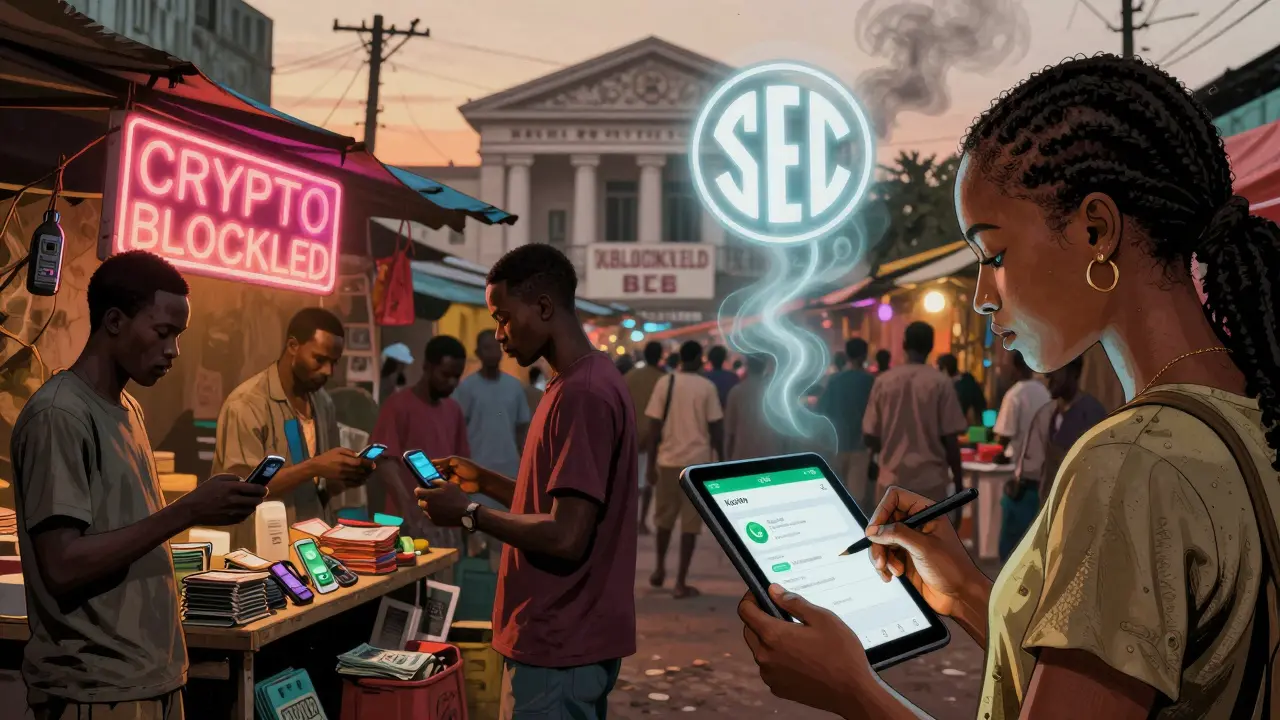
What’s Next for Nigeria’s Crypto Scene?
Nigeria is now the world’s top country for P2P crypto trading, with over 22 million people using digital assets. That’s more than the entire population of Sweden. And with inflation still high and the naira unstable, crypto isn’t going away. The real question isn’t whether crypto will survive in Nigeria - it’s whether the government can make regulation work. If they fix the enforcement gap - train police, clarify banking rules, roll out taxes fairly - Nigeria could become the fintech hub of Africa. Investors from Europe and the U.S. are already watching. Companies like Coinbase and Binance are quietly testing local partnerships. But if enforcement stays chaotic, if banks keep blocking accounts, if police keep demanding bribes - then Nigeria’s crypto market will stay underground. And the people who need it most - young entrepreneurs, freelancers, small business owners - will keep paying the highest price. The law says crypto is legal. The reality? It’s still a gamble.What Should You Do Right Now?
If you’re a Nigerian trader, here’s what to do in 2026:- Only use SEC-licensed exchanges - Quidax, Busha, and any other platform on the official SEC list.
- Keep records - Save screenshots of every trade, wallet address, and transaction ID.
- Avoid unlicensed platforms - Even if they offer better rates, you’re on your own if something goes wrong.
- Don’t panic if your bank freezes your account - Ask for a written reason. File a complaint with the Central Bank if needed.
- Stay informed - Follow the SEC’s official website and newsletters. Don’t rely on social media rumors.


25 Comments
Katrina Recto
January 11 2026Just bought ETH on Quidax last week and my bank froze my account anyway. No explanation. Just 'suspicious activity.' Like I'm laundering drug money or something. I'm tired of this.
Allen Dometita
January 12 2026Same. I use Paxful. Cash in, cash out. No bank drama. Yeah it's slower but I'd rather lose 2% in spread than lose my whole account. 🤷♂️
kris serafin
January 12 2026Use CoinTracker. Free version works fine. Track every trade. You'll thank yourself when taxes hit. 📊
Valencia Adell
January 13 2026Of course the SEC is 'regulating' crypto. That means they're about to tax it into oblivion. Welcome to the nanny state, Nigeria. 🙄
Brittany Slick
January 15 2026It's not about the tax. It's about safety. I used to trade on Binance P2P. Got scammed. Lost $800. No recourse. Now I only use Quidax. It's boring. But I sleep at night. 💙
Jordan Leon
January 16 2026The institutionalization of digital assets under a securities framework is a logical evolution of monetary sovereignty in post-colonial economies. The dissonance between legal theory and enforcement reflects deeper infrastructural and epistemic gaps within state apparatuses. This is not unique to Nigeria.
sathish kumar
January 17 2026As a legal scholar from India, I find Nigeria's regulatory approach remarkably sophisticated compared to many emerging economies. The clear delineation between licensed VASPs and unregulated P2P actors demonstrates a commitment to rule-of-law principles. The enforcement gap is not a flaw in policy, but a challenge of capacity-common in federal systems with limited fiscal resources. The SEC’s proactive engagement with the NFIU is commendable.
Sarbjit Nahl
January 18 2026Regulation is just the state's way of controlling what it can't stop. Crypto exists because people don't trust banks. If the government wants to 'help,' stop freezing accounts and start fixing inflation. This licensing nonsense is theater.
Rahul Sharma
January 18 2026Bro, just use Quidax. It's safe. I'm from India, but I know what real crypto safety looks like. Keep receipts. Don't trust random Telegram groups. 🚫📱
Kelley Ramsey
January 20 2026Can we talk about how insane it is that police are still raiding people? Like… the law changed two years ago. Why are they still acting like it’s 2021? Someone needs to sue the CBN for this.
Jessie X
January 20 2026I get that regulation is needed but the way banks are treating users feels like discrimination. I have a legitimate account with Busha and my bank still asks me to prove I'm not a criminal. It's exhausting.
Natalie Kershaw
January 22 2026Y’all are overcomplicating it. If you’re not on the SEC list, you’re playing Russian roulette. Use Quidax. Track everything. Don’t panic when your bank flags you. Just send them the transaction ID. Done. ✅
Gideon Kavali
January 22 2026Let me get this straight: Nigeria lets crypto be traded… but only if you jump through bureaucratic hoops created by the same people who caused the naira to crash? That’s not regulation. That’s extortion with a license.
Michael Richardson
January 23 2026So Binance is illegal? Cool. I’ll just use it. The SEC doesn’t own my wallet.
Staci Armezzani
January 25 2026For anyone scared of taxes: start tracking now. Even if it’s not required, having proof of income means you won’t be caught off guard. I used Koinly for 6 months before I even knew Nigeria was planning to tax crypto. Now I’m chill. You can be too.
Sabbra Ziro
January 27 2026To the Nigerian traders reading this: you’re not alone. The system’s broken, but you’re still building something real. Keep using licensed platforms. Keep documenting. Keep speaking up. Change happens one quiet, careful step at a time.
greg greg
January 28 2026It’s fascinating how the regulatory architecture of Nigeria’s crypto space mirrors the broader tension between formal institutional development and informal economic resilience. The fact that over 22 million people engage in P2P trading despite systemic barriers suggests that decentralized finance is not merely a technological innovation but a sociopolitical response to institutional failure. The SEC’s licensing framework, while theoretically sound, operates in a vacuum where enforcement mechanisms are under-resourced, culturally misaligned, and politically compromised. The real metric of success isn’t the number of licenses issued, but whether the average Nigerian trader feels protected, not persecuted. Until police training, bank compliance protocols, and tax education are scaled with the same urgency as regulatory policy, crypto will remain a gray market-not a financial revolution.
Meenakshi Singh
January 29 2026Oh please. You think Quidax is safe? They’re just the government’s puppet. They report everything. I’d rather get scammed on P2P than let the state know how much I made. 😏
Tiffani Frey
January 30 2026I appreciate the depth of this post. As someone who works in fintech compliance, I’ve seen how hard it is to implement regulation in environments with weak infrastructure. The fact that Nigeria even has a licensed VASP list is a win. The police issue? That’s a training and public awareness problem-not a policy failure. The SEC needs to partner with NGOs to run community workshops. Maybe even YouTube shorts in Pidgin. People need to know: owning crypto isn’t a crime. Trading on unlicensed platforms is risky, not illegal. The message isn’t getting through.
Jacob Clark
January 30 2026WAIT-so you’re telling me I’ve been using Binance for 3 years and I’ve been breaking the law? I thought it was just ‘gray area’! Now I’m terrified my phone’s gonna get seized. I have 12 ETH. What do I do? DO I NEED A LAWYER? IS THE EFCC COMING?!
Emily Hipps
January 31 2026Don’t panic. You’re not in trouble. Just start using Quidax going forward. Save your past trades. You’re not a criminal-you’re just late to the party. We’ve all been there. You got this. 💪
Krista Hoefle
February 2 2026Regulation? More like extortion with a website. I’m not paying $500 to ‘license’ my crypto. I’m not your ATM, SEC.
Kip Metcalf
February 3 2026My cousin in Lagos just got his phone back after paying 80k naira. No receipt. No paperwork. Just ‘pay and go.’ This isn’t regulation. It’s a tax on fear.
Staci Armezzani
February 5 2026And that’s why you need to stop using unlicensed platforms. It’s not about being ‘perfect.’ It’s about being safe. If you’re using P2P, at least use a platform with escrow. Never send cash to strangers. I’ve seen too many people lose everything.
Paul Johnson
February 6 2026you think ur smart using quidax? lol its all tracked. the gov knows how much u made. u think theyre gonna tax you later? they already are. just not on paper. your bank reports u. your phone gets flagged. your life is a spreadsheet now. welcome to the future. 🤡