
Crypto Wealth Tax in Switzerland: Rules, Rates & Exemptions for 2026
Imagine holding a significant amount of cryptocurrency and wondering how much you’ll owe the government when year-end arrives. In many countries, selling your digital assets triggers an immediate capital gains tax bill that can eat into your profits. But if you are based in Switzerland, a country known for its favorable financial regulations and status as a global hub for digital assets, the story is quite different. For most individual investors, making money from Bitcoin or Ethereum does not trigger a direct income tax event. Instead, Switzerland focuses on taxing your total net worth annually through its unique wealth tax system.
This approach makes Switzerland one of the most attractive jurisdictions for crypto holders globally. However, "attractive" does not mean "simple." The system requires precise annual declarations, strict adherence to official valuation methods, and a clear understanding of where the line is drawn between a private hobbyist and a professional trader. Get this wrong, and you could face unexpected liabilities. Let’s break down exactly how the Swiss Federal Tax Administration (FTA) treats your crypto holdings in 2026.
How Switzerland Classifies Your Crypto Assets
The foundation of Swiss crypto taxation lies in classification. Unlike some nations that treat cryptocurrency as currency or a distinct asset class with special rules, Switzerland applies existing laws to new technologies. This principle, known as technology neutrality, means your crypto is treated similarly to traditional stocks and bonds.
In 2019, the FTA formalized this by categorizing cryptocurrencies as crypto-based assets (kryptobasierte Vermögenswerte). These are considered part of your private wealth. The specific type of token you hold matters less for wealth tax purposes than it might for other regulatory issues, but the distinction remains important for broader compliance:
- Payment Tokens: Like Bitcoin or Litecoin, these are used primarily for payments. They are fully included in your wealth assessment.
- Asset-Backed Tokens: These represent claims on underlying assets. Their treatment aligns with traditional securities.
- Utility Tokens: These grant access to services. Their inclusion depends on their specific utility and whether they generate income.
For the average investor holding major coins like Bitcoin or Ethereum, the classification is straightforward: they are private wealth assets. This status is crucial because it determines how you report them and, more importantly, what you pay on any profits.
The Private Investor Exemption: No Capital Gains Tax
Here is the headline that draws many investors to Zurich or Zug: private individuals do not pay capital gains tax on cryptocurrency profits. If you buy Bitcoin today and sell it five years later for double the price, that profit is tax-free under federal law. This exemption applies regardless of the size of the gain or how long you held the asset.
This rule is not unique to crypto; it applies to all private wealth assets, including shares and bonds. The logic is that private investors are managing their personal savings, not running a business. As long as your activities remain within the bounds of "private investment," you keep 100% of your trading profits.
However, there is a major caveat. The FTA monitors for "professional trading" behavior. If you trade frequently, use complex strategies, or derive a significant portion of your income from crypto transactions, the authorities may reclassify you as a professional trader. In that case, your crypto gains become taxable income, subject to federal, cantonal, and municipal income taxes. The threshold isn't strictly defined by a number of trades but by the overall pattern of your activity. Most casual investors stay safely in the private category, but active day-traders need to be cautious.
Calculating Your Annual Wealth Tax Liability
While you don’t pay tax on profits, you do pay tax on the value of your holdings. Switzerland has no federal wealth tax, but each of the 26 cantons imposes its own. This means your rate depends entirely on where you live. Generally, wealth tax rates range from 0.3% to 1% of your total net worth annually.
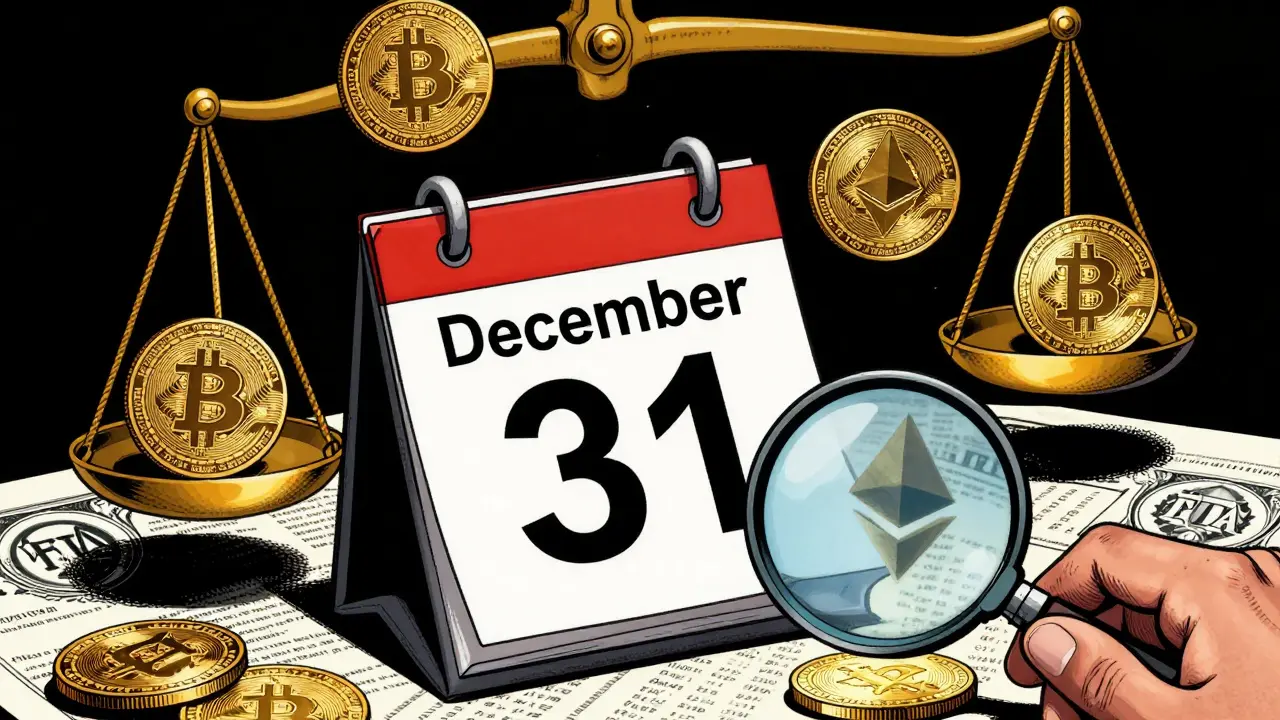
To calculate this, you must declare the value of your entire crypto portfolio as of December 31st every year. This is a snapshot valuation. It doesn’t matter if you bought or sold assets during the year; only what you hold on that specific date counts.
Valuation is strictly regulated. You cannot simply pick a price from your favorite exchange. The FTA publishes official year-end conversion rates for major cryptocurrencies, including Bitcoin, Ethereum, Ripple, Bitcoin Cash, and Litecoin. You must use these official figures for your tax return. For smaller or newer tokens not listed by the FTA, you must use the closing price from the trading platform where you execute your buys and sells. If no market price exists, you fall back to your original purchase cost.
| Token Type | Valuation Source | Fallback Option |
|---|---|---|
| Major Coins (BTC, ETH) | FTA Official Year-End Rate | N/A (Must use FTA rate) |
| Altcoins / Smaller Tokens | Closing Price on Primary Exchange | Original Purchase Cost |
| Illiquid / Unlisted Tokens | Best Estimate of Market Value | Acquisition Cost |
When Does Crypto Become Taxable Income?
The private investor exemption is powerful, but it has boundaries. Understanding when your crypto activities shift from "wealth accumulation" to "business income" is critical. The FTA uses Circular No. 36 guidelines to determine if someone is a professional securities trader. While designed for stocks, these principles apply to crypto.
You risk being classified as a professional trader if:
- You trade with high frequency and volume relative to your net worth.
- You use sophisticated trading algorithms or short-selling strategies.
- You hold positions for very short periods consistently.
- You dedicate significant time to trading as your primary occupation.
If you cross this line, your crypto gains are added to your regular income. This means they are taxed at progressive rates combining federal (0-11.5%), cantonal, and municipal taxes. For high earners, this combined rate can exceed 40%, making the distinction between private and professional status financially life-changing.
Additionally, certain passive income streams from crypto are always taxable. Interest earned from lending platforms, rewards from staking (if classified as income rather than wealth appreciation), and mining revenue are treated as business income or interest income. Mining, specifically, was confirmed in late 2024 to constitute taxable business income due to the operational nature of the activity.
Cantonal Variations and Strategic Planning
Because wealth tax is levied at the cantonal level, your residence plays a huge role in your final tax bill. Some cantons, like Zug and Schwyz, have historically lower wealth tax rates and are popular among crypto businesses and high-net-worth individuals. Others, like Geneva or Vaud, have higher rates.
Smart investors often consider "domicile optimization." This involves legally changing your primary residence to a canton with more favorable rates. However, this is not a quick fix. Swiss tax residency requires genuine ties to the location-housing, family, social integration. Simply renting an apartment while living elsewhere won’t work and could lead to severe penalties for tax evasion.
Family structuring is another common strategy. Distributing assets among family members who have lower taxable wealth can reduce the overall tax burden, as wealth tax is progressive. Each person pays tax only on their share of the assets. This must be done carefully and transparently to avoid accusations of artificial splitting.

Practical Compliance Tips for 2026
Compliance in Switzerland is meticulous. The FTA expects accurate records. Here’s how to stay on the right side of the law:
- Track Every Transaction: Use reliable software to log every buy, sell, swap, and transfer. Manual spreadsheets are error-prone for large portfolios.
- Save Year-End Screenshots: On December 31st, capture the official FTA rates for major coins and the closing prices for altcoins on your primary exchanges. Store these securely.
- Distinguish Between Wallets: Keep private investment wallets separate from any business or trading accounts. Mixing funds complicates the narrative if audited.
- Consult a Local Expert: Swiss tax law is complex. A local advisor familiar with crypto can help navigate cantonal differences and ensure your classification as a private investor holds up.
User experiences shared in online forums highlight that while the tax rates are low, the administrative burden is real. Many investors spend hours verifying valuations for obscure tokens. The predictability of the system is praised, but the lack of automated reporting from exchanges means the responsibility falls squarely on you.
Future Outlook: Stability Amid Global Change
As we move through 2026, Switzerland’s framework remains stable. There are no signs of introducing a specific "crypto tax" or reversing the private investor exemption. The government’s stance is clear: support innovation while maintaining fiscal integrity. The DLT Act, which came into force in 2021, continues to provide a robust legal backbone for digital assets.
Emerging areas like Decentralized Finance (DeFi) and Non-Fungible Tokens (NFTs) are handled under existing rules. DeFi yields are generally treated as income if they resemble interest, while NFTs are valued as private wealth. The FTA updates its guidance regularly, with the last major clarification occurring in December 2024. Investors should monitor these updates but can expect continuity rather than disruption.
Switzerland’s commitment to transparency and clarity makes it a standout jurisdiction. While other countries debate how to tax crypto, Switzerland has already built a working model. For those willing to manage the paperwork, the benefits are substantial.
Do I pay capital gains tax on crypto profits in Switzerland?
No, private investors do not pay capital gains tax on cryptocurrency profits in Switzerland. This exemption applies to all private wealth assets. However, if you are classified as a professional trader, your gains are taxed as ordinary income.
How is my crypto portfolio valued for wealth tax?
Your portfolio is valued as of December 31st each year. For major coins like Bitcoin and Ethereum, you must use the official year-end rates published by the Swiss Federal Tax Administration (FTA). For other tokens, use the closing price from your primary exchange or the original purchase cost if no market price exists.
What is the typical wealth tax rate for crypto in Switzerland?
Wealth tax rates vary by canton, typically ranging from 0.3% to 1% of your total declared net worth. There is no federal wealth tax. The exact rate depends on your place of residence and the total value of your assets.
Is staking income taxable in Switzerland?
Yes, staking rewards are generally treated as taxable income if they are considered compensation for providing services (like securing a network). This income is added to your regular earnings and taxed at standard income tax rates. Pure wealth appreciation from holding staked assets may still qualify for the private investor exemption, but the line can be thin.
Can I change my canton to lower my crypto tax?
Yes, you can optimize your tax burden by moving to a canton with lower wealth tax rates, such as Zug or Schwyz. However, you must establish genuine tax residency, which includes living there and having strong personal and economic ties. Artificial arrangements without real presence are illegal.
What happens if I trade crypto frequently?
Frequent trading may lead the FTA to classify you as a professional securities trader. In this case, your crypto profits lose the capital gains exemption and are taxed as ordinary income. Factors include trade frequency, volume, strategy complexity, and time dedicated to trading.