Helium Network: A Real-World Guide to DePIN Wireless Infrastructure
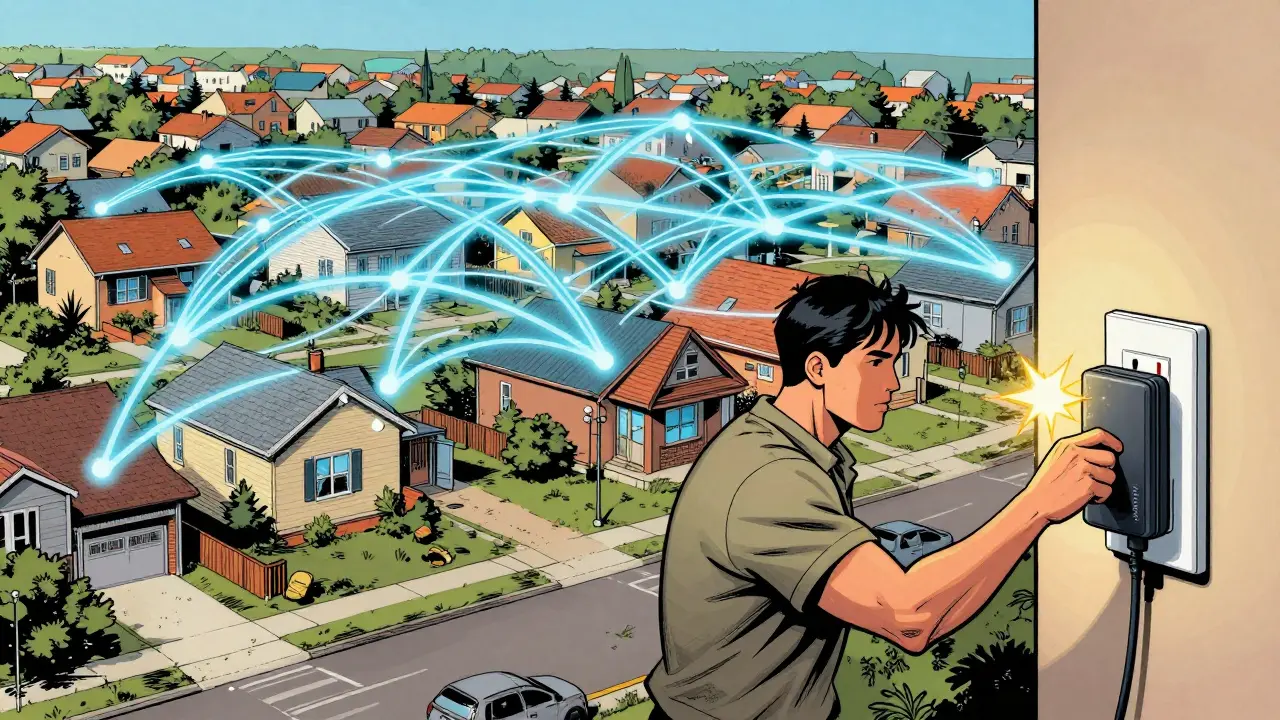
Imagine if the world's wireless networks weren't owned by a handful of giant corporations charging monthly fees, but by millions of regular people instead. That is the core idea behind Helium Network is a decentralized wireless network that allows individuals to provide internet and IoT connectivity in exchange for cryptocurrency rewards. It is the flagship example of DePIN, or Decentralized Physical Infrastructure Networks, proving that you can build a global utility without a central headquarters or billions in corporate capital.
Most people think of blockchain as just digital coins or art, but Helium takes it into the physical world. By letting anyone buy a hotspot and plug it in at home, they've managed to deploy over 400,000 active hotspots across 80 countries. To put that in perspective, in the last quarter of 2024, the network processed 576TB of data. That's not just a speculative project; it's a working piece of infrastructure serving over 124,000 mobile users who actually need connectivity.
How Helium Actually Works
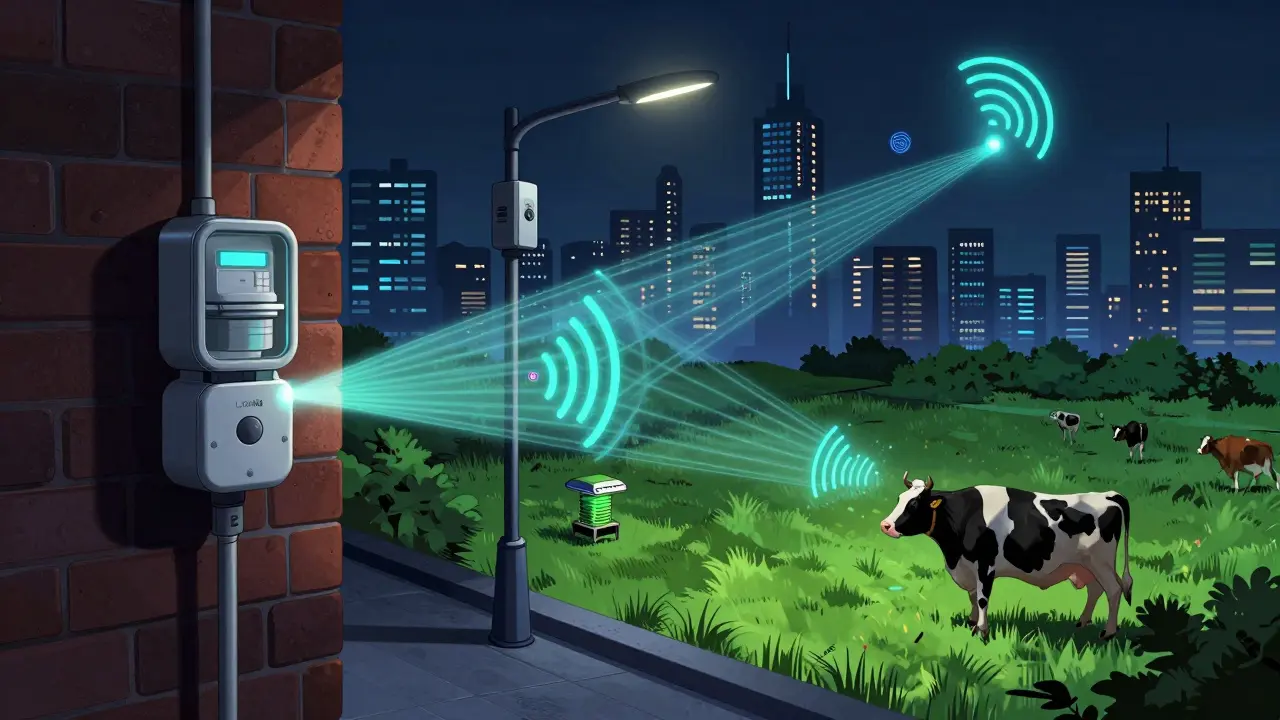
At its heart, Helium uses LongFi, a wireless communication protocol that acts like a super-powered version of Wi-Fi. While your home router barely reaches the backyard, LongFi can push signals across huge distances. This is specifically designed for the LoRaWAN (Long Range Wide Area Network) standard, which is perfect for the Internet of Things (IoT). Think of things like smart city sensors, livestock trackers, or water meters-devices that don't need to stream 4K video but need to send small bits of data over miles of terrain using very little battery.
The magic trick is how the network knows you're actually providing coverage and not just cheating. They use Proof-of-Coverage (PoC). Unlike Bitcoin's energy-hungry mining, PoC is lightweight. Your hotspot "beacons" every six hours, and about 12 nearby witnesses verify that you are where you say you are. It's a clever way to ensure the network is physically distributed and not just a bunch of devices sitting in one basement.
| Feature | Helium (DePIN) | Traditional Telecom (e.g., Verizon, AT&T) |
|---|---|---|
| Capital Expenditure | Crowdsourced (Low individual cost) | Billions in corporate investment |
| Ownership | Distributed (Thousands of individuals) | Centralized (Corporate shareholders) |
| Deployment Speed | Rapid (Organic growth) | Slow (Permits, construction, planning) |
| Incentive Model | Crypto tokens (HNT) | Corporate profit/Dividends |
The Strategic Jump to Solana
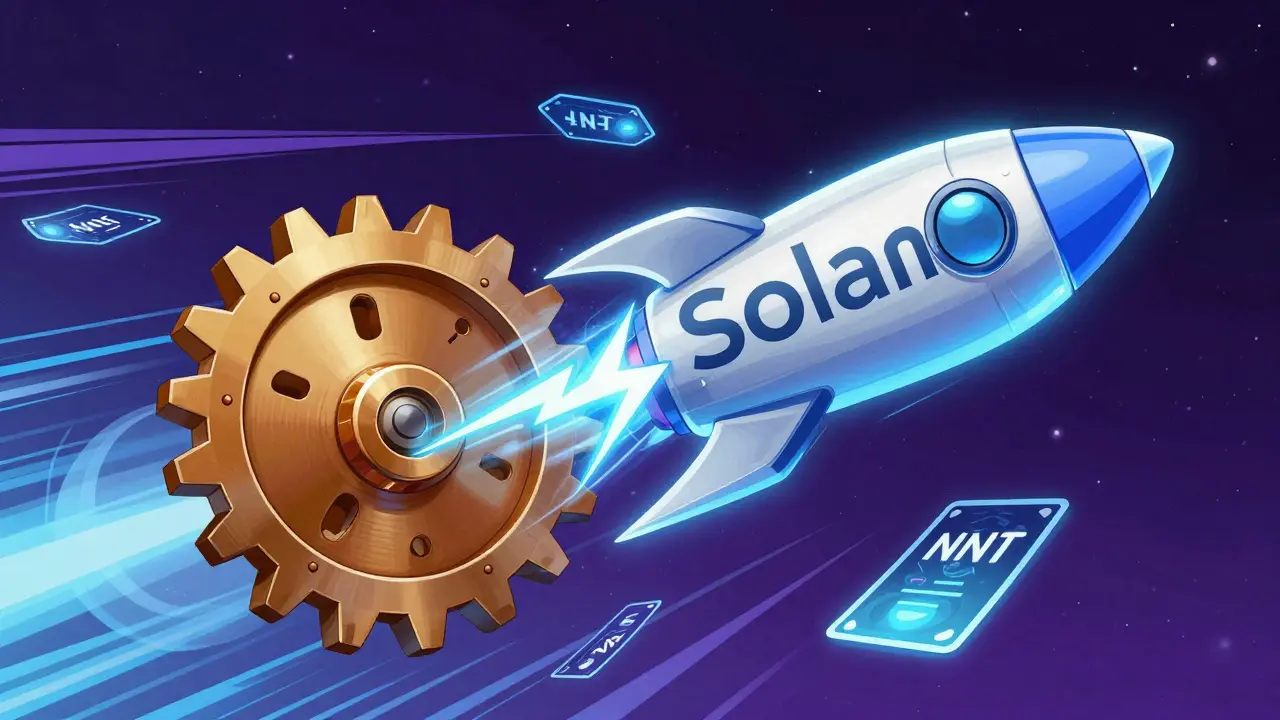
For a while, Helium ran its own blockchain, but it hit a wall. It could only handle about 10 transactions per second (TPS), which is a joke when you have hundreds of thousands of hotspots needing updates. In 2023, they migrated to Solana, a high-performance blockchain. This wasn't just a technical change; it was a business move. Now, the network handles over 1,600 TPS.
One of the biggest wins from this move is how hotspots are handled. They are now minted as compressed NFTs. In the old days, an NFT might cost a lot to create, but now it's about $0.50 to $1.00. Even better, they use a "lazy claiming" system. Instead of paying a transaction fee every single day you earn a reward, the network tracks your earnings off-chain via oracles. You only pay a tiny fee (around $0.07 per year) when you actually decide to move your rewards into your wallet. It's a massive relief for users who don't want their profits eaten up by gas fees.
Comparing Helium to Other DePIN Projects
If you're looking at the DePIN space, you'll see projects like Filecoin for decentralized storage or Render for GPU computing. While those are great, Helium is different because it deals with the "last mile" of physical connectivity. You can't download a file if you don't have a signal, and that's where Helium's real-world utility kicks in.
The network is also moving beyond just IoT. Helium Mobile is now pushing into 5G coverage. This puts them in direct competition with the big carriers. By leveraging a mix of their own hotspots and roaming agreements, they can offer unlimited data plans that are often cheaper than the industry standard. The trade-off? Coverage isn't as consistent as a legacy carrier. You might have five bars in a tech-heavy city and zero in the middle of a forest, but that's the price of building a network from the bottom up.
Getting Started: How to Join the Network
You don't need to be a network engineer to get involved, though a basic understanding of how routers work helps. The setup usually takes about a week of learning and a few hours of physical installation. Here is the general path:
- Hardware Choice: You can buy a dedicated hotspot (usually $300-$800) or convert existing hardware. Interestingly, about 60% of mobile hotspots are converted devices like Ubiquiti or Eero routers.
- Placement Strategy: This is the most important part. You want a high spot with a clear line of sight. If your hotspot is buried in a basement, you won't see other beacons, and your earnings will be tiny.
- App Configuration: You'll use the Helium app to register your device and link it to a Solana-compatible wallet.
- Maintenance: Keep the device powered on 24/7. If you go offline, you stop earning and the network coverage in your area drops.
For those doing this at a larger scale, like a retail store owner, the implementation is even faster because they already have the electrical and mounting infrastructure in place. The main hurdle for most is just understanding local RF (radio frequency) regulations, though Helium generally fits within existing open spectrum rules.
The Long-Term Outlook and Risks
Is this sustainable? That's the million-dollar question. The early days were driven by the "gold rush" of earning HNT tokens. But the shift toward actual data consumption-like the 576TB seen in late 2024-shows that the network is transitioning from a speculative experiment to a real utility. When businesses start paying for IoT connectivity, the model moves from "incentives" to "revenue," which is a much healthier place to be.
Of course, there are risks. Traditional telcos have deep pockets and could try to crush the competition or lobby for regulations that make decentralized hotspots illegal. There is also the challenge of quality control. A corporate tower is professionally installed; a home hotspot might be placed poorly by a user who doesn't care about signal propagation. However, the sheer scale and the low cost of entry make Helium a formidable challenger to the old way of doing things.
What is the difference between LoRaWAN and 5G in Helium?
LoRaWAN is designed for low-power, long-range communication for IoT devices (like sensors) that send small amounts of data. 5G is high-bandwidth cellular data for smartphones and high-speed internet. Helium supports both, allowing it to serve both industrial IoT needs and regular consumer mobile plans.
Do I need a special license to run a Helium hotspot?
In most countries, Helium operates on unlicensed RF spectrum, meaning you don't need a government telecommunications license to run a hotspot. However, it's always a good idea to check your local radio laws, as some regions have specific restrictions on signal strength.
Why did Helium move to Solana?
Helium's original blockchain couldn't handle the volume of transactions required for hundreds of thousands of hotspots. Moving to Solana increased speed from 10 TPS to over 1,600 TPS and drastically lowered the cost of minting hotspots and claiming rewards.
How do I maximize my earnings?
Earnings are primarily driven by the quality of your coverage. Placing your antenna as high as possible and avoiding physical obstructions (like thick walls or metal roofing) allows your device to see more "witnesses" and provide better service, which increases your Proof-of-Coverage rewards.
Is Helium a good investment for passive income?
While many users earn steady HNT, it depends on your location and the cost of your hardware. If you live in an area already saturated with hotspots, your earnings will be lower. It's best viewed as a contribution to a network that pays you for the service you provide, rather than a guaranteed financial product.

19 Comments
Noel Mandotah
April 30 2026Oh joy, another 'disruptive' network. I'm sure the big telcos are shaking in their boots because some guy in a suburb plugged in a plastic box.
Michael Repak
May 1 2026This is such a great breakdown!! I really think decentralized tech is the future of connectivity!!!
Iestyn Lloyd
May 2 2026In the UK, we've seen some interesting LoRaWAN deployments for agricultural monitoring. It really does excel at the low-power, long-distance niche mentioned here.
April D Thompson
May 2 2026We are witnessing a literal paradigm shift in how humans interact with the physical layer of the internet! It's like we're finally breaking the chains of corporate digital feudalism and reclaiming the airwaves for the people! This is the kind of cosmic energy we need to push the world toward a more equitable distribution of resources where the utility belongs to the community, not some boardroom of suits in Manhattan. Imagine a world where every street corner is a node of collective empowerment and the very act of providing a signal becomes a revolutionary gesture of trust and cooperation. It's a beautiful, wild dream that's actually manifesting in real-time through silicon and radio waves. The implications for rural connectivity are just staggering when you think about the liberation of information. This isn't just about HNT tokens, it's about the soul of the network.
Kara Spadone
May 3 2026Only those who truly understand the flow of energy can see that this is just another layer of digital noise 🙄
Amanda Macy
May 5 2026The transition to Solana suggests a realization that decentralization cannot sacrifice efficiency if it hopes to achieve scale.
Chloe Fletcher
May 5 2026Love seeing the growth here! 🚀 Just remember to check your local laws before mounting those antennas! 📡✨
Mitali Rajvanshi
May 6 2026It's quite an interesting model for scaling infrastructure without massive upfront capital.
Lex Harley
May 7 2026man i tried setting up a hotspot but my rf interference was off the charts... probly some crosstalk from the neighbor's gear causing packet loss in the PoC beacons
Tony Phan
May 9 2026This is huge! I'm all in on the HNT rewards! Just gimme that passive income stream right now!
Bevon Findley
May 10 2026Obviously, the Solana migration was the only logical path. :)
Kristi Swartz
May 12 2026it is simply wrong to encourage people to buy hardware that may become obsolete overnight the greed in the crypto space is appalling
Alex Mazonowicz
May 13 2026Keep pushing forward!! This is going to change everything for the better!!!
VIVEK SINGH
May 15 2026Oh look, another 'revolutionary' way to lose money while pretending to help the planet. How noble.
Emily A
May 16 2026The distinction between LoRaWAN and 5G is critical; failure to comprehend this leads to unrealistic expectations regarding bandwidth.
Gabby Puche
May 16 2026Such a cool concept! 🌟 Definitely a game changer for smart cities! 🏙️
Lynne Teperman
May 18 2026wildly different vibe than the usual corporate towers just vibing in the breeze
Rachel S
May 18 2026The implementation of compressed NFTs is actually quite elegant for managing the state of hundreds of thousands of devices on-chain. It solves the bloat issue that plagued early iterations of the network. 🧐
Noel Mandotah
May 18 2026Wait, people actually believe 'vibing' is a technical strategy? Hilarious.