
How Chinese Banks React to Crypto-to-Fiat Withdrawals in 2026
Imagine depositing a large sum into your Chinese bank account only to find it frozen within hours. For many residents of mainland China, this isn't a hypothetical scenario; it is the standard reaction when cryptocurrency-to-fiat conversions are detected by banking systems. Since the comprehensive ban issued in September 2021, the regulatory environment has tightened significantly, turning what was once a gray area into a high-risk zone for anyone attempting to move digital assets into traditional currency.
The core issue is simple: while holding crypto isn't explicitly illegal for individuals, converting it to fiat through formal banking channels is prohibited. This distinction creates a trap for users who rely on offshore exchanges or informal networks. The People's Bank of China (PBoC) and its partner agencies have built a surveillance net that casts a wide shadow over any transaction resembling a crypto cash-out. If you are considering moving funds from a wallet to a bank card in China, understanding how these institutions react is critical to avoiding legal and financial headaches.
The Regulatory Framework Behind the Ban
To understand the bank's behavior, you have to look at the rules they are forced to follow. The current strict stance stems from Circular No. 237, a joint statement released by nine government agencies including the PBoC in September 2021. This document classified all crypto trading activities as "illegal financial activities." It didn't just stop exchanges; it forbade financial institutions from providing any services related to crypto, from opening accounts to settling payments.
This wasn't an overnight change. The groundwork was laid back in December 2013 when the PBoC first told banks not to handle Bitcoin, treating it as a commodity rather than money. By September 2017, Initial Coin Offerings (ICOs) were banned, and domestic exchanges were shut down. But the 2021 circular was the final nail in the coffin for formal banking support. Pan Gongsheng, Governor of the PBoC, reinforced this position in May 2025, stating that stablecoins pose a threat to monetary sovereignty. For banks, this means zero tolerance. They aren't just being cautious; they are legally mandated to act against any sign of crypto involvement.
How Banks Detect Crypto Transactions
You might think you can fly under the radar by using small transfers or different accounts. Modern detection systems make that nearly impossible. Chinese banks use a multi-layered monitoring system that combines automated algorithms with manual compliance reviews. The Ministry of Public Security oversees a network that tracks both online data patterns and offline inspections.
Here is how the detection typically works:
- Pattern Analysis: Algorithms look for rapid sequential transfers between multiple accounts. If you move money from three different sources into one account quickly, it triggers a flag.
- IP Address Tracking: In 68% of recent cases, transactions were flagged because the IP address used during the transfer matched known crypto exchange servers.
- Wallet Blacklists: Banks cross-reference transaction details against a blacklist of over 14,000 crypto-related addresses maintained by the PBoC.
- Cash Deposit Thresholds: Deposits exceeding ¥200,000 ($27,500) require enhanced due diligence. Large cash deposits without clear business justification are often assumed to be crypto proceeds.
The process follows a three-tier verification model. About 95% of suspicious flags are handled by automated screening. Another 4.5% go to manual review by compliance officers. Only 0.5% reach specialized investigation teams, but those cases usually involve complex cross-border networks. Staff training is mandatory, with front-line employees required to complete 16 hours of annual anti-money laundering (AML) training focused specifically on crypto patterns.
Immediate Consequences: Freezes and Reports
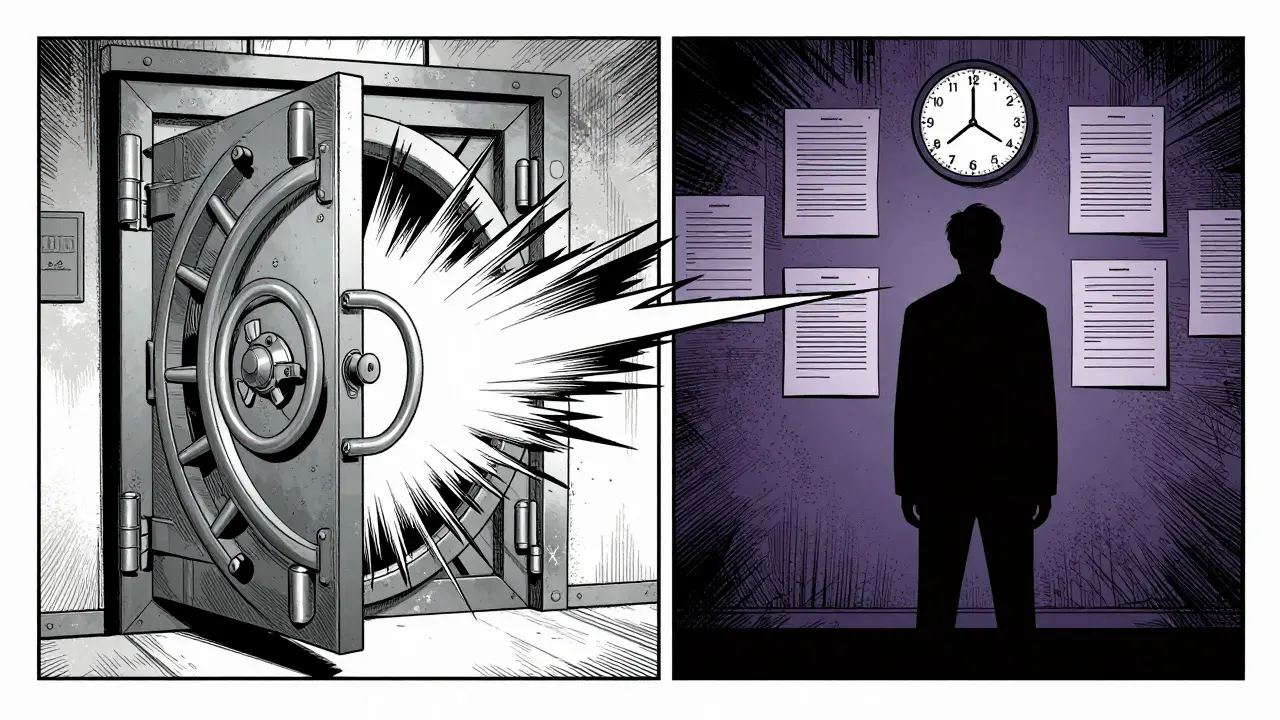
When a trigger is pulled, the reaction is fast. According to Circular No. 319 issued by the PBoC in June 2022, banks must freeze relevant accounts immediately upon detecting suspicious activity. They then have 24 hours to report the case to the China Anti-Money Laundering Monitoring and Analysis Center (CAMLMAC) and local PBoC branches.
The initial freeze usually lasts 72 hours for investigation. However, don't expect a quick release. Data from China's six largest commercial banks shows that 89% of frozen accounts remain restricted for more than 30 days. During this time, you cannot access your funds for daily expenses, rent, or bills. If the investigation reveals a connection to offshore exchanges or informal money laundering networks, the freeze can extend indefinitely until legal proceedings are resolved.
In April 2025, the Agricultural Bank of China froze 217 accounts in Guangdong Province after detecting patterns consistent with crypto conversions. Subsequent investigations linked these accounts to offshore exchanges serving Chinese residents. This wasn't an isolated incident; in the first half of 2025 alone, authorities dismantled 127 cross-border crypto transaction networks, freezing approximately ¥2.1 billion ($290 million) in assets across 3,845 bank accounts.

Penalties for Individuals and Banks
For individuals, the risk goes beyond losing access to funds. While holding crypto isn't a crime, facilitating its conversion through illicit means can lead to criminal liability. You could face fines, asset confiscation, or even imprisonment if charged with money laundering or disrupting financial order.
Banks also face severe consequences if they fail to comply. Dr. Li Wei, a Senior Researcher at the Chinese Academy of Financial Inclusion, notes that banks found facilitating crypto conversions risk immediate revocation of business licenses. Fines can range from 1 to 5 times the transaction amount, and senior management may face personal criminal liability. To avoid this, banks have invested heavily in compliance. S&P Global Ratings reported in July 2025 that Chinese financial institutions spent an average of 15-20% of their compliance budgets on crypto monitoring systems since 2022, totaling roughly $350-400 million annually across the sector.
| Trigger Type | Detection Frequency | Typical Outcome | Average Freeze Duration |
|---|---|---|---|
| IP Address Match | 68% | Account Freeze + CAMLMAC Report | 30+ days |
| Rapid Multi-Account Transfers | 23% | Manual Review + Enhanced Due Diligence | 7-30 days | Blacklisted Wallet Address | ~5% | Immediate Freeze + Investigation Team | Indefinite |
| Cash Deposit > ¥200k | Variable | Source of Funds Verification | 14-60 days |
The Role of Informal Networks and Capital Controls
Because formal channels are blocked, many Chinese citizens turn to informal money laundering networks (CMLNs). These networks use underground bankers to convert crypto to fiat or vice versa outside the banking system. FinCEN estimated that Chinese citizens transacted approximately $8.2 billion through these informal channels in 2024, up from $5.7 billion in 2023.
However, relying on CMLNs doesn't guarantee safety. Banks monitor for unusual cash deposit patterns that often exceed the ¥200,000 threshold. Additionally, capital controls add another layer of difficulty. The State Administration of Foreign Exchange (SAFE) limits individual foreign currency conversions to $50,000 annually. Moving crypto-derived funds abroad requires navigating these limits, which makes large-scale withdrawals particularly risky.
Hong Kong presents a complicating factor. The Hong Kong Monetary Authority launched a Stablecoins Ordinance in August 2025, creating a regulated market for stablecoins. This contrasts sharply with mainland policy. To prevent arbitrage, SAFE implemented additional reporting requirements for transfers exceeding HK$50,000 ($6,400) to Hong Kong accounts since June 2025. This means even moving funds to a friend in HK for a "loan" can trigger scrutiny if the pattern looks like a crypto exit strategy.
Future Outlook and Technological Escalation
Will the ban lift soon? Probably not. S&P Global projects that strict regulations will persist through 2027. Relaxation is unlikely until the digital yuan achieves 30% penetration in retail payments, a milestone not expected before 2028. Until then, enforcement will continue to tighten.
Technology is playing a huge role in this escalation. By Q2 2026, Chinese banks are expected to implement AI-powered blockchain analysis tools capable of tracing cryptocurrency flows across multiple blockchains with 92% accuracy. This means that even if you use privacy coins or decentralized finance (DeFi) protocols to obscure your trail, the chances of detection are increasing rapidly. The gap between what tech-savvy users can do and what regulators can see is closing fast.
As of July 2025, approximately 12.7 million Chinese citizens still hold cryptocurrency assets, primarily through overseas exchanges. This persistent demand fuels the black market, but it also keeps pressure on banks to innovate their detection methods. The message from Beijing is clear: the state wants control over monetary flow, and crypto is seen as a bypass of that control.
Frequently Asked Questions
Is it illegal to hold cryptocurrency in China?
No, holding cryptocurrency is not explicitly illegal for individuals. However, trading, mining, and especially converting crypto to fiat through formal banking channels are prohibited. The legal gray area exists because possession is tolerated, but circulation is banned.
What happens if my bank account is frozen due to crypto suspicion?
Your account will be frozen for at least 72 hours for initial investigation. In most cases (89%), the freeze extends beyond 30 days. You must provide proof of fund source to the bank and potentially cooperate with CAMLMAC. Without clear documentation proving the funds are not from crypto, the freeze can last months or indefinitely.
Can I use USDT or other stablecoins to withdraw to fiat in China?
Technically yes, but it is high-risk. Stablecoins are treated the same as other cryptocurrencies under the 2021 ban. Using OTC desks or P2P platforms to convert USDT to RMB triggers the same AML checks. If the counterparty is flagged or the transaction pattern looks unusual, your bank account is at risk of being frozen.
Does living in Hong Kong protect me from mainland bank freezes?
Not necessarily. If you hold a mainland Chinese bank account, the same rules apply regardless of where you live. Furthermore, transfers between mainland and HK accounts over HK$50,000 now require extra reporting. Mainland banks actively monitor for cross-border crypto arbitrage, so having a HK account doesn't shield your mainland assets from scrutiny.
How much does it cost for banks to monitor crypto transactions?
It is expensive. Chinese financial institutions spend an average of 15-20% of their total compliance budgets on crypto monitoring systems. Across the entire banking sector, this amounts to approximately $350-400 million annually. This investment includes AI tools, staff training, and integration with government databases.




14 Comments
Ashley Snyder
August 20 2026It is wild to see how much infrastructure has been built just to keep people out of the system. The fact that they are spending $400 million a year on AI tools to track wallets feels like overkill, but then again, when you have a population this size, the stakes are high. I think we often underestimate the sheer scale of the administrative burden this creates for banks. It’s not just about freezing accounts; it’s about the constant human and digital labor required to maintain that net.
Sarah Hafner
August 20 2026For anyone reading this who is actually trying to navigate this, please note that the IP address tracking is the biggest gotcha :). Many people assume using a VPN fixes everything, but if your bank sees a connection from a known exchange server, it flags regardless of the proxy. It’s a bit of a trap because the technology moves faster than most users realize. Keep your metadata clean if you must play in this space, but know that the risk is real and not just theoretical.
Calliope Clio
August 21 2026Oh, how quaint. 🙄
Let us bask in the glory of centralized control, shall we? They call it 'monetary sovereignty,' but let’s be honest, it’s just fear dressed up in a suit. The idea that a state needs to monitor every single cent to prevent 'disruption' is the height of bureaucratic arrogance. We are living in a surveillance state where the currency itself is the leash. And yet, here we are, applauding their efficiency at catching cheaters. Bravo. 👏
Tasha Davis
August 23 2026This is so crazy! 😱
I never knew it was this hard to just move money around. Like, why can’t they just let people use what they want? It seems like such a pain in the neck for regular folks. But hey, maybe it keeps things safe? Who knows! Just glad I don’t live there, though I do love the tech they have. It’s all very exciting and scary at the same time!
Abigail Sparks
August 24 2026Listen up, everyone. This isn't just about China anymore. If you think the US or EU won't follow suit with similar blockchain tracing tools, you're dreaming. The PBoC is showing the world how it's done. By 2027, expect similar AI-driven compliance costs to hit Western banks too. Get ready for tighter controls everywhere. The era of total anonymity in finance is dead, and this article proves it.
Ami Elizabeth
August 26 2026thats wild
never realized the ip thing was such a big deal. i thought its just about the wallet addresses. good to know before i try anything shady lol
Alexander Scheel
August 27 2026One must appreciate the sheer audacity of the regulatory apparatus here. It is not merely a ban; it is a comprehensive re-engineering of financial behavior. To suggest that individuals should simply 'adapt' without questioning the underlying philosophy of monetary control is to ignore the profound implications for personal liberty. Yet, as always, the masses will complain while continuing to transact in the shadows, proving once again that prohibition is the mother of innovation-albeit illicit innovation.
Evelyn Kula
August 28 2026You guys are missing the point!! This is pure espionage by the state. They aren't protecting 'monetary sovereignty', they are building a database of every transaction to crush dissent. Look at the numbers: 12.7 million holders still exist. That means 12.7 million potential dissidents being tracked. It's not about crypto, it's about control. Wake up! 🚨
manish jha
August 29 2026The moral hazard here is immense. When a government decides which assets are 'legal' and which are 'illegal financial activities', it places itself above the market. It is a power grab disguised as regulation. We must remain vigilant against such overreach, lest our own freedoms erode in the name of stability.
Mohamed Shoaeb
August 30 2026interesting read. the part about the hong kong stablecoin ordinance vs mainland policy is a great contrast. shows how fragmented the region really is. also good to see the data on freeze durations. most people dont realize how long these investigations take. usually months. makes me think twice about any cross-border stuff now.
Sonia Gomez Gomez
August 31 2026So basically, if you are poor enough to need your money for rent, you get frozen out? :(
It’s just class warfare with extra steps. The rich have lawyers and offshore accounts, but the average person who made a mistake gets locked out of their life savings for 30+ days. It’s brutal. And don’t get me started on the 'enhanced due diligence' for cash deposits over $27k. That’s barely a month's salary for some people. Who does this even protect?
SHIV SHANKAR KANTA
August 31 2026The soul of the individual is crushed under the weight of the state ledger...
We are no longer citizens but data points. The blockchain was meant to liberate us from the bank but here we are watching the bank build a better chain to catch us. It is a tragedy. A beautiful, cold tragedy. The iron fist holds the coin tightly. 💔
Marco Maldonado
September 1 2026Finally some facts instead of hype. Most crypto bros think they can outsmart the Chinese govt. Good luck. The AI accuracy rate of 92% by Q2 2026 is going to make privacy coins obsolete for retail users. Stop pretending DeFi is anonymous. Its not. Get off your high horse and read the room. America is next in line for this kind of scrutiny, just slower. 🇺🇸
Kate Staab
September 1 2026Boring.
Another list of rules we don't have to follow. Let them freeze their accounts. If it’s so bad, why do 12.7 million people still hold crypto? Because freedom is worth the risk. Or maybe they just don't care. Either way, not my problem. Just glad the UK hasn't gone full Orwellian yet. Probably won't, we're too polite to be that aggressive. 🇬🇧