What is TITAN (TIT) crypto coin? Understanding the confusion behind the ticker symbol
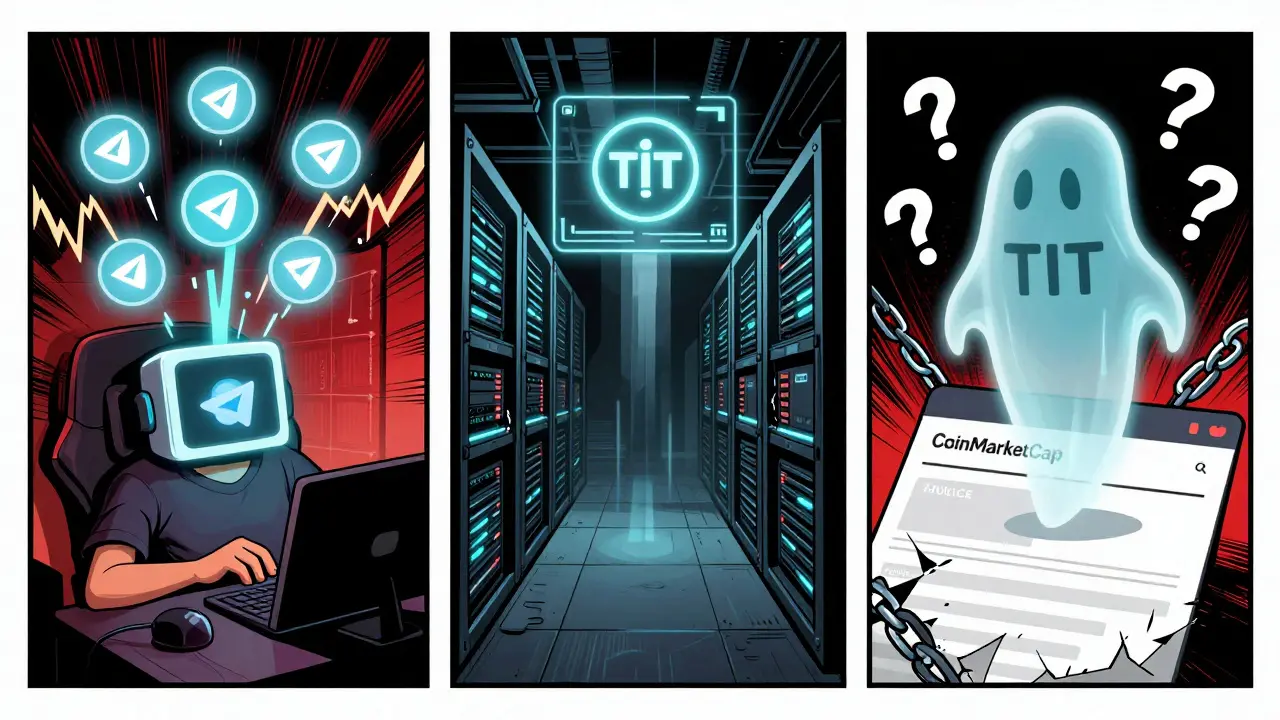
When you hear "TITAN (TIT)" as a cryptocurrency, you might think it’s one project. But it’s not. There are at least three completely different crypto projects using the same ticker symbol - TIT. This isn’t just a minor mix-up. It’s causing real confusion, lost money, and risky trades for people who don’t know the difference. If you’re looking into TITAN, you need to know which one you’re dealing with - because they’re not even in the same universe.
Project #1: Titans Tap - The Telegram Game That’s Hard to Trust
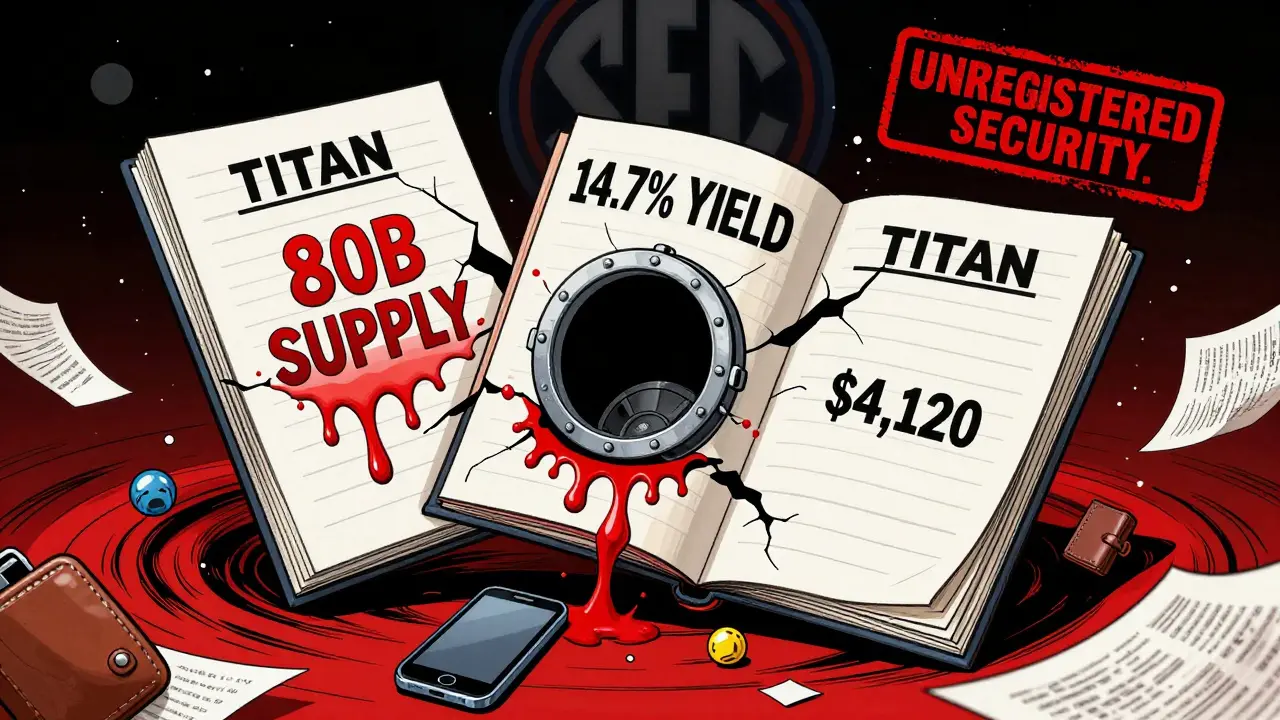
The most talked-about TIT is from Titans Tap, a Web3 idle RPG game built on Telegram. Think of it like a mobile game where you collect mythical powers from Greek gods while doing nothing - just tapping and waiting. It’s simple, no fancy wallet needed. You install Telegram, join the bot, and start "gathering" divine energy. That’s the whole hook.But here’s the catch: it has an 80 billion token supply. That’s massive. For comparison, Bitcoin’s total supply is capped at 21 million. With that many tokens floating around, each one is worth almost nothing - currently around $0.0008. And because supply is so high, the price swings wildly. One day it’s up 30%, the next it’s down 25%. That’s not volatility - that’s a red flag.
Users report losing money after the team changed the tokenomics without warning. Reddit threads are full of complaints: "Lost $300 on Titans Tap." Trustpilot gives it 1.2 out of 5 stars. The Telegram group has over 8,500 members, but only about 200 people are active daily. That’s not a community - that’s a ghost town with a chat box. And the GitHub repo? Only three commits in six months. If the team isn’t coding, they’re not building.
Project #2: The DePIN TITAN - Staking Bitcoin Infrastructure
Then there’s the DePIN version of TITAN. This one isn’t a game. It’s supposed to be a revenue-sharing token tied to decentralized physical infrastructure - like data centers, solar farms, or mining rigs. The idea? You stake your TIT tokens and earn passive income from both infrastructure projects and Bitcoin mining.It sounds smart. But the numbers don’t lie. Total supply is 40 million tokens, with a market cap of just BTC27.1929 (around $1.7 million USD). That’s tiny compared to real DePIN leaders like Render (RNDR) or Filecoin (FIL), which each sit above $1 billion. CoinGecko ranks it at #2705. That’s near the bottom. And while it promises a 14.7% annual yield, there’s no public proof of where the revenue comes from. No audits. No transparency. Just a whitepaper with vague promises.
It’s not a scam - not yet. But it’s barely alive. The team hasn’t updated their roadmap in months. No major partnerships have been confirmed. And if you look at the trading volume, it’s barely $100,000 a day. That’s not a market - that’s a whisper.
Project #3: The CoinMarketCap Ghost - A Token With No Real Presence
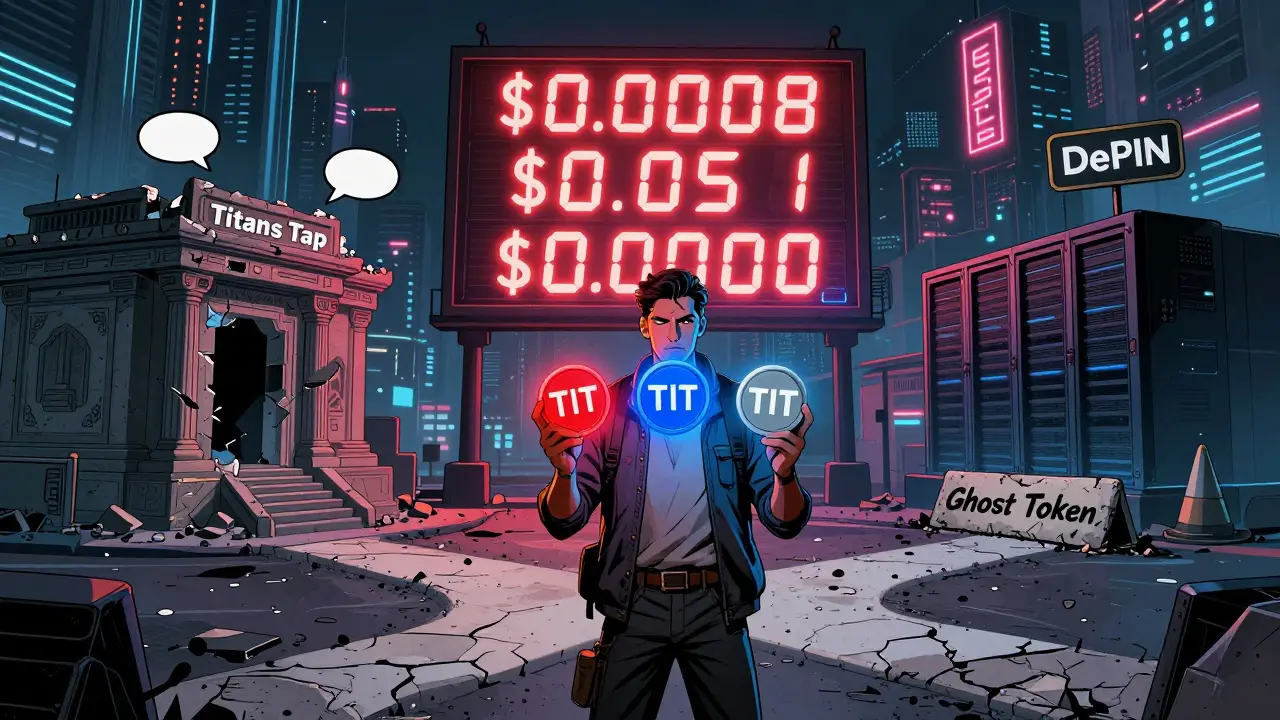
The third TITAN project shows up on CoinMarketCap as a "unified ecosystem" for gaming, esports, and finance. Sounds impressive. But look closer. Its market cap is listed at $2.67 million, with a circulating supply of nearly 200 million tokens. Yet, its 24-hour trading volume is only $4,120. That’s a problem. If nobody is trading it, the price is meaningless. It’s like having a stock that trades once a week - price can be manipulated by one person.Worse, Binance and MEXC show wildly different prices for TIT. One exchange says $0.051, another says $0.0008. That’s a 6,000% difference. How is that possible? Because the ticker symbol TIT is being used for all three projects. Traders buy TIT thinking it’s one thing - and end up holding something completely different. No one is in control. No one is fixing it.
Why This Confusion Matters
This isn’t just confusing - it’s dangerous. The U.S. SEC warned in January 2026 that tokens with "ambiguous project identities" could be classified as unregistered securities. That means if you’re holding TIT and it turns out to be a security, you could lose everything - and have no legal recourse.There’s zero enterprise adoption. No companies use any TITAN token. No DeFi platforms list it as collateral. No wallets have integrated it as a standard asset. Even the blockchain contract addresses vary between projects. The Titans Tap TIT runs on Binance Smart Chain with address 0x44d7f403b0451b991df1378827982c883c390719. But the DePIN version? Different chain. Different contract. Different everything.
And the experts agree. Crypto.com gave TITAN a 2.1 out of 5 rating. Messari labeled it "high risk of abandonment." Delphi Digital says 87% of tokens with this level of ambiguity die within 18 months. That’s not speculation - that’s data.
What You Should Do
If you’re thinking of buying TITAN:- Check the exchange. Are you on MEXC? Then you’re likely buying Titans Tap. On CoinGecko? You might be looking at the DePIN version.
- Look at the contract address. Always verify the smart contract before sending funds.
- Ignore the price. A $0.01 price sounds cheap - but with 200 million tokens in circulation, it’s worthless if no one wants it.
- Don’t chase gains. That 15% profit in 48 hours? It’s not a sign of success - it’s a trap. Volatility like that is how pump-and-dump schemes work.
The truth is, TITAN (TIT) isn’t a single asset. It’s a mess. Three projects. One ticker. Zero clarity. And in crypto, that’s a recipe for disaster.
Is TITAN Worth Anything?
Right now? Not really. Titans Tap has a small community of casual gamers, but its tokenomics are broken. The DePIN version has a decent idea but no traction. The CoinMarketCap version? It’s a ghost. None of them have real adoption, no strong team, and no clear future.Compare it to Axie Infinity. It has over 2 million active wallets. Titans Tap has 12,450. That’s not a competitor - it’s an afterthought.
There’s no reason to believe any of these TITAN projects will survive beyond 2026. Without transparency, without development, without liquidity - they’re just names on a screen.

23 Comments
Patty Atima
March 19 2026Honestly? I just bought TIT thinking it was the game one. Lost $50. Never again.
Tony Weaver
March 19 2026This post is the only thing that even remotely resembles due diligence in this entire subreddit. The fact that three separate projects share a ticker symbol is not a bug - it’s a feature of the regulatory vacuum we call crypto. The SEC will eventually classify this as an unregistered security offering, and when they do, every retail investor holding TIT will be left holding vaporware. There’s no such thing as a "cheap" token with 200M supply. It’s not cheap - it’s worthless.
Lucy de Gruchy
March 20 2026You think this is bad? Wait till you find out that the DePIN contract was audited by a guy who runs a Telegram bot that sells "NFTs" of his cat. The whole thing is a front for a money laundering ring disguised as a Web3 project. I’ve seen the transaction flows - they’re routing through mixers before hitting Binance. This isn’t confusion. It’s intentional obfuscation.
Lauren J. Walter
March 21 2026I saw someone post "TITAN is going to 100x" in a DM. I replied with a screenshot of the contract address. They still sent the funds. I don’t know whether to laugh or cry.
S F
March 23 2026American crypto is dying because we let amateurs run the show. In China, they’d have shut this down in a week. In Russia, they’d have jail time. Here? We have people trading tokens with 0 liquidity like it’s a lottery ticket. Pathetic.
Angelica Stovall
March 25 2026I knew it. I KNEW IT. This is how they get you. First they make it look easy. Then they drain your wallet. The contract address doesn’t even match the whitepaper. They’re not even trying anymore.
Bryan Roth
March 26 2026I’ve been in crypto since 2017 and I’ve seen this pattern a hundred times. A team grabs a catchy name, throws up a website, lists on a low-tier exchange, and then disappears. The real tragedy isn’t the money lost - it’s how many people still believe this stuff is legitimate. You don’t need to be a genius to see this is a trap. You just need to care enough to look.
sai nikhil
March 26 2026This is why we need global standards for token symbols. India has strict naming rules for listed securities. Why can’t crypto follow the same? A ticker isn’t just a label - it’s a legal identifier. This chaos is unacceptable.
Sahithi Reddy
March 28 2026I bought TIT on MEXC because it looked cheap now I dont even know what I own 😅
George Hutchings
March 29 2026I’m from the US but I’ve been following crypto in Southeast Asia. They’ve got way better transparency there. One country, one ticker. No exceptions. Maybe we need to copy them instead of pretending this is innovation.
Henrique Lyma
March 29 2026The fact that you’re even having this conversation is a symptom of the entire crypto ecosystem’s collapse. We used to have whitepapers with real engineering specs. Now we have Telegram bots with pixel art of Zeus holding a wallet. The supply isn’t 80 billion - it’s 80 billion delusions. And you think the market cap matters? Please. The only metric that counts is how many people still believe this isn’t a pyramid scheme with a blockchain logo.
Derek Lynch
March 30 2026I’ve been teaching newbies for years. If you can’t find the contract address on Etherscan or BscScan within 30 seconds, don’t invest. TITAN isn’t a project - it’s a test. And most people are failing it. Don’t be one of them. Do your homework. It’s not hard.
Shreya Baid
March 30 2026The ethical responsibility of crypto developers extends beyond code. When a ticker symbol is shared across multiple unlinked entities, it constitutes a breach of fiduciary duty to the community. The absence of centralized governance does not excuse the absence of ethical governance. This is not innovation - it is negligence.
Christopher Hoar
March 31 2026titan is the new dogecoin lmao who even still buys this shit
Sarah Zakareckis
April 1 2026From a product standpoint, this is a textbook case of poor tokenomics and branding overlap. The DePIN model has potential, but the naming collision creates irreversible brand erosion. You can’t build a network effect when users can’t even agree on what asset they’re interacting with. This is why Layer 2s need standardized symbol registries - and why exchanges should be legally liable for misrepresentation.
Heather James
April 2 2026I saw this on CoinMarketCap and thought "huh, interesting." Then I checked the contract. My jaw dropped. I literally closed the tab and went for a walk. Sometimes the truth is too weird to believe.
Ann Liu
April 3 2026Always verify the contract address before transacting. Always. This is non-negotiable. TITAN is a perfect example of why. The BSC contract for Titans Tap is 0x44d7f403b0451b991df1378827982c883c390719. The DePIN contract is 0x8a1b2c4d5e6f7a8b9c0d1e2f3a4b5c6d7e8f9a0b. They are not the same. If you don’t know which one you’re buying, you’re gambling - not investing.
Dionne van Diepenbeek
April 3 2026I bought TIT because I thought it was the game and now I’m stuck with a token that’s worth less than my coffee ☕️
Graham Smith
April 4 2026The real failure here isn’t the projects - it’s the exchanges. They should not be allowed to list tokens with ambiguous symbols. This is like listing AAPL and Apple Inc. as separate entities. It’s not just sloppy - it’s fraudulent. Regulatory bodies need to step in and impose symbol exclusivity.
Jerry Panson
April 5 2026The integrity of financial markets depends on unambiguous asset identification. The current state of TITAN ticker usage violates the foundational principles of market transparency. No amount of "decentralization" can justify the systemic risk posed by this ambiguity. This is not a technical issue - it is a legal and ethical imperative.
Katrina Smith
April 6 2026Lmao so TITAN is just crypto’s version of "I’m not a doctor but I play one on TV"? 🤡
Anastasia Danavath
April 7 2026I lost my rent money on TIT 😭😭😭
anshika garg
April 9 2026It’s funny how we call this innovation. In reality, it’s just human greed dressed up in blockchain. We’ve forgotten that money is a social contract - and when the contract is broken, no amount of tech can fix it.