Legal Risks for Tunisian Crypto Users and Traders in 2026
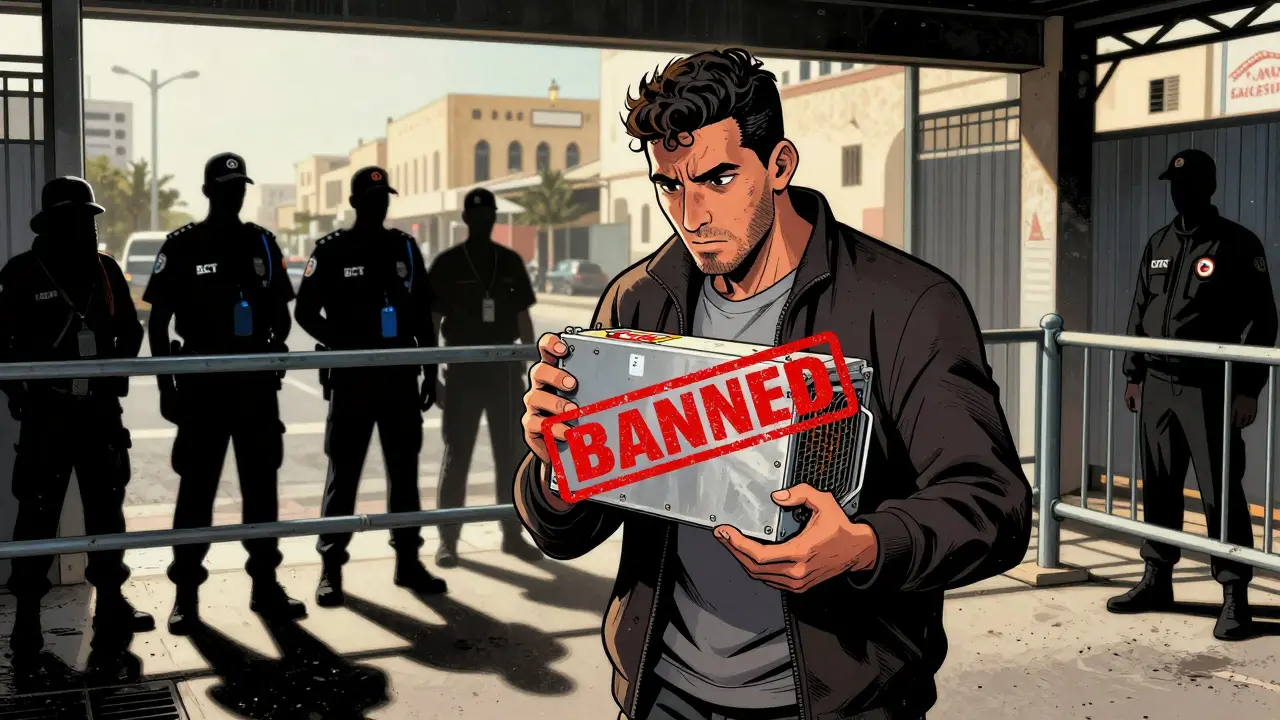
If you're in Tunisia and holding or trading cryptocurrency, you're breaking the law. Not just a little bit - completely. As of 2026, the Central Bank of Tunisia (BCT) still enforces a total ban on all cryptocurrency activities, and the penalties aren't warnings or fines. They're prison time.
What Exactly Is Illegal?
It doesn't matter if you're buying Bitcoin, mining Ethereum, or just holding crypto in a wallet. Every single activity is banned under Tunisia's 2018 directive. The law doesn't make exceptions. You can't pay for coffee with crypto. You can't sell goods online for Dogecoin. You can't even mine Bitcoin using a rig bought from abroad. Customs officials have the legal right to seize your equipment the moment it crosses the border. Banks are required to block any transaction tied to cryptocurrency. If your account receives money from Binance, Kraken, or even a peer-to-peer buyer, it gets flagged. The Financial Market Council (CMF) and the National Anti-Money-Laundering Commission (CTAF) work together to track suspicious activity. If you're using a VPN to access an offshore exchange, that still counts as illegal. There's no loophole.What Happens If You Get Caught?
The punishment isn't just a slap on the wrist. Under Tunisia's currency control code, violating the crypto ban can land you in jail for up to five years. That’s not a rumor - it’s written into law. Any profits from crypto trades are seized immediately. If you bought 5 Bitcoin in 2023 and sold them for 200,000 Tunisian dinars, the government will take every last dinar. Businesses face even harsher consequences. Companies can’t record crypto as an asset on their books. If you try to pay employees in Bitcoin or accept crypto as payment, you’re not just breaking financial rules - you’re risking criminal charges. Even running a crypto-related startup without a license can lead to prosecution. There’s no gray area.Who’s Watching You?
Three government bodies are actively monitoring crypto activity:- Central Bank of Tunisia (BCT) - Enforces the 2018 ban and controls all monetary policy. They also run the limited regulatory sandbox, but it’s not for crypto trading.
- Financial Market Council (CMF) - Oversees capital markets. They would regulate security tokens, but only if they ever get approved - which they haven’t.
- National Anti-Money-Laundering Commission (CTAF) - Tracks suspicious transactions. Banks report anything that looks like crypto activity, and CTAF investigates.
What About the Regulatory Sandbox?
You might hear about Tunisia’s sandbox program and think there’s a way in. There isn’t - not for crypto. The sandbox only allows blockchain projects that are completely controlled by the government. For example, VFunder, Hydro E-Blocks, and No Phobos are allowed to test blockchain for supply chain tracking or carbon credits - but only if their servers are hosted outside Tunisia and they don’t deal with public tokens or trading. The BCT even built its own digital currency prototype, the E-Dinar, but it’s not available to the public. It’s a government-controlled ledger, not a decentralized network. If you’re using blockchain for transparency in logistics, fine. If you’re trying to send crypto to a friend? That’s a five-year prison sentence.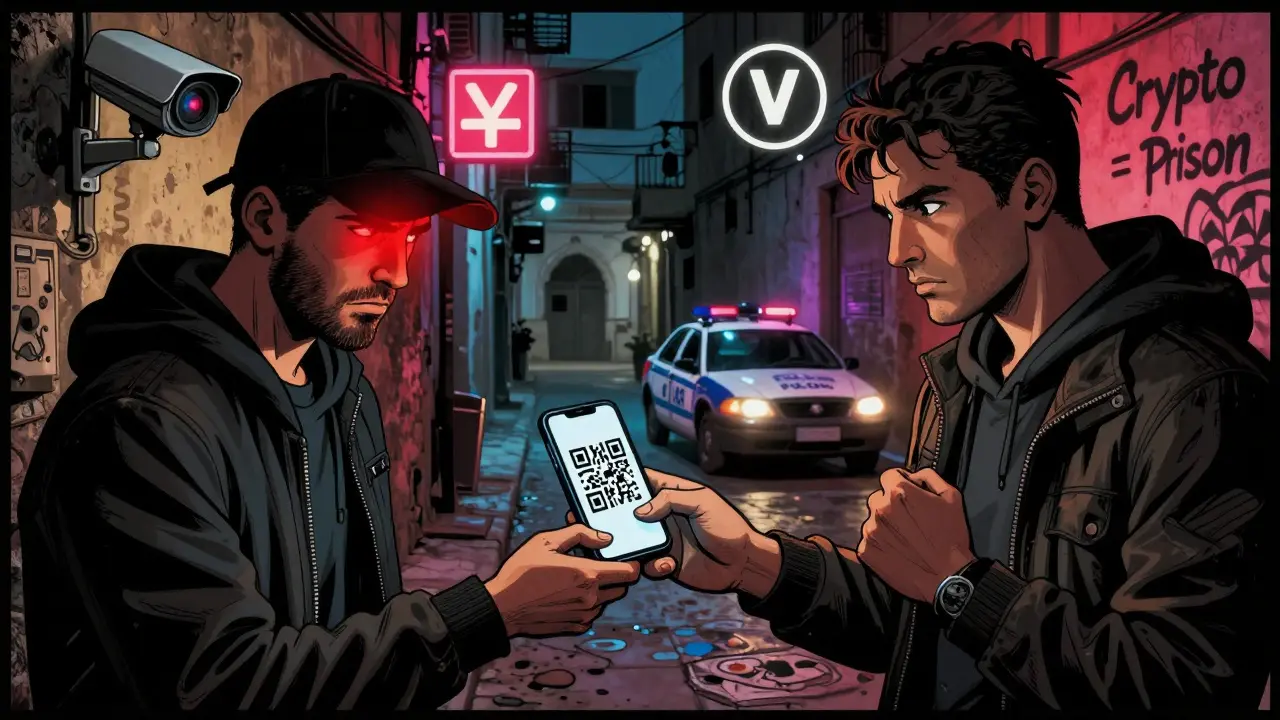
How Are People Still Trading?
Despite the risks, crypto use hasn’t disappeared. It’s gone underground. Many Tunisians use VPNs to access Binance, Bybit, or KuCoin. They buy crypto with peer-to-peer platforms like Paxful or LocalBitcoins, then pay in cash during in-person meetups. Some use encrypted apps like Signal or Telegram to coordinate trades. But here’s the catch: it’s still illegal. There’s no protection. If someone you trade with gets arrested, your name could be dragged into the investigation. If your bank account gets frozen because of unusual transfers, you’ll need a lawyer - and good luck finding one who understands crypto law in Tunisia. Most legal advisors simply tell clients: Don’t touch it.Why Is Tunisia So Strict?
Tunisia’s ban is one of the strictest in the world. Unlike countries like Nigeria or Argentina, where crypto is restricted but not criminalized, Tunisia treats it like counterfeiting currency. The government fears losing control over the national currency, the Tunisian dinar. They worry about capital flight, money laundering, and people bypassing banking controls. Experts compare Tunisia’s approach to countries like Egypt and Algeria - all have bans, but Tunisia’s enforcement is more aggressive. In Egypt, crypto isn’t technically legal, but banks don’t actively block all transfers. In Tunisia, they do. In Switzerland or Canada, crypto is regulated. In Tunisia, it’s outlawed.What’s the Real Cost?
The ban isn’t just about law - it’s about opportunity. Young Tunisian developers, engineers, and entrepreneurs are leaving. Many have moved to Portugal, Georgia, or the UAE to build crypto startups. The brain drain is real. Tunisia’s tech sector is losing talent that could be driving innovation. And it’s not just individuals. Businesses that want to accept digital payments or integrate blockchain for logistics are forced to operate offshore. E-commerce platforms that tried to list prices in Bitcoin had to shut down their Tunisian-facing sites. The economy is missing out on tech investment.
What Could Change?
There are whispers in parliament about reclassifying crypto as a “virtual asset” and bringing it under FATF rules - which would mean licensing exchanges instead of banning them. But nothing’s official. No timeline. No draft law. The government shows no signs of softening. Until then, the message is clear: if you trade crypto in Tunisia, you’re breaking the law. And the law doesn’t care if you think Bitcoin is the future. It only cares that you broke the rules.What Should You Do?
If you’re already holding crypto: don’t panic. But don’t try to cash out through local banks. The moment you convert to dinars, you trigger a report. If you’re thinking about starting to trade: walk away. The risk isn’t worth it. If you’re a business owner: keep crypto off your books. Don’t accept it. Don’t promote it. Don’t even mention it. The penalties for companies are just as harsh as for individuals. If you’re a developer: focus on permissioned blockchain projects that serve public services - not trading. That’s the only legal path left.What Happens If You Get Reported?
If your bank reports you to CTAF, you’ll get a visit - maybe a call, maybe a summons. You won’t be arrested immediately, but you’ll be investigated. Your bank account will be frozen. Your phone number might be flagged. If you’ve been trading for months or years, authorities could request access to your wallet addresses, transaction history, and even your device. There’s no legal defense for “I didn’t know it was illegal.” Ignorance of the law doesn’t protect you. The 2018 directive is public. The BCT has published it. Everyone is expected to know.Is it legal to buy crypto on Binance from Tunisia?
No. Even if you use a foreign exchange like Binance or Kraken, buying or selling crypto while in Tunisia violates the 2018 BCT ban. Using a VPN doesn’t make it legal - it just makes it harder to catch. Authorities still consider the activity illegal, and you can be prosecuted.
Can I mine Bitcoin in Tunisia?
No. Importing mining equipment like ASIC rigs is illegal. Mining crypto and converting it to Tunisian dinar is a direct violation of the currency control code. Customs has seized mining hardware at ports. If caught, you face fines and up to five years in prison.
What happens if I inherit cryptocurrency in Tunisia?
Inheriting crypto doesn’t make it legal. Under Tunisian law, cryptocurrency isn’t recognized as property. Authorities can seize it, and you may be investigated for holding illegal assets. There’s no legal process to claim or transfer crypto inheritance.
Can I use crypto to send money to family abroad?
No. Sending crypto to another country to bypass traditional remittance systems is considered capital flight and violates Tunisia’s currency control laws. Banks monitor outbound transfers and report any that match crypto transaction patterns. This can lead to account freezes and investigations.
Is there any way to legally trade crypto in Tunisia?
Not right now. The only legal pathway is through the BCT’s regulatory sandbox - but it’s only for government-controlled blockchain projects in supply chain or record-keeping. No trading, no tokens, no public access. For individuals or businesses wanting to trade crypto, there is no legal option.


19 Comments
Angela Henderson
February 16 2026Man, I just read this whole thing and I’m sitting here wondering how anyone in Tunisia even survives without crypto. I mean, inflation’s crazy there, right? Like, dinar’s worth less than my old socks. And the government’s like, ‘Nope, no Bitcoin, no Ethereum, no nothing.’ But people are still trading-via Signal, cash meetups, the whole underground vibe. It’s wild how human nature just finds a way. I don’t know if it’s brave or stupid, but it’s definitely real. I’ve met Tunisians online who’ve been holding BTC since 2021. They don’t talk about it much, but you can tell. They’re just… waiting. And honestly? I kinda respect that.
Paul David Rillorta
February 17 2026so like… is it just me or is the bct secretly run by the illuminati?? like why would they ban bitcoin but let their own e-dinar thing exist?? sounds like a total scam. they’re prob already tracking every wallet and selling the data to china. or worse-selling it to amazon. i saw a video once where a guy in tunisia got arrested for having 0.2 eth. he was 19. imagine. they’re not banning crypto they’re banning freedom. and the worst part? they’re probably using the seized coins to buy more drones. #cryptoisfreedom #bctisfascist
Lauren Brookes
February 19 2026There’s something deeply tragic about a country that’s afraid of its own people’s ingenuity. Tunisia has this incredible history of innovation-think of the Carthaginians, the Berber traders, the revolutionaries who changed the region. And now? They’re criminalizing access to global finance because they’re scared of losing control. But you can’t control what people need. If you lock the door, they’ll climb the window. If you ban the tool, they’ll build it themselves. This isn’t about money. It’s about dignity. And dignity doesn’t die because a law says so. It just goes underground… and waits.
Andrew Edmark
February 20 2026Just wanted to say-this is heavy. I’ve got friends who grew up in Tunisia and they’ve all left for Georgia or Portugal. One of them sent me a pic of his new apartment with a little sign that says ‘Crypto is my pension.’ I cried. Like… imagine being forced to leave your home because the government doesn’t trust you to manage your own money. And it’s not even about the tech. It’s about autonomy. We talk about freedom like it’s a slogan. But for them? It’s a prison sentence. Just… thank you for writing this. It matters.
Dominica Anderson
February 20 2026It’s Tunisia. They’ve been backwards since the Arab Spring. Crypto? That’s a Western scam. They should focus on schools, not Satoshi.
Aileen Rothstein
February 22 2026Okay, but let’s not pretend this is just about money. People in Tunisia are using crypto because they’re tired of being locked out of the global economy. They’re tired of inflation eating their salaries. They’re tired of banks that won’t let them send money home. This isn’t gambling. It’s survival. And yeah, the law says prison-but the real law is human need. And human need doesn’t care about government forms. I’m not saying go do it. I’m saying understand why they do. There’s a whole generation growing up thinking: ‘If the state won’t let me build a future, I’ll build one anyway.’ That’s not rebellion. That’s resilience.
Jennifer Riddalls
February 23 2026i just read this and i feel so sad for people there. like, imagine being told you cant use a tool that could change your life just because some bureaucracy is scared. i dont know much about crypto but i know what it means to be stuck. and if this is the only way out for someone… maybe the law needs to change, not the people. also… if you’re reading this from tunisia… you’re not alone. we see you.
Jeremy Fisher
February 25 2026As someone who’s lived in both the U.S. and Tunisia, I can tell you this isn’t just about crypto. It’s about control. The BCT is terrified because crypto removes their monopoly on money. When people can send value peer-to-peer, the state loses its grip on surveillance, taxation, and economic leverage. Tunisia’s ban is a symptom of a deeper problem: a government that sees its citizens as subjects, not stakeholders. The E-Dinar? It’s not innovation-it’s digital serfdom. And the fact that young Tunisians are still finding ways around it? That’s not defiance. That’s democracy in action. Quiet, encrypted, and very, very determined.
Anandaraj Br
February 25 2026lol tunisia banning crypto? they dont even have good wifi. how do they even know what blockchain is? i bet their tech minister still uses fax machines. this is like banning the internet because someone posted a meme. the whole thing is a joke. they should focus on fixing power outages before they start arresting people for holding btc. also… who even uses tunisian dinar anymore? its worth less than my socks
AJITH AERO
February 27 2026another post about how crypto is illegal in tunisia. wow. groundbreaking. did you also know water is wet? thanks for the hot take, genius. now go touch grass.
andy donnachie
February 28 2026Interesting read. The BCT’s stance is understandable from a macroeconomic standpoint-capital flight is real, and unregulated crypto can destabilize a fragile currency. But the enforcement is draconian. Most countries that ban crypto still allow some gray space. Tunisia doesn’t. The real tragedy? It’s pushing innovation abroad. Developers who could’ve built fintech solutions for North Africa are now in Lisbon or Tbilisi. That’s a loss for the whole region. Maybe regulation, however slow, would’ve been better than repression.
Beth Erickson
March 2 2026Of course Tunisia bans crypto. They’re a third-world country that can’t handle modern tech. The dinar’s garbage anyway. Why not just adopt USD and be done with it? This crypto nonsense is just a distraction for people too lazy to work real jobs. Stop blaming the government for your bad financial decisions.
Jenn Estes
March 4 2026People think crypto is about freedom? It’s about gambling. Tunisia’s doing the right thing. If you want to gamble, go to Vegas. Don’t drag your entire country into your personal fantasy.
JJ White
March 6 2026Oh wow. So Tunisia bans crypto because they’re afraid of losing control? What a shocker. That’s exactly what every authoritarian regime says. But here’s the twist: they’re not banning crypto because it’s dangerous. They’re banning it because it’s *too* powerful. It doesn’t need them. It doesn’t ask for permission. It doesn’t care about their borders or their laws. And that? That terrifies them more than any bank run. So they criminalize it. They jail people. They seize miners. They pretend they’re protecting the economy. But really? They’re protecting their own irrelevance. The future isn’t in their E-Dinar. It’s in the hands of the 19-year-old in Sfax who just mined his first Bitcoin on a stolen laptop.
Alan Enfield
March 8 2026From a compliance standpoint, this makes sense. The FATF travel rule applies to VASPs, and if Tunisia’s banks are reporting all crypto-related transfers, they’re likely trying to avoid being gray-listed. The problem? The ban is too blunt. A licensing framework would’ve allowed oversight without criminalization. Now you’ve got a black market that’s untraceable, and the government’s chasing shadows while the real innovation leaves the country. Classic policy failure. You don’t stop innovation by outlawing it-you just make it harder to regulate.
kieron reid
March 9 2026they banned crypto. cool. so what. i dont care. move on.
Nikki Howard
March 10 2026While I appreciate the thoroughness of this analysis, I must point out that the BCT’s position aligns with international anti-money laundering standards. The FATF guidelines are clear: unregulated crypto poses systemic risk. Tunisia is not alone. Countries like Algeria and Morocco have taken similar stances. The real issue is not the ban-it’s the lack of infrastructure to support compliant adoption. Until Tunisia develops secure, regulated gateways, prohibition remains the only prudent path. To suggest otherwise is irresponsible.
Ruby Ababio-Fernandez
March 12 2026crypto is a scam. tunisia is right. stop trying to be cool with your bitcoin.
Angela Henderson
March 14 2026Just read the comment from @1907 and… damn. That’s the most accurate thing I’ve read all week. The 19-year-old in Sfax with the stolen laptop? That’s the real revolution. Not the E-Dinar. Not the sandbox. Not the government’s press releases. That kid doesn’t care about policy. He just wants to buy food, send money to his sister, and maybe one day start his own thing. And the state? It’s trying to arrest him for it. I’m not saying he’s right. I’m saying he’s inevitable.