Nigeria's Underground Crypto Economy: Thriving Under the Ban (2021-2023)
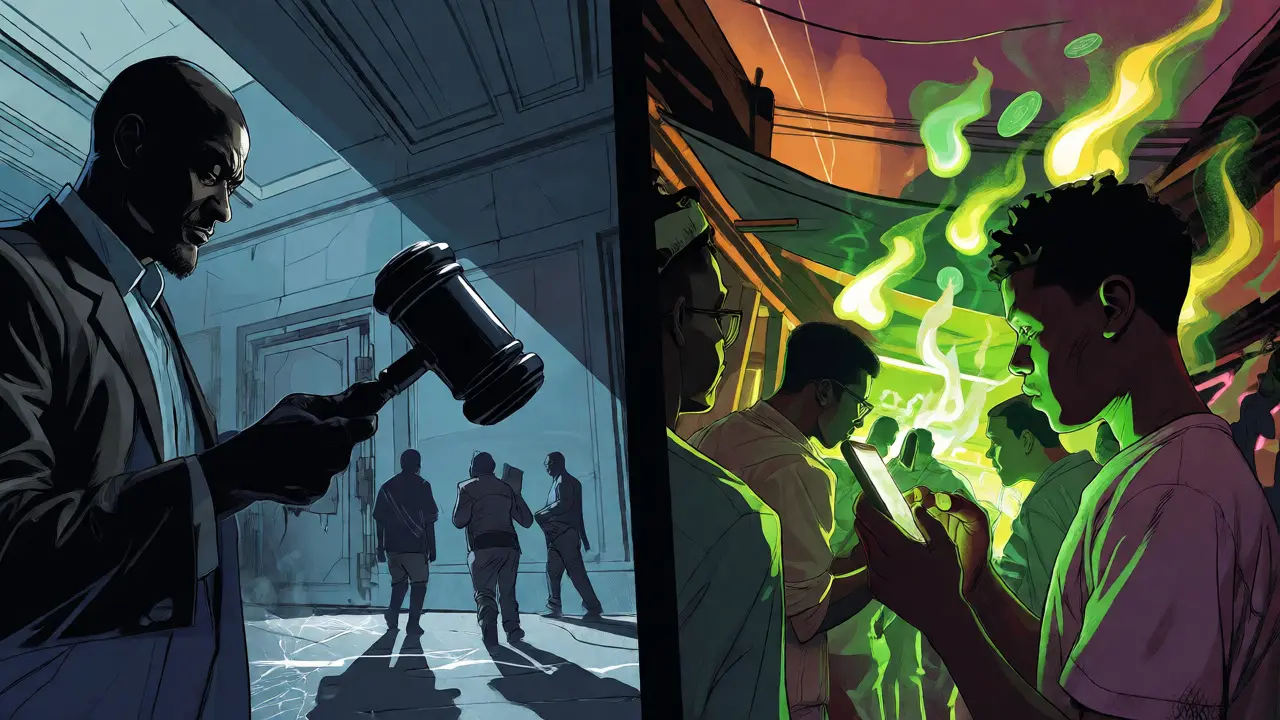
Imagine trying to buy a coffee with digital money while your bank account is frozen just for mentioning Bitcoin. That was daily life in Nigeria between February 2021 and December 2023. When the Central Bank of Nigeria (CBN) issued a directive banning financial institutions from facilitating cryptocurrency transactions, most analysts predicted the end of digital asset trading in Africa’s largest economy. They were wrong. Instead of dying, the market went underground, exploding into one of the world’s most vibrant peer-to-peer (P2P) ecosystems.
This wasn’t just about stubborn traders refusing to give up. It was a survival mechanism. With inflation eating away at savings and the naira losing value, Nigerians needed an escape route. The ban didn’t stop them; it just forced them off the rails and onto WhatsApp groups, Telegram channels, and decentralized platforms. By understanding how this underground economy functioned, we can see why regulatory bans often fail to kill demand-and how they sometimes accelerate innovation instead.
The Perfect Storm: Why the Ban Backfired
To grasp the scale of what happened, you have to look at the context. In early 2021, Nigeria was already a global leader in crypto adoption. But when the CBN ordered banks to identify and close accounts of anyone dealing in crypto, it created a vacuum. Formal banking channels shut down, but the demand for crypto remained sky-high. This mismatch birthed a gray market where individual trading remained technically legal, even if institutional support vanished.
The result? A surge in activity that defied logic. According to Chainalysis data, Nigerian crypto transaction volume hit $56.7 billion between July 2021 and June 2022. That’s 1.2% of all global crypto transactions, despite Nigeria making up only 0.1% of the global GDP. How did they do it without banks? They built their own infrastructure.
The Rise of Peer-to-Peer (P2P) Trading
If you wanted to buy Bitcoin in Lagos during the ban, you didn’t go to a bank. You went to Binance P2P. By the third quarter of 2022, this platform alone hosted over 1.2 million Nigerian users moving roughly $150 million worth of naira-denominated crypto every month. It became the primary bridge between the fiat world and the digital one.
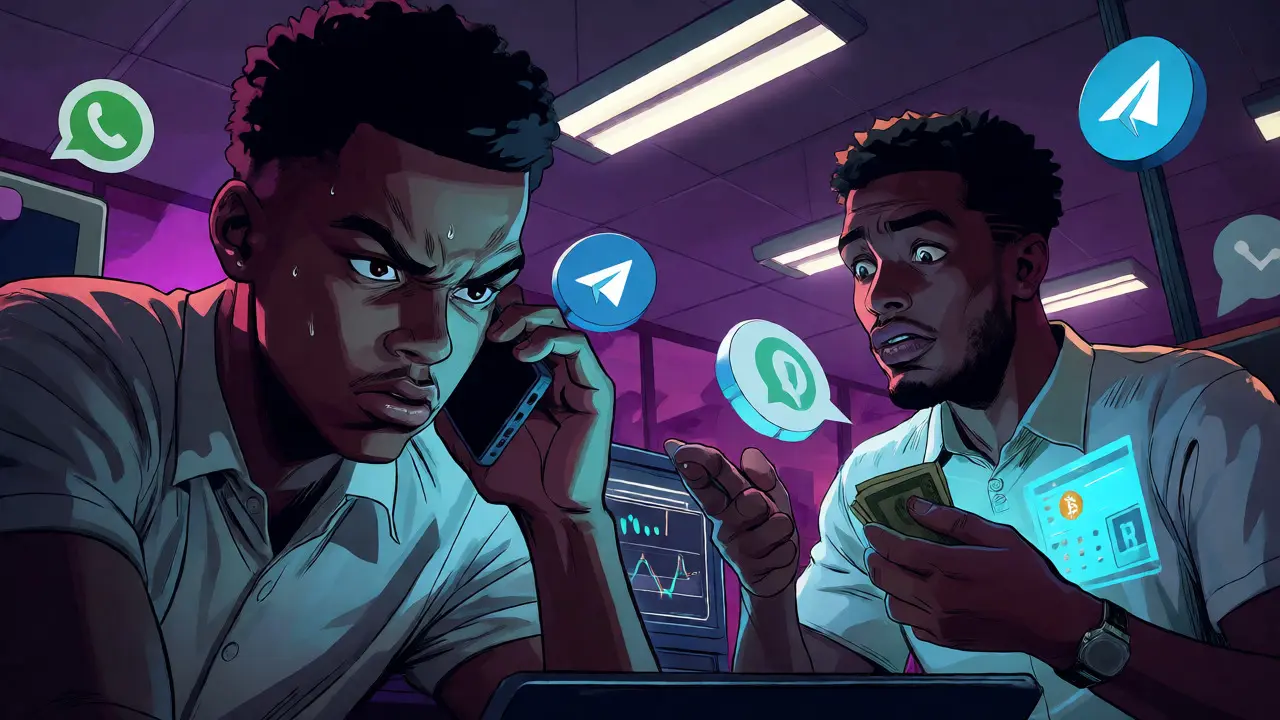
But it wasn’t just big exchanges. The real magic happened in smaller, community-driven networks. A survey by Breet.io revealed that 78% of underground traders used WhatsApp groups to verify transactions, while 63% relied on Telegram for price discovery. These weren’t casual chats; they were sophisticated trading floors. Community-managed blacklists of fraudulent traders circulated through groups with over 50,000 members each, creating a self-policing system that formal regulators couldn’t replicate.
| Metric | Value | Source/Context |
|---|---|---|
| Total Transaction Volume (July 2021 - June 2022) | $56.7 Billion | Chainalysis Geography Report |
| Binance P2P Monthly Volume (Q3 2022) | $150 Million | Monierate Crypto Regulation Timeline |
| Users Trusting P2P Over Banks | 89% | Breet.io Survey |
| Traders Reporting Scam Experience | 42% | Monierate Study |
| Users Facing Frozen Accounts | 67% | Creditcoin.org |
Innovation Born From Necessity
When you cut off easy access, people get creative. Nigerian developers launched 14 locally-focused crypto platforms during the ban. Platforms like Quidax processed ₦8.2 billion ($10 million) monthly by 2022, catering specifically to local needs. Another platform, Bundle, integrated directly with mobile money services, bypassing traditional bank transfers entirely.
The technical backbone of this underground economy relied heavily on multi-signature escrow services. Paxful reported that Nigerian users accounted for 32% of its global escrow transactions during this period. This meant that even without bank guarantees, buyers and sellers could trust the process because the smart contract held the funds until both parties agreed the deal was done.
Then there was the "trade verification protocol." Before sending large sums, traders would conduct small test transactions. This simple step reportedly reduced scam rates by 37%, according to community data collected by CryptoNaija. It’s a low-tech solution to a high-tech problem, proving that human ingenuity often outpaces regulatory frameworks.
The Human Cost: Scams and Frozen Accounts
It wasn’t all smooth sailing. Operating outside the law comes with risks. Fraud was rampant. About 42% of underground traders reported at least one scam experience. Imagine sending your hard-earned naira via bank transfer, releasing your Bitcoin, and then watching the seller disappear. User 'AbujaInvestor' on Reddit lost ₦380,000 exactly this way, with no recourse since the transaction was informal.
Banking complications were another major headache. While individuals weren’t banned from owning crypto, banks aggressively froze accounts linked to crypto payments. 67% of users who received crypto payments through informal channels experienced frozen bank accounts. This created a paradox: you could trade crypto, but getting the money back into your regular banking life was a nightmare. Many traders resorted to using multiple bank accounts or cash-based settlements to avoid detection.
Who Was Driving This Market?
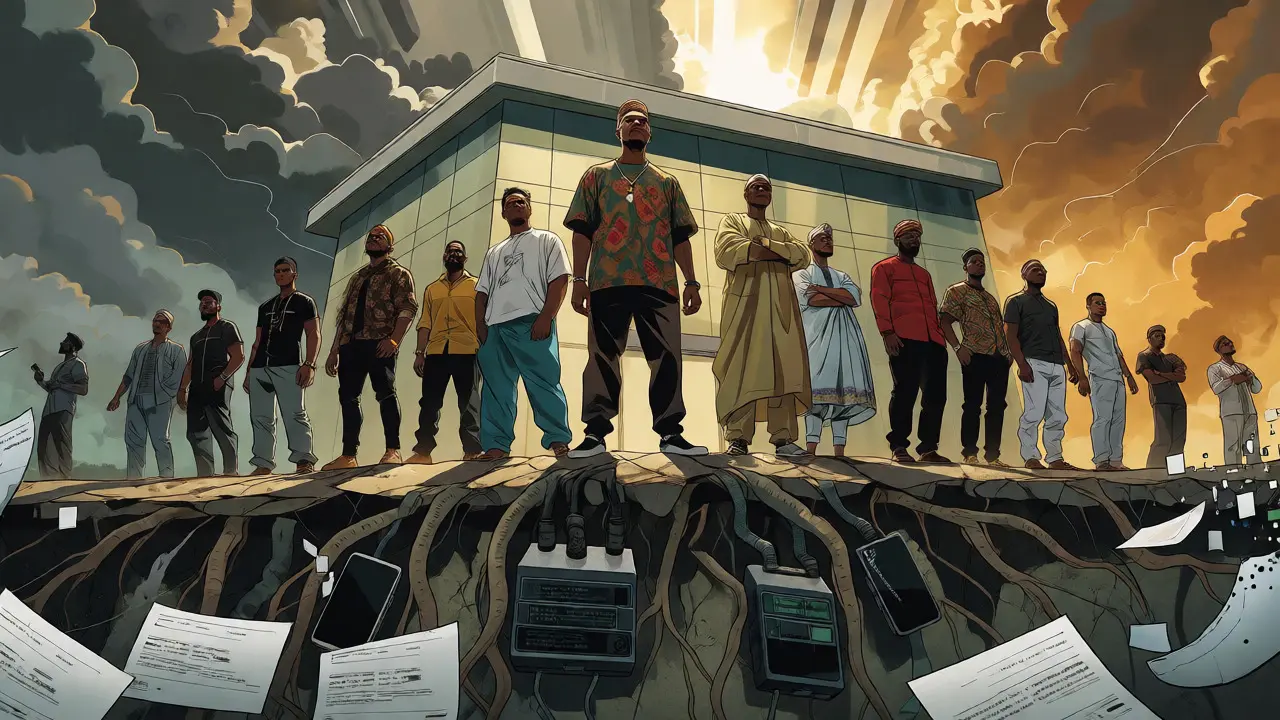
You might assume this was dominated by tech-savvy millennials, and you’d be partly right. 68% of underground traders were aged 18-35. But the demographic breakdown tells a deeper story. Students made up 41% of participants, and small business owners comprised 29%. For students, crypto was a way to fund education amid rising tuition costs. For small business owners, it was a hedge against currency devaluation.
The average user wasn’t a day trader chasing moonshots. They were everyday people trying to preserve wealth. A representative success story comes from 'LagosTrader87,' who started with just ₦5,000 in March 2021. By December 2022, he had built a ₦2.3 million portfolio entirely through P2P trades, funding his university education. His journey mirrors thousands of others who turned necessity into opportunity.
The Legacy: What Happens After the Ban?
The CBN officially reversed its stance on December 23, 2023, allowing licensed exchanges to operate again. But the genie was out of the bottle. The underground economy had changed the culture. A Techpoint Africa survey found that 89% of Nigerians now view cryptocurrency as a legitimate financial tool, regardless of regulatory status.
Regulators are still wary. In May 2024, the SEC announced intentions to ban P2P naira trading to protect the national currency. Yet, the infrastructure built during the ban years remains robust. As Dr. Yemi Babarinsa of the African Fintech Network noted, bans often accelerate adoption rather than prevent it. Nigeria’s experience proves that when you drive a market underground, you don’t kill it-you make it harder to control and more resilient.
Was it illegal for individuals to own crypto in Nigeria during the ban?
No, it was not illegal for individuals to own or trade cryptocurrency. The Central Bank of Nigeria’s 2021 directive prohibited banks and financial institutions from facilitating crypto transactions. Individuals were free to buy, sell, and hold crypto, but they had to use non-bank methods like P2P platforms or cash settlements.
Why did the crypto ban increase adoption in Nigeria?
The ban accelerated adoption because it coincided with high inflation and naira devaluation. People sought alternative stores of value. Since banks blocked crypto-related transactions, users migrated to efficient P2P platforms and community networks, which actually improved accessibility for many unbanked or underbanked citizens.
What were the main risks of trading crypto underground?
The primary risks were fraud and bank account freezes. Approximately 42% of traders reported experiencing scams due to the lack of formal consumer protection. Additionally, 67% of users faced frozen bank accounts when banks detected frequent transfers linked to crypto trading, disrupting their normal financial activities.
How did Nigerians verify transactions without banks?
They relied heavily on social proof and technology. Most traders used WhatsApp groups for verification and Telegram for price discovery. Community-managed blacklists helped identify scammers, and many adopted a "test transaction" protocol-sending small amounts first-to build trust before executing larger trades.
Did the ban affect Nigeria's global crypto ranking?
Yes, positively. Despite the ban, Nigeria jumped from 28th to 2nd place globally in Chainalysis’ 2022 Cryptocurrency Adoption Index. The resilience of the underground market demonstrated strong grassroots demand, surpassing many countries with more favorable regulatory environments.