Smart Grid Management with Blockchain: Real-World Insights
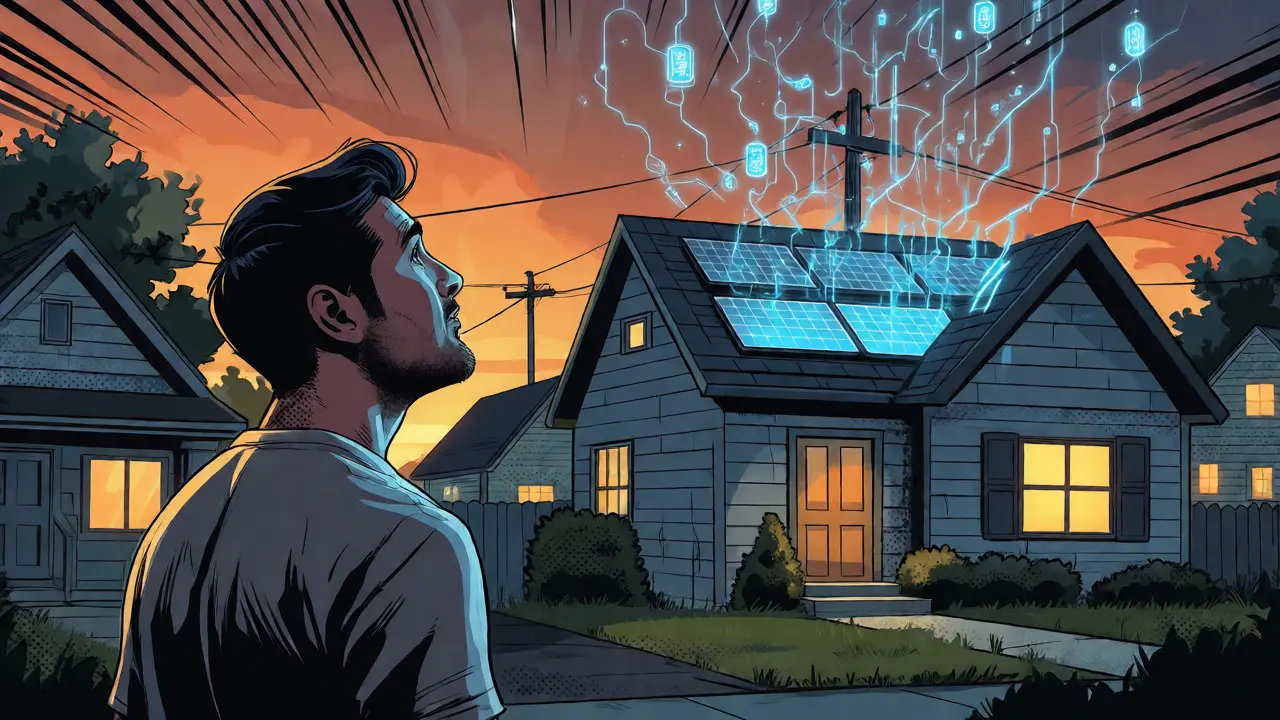
Imagine your neighbor’s solar panels powering your fridge while you sleep, with a transparent, tamper-proof record of exactly how much energy moved and what it cost. No utility middleman taking a cut for the transaction itself, no opaque billing statements, just pure, verifiable data. This isn’t science fiction from a 2050 movie; it’s the promise of Smart Grid Management with Blockchain. While the hype cycle has quieted down since the initial frenzy, the technology has quietly matured into a critical tool for solving specific, stubborn problems in energy distribution.
You might be wondering if this is just another buzzword salad thrown at utilities to sell expensive software. It’s a fair question. For years, blockchain was pitched as the silver bullet for everything from supply chains to voting systems. But in the energy sector, the stakes are physical and immediate. If the grid fails, lights go out. So, where does distributed ledger technology actually fit? Does it replace your existing SCADA systems, or does it work alongside them? And more importantly, is it ready for prime time in 2026, or is it still stuck in pilot purgatory?
The Core Problem: Trust and Transparency in Decentralized Energy
The traditional electrical grid was built for a one-way flow: power plants push electricity through wires to consumers. Today, that model is breaking down. With the rise of rooftop solar, home batteries, and electric vehicles, consumers are becoming "prosumers"-both producing and consuming energy. This creates a chaotic web of small transactions that legacy centralized systems struggle to track efficiently.
This is where blockchain steps in. It doesn’t generate power, but it provides an immutable ledger-a digital notebook that everyone can see but no one can erase or alter without agreement. In a smart grid context, this solves three massive headaches:
- Double-Counting Renewable Credits: Before blockchain, tracking Renewable Energy Certificates (RECs) was a manual nightmare. The Rocky Mountain Institute identified a $400 million annual gap caused by double-counting. Blockchain ensures each unit of green energy is claimed only once.
- Peer-to-Peer (P2P) Trading Friction: Selling excess solar power to a neighbor usually involves complex net-metering credits or waiting months for settlement. Smart contracts on a blockchain automate this instantly.
- IoT Security Vulnerabilities: As grids connect millions of smart meters and sensors, they become targets for hackers. A decentralized ledger reduces the single point of failure that attackers love to exploit.
How It Actually Works: Permissioned Chains vs. Public Crypto
If you’re picturing Bitcoin miners burning tons of electricity to secure the grid, you’ve got the wrong picture. Most smart grid implementations don’t use public blockchains like Ethereum mainnet or Bitcoin. They are too slow and energy-intensive. Instead, utilities rely on permissioned blockchains, specifically platforms like Hyperledger Fabric.
Why permissioned? Because the grid needs speed and identity verification. You don’t want anonymous nodes deciding if your house gets power. According to IET analysis, Hyperledger Fabric dominates this space, used in 68% of documented projects. These networks allow for high throughput-between 100 and 500 transactions per second-which is crucial when thousands of devices are reporting data every few seconds.
| Metric | Traditional Centralized System | Permissioned Blockchain System |
|---|---|---|
| Settlement Time | 24-48 hours | < 5 minutes |
| Transaction Accuracy | ~89.3% | ~98.7% |
| Latency (Response) | ~2ms (SCADA) | ~22ms (Average) |
| Data Integrity | Vulnerable to central DB edits | Immutable cryptographic hash |
| Primary Use Case | Real-time control & dispatch | Settlement, auditing, P2P trading |
Notice the latency difference. Blockchain adds about 20 milliseconds of delay compared to traditional SCADA systems. For adjusting grid frequency in real-time, that’s a dealbreaker. But for settling a financial transaction between two neighbors? Five minutes versus two days is a revolution.
Key Players and Real-World Pilots
The industry isn’t just theorizing. Organizations like the Energy Web Foundation (EWF), co-founded by the Rocky Mountain Institute, have been driving standardization since 2017. Their goal is to create an open-source operating system for the energy sector. But who is actually using this tech?
Brooklyn Microgrid remains the most famous case study. Launched by LO3 Energy, it allowed residents in Brooklyn to trade solar power directly. Users reported high satisfaction with transparency, though many found the mobile app interfaces clunky. One user noted, "I love seeing exactly where my solar power goes, but the 3-step verification for each transaction gets tedious." This highlights a key UX challenge: the backend is robust, but the front-end experience often lags behind consumer expectations.
In Europe, TenneT, the German transmission system operator, partnered with Sonnen to test blockchain for balancing services. They processed 1.2 million transactions with 99.2% accuracy. The result? A 40% reduction in staff time spent reconciling invoices. That’s hard cash savings for utilities.
The Implementation Hurdle: Legacy Systems and Skills Gaps
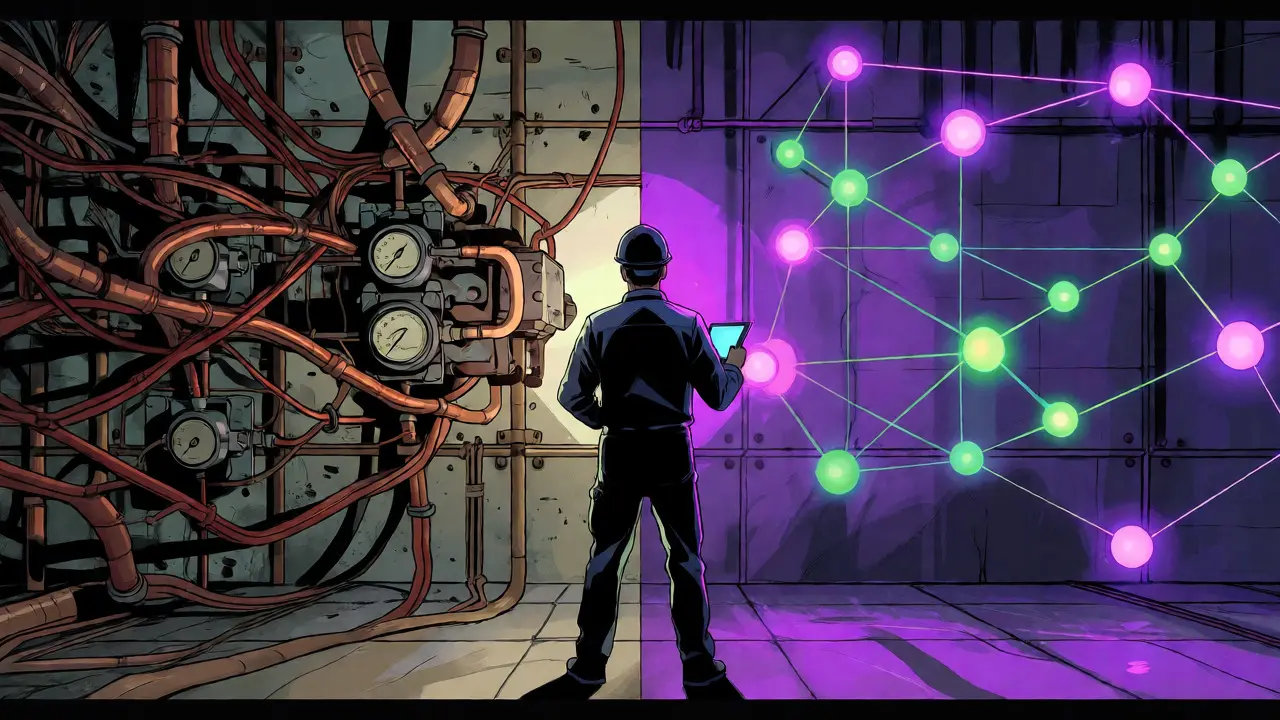
So why isn’t every utility running a blockchain node today? Two words: integration complexity. Most utilities run on legacy infrastructure that dates back decades. Connecting a modern blockchain API to a 1990s-era SCADA system is like trying to plug a USB-C cable into a rotary phone.
Engineering teams face a steep learning curve. You need people who understand both electrical engineering and cryptography. As of recent counts, there are only about 1,200 certified Energy Web Developers globally. That’s a tiny talent pool for a global industry. Furthermore, interoperability is a major pain point. A UK Power Networks engineer famously complained about spending £280,000 on integration only to find their 2015 smart meters couldn’t handle the cryptographic signatures required by the new system.
Here are the common pitfalls to avoid if you’re considering implementation:
- Ignoring Key Management: Losing private keys means losing access to assets. Poor key management causes 31% of pilot failures.
- Overestimating Throughput Needs: Don’t put every meter reading on-chain. Only put settlements and critical audit trails on the blockchain. Store bulk data off-chain.
- Underestimating Storage Costs: A full node for a million-customer utility could require petabytes of storage annually. Pruning strategies are essential.
Regulatory Landscape and Future Outlook
Technology moves faster than regulation, but the gap is closing. In the US, the Federal Energy Regulatory Commission (FERC) issued Framework Order No. 881, which permits blockchain-based transactive energy provided it meets reliability standards equivalent to conventional systems. In Europe, the MiCA framework (effective mid-2024) has set clearer rules for crypto-asset usage in energy applications.
Looking ahead, we’re seeing a shift from "will it work?" to "where does it fit best?" Gartner predicts that while many pilots will fail to scale, blockchain will underpin 25% of distributed energy transactions by 2027. The focus is moving toward hybrid models: using blockchain for trust and settlement, while keeping high-speed control loops on traditional hardware.
New developments like zero-knowledge proofs (ZKPs) are addressing privacy concerns. ZKPs allow the grid to verify a transaction is valid without revealing exactly who bought or sold the energy, satisfying GDPR requirements while maintaining auditability. This is critical for residential users who don’t want their detailed energy habits exposed to competitors.
Is Blockchain Right for Your Grid Strategy?
If you manage a utility or work in energy policy, ask yourself these questions before diving in:
- Do you have significant prosumer activity? If most customers are passive consumers, blockchain offers little value over traditional billing.
- Are reconciliation costs high? If your team spends weeks matching invoices across different providers, blockchain’s automation pays for itself quickly.
- Can you tolerate latency? If your primary goal is sub-second grid stability, stick to SCADA. If it’s market clearing and auditing, look at blockchain.
The consensus among experts is nuanced. Dr. Ning Zhang notes that while blockchain enhances credit-based payment schemes, integration challenges remain. Conversely, skeptics argue the computational overhead makes it impractical for real-time control. Both are right. Blockchain isn’t replacing the grid’s nervous system; it’s upgrading its accounting department.
Does blockchain consume too much energy for the grid?
Not necessarily. While public proof-of-work chains like Bitcoin are energy-intensive, smart grids typically use permissioned proof-of-authority or practical Byzantine fault tolerance (PBFT) consensus mechanisms. These require negligible energy compared to the total load of the grid, making them sustainable for operational use.
Can blockchain replace smart meters?
No, blockchain complements smart meters rather than replacing them. Smart meters collect the raw data (voltage, current, usage). Blockchain records the verified transactions derived from that data. The meter is the sensor; the blockchain is the ledger.
What is the biggest barrier to adoption?
Interoperability with legacy infrastructure is the top barrier. Many utilities struggle to integrate modern blockchain APIs with older SCADA systems and smart meter protocols. Additionally, the shortage of developers skilled in both energy engineering and distributed ledger technology slows deployment.
Is peer-to-peer energy trading legal everywhere?
No, regulations vary significantly by region. Some jurisdictions prohibit selling power directly to neighbors due to franchise rights held by incumbent utilities. However, regulatory sandboxes in places like New York, Germany, and Australia are actively testing frameworks to legalize P2P trading.
How does blockchain prevent double-spending of renewable energy?
Each unit of renewable energy is tokenized on the blockchain. Once a token representing 1 kWh of solar energy is transferred to a buyer, the ledger updates immediately. Any attempt to transfer that same token again is rejected by the network because the cryptographic state shows it has already been spent.