SpaceFi (Evmos) Crypto Exchange Review: Is It Worth Your Time in 2026?
Imagine connecting your wallet to a decentralized exchange that promises to bridge the gap between two major blockchain ecosystems. That is exactly what SpaceFi is a cross-chain decentralized finance platform designed to connect the Cosmos ecosystem with Ethereum's Layer 2 solutions, specifically operating on both Evmos and zkSync Era. Launched to serve as an integrated DeFi hub, it combines a decentralized exchange, NFT marketplace, and launchpad into one interface. However, before you deposit your funds, you need to know if the hype matches the reality. As of mid-2026, SpaceFi holds a unique but fragile position in the market, offering technical innovation but struggling with significant liquidity challenges.
What Exactly Is SpaceFi?
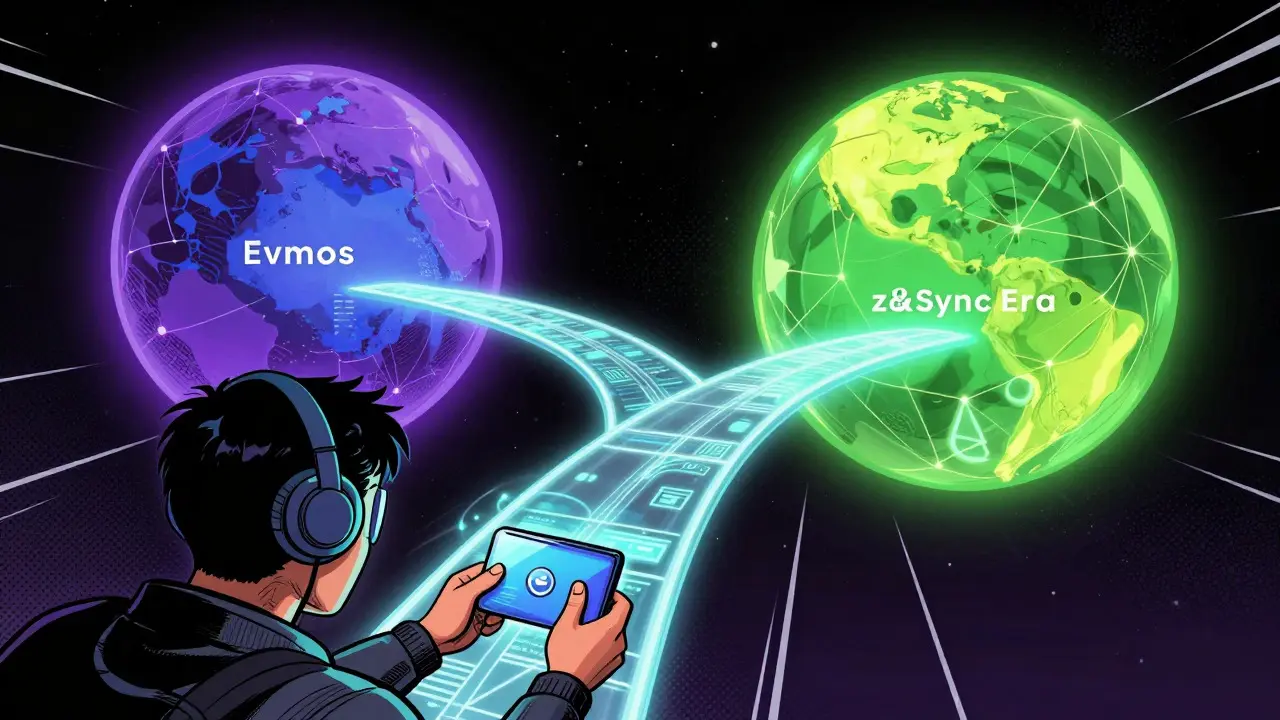
SpaceFi is a multi-service DeFi protocol that functions as a unified gateway for users navigating between Evmos and zkSync Era. Unlike single-chain DEXs that only operate on one network, SpaceFi attempts to provide a seamless experience across both. The platform was built to leverage the strengths of Evmos, which is the first EVM-compatible chain within the Cosmos ecosystem, enabling Ethereum developers to build on Cosmos while maintaining tool compatibility, and zkSync Era, which is a Layer 2 scaling solution for Ethereum utilizing zero-knowledge proof technology to provide low gas fees and fast transactions.
The core value proposition here is convenience. Instead of juggling multiple wallets and bridges, users can swap tokens and provide liquidity pools through a single dashboard. The platform also includes additional features like a Launchpad for new projects and a community space called Spacebase. While the architecture sounds robust, the question remains: does it deliver enough utility to justify its existence in a saturated market?
Technical Architecture and Cross-Chain Functionality
SpaceFi’s technical setup relies heavily on its dual-network deployment. On the Evmos side, it acts as the primary liquidity venue. According to data from CoinGecko, SpaceFi holds a dominant position among Evmos-based decentralized exchanges, effectively capturing nearly all trading volume on that specific chain. This dominance is less about massive user numbers and more about the lack of active competitors. Rivals like EvmoSwap and Cronus Finance have reported negligible or zero trading volume, leaving SpaceFi as the default option for those already holding assets on Evmos.
On the zkSync Era side, the platform benefits from Ethereum-level security without the high transaction costs associated with the mainnet. The integration allows for faster settlement times and lower fees, which is crucial for frequent traders. However, the cross-chain aspect requires users to understand the mechanics of moving assets between these distinct ecosystems. While the interface aims to simplify this, the underlying complexity means that beginners might find the initial setup slightly steep compared to simpler, single-chain platforms like Uniswap on Ethereum.
| Feature | SpaceFi | Uniswap | PancakeSwap |
|---|---|---|---|
| Primary Networks | Evmos, zkSync Era | Ethereum, Arbitrum, Optimism | BSC, Ethereum, Polygon |
| Market Share (Niche) | ~100% of Evmos DEX volume | Dominant global leader | Strong BSC presence |
| Trading Volume Status | Low (Micro-cap level) | High (Billions daily) | High (Hundreds of millions) |
| Additional Features | NFT Marketplace, Launchpad | Liquidity Pools, NFTs | Farms, Lottery, NFTs |
| User Base Size | Niche / Limited | Massive / Global | Large / Active |
Tokenomics and Market Reality Check
This is where the review gets complicated. When evaluating any crypto project, you must look at the token data. The SPACE token has shown significant discrepancies across tracking platforms. CoinMarketCap has listed the total supply and circulating supply as zero at various points, suggesting potential issues with tokenomics transparency or delisting from major aggregators. Meanwhile, CoinGecko reports measurable, albeit tiny, trading volumes. For instance, a 24-hour trading volume of approximately $250 USD highlights just how small the active user base currently is.
These numbers paint a picture of a project that is technically functional but commercially quiet. The discrepancy between marketing claims of being a "popular DeFi Hub" and the actual micro-scale trading activity raises red flags for risk-averse investors. If you are looking for deep liquidity to execute large trades without significant slippage, SpaceFi is not the place. It is better suited for smaller positions or users who specifically need access to Evmos-based assets.
User Experience and Practical Usage
From a usability standpoint, SpaceFi follows the standard design patterns of modern DEXs. You connect an Ethereum-compatible wallet, such as MetaMask or Rabby, select the token pair you want to swap, and confirm the transaction. The interface is clean and intuitive, which helps mitigate some of the complexity inherent in cross-chain operations.
However, the lack of extensive user reviews and forum discussions suggests that very few people are actively using the platform day-to-day. This absence of community feedback makes it harder to gauge long-term reliability. For example, there are no widespread reports of bugs or downtime, but also no testimonials praising the speed or support quality. In a world where community sentiment often drives adoption, this silence is notable. Users should proceed with caution, starting with small test transactions to ensure their specific use case works smoothly before committing larger amounts.
Risks and Bearish Sentiment
You cannot ignore the broader market context when reviewing SpaceFi. The platform’s viability is heavily tied to the success of the Evmos ecosystem. Recent analyses from platforms like CoinCodex have shown bearish indicators for EVMOS, the native token of Evmos. Forecasts have predicted significant price declines, with some models projecting drops of over 25% in the coming months. Such pessimism directly impacts the utility and attractiveness of building on or using Evmos-based applications like SpaceFi.
Furthermore, the competitive landscape is fierce. Established giants like Uniswap and PancakeSwap process billions in daily volume, creating a stark contrast with SpaceFi’s niche status. While SpaceFi offers unique cross-chain functionality, few other DEXs offer this specific combination as a unified platform. Yet, unless the Evmos ecosystem grows significantly, SpaceFi may remain a peripheral player rather than a central hub. Investors need to weigh the innovative tech against the real-world adoption metrics, which currently lean toward stagnation.
Who Should Use SpaceFi?
Given the current state of affairs, SpaceFi is best suited for a very specific type of user. If you already hold assets on Evmos and need to swap them without bridging back to Ethereum mainnet, SpaceFi is your most viable option due to its near-monopoly on Evmos DEX volume. It is also useful for developers or researchers interested in exploring the intersection of Cosmos and Ethereum L2 technologies. For the average retail trader seeking the deepest liquidity and highest security, sticking to major established DEXs is likely the safer bet. SpaceFi serves as a specialized tool rather than a general-purpose exchange.
Is SpaceFi safe to use?
SpaceFi operates on established networks like Evmos and zkSync Era, which inherit their respective security models. However, like all DeFi platforms, it carries smart contract risks. Given the low trading volume and limited audit history mentioned in public sources, users should start with small amounts to test the waters.
Why is SpaceFi’s trading volume so low?
The low volume reflects the niche nature of the Evmos ecosystem. While SpaceFi dominates the small market of Evmos DEXs, the overall Evmos chain has limited adoption compared to Ethereum or BSC. Additionally, bearish sentiment surrounding EVMOS prices has reduced user activity.
Can I use SpaceFi on mobile?
Yes, SpaceFi is accessible via web browser on mobile devices. Since it is a decentralized application, you do not need to download a separate app; simply navigate to the website using a mobile-friendly browser with a compatible wallet extension installed.
What is the difference between SpaceFi on Evmos and zkSync Era?
The difference lies in the underlying network. The Evmos version caters to the Cosmos ecosystem, while the zkSync Era version leverages Ethereum Layer 2 scaling for lower fees and faster speeds. The interface is unified, but the assets and gas tokens differ based on which network you are interacting with.
Does SpaceFi charge high fees?
Fees depend on the network used. Transactions on zkSync Era typically have very low gas fees due to zero-knowledge rollup technology. Fees on Evmos are generally lower than Ethereum mainnet but higher than some L2s. The DEX itself charges a standard swap fee, usually around 0.3%, similar to other AMMs.