SpaceFi (zkSync) Crypto Exchange Review: Safety, Fees & Verdict for 2026
Have you ever clicked on a flashy ad promising "zero fees" and "instant withdrawals" on the zkSync network, only to find yourself staring at a website called SpaceFi?
If so, you are not alone. In the crowded world of Layer 2 DeFi, new platforms pop up daily. Some are legitimate innovations built by top-tier developers. Others are hastily coded fronts designed to drain your wallet before you even realize what happened. This review cuts through the noise to tell you exactly what SpaceFi is, how it uses the ZK token ecosystem, and whether your funds are actually safe in 2026.
What Is SpaceFi? The Basics
SpaceFi is a decentralized exchange (DEX) interface operating primarily within the zkSync Era ecosystem. Unlike centralized exchanges like Binance or Coinbase, where a company holds your money, SpaceFi connects directly to your wallet-usually MetaMask or Rabby-and interacts with smart contracts on the blockchain.
The core promise of any DEX on zkSync is speed and cost. Because zkSync Era is an Ethereum Layer 2 scaling solution using zero-knowledge rollups, transactions settle much faster than on the main Ethereum chain. For users, this means swapping tokens shouldn't cost more than a penny. SpaceFi leverages this infrastructure to offer trading pairs that include the native ZK token is the governance and utility token of the zkSync network alongside major assets like ETH and USDC.
However, here is the catch: there are multiple projects with similar names in the crypto space. Before you connect your wallet, you need to verify if you are looking at the official SpaceFi protocol backed by known investors, or a copycat site. As of mid-2026, the legitimacy of specific "SpaceFi" branded interfaces varies wildly depending on which URL you visit. Always check the contract addresses.
How SpaceFi Works on zkSync Era
To understand if SpaceFi is worth using, you have to look at the engine under the hood. It runs on zkSync Era utilizes validium technology and ZK-rollups to batch transactions off-chain. Here is what that means for your daily trading:
- Low Gas Fees: On Ethereum Mainnet, a simple swap might cost $5-$20 during peak times. On zkSync, via SpaceFi, that same transaction often costs less than $0.01.
- EVM Compatibility: You don’t need to learn a new coding language or buy a special hardware wallet. If you can use Uniswap, you can use SpaceFi.
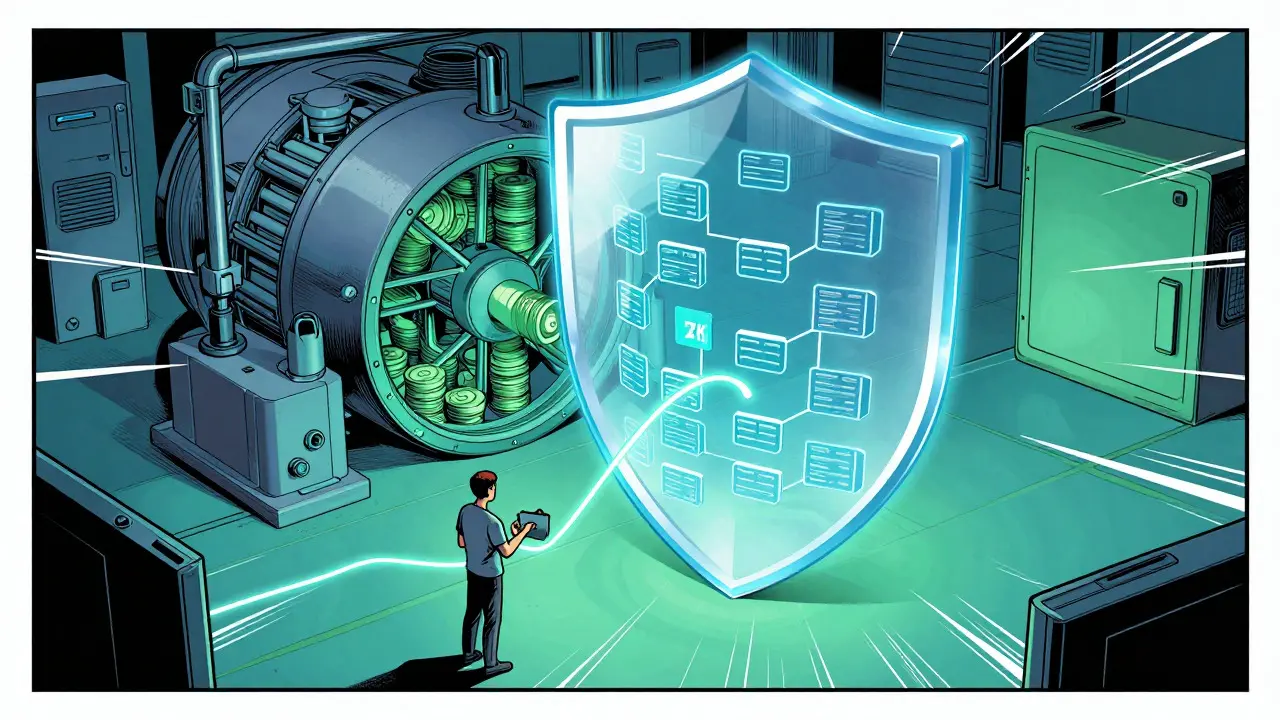
- Security Model: The security comes from Ethereum. Every few minutes, a cryptographic proof (a ZK-proof) is posted to Ethereum, proving that the state of zkSync is valid. If SpaceFi’s smart contracts are secure, your funds are as safe as they are on Ethereum.
The risk isn't usually the Layer 2 itself; it's the smart contracts powering the specific DEX. If SpaceFi has a bug in its router contract, hackers can drain liquidity pools regardless of how good zkSync is. This is why auditing matters more than marketing.
Is SpaceFi Safe? A Security Audit Breakdown
Safety in DeFi is not binary. It’s a spectrum. When evaluating SpaceFi, we look at three pillars: Audits, Team Transparency, and Liquidity Depth.
1. Smart Contract Audits
Reputable DeFi protocols hire firms like CertiK, OpenZeppelin, or Trail of Bits to audit their code. Check SpaceFi’s documentation page. Do they list recent audits from 2025 or 2026? If the last audit was from 2023, be cautious. Code changes frequently, and old audits don't cover new vulnerabilities.
2. Team Anonymity vs. Identity
Many early crypto projects were anonymous. In 2026, however, trust requires identity. Does SpaceFi have a public team linked to LinkedIn profiles? Are they active on Twitter/X and Discord? Anonymous teams aren't automatically scams, but they make recourse impossible if things go wrong.
3. Liquidity Locks
A common scam is the "rug pull," where developers remove all liquidity and run. Legitimate platforms lock their liquidity tokens for long periods (e.g., 1-2 years) using services like Unicrypt or Team.Finance. Verify if SpaceFi’s liquidity is locked. If it isn't, you are trading in a sandbox where the owners can close the door anytime.
| Feature | SpaceFi | Mute.io / SyncSwap | Uniswap (on L2) |
|---|---|---|---|
| Audits | Variable (Check Docs) | Multiple Top-Tier Audits | Extensively Audited |
| Liquidity Depth | Lower (Higher Slippage) | High | Very High |
| Fees | Competitive (Often 0.3%) | Standard (0.3% - 1%) | Standard (0.05% - 1%) |
| User Base | Growing/Niche | Large Native User Base | Massive Cross-Chain Base |
Trading Experience: Interface and Usability
Let’s talk about the actual experience of using SpaceFi. The interface typically mirrors standard DEX designs: a swap box on the left, order book or pool details on the right, and a history tab below.
Speed: Swaps on SpaceFi should confirm in seconds. If you are waiting more than 30 seconds for a quote to load, check your RPC settings in MetaMask. Often, users get stuck because they are still pointing their wallet at an old zkSync testnet or a congested node.
Slippage: Because SpaceFi may have lower liquidity than giants like Uniswap, you might experience higher slippage when trading large amounts. Slippage is the difference between the expected price and the executed price. For small trades ($10-$100), this is negligible. For whales moving $10k+, you might lose value. Always set a slippage tolerance of 0.5% to 1% unless the trade is very volatile.
Token Support: SpaceFi likely supports the major pairs: ETH/ZK, USDC/ZK, and maybe some trending meme coins native to zkSync. If you want to trade obscure tokens, you might need to add custom token addresses manually-a step that carries risk if you paste the wrong address.
Fees and Costs: What You Actually Pay
Crypto exchanges love hidden fees. Let’s break down what you pay on SpaceFi:
- Protocol Fee: Usually 0.3% per trade. This goes to liquidity providers (LPs). Part of this might be taken as a protocol fee to fund development.
- Gas Fee: Paid in ZK or ETH. On zkSync, this is tiny. Expect to pay $0.01-$0.05 per transaction. Keep a small amount of ZK in your wallet for gas; running out will leave your other tokens stuck until you bridge more in.
- Bridging Costs: Getting funds onto zkSync in the first place costs money. Using official bridges like the zkSync Portal or third-party aggregators like Orbiter or Jumper can vary in cost. Sometimes paying a slightly higher fee on an aggregator saves time compared to the slow official bridge.
There are no withdrawal fees in the traditional sense because you control the private keys. However, if you bridge back to Ethereum Mainnet, you will pay Ethereum gas fees, which can be expensive.
Alternatives to SpaceFi on zkSync
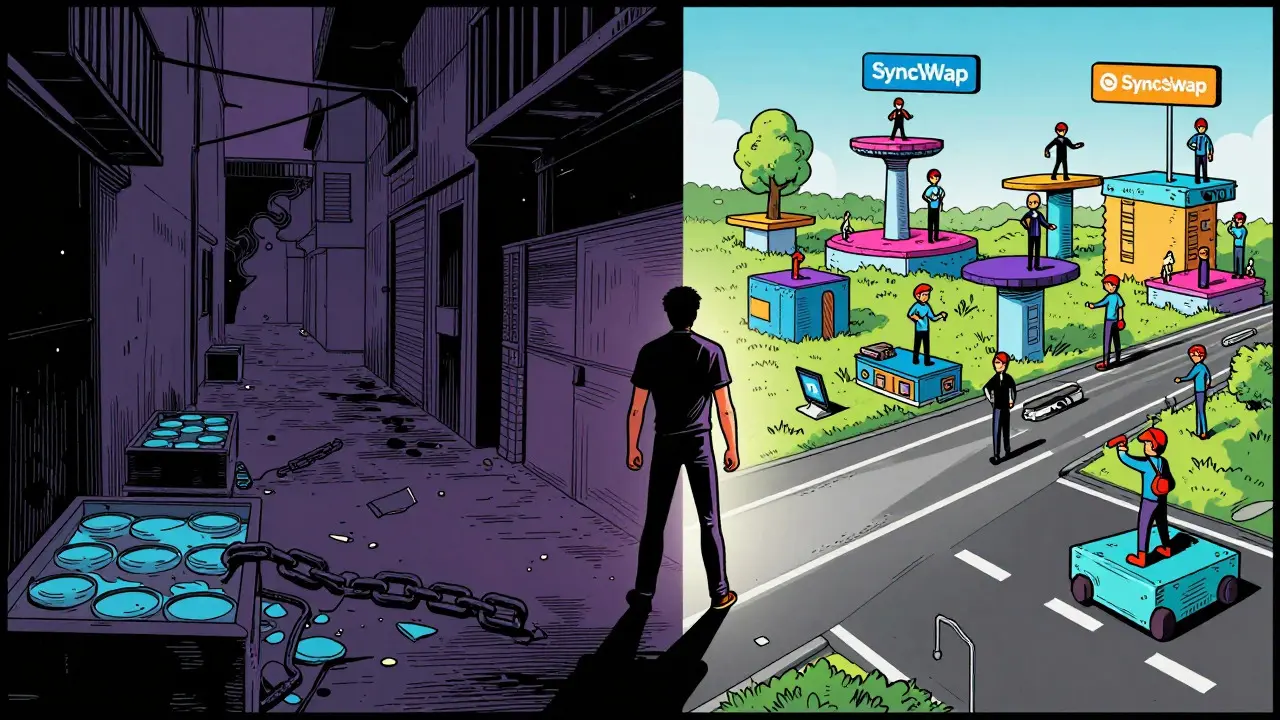
If SpaceFi feels too risky or lacks the liquidity you need, there are robust alternatives already established in the zkSync ecosystem:
- SyncSwap: One of the earliest AMMs on zkSync. It offers deep liquidity and a familiar interface similar to PancakeSwap.
- Mute.io: Known for low fees and high throughput, Mute is a favorite among traders who prioritize speed and cost efficiency.
- Uniswap v3: Available on zkSync, offering concentrated liquidity for advanced users who want better capital efficiency.
These platforms have undergone more scrutiny and have larger communities. For most users, sticking to these established names reduces the risk of interacting with buggy or malicious code.
Verdict: Should You Use SpaceFi in 2026?
Here is the bottom line. SpaceFi offers the theoretical benefits of zkSync: cheap, fast, and secure trading. But because it is a smaller player compared to SyncSwap or Mute, it carries higher counterparty risk.
Use SpaceFi if:
- You are trading newer, niche tokens listed exclusively on SpaceFi.
- You have verified the smart contract audits and liquidity locks yourself.
- You are comfortable managing small amounts of capital in experimental DeFi apps.
Avoid SpaceFi if:
- You are moving significant life savings.
- You cannot find recent, reputable audit reports.
- You prefer the simplicity and depth of larger, battle-tested DEXs.
In the crypto world, "too good to be true" often is. If SpaceFi promises yields that seem impossibly high, walk away. Stick to transparent, audited, and liquid platforms. Your wallet will thank you.
Is SpaceFi a centralized or decentralized exchange?
SpaceFi is a decentralized exchange (DEX). It operates via smart contracts on the zkSync network, meaning you retain custody of your funds through your personal wallet (like MetaMask) rather than depositing them into a company-controlled account.
What is the minimum amount to trade on SpaceFi?
There is technically no minimum set by the protocol, but you must have enough ZK or ETH in your wallet to cover the gas fee. Since gas on zkSync is extremely low (often less than $0.01), you can trade very small amounts effectively.
How do I get ZK tokens to pay for gas on SpaceFi?
You can bridge ZK tokens from Ethereum Mainnet using the official zkSync Portal or third-party bridges like Orbiter. Alternatively, you can buy ZK on a centralized exchange like Binance or Coinbase and withdraw it to your zkSync-compatible wallet address.
Are there any hidden fees when using SpaceFi?
The primary fee is the 0.3% trading fee paid to liquidity providers. There are no hidden withdrawal fees since you own your keys. However, always check the slippage impact on large trades, as low liquidity can result in a worse execution price.
Can I use SpaceFi on mobile devices?
Yes, SpaceFi is a web-based application. You can access it through any mobile browser (Chrome, Safari) and connect your mobile wallet app. Ensure you are using the correct RPC settings for zkSync Era in your wallet configuration.
What happens if the SpaceFi website goes down?
Your funds are safe. They are stored in the smart contracts on the zkSync blockchain, not on SpaceFi's servers. If the website goes down, you can still interact with the contracts directly via block explorers like Etherscan (zkSync section) or alternative front-ends that support the same contract addresses.