Miner Tip: What You Need to Know About Crypto Mining Rewards and Real-World Risks
When you hear miner tip, a small reward given to miners for validating transactions and securing the blockchain. Also known as mining reward, it's the core incentive that keeps networks like Bitcoin alive. It’s not a gift. It’s a contract written in code. Every time a miner solves a complex math problem, they earn new coins—this is the block reward, the fixed amount of cryptocurrency awarded to miners for adding a new block to the chain. That’s how Bitcoin gets into circulation. And every four years, that reward cuts in half. That’s the Bitcoin halving, a scheduled reduction in block rewards that controls the rate of new Bitcoin creation. It’s not magic. It’s math. And it’s what makes Bitcoin scarce.
But here’s the catch: miner tip isn’t just about coins. It’s about power, control, and who gets to play. In Venezuela, the government forces miners into a state-run pool, demands licenses, and takes a big cut. That’s not decentralization—that’s regulation with teeth. In places like Myanmar and North Korea, mining isn’t even legal—it’s a front for crime. These aren’t abstract ideas. Real people lose money, get trapped, or worse. Meanwhile, in places like El Salvador or Turkey, mining rules change overnight. What’s legal today might be banned tomorrow. The cryptocurrency supply, the total number of coins in circulation, limited by protocol rules like halving or fixed caps. stays predictable in theory. But in practice, who controls mining determines who controls value.
Some miners chase airdrops, hoping for free tokens. Others trade on exchanges like SushiSwap or Velodrome, trying to earn more from fees. But if you’re serious about mining, you need to understand the real stakes: energy costs, hardware wear, and the fact that most small miners won’t break even. The big players have cheap power and massive farms. The rest? They’re playing with house money. And when the reward halves, the pressure mounts. That’s why some turn to sketchy schemes—fake airdrops, zero-supply coins like OCP, or platforms that vanish overnight. You think you’re getting a miner tip. You might just be funding a rug pull.
What you’ll find below isn’t a list of tips. It’s a map. Of who’s mining, who’s banning it, who’s scamming it, and who’s still standing. From Venezuela’s state-controlled mines to the $2 billion heisted by North Korea’s Lazarus Group, these stories show what mining really looks like when the code meets the real world. No fluff. No hype. Just what’s happening—and why it matters to anyone holding crypto.
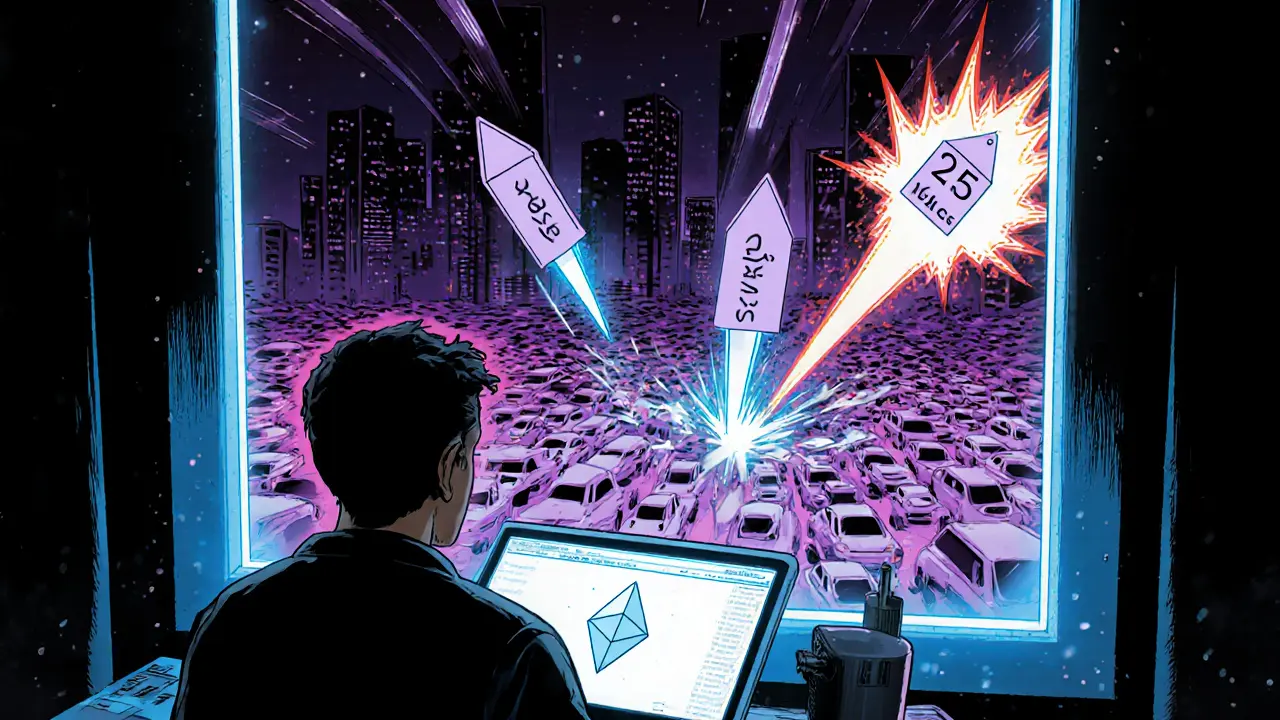
Learn how priority fees and miner tips affect your blockchain transaction speed. Understand Ethereum’s EIP-1559 system, Bitcoin’s fee model, and how to set the right tip to avoid delays and wasted money.
Continue Reading