
TAGZ Crypto Exchange Review: The Rise and Fall of a Fraudulent Platform
TAGZ crypto exchange promised the moon: zero fees, lightning-fast trades, and a regulatory stamp from Australia. It even claimed to outperform Binance and Kraken in trading volume. But today, it’s a ghost. No website. No customer support. No funds. Just a domain for sale and thousands of angry users who lost everything. This isn’t a story about a bad business. It’s a story about a carefully constructed lie.
How TAGZ Sold the Dream
When TAGZ launched in March 2019, it came with a flashy pitch. It said it processed 75,000 transactions per second - faster than any exchange in the world. It claimed to be fully licensed in Australia with four government registrations: ASIC, AUSTRAC, Digital Currency Exchange, and Remittance Dealer. It offered zero trading fees (though later reports found a hidden 0.01% fee), instant deposits, and 99.8% uptime. Its interface looked clean. Its marketing looked professional. And for a while, people believed it.
Platforms like CoinGecko briefly listed TAGZ in the top 20 exchanges by volume, reporting $3.5 billion in daily trades. That number was impossible. Binance, the real leader, was doing $15 billion at the time. TAGZ’s volume didn’t come from real traders. It came from bots - wash trading, where the same coins were bought and sold between fake accounts to inflate numbers. Chainalysis flagged this pattern in 2021. Messari and Nansen confirmed it. The numbers were fake. The platform was a facade.
The Hollow Infrastructure
Behind the marketing, TAGZ had almost nothing. No fiat on-ramps. You couldn’t deposit USD, EUR, or AUD. You had to buy crypto elsewhere - say, on Coinbase or Binance - then send it to TAGZ. That’s not a feature. That’s a red flag. Legitimate exchanges make it easy to enter the crypto world. TAGZ made it hard.
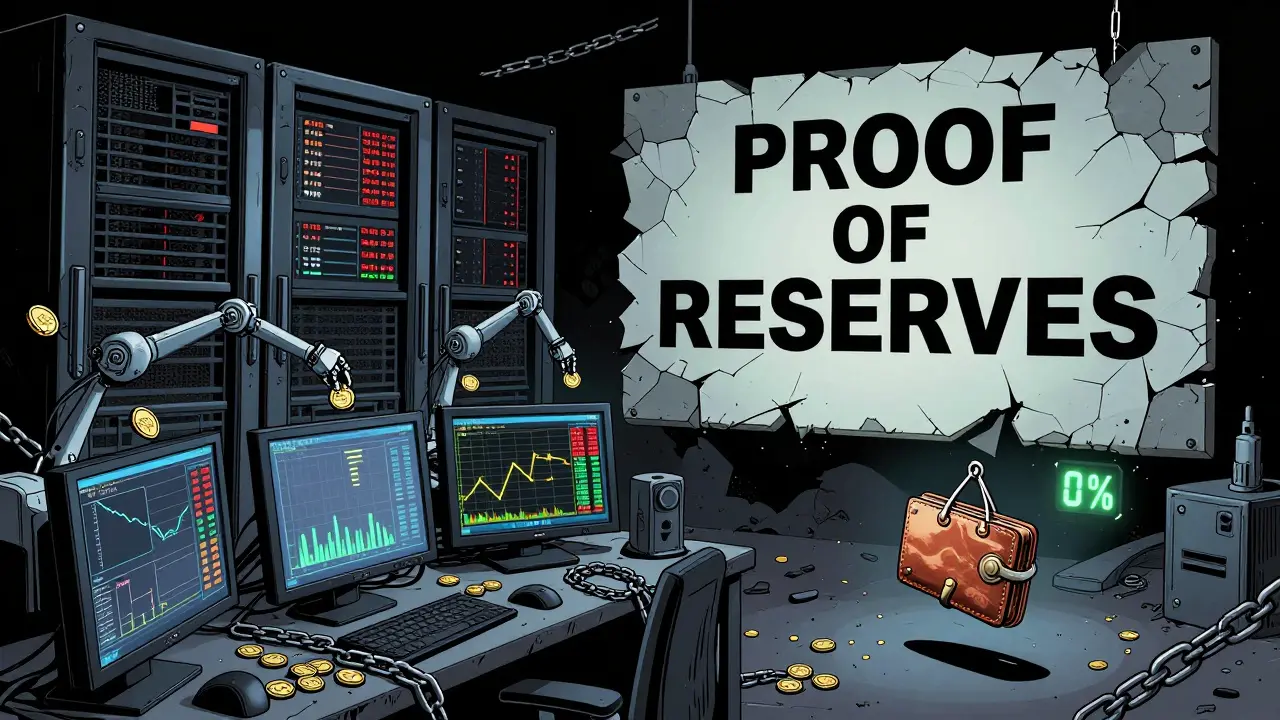
It claimed to support spot trading and futures with margin, but there was no transparency. No public order books. No trade history. No liquidity depth. No third-party audits. Unlike Binance, which publishes its Proof of Reserves monthly, TAGZ never showed a single wallet address. No one could verify if it held even 10% of the crypto users deposited.
Its "world’s fastest" trading engine? Other exchanges like Bybit and OKX openly state their engines handle over 100,000 TPS. TAGZ never released technical specs. No code. No benchmarks. Just a slogan. That’s not innovation. That’s theater.
The User Experience: From Smooth to Nightmare
Early users gave TAGZ glowing reviews. Trustpilot had a 4.2/5 rating in mid-2020. People praised the interface and "fast withdrawals." But that was before the curtain dropped.
By late 2021, the same users were screaming on Reddit and BitcoinTalk. Withdrawals stopped. Accounts got locked. Support vanished. One user, u/CryptoLoser99, submitted a withdrawal for 2.5 BTC on October 12, 2021. By October 15, the account was frozen. No email. No reply. No explanation. That story wasn’t rare. CryptoSlate documented 83 verified cases of lost funds totaling over $1.2 million. The largest single loss? $78,500.
The KYC process, once advertised as "under 15 minutes," turned into a nightmare. Users reported being asked for bank statements, proof of wealth, and even selfies holding IDs - for withdrawals under $5,000. No other major exchange did this. It was harassment disguised as compliance.
Customer support response times went from 4 hours in 2020 to over 72 hours by 2021. Telegram and Discord communities, once with 12,000 and 8,500 members respectively, shrank to under 200 active users. The website’s help docs disappeared. Links broke. The platform was rotting from the inside.
The Regulatory Lie
TAGZ’s biggest claim? That it was licensed in Australia. But ASIC - Australia’s financial regulator - has no record of Tagz Group Pty Ltd ever holding an Australian Financial Services License. None. Zero. Not even an application.
AUSTRAC, the anti-money laundering body, fined another exchange $1.3 million in 2021 for similar false claims. TAGZ didn’t just ignore regulations - it pretended they didn’t exist. It used fake registration numbers. It copied language from real licenses. It even had a fake "regulatory compliance" page on its site. That’s not negligence. That’s fraud.
ASIC’s 2022 Enforcement Report explicitly called out TAGZ as an example of how scammers exploit regulatory trust. If you see a crypto exchange claiming Australian licensing - and you can’t find its license number on ASIC’s official register - walk away. TAGZ is the textbook case.
The Final Collapse
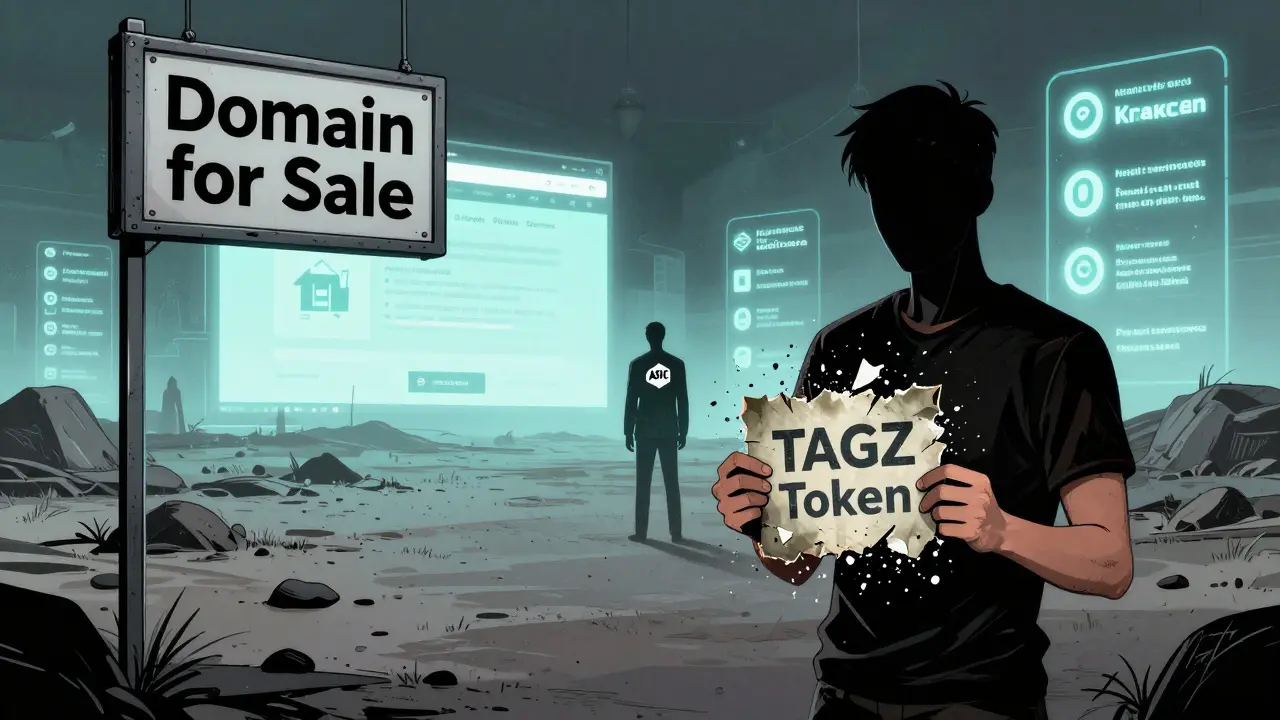
By September 2021, TAGZ vanished from CoinGecko and CoinMarketCap. No volume. No trading pairs. No liquidity. Just a blank page. By November 2023, its domain - tagz.us.com - was listed for sale. The website now shows a simple message: "Domain for Sale."
The TAGZ token, once trading at $1.50 in June 2020, is now worth $0.000027 USD. That’s a 99.998% drop. It’s not just dead. It’s erased.
Delphi Digital’s 2022 report found that every exchange with TAGZ’s pattern - fake volume, withdrawal blocks, unverified licensing, and eventual silence - had a 0% recovery rate. No exceptions. TAGZ wasn’t an outlier. It was a blueprint.
Why TAGZ Still Matters
This isn’t just history. It’s a warning. TAGZ succeeded because it looked real. It used professional design, fake testimonials, and borrowed credibility from real regulators. It preyed on people who wanted to believe crypto could be fast, cheap, and easy.
Today, new exchanges still use the same tricks: "zero fees," "fastest engine," "licensed in [country]." They copy TAGZ’s playbook. They don’t change the script. They just change the name.
Here’s how to avoid the next TAGZ:
- Check the license. Go to ASIC, FINMA, or FCA’s official site. Search for the company name. If it’s not there, it’s fake.
- Look for Proof of Reserves. Does the exchange publish wallet addresses and signed attestations? If not, assume your funds aren’t safe.
- Verify volume. If CoinGecko or CoinMarketCap doesn’t list the exchange, or if its volume is way higher than Binance’s, it’s likely inflated.
- Watch for withdrawal delays. If users on Reddit or Twitter are complaining about frozen funds - listen.
- Never trust "zero fees." There’s always a cost. Hidden fees, withdrawal limits, or outright theft.
TAGZ didn’t fail because it was unlucky. It failed because it was a scam from day one. And the only thing worse than losing money to a scam? Knowing you ignored every warning sign.
Is TAGZ crypto exchange still operational?
No, TAGZ is completely defunct. Its website (tagz.us.com) now displays a "Domain for Sale" message. No trading pairs, no deposits, no withdrawals, and no customer support exist. Major crypto trackers like CoinGecko and CoinMarketCap removed it in 2021 and now list it as dead.
Was TAGZ ever a legitimate exchange?
No. While TAGZ claimed to be licensed in Australia with ASIC and AUSTRAC registrations, neither regulator has any record of Tagz Group Pty Ltd ever being approved. ASIC’s 2022 report explicitly called out TAGZ as an example of fraudulent licensing claims. Its volume, uptime, and trading engine claims were also proven false by blockchain analysts.
Can I recover my funds from TAGZ?
No. There is no recovery mechanism. TAGZ had no real assets, no insurance, and no legal entity behind it. ASIC confirmed it never held an Australian Financial Services License. Users who lost funds have no legal recourse. The platform was designed to disappear - and it did.
How did TAGZ fake its trading volume?
TAGZ used wash trading - a technique where bots buy and sell the same assets between controlled accounts to create the illusion of high activity. Chainalysis and Messari confirmed this pattern in 2021. The volume numbers were entirely artificial, with round-number trades (like 100 BTC, 500 ETH) that don’t occur naturally in real markets.
What should I look for in a safe crypto exchange?
Look for: 1) Public Proof of Reserves (verified wallet addresses), 2) Real regulatory licensing you can check on government sites, 3) Transparent trading volume on CoinGecko or CoinMarketCap, 4) No withdrawal delays reported by users on Reddit or Twitter, and 5) A long track record with real institutional clients. Avoid platforms that promise "zero fees," "fastest engine," or "licensed in [country]" without proof.


23 Comments
Michelle Mitchell
February 26 2026lol i just lost my whole portfolio to this thing. i thought it was legit because the website looked so clean. guess that's what they want you to think. rip my btc. 🤡
Kaitlyn Clark
February 26 2026this is why you ALWAYS check ASIC's official register 😤 i literally screamed when i saw tagz was gone. my mom still doesn't understand why i won't use "easy" exchanges anymore. 💔
christopher luke
February 27 2026man i'm just glad i didn't fall for it. i always say: if it sounds too good to be true, it is. crypto's wild but you can still stay safe. stay smart out there 🙌
Mary Scott
March 1 2026this was all a psyop. the australian government was in on it. they let it run so they could track every crypto user. now they have your data. they always do.
Shannon Holliday
March 1 2026i'm from india and i saw so many people from my community get scammed by this. the way they used "australian license" to seem trustworthy? pure manipulation. we need better crypto education 💬❤️
Jeremy buttoncollector
March 3 2026the ontological collapse of trust in centralized exchanges is palpable. tagz was a semiotic artifact of performative legitimacy - a hollow simulacrum of financial infrastructure. the wash trading wasn't just manipulation; it was a deconstruction of market epistemology.
Michelle Xu
March 5 2026i'm a former compliance officer and let me say this: if an exchange doesn't publish its wallet addresses publicly, walk away. period. tagz didn't even try to look real. they just hoped people wouldn't check.
Ryan Burk
March 6 2026you guys are overreacting. binance is worse. at least tagz didn't charge 0.1% fees. you're just mad because you got caught being lazy.
Amanda Markwick
March 8 2026i'm so glad someone finally broke this down. i lost money too but now i'm helping others avoid it. if you're new to crypto, just stick to coinbase or kraken for now. no need to be a hero. we got you 💪
Sriharsha Majety
March 9 2026i lost 5000 usd to tagz. i was so excited because it was so easy to use. now i dont even trust my own phone. i just cry every night. why did this happen to me
Tabitha Davis
March 11 2026obviously this is a deep state operation. the real scam is that they made you think it was just a normal scam. they want you to blame the exchange so you don't ask why the feds didn't stop it. wake up.
Vishakha Singh
March 12 2026as someone from india, i want to say: please, always verify. don't rely on logos or fancy websites. check the regulator's website yourself. it takes 2 minutes. your money is worth it.
Andrew Hadder
March 13 2026i read the whole thing. honestly? i'm surprised more people didn't notice the fake volume. those 100 btc trades? no real trader does that. too obvious.
Derek Sasser
March 15 2026i used to work at a legit exchange. we had audits every quarter. tagz didn't even have a server log. if you're not verifying your own funds, you're not investing - you're gambling.
Neeti Sharma
March 16 2026australia? pfft. they're all fake. india has real regulators. why do you trust western countries? they scam you too. we knew this was trash from day one
Nadia Shalaby
March 18 2026honestly i just scroll past these posts now. too much drama. i use coinbase. it works. end of story.
Fiona Monroe
March 18 2026The regulatory misrepresentation exhibited by TAGZ constitutes a material breach of the Financial Services and Markets Act 2000. Had this occurred within the UK jurisdiction, it would have triggered immediate intervention by the FCA. The absence of due diligence by users is not an excuse - it is a failure of financial literacy.
Molley Spencer
March 19 2026the fact that you're still using "crypto" as a word makes me sad. this isn't about tagz. it's about the entire blockchain mythos being a gilded cage for the gullible. you didn't lose money. you lost your delusion.
John Fuller
March 20 2026tagz was a scam. next.
Maggie House
March 22 2026i just started learning about crypto last year and i read this whole thing. it's scary but also so helpful. i'm gonna check every exchange now. thanks for writing this. you saved me from a bad decision 💛
Dana Sikand
March 23 2026i cried when i lost my money. i had saved for 2 years. i thought i was smart. i wasn't. now i tell everyone i know: if they don't show you the wallet, don't send a dime. please don't make my mistake.
Robert Kromberg
March 24 2026i think we need to stop blaming users. the system is designed to trick people. the real problem is that no one is holding these fake platforms accountable. it's not about being lazy - it's about being preyed on.
Daisy Boliaan
March 24 2026i used to work for tagz. i was a customer support rep. i was told to ignore all withdrawal requests after october. i quit the next day. i still feel guilty. i'm so sorry.