
What is Coin (COINS) on reservebankapp.com? A Guide to the Reserve Bank Crypto Asset
Most people looking for COINS aren't searching for a meme coin or a new DeFi protocol. They are likely trying to figure out what this specific asset is, why it's tied to an app called "Reserve Bank," and whether it's safe to hold. The short answer is that Coin (reservebankapp.com), or COINS, is a low-cap utility token designed to power a mobile payment system. It’s not a mainstream stablecoin like USDT, nor is it a top-10 altcoin. It sits in the long tail of the crypto market, with a market cap that has fluctuated between roughly $88,000 and $920,000 in recent months.
If you’ve stumbled upon this ticker while checking your portfolio or reading about digital wallets, you might be confused by conflicting data online. Some sources say it runs on Solana; others point to a Binance Smart Chain contract. Prices swing wildly because trading volume is often measured in tens of dollars per day. This guide breaks down exactly what COINS is, how it works within the Reserve Bank ecosystem, and the risks you need to know before interacting with it.
Key Takeaways
- COINS is a fixed-supply cryptocurrency issued by The Reserve Bank, LLC, designed for use in their mobile payment app.
- The primary use case is spending via a virtual card linked to Apple Pay or Google Pay, abstracting away complex blockchain interactions for everyday purchases.
- It primarily operates on the Solana blockchain, though a separate contract exists on Binance Smart Chain, creating potential confusion for users.
- With a max supply of 1 billion tokens and daily volumes sometimes under $100, liquidity is extremely low, leading to high volatility and slippage risk.
- As of August 2026, the price hovers around $0.000126, placing it in the microcap category with limited institutional adoption.
What Is the Reserve Bank App Ecosystem?
To understand the token, you have to look at the product it supports. The Reserve Bank, LLC describes its platform as a "blockchain-based financial platform" that combines three things: a secure credit card, a crypto wallet, and a decentralized exchange interface. The goal isn't just to let you buy and hold crypto; it's to make crypto usable for paying for coffee or groceries without you needing to understand gas fees or private keys.
The core product here is the Reserve Bank Card. When you add this card to your phone’s wallet (Apple Pay or Google Pay), you can pay anywhere standard cards are accepted. Behind the scenes, the system uses COINS as part of its asset framework. According to the project's white paper, which was updated in early 2026, the system is built on the "Reserve Coin Series." This series includes Reserve Coin itself, various denominations, and treasury securities. COINS acts as the base asset class that governs issuance rules and compliance controls within this closed-loop system.
Think of it like this: you load value into the app, perhaps using fiat currency or other crypto assets. The app manages these assets automatically. When you tap your phone to pay, the system handles any necessary conversion from your underlying holdings to the fiat currency required by the merchant. COINS facilitates this internal liquidity and stability, ensuring that the payment rails remain functional even if external markets are volatile.
Technical Architecture: Solana vs. BSC Confusion
Here is where it gets tricky for anyone trying to buy or send COINS manually. Major exchanges like HTX and the official documentation state that COINS operates on the Solana blockchain. This makes sense given Solana's high throughput and low transaction costs, which are ideal for frequent, small-value payments. Users can interact with the token through popular wallets like Phantom or directly via DEXs accessible inside the Coinbase app.
However, if you search for COINS on some data aggregators, you’ll find a reference to a contract on Binance Smart Chain (BEP-20). This contract was deployed in July 2025. The data associated with this BSC version is often contradictory. While Solana trackers show a circulating supply of 1 billion tokens, some BSC listings claim a supply of 10 billion. Prices also diverge significantly between the two networks in some reports. This suggests that the BSC version might be a derivative, a bridged representation, or simply a misconfigured listing. For most users, the Solana version is considered the primary implementation, but always verify the network before sending funds. Sending COINS to the wrong chain could result in lost assets.
| Attribute | Solana (Primary) | BSC (Secondary/Derivative) |
|---|---|---|
| Network | Solana | Binance Smart Chain |
| Reported Max Supply | 1,000,000,000 | Varies (up to 10,000,000,000 in some reports) | Circulating Supply | 1,000,000,000 (100%) | Inconsistent data | Typical Price Range (2025-2026) | $0.00008 - $0.0009 | Highly variable/unreliable | Daily Volume | Often < $1,000 | Negligible | Primary Use Case | Reserve Bank App Payments | Unclear/Potential Bridging |
Tokenomics and Market Performance
COINS has a fixed maximum supply of 1 billion tokens. Unlike Bitcoin, there is no mining process. All tokens are already in circulation, meaning there is no future inflation from new issuance. This fixed supply model is common for utility tokens that serve as a medium of exchange rather than a store of value.
The market performance reflects its status as a niche asset. In mid-2025, the price saw spikes, reaching nearly $0.0004 with a market cap around $360,000. However, by June 2026, the price had dropped to approximately $0.000088, with a market cap of just $88,010. As of late August 2026, it has rebounded slightly to $0.000126. These swings are dramatic in percentage terms (often 50%+ moves in a day) but tiny in absolute dollar terms. If you hold 10,000 COINS, a 50% drop only affects you by a few dollars. Conversely, a 50% gain adds very little value. This makes it less attractive for large-scale investors but potentially interesting for those testing out the Reserve Bank app features.
Liquidity is the biggest practical hurdle. On days when trading activity is low, the 24-hour volume can be as low as $35. If you try to sell a large position, you might move the price against yourself significantly due to thin order books. This is typical for tokens ranked #2,900 or lower on CoinMarketCap.
How to Use COINS for Payments
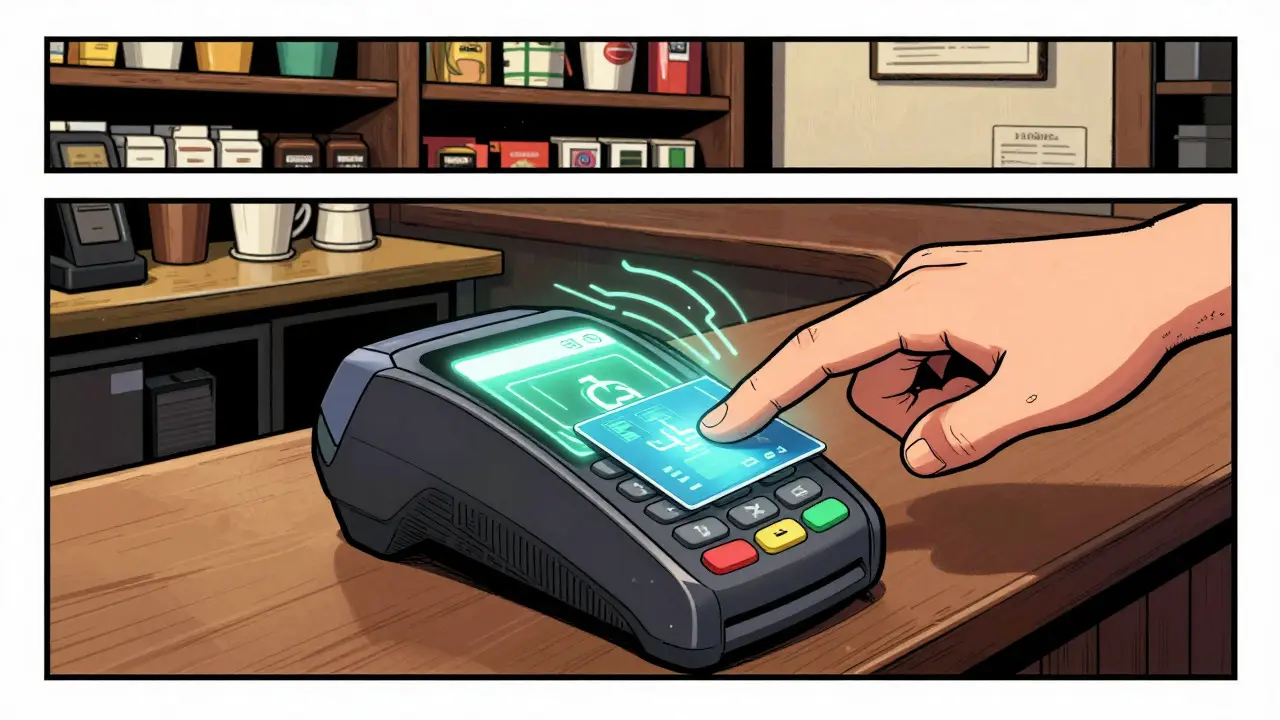
You don’t necessarily need to buy COINS on an open exchange to benefit from the system. The intended user journey is much simpler:
- Download the Reserve Bank app.
- Create an account and fund your wallet (using fiat or supported crypto).
- Receive the virtual Reserve Bank Card.
- Add the card to Apple Pay or Google Pay.
- Pay for goods and services normally.
Risks and Considerations
Before engaging with COINS, keep these risks in mind:
- Low Liquidity: Exiting a position quickly can be difficult without significant price impact.
- Network Confusion: Always confirm you are on the Solana network unless specifically instructed otherwise by the app.
- Adoption Uncertainty: The token's value is entirely dependent on the success of the Reserve Bank app. If the app fails to gain users, the token has little standalone utility.
- Data Discrepancies: Third-party trackers often have conflicting data for this asset. Rely on the official app dashboard for your balance and transaction history.
- Regulatory Status: Like many payment-focused crypto projects, the regulatory landscape is evolving. Ensure you are compliant with local laws regarding digital asset ownership.
Frequently Asked Questions
Is COINS a stablecoin?
Not exactly. While it aims to maintain relative stability for payment purposes, it trades freely on secondary markets and has experienced significant price fluctuations. It functions more as a utility token for the Reserve Bank app than a pegged stablecoin like USDC or USDT.
Which blockchain does COINS run on?
The primary implementation is on the Solana blockchain. There is also a contract listed on Binance Smart Chain, but data for this version is inconsistent. Most official documentation points to Solana as the main network for the Reserve Bank ecosystem.
Can I buy COINS on major exchanges like Binance or Coinbase?
Direct spot trading pairs for COINS are rare on major centralized exchanges. You may find it on smaller platforms like HTX or through decentralized exchanges (DEXs) on Solana. Often, the easiest way to obtain exposure to the asset is by using the Reserve Bank app directly.
What is the total supply of COINS?
The maximum and circulating supply is 1,000,000,000 (1 billion) tokens. All tokens are currently in circulation, and there is no planned minting of additional units.
Who created the Reserve Bank app?
The platform is developed by The Reserve Bank, LLC. It is distinct from central banks and operates as a private fintech company focusing on blockchain-based payment solutions.

21 Comments
Zothana Pachuau
August 24 2026Oh, look at that. Another "revolutionary" payment rail that's actually just a debit card with extra steps and a blockchain wrapper for the cool kids.
The whole point of crypto was to remove the middleman, right? Well, here we are, adding a layer of obscurity so you don't even have to know you're using it. It's like wearing a suit to go swimming; technically functional, but why bother? If I want to pay for coffee, I'll just use my phone wallet without needing to worry about gas fees or private keys. That's not innovation, that's just hiding the plumbing.
Patrick Quairoli
August 24 2026you guys dont get it this is a trap!!! they are tracking every single purchase through the reserve bank app!! did you see the white paper?? its all about compliance controls!! they want to kill the dollar and replace it with their own digital leash!! i checked the contract on bsc and the supply is different which means they are minting more behind our backs!! wake up sheeple!!
Shawn Schaerer
August 24 2026It is imperative to note that while the narrative of 'compliance' may appear restrictive to the uninitiated, it serves as a necessary bridge for institutional adoption. One must consider the philosophical implications of utility over speculation. This asset does not seek to conquer the market through hype, but rather to solve the friction problem inherent in decentralized finance. Is it not the height of sophistication to make the complex invisible? The true value lies not in the token itself, but in the seamless integration of fiat and digital assets. We stand at the precipice of a new financial paradigm, one where convenience dictates utility. Do not dismiss the quiet revolution happening in the background.
Hicham Mounir
August 25 2026I honestly think people are overthinking this... it's just a tool. If it works for paying for groceries without me having to open five apps, then who cares if it's on Solana or BSC? The drama around the 'conspiracy' feels a bit much for a token that trades for less than a penny. I'm just happy there's an option that doesn't require me to be a computer scientist to buy lunch. Let's try to keep the vibes positive here, folks. Not everything has to be a war.
Dina Lazarova
August 26 2026One simply wonders why the average retail investor bothers with such a microcap curiosity. The liquidity profile is abysmal, bordering on non-existent for any serious portfolio allocation. To hold this asset is to accept a level of volatility that would make a day trader weep. It is a niche product for a niche audience, likely those who enjoy the aesthetic of decentralization more than the reality of exit ramps. The data discrepancies between networks suggest a lack of rigorous governance, which is hardly a selling point for the discerning investor. Perhaps it is best left to the speculators who enjoy the thrill of the near-zero probability game.
Walker Perry
August 26 2026this is exactly what i mean when i say america needs to take back control of its currency infrastructure. letting some random llc issue tokens on solana is a recipe for disaster. we need strong domestic blockchains not these foreign tech companies dictating how we spend our money. the fact that the supply is inconsistent on bsc proves they are playing games with us. stop trusting the tech bros and start trusting the nation. our money should stay in our hands not in some app that could be shut down by a judge in ny.
Alexander Scheel
August 27 2026How quaint. You speak of national sovereignty as if the global market cared for your borders. In truth, the 'nation' you champion is merely a construct that facilitates the very inefficiencies this technology seeks to eliminate. The inconsistency in supply is not a conspiracy, but a symptom of the chaotic nature of early-stage DeFi. To demand centralized control is to reject the fundamental ethos of decentralization. We are not victims of foreign tech; we are participants in a global experiment. Embrace the complexity or remain stagnant in your nostalgia for the old guard.
Evelyn Kula
August 28 2026Oh, please. The idea that a US-centric view applies to a global blockchain is laughable. These tokens don't care about your flag, darling. They care about throughput and low fees. And let's be real, if the US government gets involved, it won't be to protect 'our' currency, it'll be to tax every transaction you make. The 'foreign tech' you hate is probably running on servers in Ireland anyway. Stop projecting your insecurities onto a utility token that costs less than a stamp. It's cute, really, the way you cling to outdated notions of power.
manish jha
August 29 2026The moral imperative here is clear. Transparency is the only virtue that matters in finance. If the supply data is inconsistent, trust is broken. Until the auditors verify the chain, this remains a gamble. Do not confuse convenience with safety. The soul of the market requires honesty. Hold your breath until the facts are irrefutable. Only then can we speak of progress.
Ashley Snyder
August 30 2026I think we're all looking at this from slightly different angles, which is fine. Some of us want the security of the traditional system, others want the freedom of the new one. Maybe the answer isn't picking a side but finding the tools that work for your specific life. If COINS makes your payments easier, great. If not, ignore it. No need for the drama. Peace out.
Sarah Hafner
September 1 2026Just a quick technical note for anyone confused by the BSC listing! : ) The primary contract is definitely on Solana. The BSC version is likely a bridged asset or a mirror, which explains the supply discrepancies. Always double-check the network before sending! It's super easy to mix them up if you're not careful. Hope this helps clarify things for everyone! : D
Susan Kiley
September 2 2026Ugh, finally someone said it! : O The 'abstraction layer' is just a fancy term for 'we hid the bad parts from you.' I've been using fintech apps since the days of Square Cash, and every time they promise 'seamless integration,' it usually means 'more data collection.' But hey, if it saves you ten seconds on a coffee run, maybe it's worth the privacy trade-off? Just don't expect it to change the world. It's a gadget, not a revolution. : P
Gary Straiton
September 3 2026DID YOU SEE THE VOLUME?! $35 A DAY?! THIS IS A JOKE! HOW CAN ANYONE SERIOUSLY HOLD THIS ASSET WITHOUT BEING SCAMMED BY SLIPPAGE? IT'S A DEAD TOKEN WITH A FANCY NAME. AMERICA DESERVES BETTER THAN THESE MICROCAP TRASH CANS. GET RID OF IT BEFORE IT GOES TO ZERO. THE ONLY THINGS THAT MATTER ARE BIG CAPS AND STABLECOINS. EVERYTHING ELSE IS JUST NOISE. WAKE UP!
alex fordy
September 5 2026Hey everyone! 👋 I've been diving into the code a bit, and it's interesting how they handle the conversion behind the scenes. It's not just a simple swap; it's more like a dynamic pool that adjusts based on merchant acceptance rates. 🤔 It’s a neat trick, really. Makes me wonder if we’ll see similar models in other payment rails soon. What do you all think about the long-term viability of these closed-loop systems? 🌟
Nia Franklin
September 6 2026oh my gosh, i love the color of this concept!! 🎨 like, imagine if the app had a theme switcher for different vibes? sunny days vs rainy days? it would make the 'invisible' crypto feel so much more personal!! also, did you notice the typo in the white paper?? 'complience' instead of 'compliance' lol 😂 such a small thing but it shows the human touch behind the tech!! i think we need more personality in fintech, not just cold numbers!! 💖✨
Mohamed Shoaeb
September 8 2026chill out guys. it's just a token. if you like it use it, if not don't. no need for the big speeches. sometimes the simplest path is the best one. just check the volume before you buy and you'll be fine. easy peasy.
Sonia Gomez Gomez
September 8 2026You really need to look at your own spending habits before judging this. I bet you still carry cash because you're afraid of being tracked. But we all know the truth: privacy is a myth. This app is just making the obvious explicit. So stop complaining and adapt. It's for your own good. : )
SHIV SHANKAR KANTA
September 10 2026the essence of this coin is not in the number but in the feeling. when you tap your phone you feel free. you feel powerful. the blockchain is just a shadow. the real power is in the mind. do you understand? the supply doesn't matter if your spirit is rich. the volatility is a test of your soul. pass it and you will ascend. fail and you will remain in the material world. think deeply.
Daniel Brown
September 10 2026stop wasting time on this. it's a scam. i told you so. look at the chart. it's going down. always goes down. these little coins never last. stick to btc eth sol. anything else is gambling. you're losing money right now just by reading this thread. close the tab. save your brain cells. next time check the fundamentals first. don't be a sheep.
Marco Maldonado
September 11 2026Let's cut the fluff. This is a utility token for a specific app. Period. If the app fails, the token dies. Simple economics. Don't give it a mystical meaning. It's a tool. Use it or throw it away. The 'nationalist' arguments are irrelevant because this is a global tech product. The 'philosophical' arguments are irrelevant because it's a payment method. Focus on the user experience. If it's fast and cheap, it wins. If not, it loses. That's all there is to it.
Darren Moon
September 11 2026One might observe that the entire discourse surrounding this asset is a testament to the current state of market fragmentation. The liquidity metrics, whilst poor, are indicative of a broader trend towards niche utility tokens that serve specific verticals rather than broad consensus. It is a fascinating case study in the intersection of fintech UX and blockchain infrastructure. However, without robust secondary market depth, its role as a store of value is negligible. We shall see if the abstraction layer holds under the weight of actual user adoption. Time, as ever, is the ultimate arbiter of such technological experiments.