
What is Scopuly (SCOP) crypto coin? A detailed look at the Stellar-based DeFi token
Scopuly (SCOP) isn’t just another crypto coin. It’s a token built on the Stellar network designed to power a full digital banking ecosystem - not just a wallet, but a way to spend, earn, and manage money without banks. Launched in August 2019, SCOP has stayed under the radar for most crypto traders, but its real value lies in how it’s used inside the Scopuly platform - a non-custodial wallet that connects crypto with everyday spending.
What exactly is SCOP used for?
SCOP isn’t meant to be held as a speculative asset. It’s a utility token - the key that unlocks services inside the Scopuly app. Think of it like a membership card that gives you access to features like cashback, staking rewards, and trading tools. Every time you use the Scopuly Card to buy coffee or pay bills, you earn SCOP back. That’s not a gimmick - it’s built into the tokenomics. For every transaction, 10% of the total SCOP supply is reserved for cashback rewards, paid directly to users.
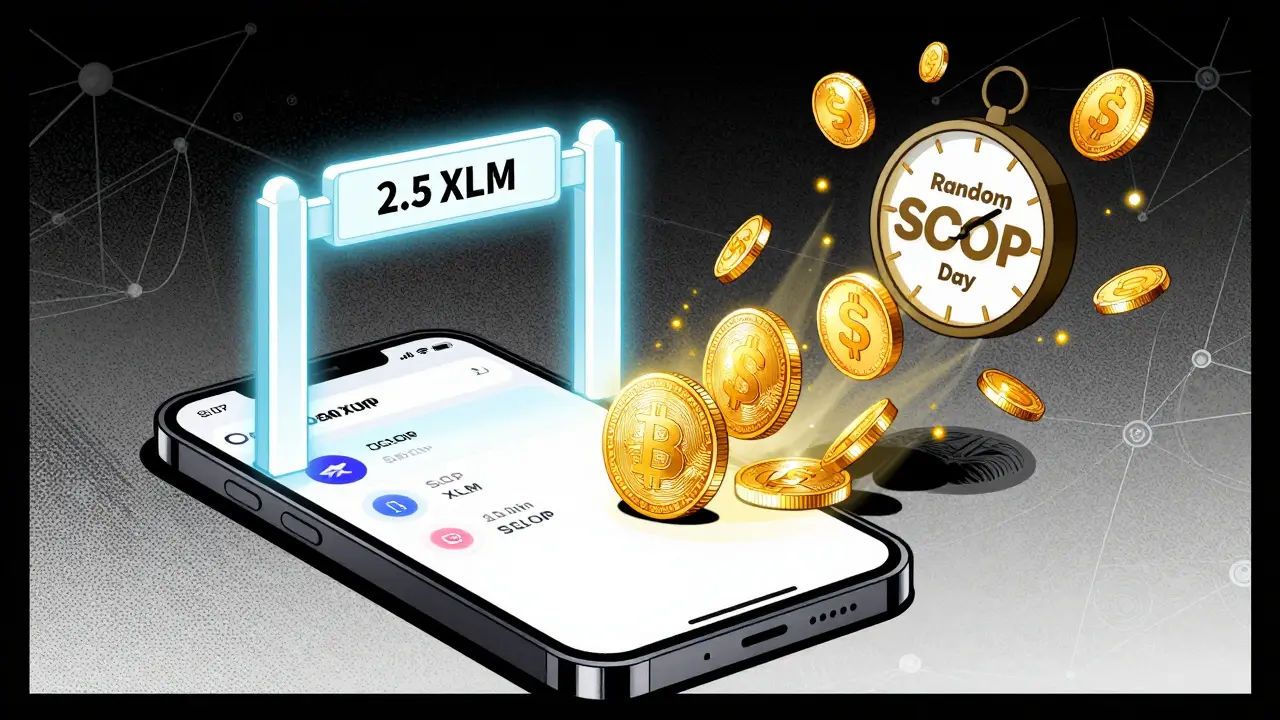
On top of that, SCOP holders get monthly staking rewards. The Scopuly team takes a snapshot of all SCOP balances on a random day each month and distributes new tokens based on how much you hold. No locking up funds. No minimums. Just holding SCOP in your wallet earns you more SCOP. It’s a simple, transparent model - no complicated staking pools or delegation fees.
SCOP also acts as a governance token. While Scopuly hasn’t released detailed voting rules yet, the token gives holders a say in future upgrades - like which new assets to support or how to adjust reward rates. This isn’t just a token for trading; it’s meant to grow with the ecosystem.
How does Scopuly work on the Stellar blockchain?
Scopuly runs entirely on Stellar, a blockchain known for speed and low fees. Transactions confirm in 3-5 seconds, and fees are less than a penny. SCOP is a native Stellar token, which means it doesn’t need a separate network. All you need is a Stellar wallet address, a small amount of XLM (Stellar’s native currency), and a trustline to accept SCOP.
Here’s the catch: you need at least 2.5 XLM in your wallet just to activate it. That’s not a bug - it’s how Stellar works. The 2.5 XLM acts as a reserve to prevent spam and keep the network clean. But for new users, especially during XLM price spikes, this can feel like a barrier. If you don’t have enough XLM, you can’t even start using SCOP.
The Scopuly app supports Android, iOS, Windows, macOS, and web. Your wallet syncs across all devices. You can store SCOP, XLM, Bitcoin, Ethereum, Ripple, and dozens of other assets issued on Stellar. The wallet even lets you merge multiple accounts - useful if you’ve created more than one wallet by accident.
The tokenomics: Where do all the SCOP tokens go?
There are 10 billion SCOP tokens in total - and all of them have been allocated. No more will ever be created. Here’s how they’re split:
- 10% - Foundation (long-term development)
- 10% - Marketing & Ecosystem Growth
- 10% - Airdrops to early users
- 10% - Community Rewards (staking)
- 10% - Holder Rewards (ongoing incentives)
- 10% - Liquidity Providers (on Stellar DEX)
- 10% - Trader Rewards (based on monthly volume)
- 10% - Scopuly Card Cashback
- 5% - Private Sale
- 5% - Referral Program
This structure shows Scopuly isn’t trying to pump and dump. Most of the supply is tied to user activity - spending, trading, holding, and referring others. The team didn’t hoard tokens. They distributed them to people who use the platform.
As of February 2026, about 3.14 billion SCOP are in circulation. That’s only 31% of the total supply. The rest are locked in rewards programs, foundation reserves, or waiting to be distributed. That means if all tokens were released, the market cap could jump from $31.96 million to over $101 million - but that’s only if demand keeps up.
How do you get SCOP?
You can’t buy SCOP on Binance or Coinbase. It’s only available on a few smaller exchanges like HTX and decentralized platforms on the Stellar network. Most people get SCOP through:
- Using the Scopuly Card - earn 0.5% to 2.5% back in SCOP on every purchase
- Staking - hold SCOP in your wallet and get monthly rewards
- Airdrops - from past community events or referrals
- Trading - swap XLM or other assets for SCOP on Stellar DEX
The cashback program is the most popular way to earn SCOP. Users report getting 1-3 SCOP per $10 spent. Over time, that adds up. One Reddit user said they earned over 5,000 SCOP in six months just by using the card for groceries and gas.
Pros and cons: Is Scopuly worth it?
Pros:
- Real utility - SCOP isn’t just a coin; it’s used for cashback, staking, and rewards
- Non-custodial - you control your keys. Scopuly doesn’t store them
- Low fees - Stellar transactions cost pennies
- Fast - payments confirm in seconds
- Multi-asset support - store crypto, stablecoins, and tokens in one wallet
- Strong focus on emerging markets - 63% of users are from Southeast Asia and Latin America
Cons:
- Low liquidity - daily trading volume is near $0 on major trackers
- Hard to buy - not listed on big exchanges
- 2.5 XLM barrier - new users need to buy XLM first
- Learning curve - Stellar’s trustline system confuses beginners
- Delayed rewards - some users report staking rewards arriving 10 days late
It’s not for everyone. If you want to flip SCOP for quick profits, you’ll be disappointed. But if you want to use crypto for daily spending and earn rewards without relying on banks, it’s one of the few projects that actually delivers.
What’s next for Scopuly?
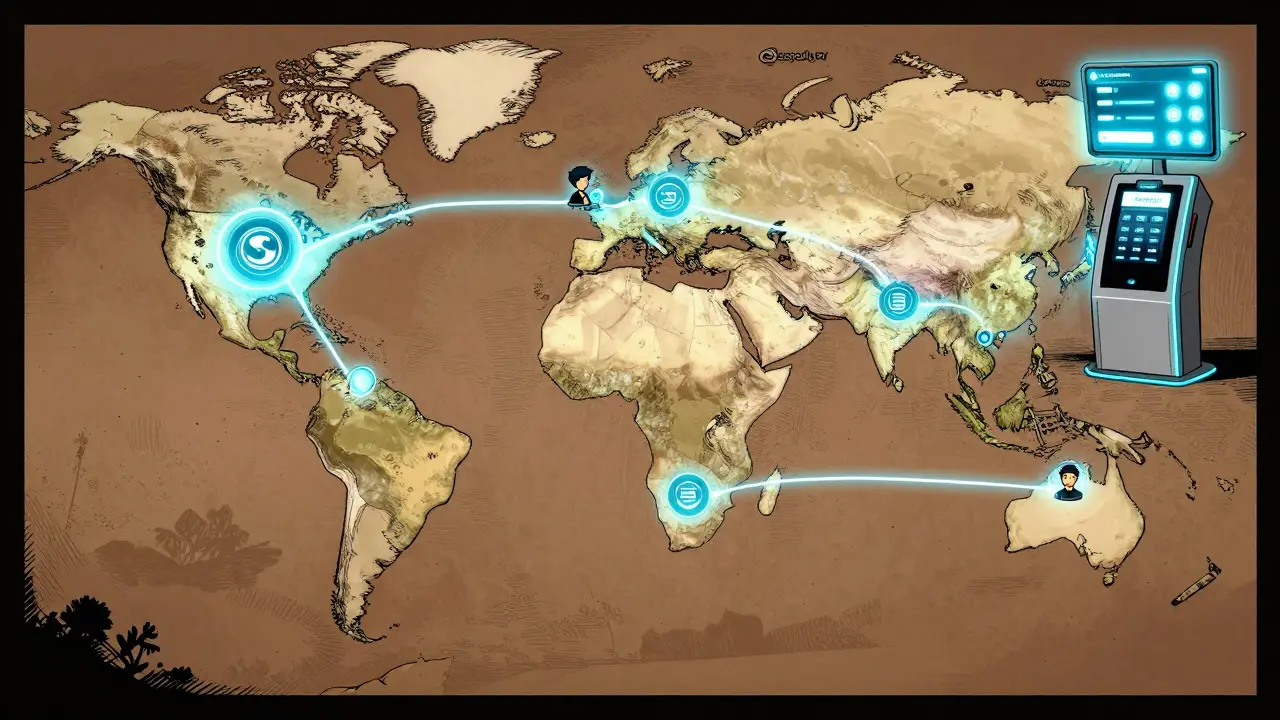
Scopuly isn’t standing still. In late 2025, they integrated with Stellar’s Soroban smart contracts, opening the door for more complex DeFi tools. In January 2026, they launched Scopuly Pay - a system that lets merchants accept SCOP and XLM as payment. That’s a big step toward becoming a real digital bank.
They’re also working on a bridge to Binance Smart Chain, which could let users move SCOP to other networks. And by mid-2026, they plan to integrate with Central Bank Digital Currencies (CBDCs) - meaning you might soon be able to swap SCOP for digital versions of the peso, baht, or peso.
Their goal? To replace traditional banking for millions of people who don’t have access to banks - or hate the fees. So far, they’ve built a working product. Now they just need to scale it.
Who is Scopuly for?
Scopuly is perfect for:
- People in countries with high inflation or unstable banks
- Stellar ecosystem users who want more than just a wallet
- Anyone who spends crypto daily and wants rewards
- Users tired of centralized apps that lock up your funds
It’s not for:
- Day traders looking for volatility
- People who want to buy SCOP on Coinbase
- Those who dislike learning new systems
If you’re already using Stellar, Scopuly adds real value. If you’re new, start with the wallet, fund it with 2.5 XLM, and earn your first SCOP through the card. The rewards add up - slowly, but surely.


22 Comments
Deeksha Sharma
February 4 2026Scopuly is exactly what the world needs right now-real utility, not just hype. I’m from India, and seeing people in my village use this to pay for groceries without a bank account? That’s revolutionary. No more middlemen taking 20% just to move money. SCOP isn’t a coin-it’s a lifeline.
David Bain
February 5 2026The tokenomics here exhibit a non-extractive, stakeholder-aligned incentive architecture-unlike the rent-seeking parasitism endemic to most DeFi protocols. The 10% allocation to cashback and holder rewards creates a closed-loop feedback mechanism that internalizes network effects rather than externalizing them into speculative rent. This is not a token-it’s a socio-economic protocol.
Paul Gariepy
February 6 2026Okay, so you need 2.5 XLM to even get started? That’s a nightmare for someone trying to dip their toes in. I tried to set this up last month and ended up buying XLM on a sketchy exchange just to unlock SCOP… and then my wallet crashed. Don’t get me wrong-I love the idea-but the UX is still a dumpster fire. Someone needs to make a one-click onboarding flow. Please. For the love of god.
Udit Pandey
February 7 2026India has always been ahead in financial innovation. While the West still clings to outdated banking systems, our youth are building real alternatives. Scopuly is not just a project-it is a testament to Indian engineering and vision. Why are you all still waiting for permission from Silicon Valley when the future is already here?
mahikshith reddy
February 8 2026They’re lying. Everyone knows this is a pump disguised as utility. 10 billion tokens? 3.14 billion circulating? That’s a rug pull waiting to happen. And don’t even get me started on ‘Stellar DEX’-that’s a ghost town. You think you’re earning SCOP? You’re just feeding the whales.
Matthew Ryan
February 9 2026I’ve been using the Scopuly wallet for 8 months. The cashback on groceries adds up. I’ve earned over 1,200 SCOP just from buying milk and bread. Not life-changing money, but it’s real. And I never had to give up my keys. That’s more than I can say for most apps.
Nathaniel Okubule
February 10 2026If you’re considering Scopuly, start small. Fund your wallet with 2.5 XLM, enable the trustline, and use the card for one purchase. See if the reward shows up. If it does, you’ve got a working system. Don’t overthink it. Just try it.
Shruti Sharma
February 12 2026OMG I JUST GOT 300 SCOP FROM ONE GROCERY RUN??? I thought it was a scam but my wallet updated in 2 minutes!! I’m telling my entire family. My mom is gonna start using it for her chai money!! 🤯
Robin Ødis
February 13 2026Let’s be real-this whole thing is a decoy. The Stellar network is controlled by Ripple insiders. The 2.5 XLM reserve? That’s a trap to lock you in. And the ‘random snapshot’ for staking? It’s not random-it’s algorithmically manipulated to favor early adopters who sold at $0.003. You think you’re getting rewards? You’re just funding the insiders’ exit strategy. Look at the whale wallets-they’ve moved 80% of their holdings to cold storage since January. Coincidence? I think not.
Molly Andrejko
February 13 2026I started with 5 XLM and earned my first SCOP in 11 days. It’s slow, but it’s real. I don’t expect to get rich-I just want to pay for coffee without a bank. This is the quiet revolution. No headlines. No hype. Just steady, honest utility. Keep going, Scopuly team.
sabeer ibrahim
February 14 2026Stellar is a Chinese-backed blockchain. SCOP is just a front for capital flight. Why else would they target India and Southeast Asia? You’re not earning rewards-you’re laundering money under the guise of ‘financial inclusion.’ Wake up.
Alisha Arora
February 15 2026Why is everyone acting like this is some kind of miracle? You need to know how to set up a trustline. You need to understand XLM. You need to not be an idiot. This isn’t for ‘everyone.’ It’s for tech-savvy people who already know what a blockchain is. Stop pretending it’s for your grandma.
Michael Sullivan
February 16 2026SCOP is the future. 🚀 The cashback is real. The wallet is slick. The team is legit. And the fact that you can’t buy it on Binance? That’s the point. They don’t want degens. They want users. This isn’t crypto. It’s finance. And it’s winning. 🤖
Reda Adaou
February 17 2026I’m from Nigeria and I use this to pay my maid. She doesn’t have a bank account, but she has a phone. We load SCOP, she cashes out at a local kiosk for naira. It’s the first time she’s ever had direct control over her earnings. This matters.
Sharon Lois
February 17 2026CBDC integration? Of course. Because the Fed, ECB, and RBI are totally cool with decentralized cashback. This is a surveillance tool disguised as liberation. You think you’re free? You’re just being prepped for digital serfdom.
orville matibag
February 18 2026Used this in Bali last month. Paid for a massage in SCOP. The guy didn’t know what it was, but his phone showed the balance. He smiled. We both laughed. That’s the magic. Not the price. Not the charts. Just people using money that doesn’t need permission.
Josh Flohre
February 19 202610 billion tokens? You’re kidding. That’s inflationary garbage. Real money doesn’t have supply targets-it has scarcity. This isn’t innovation. It’s a Ponzi with a wallet.
Jesse Pasichnyk
February 21 2026I used to think crypto was all scams. Then I started using the Scopuly Card. Now I pay for my gym membership with it. My dog even gets treats paid in SCOP. It’s not flashy. But it works. And that’s enough.
Jordan Axtell
February 21 2026You guys are so naive. The team has been quietly dumping since December. I checked the Stellar explorer. The foundation wallet moved 120 million SCOP to a multisig last week. They’re not building a bank-they’re building a vault for their own exit. You’re not early. You’re the last ones holding the bag.
James Harris
February 23 2026I’ve been telling my cousins in rural Kenya about this for months. One of them just got their first SCOP from a local market vendor. She didn’t know what blockchain meant. She just knew she got extra money for buying tomatoes. That’s the win.
aryan danial
February 24 2026Let me be clear: the notion that this is ‘decentralized finance’ is a grotesque misnomer. The governance structure is opaque, the token distribution is centralized around early adopters, and the reliance on Stellar-a protocol with a known centralized governance node-renders the entire premise a performative illusion of autonomy. You are not sovereign. You are a participant in a curated ecosystem designed to mimic decentralization while preserving control. The 2.5 XLM reserve? A psychological barrier to entry. The cashback? A behavioral nudge. This is not liberation. It is financial seduction dressed in open-source clothing.
David Bain
February 25 2026It’s worth noting that the 10% allocation to liquidity providers on Stellar DEX is the only mechanism preventing total illiquidity. Without it, the token would be a dead asset. The fact that it’s being used to incentivize market-making-rather than speculative trading-is what makes this model structurally sustainable. Most DeFi tokens burn liquidity to pump; Scopuly builds it to serve.