How Colombians Access Crypto Exchanges: The Truth Behind the Restrictions
There is a persistent myth that buying cryptocurrency in Colombia requires you to go underground. You might hear stories about people using obscure workarounds, hiding their activity, or fearing sudden bans. If you are looking at the headlines from a few years ago, it’s easy to believe that the country has locked its doors on digital assets. But if you look at what is actually happening on the ground in Bogotá, Medellín, or Cali today, the reality is strikingly different.
Colombians do not need to circumvent restrictions to access crypto exchanges because, largely speaking, there are no broad restrictions blocking them. In fact, over 5 million Colombians actively trade digital assets. The market saw US$6.7 billion in crypto assets traded in 2024 alone. So, how does this happen? How do regular citizens move money into Bitcoin, Ethereum, or stablecoins without getting blocked by their banks? The answer lies in a mix of local innovation, regulatory clarity for specific players, and a shift in how traditional banks view these assets.
The Rise of Local Giants: Wenia and LuloX
The biggest change in how Colombians access crypto is the emergence of homegrown platforms that bridge the gap between traditional banking and digital wallets. For years, users relied entirely on international giants like Binance or Coinbase. While those still work, they often face friction with local payment rails. Enter Wenia, a platform launched by Bancolombia.
Bancolombia is not just any bank; it is one of the largest financial institutions in Latin America. When a major player like this launches a dedicated crypto exchange, it signals a massive shift. Wenia allows users to buy and sell cryptocurrencies directly using their existing Bancolombia accounts. This integration solves the biggest headache for most traders: the transfer process. Instead of sending Pesos (COP) to a third-party wallet and hoping it arrives, you can swap COP for crypto within the ecosystem you already trust.
Another key player is LuloX. Lulo Bank, known for its user-friendly digital-first approach, introduced LuloX to make crypto trading accessible to everyday users who might be intimidated by complex charts and order books. These platforms operate under strict compliance rules, meaning they handle the heavy lifting regarding identity verification and anti-money laundering checks. For the average Colombian, this means signing up, verifying your ID, and trading-just like you would with a stock brokerage app.
Why Traditional Banks Seem "Restrictive"
If the path seems clear, why does the rumor of restrictions persist? The confusion often stems from the behavior of traditional commercial banks when processing transactions to *international* exchanges. The Financial Superintendency of Colombia (SFC) has issued warnings to supervised financial entities. They are reminded that they are not authorized to hold custody of, invest in, or facilitate transactions involving digital assets unless they have specific licenses or partnerships.
This creates a practical hurdle. If you try to send a large wire transfer from a standard savings account at a conservative bank to an unregulated offshore exchange, the transaction might get flagged or rejected. The bank isn't banning crypto; they are protecting themselves from regulatory risk. They don't want to accidentally facilitate money laundering.
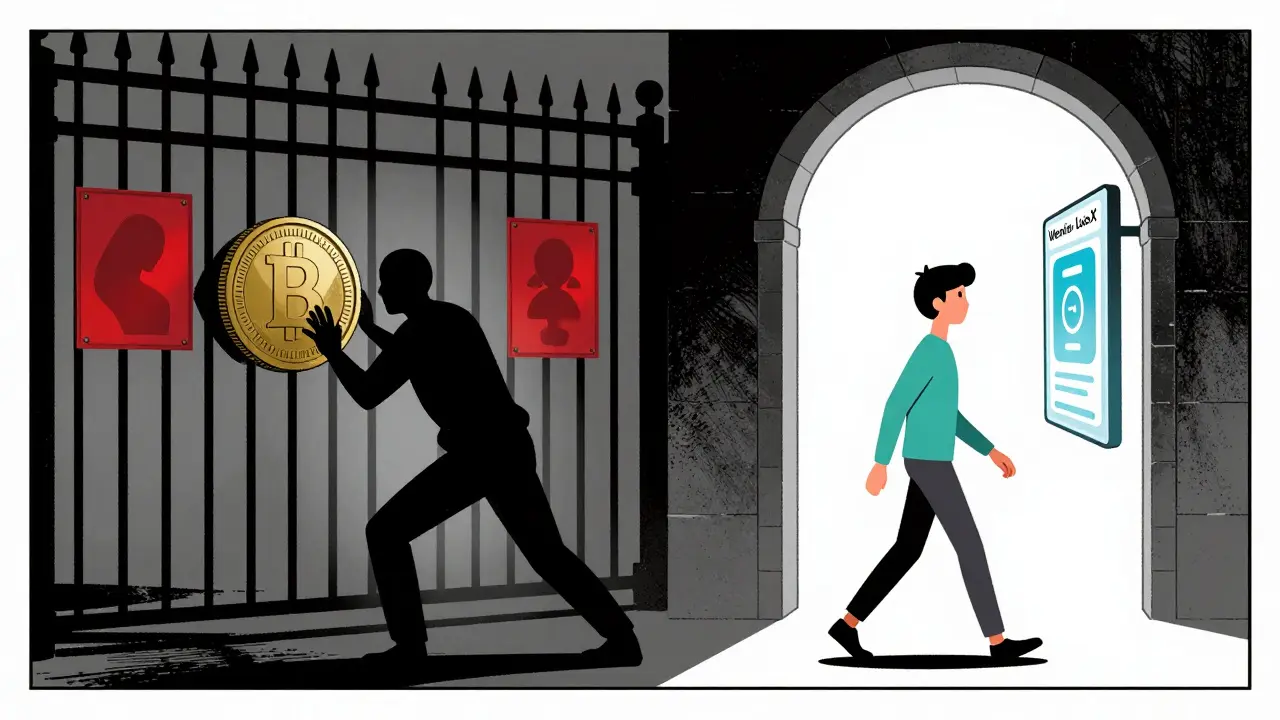
This is where the distinction matters. You aren't being banned from crypto. You are being nudged toward regulated channels. Using Wenia, LuloX, or other licensed Virtual Asset Service Providers (VASPs) bypasses this friction entirely because the platform itself handles the compliance. The bank sees a legitimate transaction with a registered entity, not a mysterious transfer to an anonymous server.
The Regulatory Sandbox and Bill 510
Colombia’s approach to regulation is best described as "structured evolution." Rather than slamming the door shut, regulators have been building a framework to manage the industry. A key part of this was the regulatory sandbox launched by the SFC in 2021. Although the initial pilot phase ended in December 2023, it served its purpose: it allowed fintechs to test new models under supervision.
More recently, legislative efforts have accelerated. Bill 510 of 2025 received approval in its first legislative debate. Introduced by Senator Gustavo Moreno and Representative Julián López, this bill aims to formalize the status of VASPs. It provides legal certainty for businesses and protection for users. This isn't about restricting access; it's about bringing the industry out of the shadows. By defining who can operate and how they must report transactions, the government ensures that the millions of users involved in this sector are protected from fraud and scams.
The focus here is heavily on Anti-Money Laundering (AML) and Counter-Financing of Terrorism (CFT). The Unit for Information and Financial Investigation (UIAF) monitors suspicious transactions. Any crypto transaction above USD 150 triggers reporting requirements. This threshold is low compared to some jurisdictions, but it ensures transparency. For the honest trader, this is just paperwork handled by the exchange. For illicit actors, it raises the cost of doing business.
Taxation: Treating Crypto as Real Money
One area where Colombians feel the weight of regulation is taxation. There is no special "crypto tax" bucket, which sounds good until you realize it means your gains are treated exactly like regular income. The National Tax and Customs Directorate (DIAN) treats cryptocurrency operations as financial activities subject to existing personal or corporate income tax frameworks.
If you trade crypto as a hobby and sell occasionally, you might fall under capital gains rules depending on how the activity is classified. However, if you trade frequently or run a mining operation, those profits are taxed as business income. This clarity is crucial. It means the government recognizes crypto as a legitimate economic activity. They aren't trying to stop you from earning; they want their share of the revenue. This legitimacy encourages more institutional participation and makes it easier for individuals to declare their assets openly.
Mining and Infrastructure Support
While retail trading gets the most attention, the infrastructure side of the equation is also evolving. Cryptocurrency mining is explicitly legal in Colombia, provided operators follow specific guidelines. The regulatory framework issued in 2023 outlines requirements for registration, environmental compliance, and taxation. This has led to the rise of several successful mining operations, particularly in regions with lower electricity costs.
This legalization is significant because it shows the government views blockchain technology as a driver of economic growth, not a threat. Regions hosting mining facilities report increased employment and technological advancement. The government is investing in the grid and supporting tech-focused investments. This supportive environment trickles down to the broader ecosystem, making it easier for exchanges and wallets to operate smoothly.

Practical Steps for New Users
If you are in Colombia and want to start trading, the process is straightforward. You do not need VPNs or hidden accounts. Here is the typical workflow:
- Choose a Regulated Platform: Start with local options like Wenia or LuloX if you have accounts with Bancolombia or Lulo Bank. This simplifies deposits and withdrawals significantly.
- Complete KYC Verification: Be prepared to upload your ID (Cédula de Ciudadanía) and proof of address. This is mandatory for all reputable platforms to comply with UIAF regulations.
- Fund Your Account: Use PSE (Sistema de Pagos en Línea) for instant transfers from your local bank. This is the most common and efficient way to move COP into your exchange wallet.
- Trade and Withdraw: Buy your desired assets. Remember that holding periods and frequency of trades may impact your tax obligations, so keep records of your transactions.
Avoid platforms that promise anonymity or refuse to collect identification data. These are likely operating outside the regulatory framework and pose a high risk of fraud. The goal is to participate in a secure, transparent market.
The Future: Stability and Integration
Looking ahead, the trend in Colombia is toward greater integration, not separation. The Central Bank of Colombia maintains that cryptoassets cannot be classified as legal tender (money), but this is a definitional stance, not a prohibition. It simply means you cannot pay your taxes or buy bread directly with Bitcoin at a supermarket yet. However, stablecoins are changing this dynamic. The launch of COPW, a stablecoin pegged to the Colombian Peso by Bancolombia, demonstrates how digital assets can integrate with the local economy.
Latin America is leading global adoption for cross-border payments using stablecoins, and Colombia is at the forefront of this surge. As Bill 510 progresses through the legislative process, we will see even clearer rules for VASPs. This will likely attract more international investment and further legitimize the sector. For the individual user, this means fewer hurdles, better consumer protections, and more choices.
The narrative that Colombians must fight against restrictions to access crypto is outdated. The barriers that existed were largely bureaucratic and informational, not legal prohibitions. Today, with major banks offering direct access and a regulatory framework that prioritizes transparency over banishment, accessing crypto exchanges in Colombia is easier, safer, and more mainstream than ever before. The key is to stay informed, use regulated platforms, and understand your tax responsibilities.
Is it legal to buy Bitcoin in Colombia?
Yes, it is fully legal to buy, sell, and hold cryptocurrencies like Bitcoin in Colombia. The government recognizes crypto as a legitimate financial asset, though it is not considered legal tender. You can trade on both local platforms like Wenia and LuloX and international exchanges.
Why do some banks block transfers to crypto exchanges?
Traditional banks may block transfers to unregulated or international exchanges due to compliance risks set by the Financial Superintendency of Colombia (SFC). They aim to prevent money laundering. Using regulated local platforms like Wenia avoids this issue as they are integrated with the banking system.
Do I need to pay taxes on my crypto profits?
Yes. The DIAN treats crypto gains as taxable income. Depending on your activity level, profits may be taxed as capital gains or business income. It is important to keep detailed records of all transactions for your annual tax declaration.
What is Bill 510 of 2025?
Bill 510 is legislation aimed at formally regulating Virtual Asset Service Providers (VASPs) in Colombia. It seeks to provide legal certainty for businesses and stronger consumer protection for users, moving the industry from a grey area to a structured regulatory environment.
Can I use PSE to deposit money into crypto exchanges?
Yes, many local platforms like Wenia and LuloX support PSE (Sistema de Pagos en Línea) for instant deposits. This allows you to transfer funds directly from your Colombian bank account to your crypto wallet quickly and securely.