XeggeX Crypto Exchange Review: What Went Wrong and Why It Failed
XeggeX was never meant to be a long-term player in the crypto exchange space. It didn’t have the brand recognition of Binance, the regulatory compliance of Coinbase, or the security track record of Kraken. Instead, it carved out a risky niche: listing obscure mining coins no one else would touch. For a while, that worked. Traders flocked to it for low fees and fast listings. But behind the scenes, the foundation was crumbling. By June 27, 2025, XeggeX was gone - shut down, bankrupt, and leaving thousands of users with nothing.
How XeggeX Attracted Users - and Why It Was a Trap
XeggeX didn’t win users with fancy marketing. It won them with access. While bigger exchanges demanded strict listing criteria, XeggeX let almost any project get listed. If you were a small team with a new mining coin - say, Pyrin (PYI) or some obscure token tied to a decentralized mining rig - XeggeX would list it within days. No lengthy audits. No proof of team identity. Just a form and a fee. That attracted a specific kind of trader: the speculative kind. People who chased low-market-cap coins hoping to catch the next 100x. By early 2025, over 78% of XeggeX’s trading volume came from tokens worth less than $50 million. These weren’t stable assets. They were gambling chips. And XeggeX was the casino that didn’t bother locking the doors. The platform also pushed its native token, XPE. Holders got 25% off trade fees, withdrawal fees, and even NFT marketplace commissions. It sounded smart. But here’s the catch: XPE only had value as long as XeggeX existed. When the exchange collapsed, XPE became worthless. No utility. No liquidity. Just a digital ghost.The Security Nightmare That Took It Down
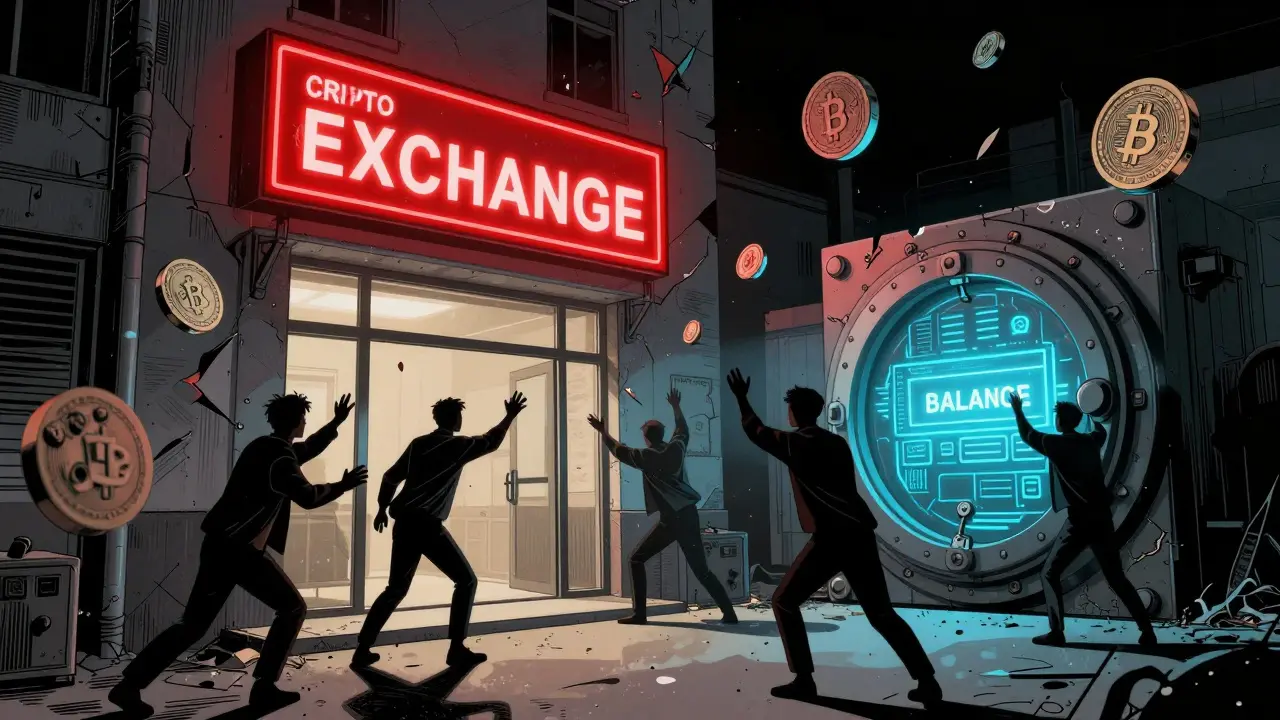
The real story of XeggeX isn’t about low fees or fast listings. It’s about how dangerously bad its security was. On February 3, 2025, hackers gained access to the CEO’s Telegram account. Not through some complex exploit. Not through a software vulnerability. Just because the CEO used Telegram for internal communications - and didn’t enable two-factor authentication. Once inside, the attackers sent fake admin messages, tricked support staff, and eventually accessed internal systems. The platform’s response? They disconnected their database from the network to ‘protect’ it. That didn’t stop the hack. It just made the platform unusable. Users couldn’t log in. Wallets showed $0 balances. Customer support vanished. For months, XeggeX posted vague updates: ‘We’re working on it.’ ‘Funds are safe.’ But the database stayed offline. No backups were restored. No communication was clear. By May, users were reporting their entire portfolios - some worth tens of thousands of dollars - had vanished. Reddit threads filled with angry posts. Trustpilot reviews hit 98% negative. One user lost 3.2 BTC in obscure tokens. Another lost $18,000 in mining coins. No one got their money back.Why XeggeX Wasn’t Just Bad - It Was Inevitably Doomed
XeggeX didn’t fail because of bad luck. It failed because its business model was built on sand. Most major exchanges keep proof-of-reserves. They get audited. They use cold storage. They have insurance. XeggeX had none of that. No public audits. No cold wallet disclosures. No insurance fund. Just a website promising low fees and high returns. Its target market - obscure, low-liquidity coins - was a magnet for scams and wash trading. Chainalysis reported in 2025 that 63% of all crypto exchange losses came from platforms serving this exact segment. XeggeX didn’t just serve that market. It thrived on it. And when the hack hit, there was no safety net. No reserve funds. No legal team ready to fight for users. Just silence. Then, on June 27, 2025, the final notice appeared: ‘XeggeX is shutting down and filing for insolvency.’ No timeline. No recovery plan. No hope.What Happened to Users’ Money?
Short answer: it’s gone. Unlike Binance or Coinbase, XeggeX never held user funds in segregated accounts. There was no insurance. No bankruptcy protection. When the platform collapsed, user assets were tied directly to the company’s internal wallets - wallets that were emptied or locked during the hack. Legal filings confirmed the company had zero liquid assets left. No cash. No crypto. No valuable IP. Just a website with a shutdown notice. Some users tried filing claims in court, but without a clear asset trail or regulatory oversight, recovery is nearly impossible. Even the XPE token, once touted as a key feature, became a symbol of the scam. With no exchange to use it on, no liquidity pools, and no buyers, its value dropped to zero. It wasn’t a failed investment. It was a trap.
Lessons from XeggeX’s Collapse
If you’re thinking about using a small crypto exchange today, remember XeggeX.- Never trust an exchange that doesn’t publish proof-of-reserves. If they won’t show you their crypto holdings, they’re not trustworthy.
- Avoid exchanges that list hundreds of obscure coins. The more niche the asset, the higher the risk of fraud or collapse.
- Check if the platform is regulated. Canada’s securities regulators excluded XeggeX from their approved list in October 2025. That should’ve been a red flag.
- Don’t rely on native tokens for fee discounts. If the exchange dies, so does the token.
- Use only major exchanges for anything beyond small, experimental trades. Binance, Kraken, Coinbase - they may charge more, but they’ve survived because they prioritize security over speed.
Is XeggeX Still Operational?
No. As of June 27, 2025, XeggeX officially ceased all operations. Its website is now a static page with a bankruptcy notice. No trading. No support. No access to wallets. The domain still exists, but it’s a digital tombstone.Can You Recover Your Funds from XeggeX?
Almost certainly not. With no assets, no insurance, and no regulatory protection, recovery is not possible. Legal actions have been filed, but there’s no evidence of any funds being held or traceable. Users are being advised to treat their losses as final.


14 Comments
Brandon Vaidyanathan
January 31 2026Bro, XeggeX was a casino with a website. They didn’t just fail-they performed a public execution of trust. People lost life savings on tokens named after their dog’s birthday. And the CEO? Probably sipping margaritas in Bali while his users cried into their laptops. 😭
Calvin Tucker
February 1 2026The structural failure of XeggeX is a textbook case in institutional epistemology. The exchange operated under a performative model of trust, where the absence of proof-of-reserves, audit transparency, and regulatory compliance constituted not mere negligence, but an ontological contradiction of financial intermediation. In essence, it was a promise without substance-language without referent.
Furthermore, the reliance on native utility tokens as fee incentives reveals a deeper pathology: the conflation of speculative liquidity with economic value. XPE was not a token; it was a rhetorical device designed to mask insolvency with the illusion of participation.
When the hack occurred, the platform’s response-disconnecting the database-was not a security measure but an act of epistemic surrender. It signaled the collapse of operational integrity, not merely technical failure. The absence of backups, the silence, the lack of communication-these were not errors. They were features of a business model built on denial.
Regulatory exclusion by Canadian authorities in October 2025 should have been the final warning. Yet, users clung to the myth of ‘low fees’ and ‘fast listings’ as if those were virtues rather than red flags. This is the tragedy: the victims weren’t fools. They were rational actors in an irrational system.
What makes XeggeX unique is not its scale, but its clarity. It didn’t hide its rot. It wore it like a badge. And people still walked in. That’s the real horror.
The lesson isn’t just ‘don’t use small exchanges.’ The lesson is: never confuse speed with efficiency, accessibility with legitimacy, or discount with value. When the foundation is sand, no amount of marketing can prevent the avalanche.
And yet, here we are. Another exchange, another token, another promise. History doesn’t repeat, but it rhymes. And the next rhyme is already being written.
Gareth Fitzjohn
February 2 2026It’s sad, really. People just wanted cheap trading and quick listings. But nobody asked who was running the place. No one checked if they had insurance. No one cared about audits. It’s like buying a car with no brakes because it’s cheap.
Katie Teresi
February 3 2026AMERICA ISN’T SAFE ANYMORE. This is what happens when you let unregulated foreign trash run crypto. If this happened in the EU, they’d jail the founders. Here? They just get a podcast. #AmericaFailsCrypto
Aaron Poole
February 3 2026Yeah, XeggeX was a mess, but let’s be real-most people didn’t even know what proof-of-reserves meant. They saw ‘25% off fees’ and ‘new coins daily’ and thought they were getting ahead. It’s not just the exchange’s fault. We all got greedy. I lost $3k there too. No one’s coming to save us. Learn, don’t blame.
Akhil Mathew
February 4 2026I remember when Pyrin was listed. I bought 50k tokens for $80. Within a week, it was up to $1,200. I cashed out and thought I was a genius. Then the next week, the whole thing collapsed. I didn’t know then that if the exchange dies, your ‘investment’ dies with it. Lesson learned the hard way.
Now I only use exchanges with public audits and clear wallet addresses. Even if fees are higher, I sleep better. XeggeX didn’t just lose money-it lost credibility. And you can’t trade on credibility alone.
Also, the CEO using Telegram without 2FA? That’s like leaving your house key under the mat while posting ‘I’m rich’ on Instagram. You can’t blame hackers if you make it that easy.
Tom Sheppard
February 4 2026rip xeggex 😔 i lost my whole portfolio in those mining coins… i was so excited when i saw the new listings, but now i just feel dumb. i’m sticking to binance from now on. no more ‘fast listings’ for me. also, xpe was a trap-no one told me it was just a loyalty card that vanished with the store.
ps: if you’re new to crypto, just use coinbase. they’re slow but they don’t disappear. trust me.
Pamela Mainama
February 6 2026It’s not just about the exchange. It’s about how we treat crypto like a lottery ticket. We don’t research. We just chase hype. XeggeX didn’t trick us. We tricked ourselves.
Rachel Stone
February 7 2026Wow. A crypto exchange that didn’t even enable 2FA. Who saw that coming? 🙄
laurence watson
February 9 2026I lost $12k on XeggeX. I didn’t cry. I just deleted the app. But I’ll tell you what helped: talking to others who lost everything. We didn’t fix it. But we stopped blaming ourselves. It wasn’t us. It was the system. And now I help new people avoid it. One conversation at a time.
Lori Quarles
February 9 2026Y’all need to stop acting like this was a surprise. This was predictable. If you’re trading coins with names like ‘Pyrin’ and ‘MinoChain’ on a site that doesn’t even have a physical address, you’re not investing-you’re playing Russian roulette with your wallet. I’m proud of myself for walking away before the crash. Don’t be like the rest of us who thought ‘low fees’ meant ‘safe.’
Elizabeth Jones
February 9 2026The collapse of XeggeX isn’t just a failure of security or governance-it’s a failure of imagination. We built a financial system where trust is replaced by algorithms, where value is assigned by hype, and where accountability is optional. XeggeX didn’t break the system. It exposed it. We keep building new exchanges with the same flaws, expecting different results. That’s not optimism. That’s insanity.
Until we demand transparency as a right, not a perk, we’ll keep seeing the same tragedy. The next XeggeX is already being coded. And we’re already signing up.
Sunil Srivastva
February 11 2026Just wanted to add: if you’re using a small exchange, check their Twitter. If they’re posting memes instead of audit reports, run. Also, if their CEO’s Telegram is public and unverified? That’s not a feature. That’s a funeral notice.
I used to think ‘fast listings’ were cool. Now I think they’re a warning sign. Slow is safe. Safe is profitable.
Moray Wallace
February 12 2026Interesting how the same pattern repeats: low fees, no oversight, native token, then silence. I’ve seen it in three other exchanges since 2023. The industry needs to stop rewarding recklessness. Maybe regulation isn’t the enemy-it’s the only thing keeping people from losing everything.