Algeria's Underground Crypto Market: Surviving the 2025 Ban
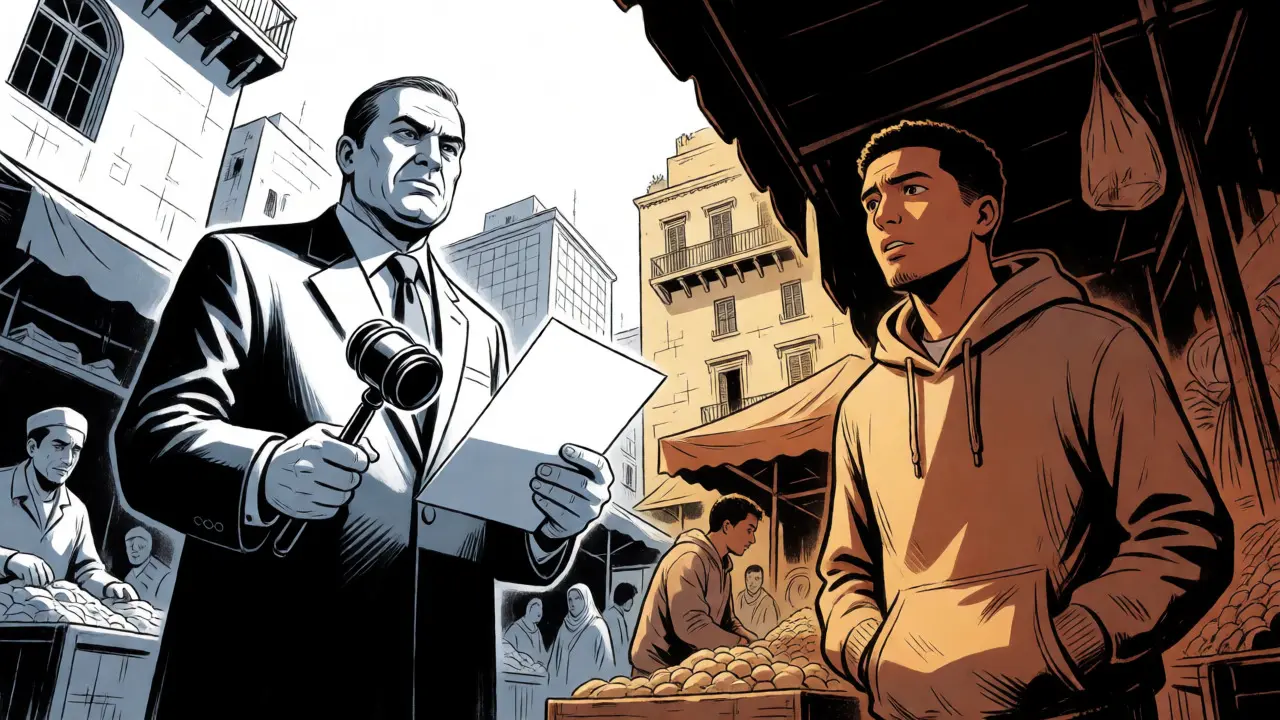
Imagine buying a coffee in Algiers and paying with Bitcoin, only to risk a year in prison for it. That is the reality in Algeria, where the government decided that digital money was too dangerous to exist. Since July 24, 2025, owning, trading, or even talking about cryptocurrency has been a criminal offense under Law No. 25-10. Yet, if you dig beneath the surface of this strict prohibition, you will find a thriving shadow economy. The underground crypto market in Algeria didn't disappear; it just went dark.
This isn't just about people being stubborn. It is about a fundamental clash between modern financial tools and traditional state control. Before the ban, Algeria had one of the largest crypto markets in the Middle East and North Africa (MENA). Today, those traders haven't vanished. They have adapted, moving their activities into peer-to-peer networks and encrypted channels. If you are curious about how finance survives when the law says it cannot, look no further than the Algerian underground.
The Legal Hammer: What Law No. 25-10 Actually Says
To understand the underground market, you first need to grasp the severity of the rules. The previous ban from 2018 was largely ignored because there were no real teeth behind it. The new law changed everything. Article 6 bis explicitly criminalizes eight specific activities. This isn't vague language; it is precise and punitive.
If you buy, sell, hold, mine, or use crypto as payment, you are breaking the law. Even promoting it through advertising or social media content counts as an offense. The penalties are steep. First-time offenders face fines ranging from 200,000 to 1 million Algerian dinars (roughly $1,540 to $7,700) and potential imprisonment of up to one year. For repeat offenses, these penalties double. Some reports suggest fines could reach up to 2 million dinars ($14,700). The message from the Algerian government is clear: they do not want decentralized finance touching their monetary system.
The law defines virtual currencies as instruments used for exchange via computer systems without central bank support. By banning the mere holding of these assets, the state removed any legal gray area. You cannot claim you are just "storing value" if the storage itself is illegal. This comprehensive approach aims to protect the Algerian Dinar and prevent capital flight, but it also creates a massive incentive for users to hide their activities.
How the Shadow Economy Operates
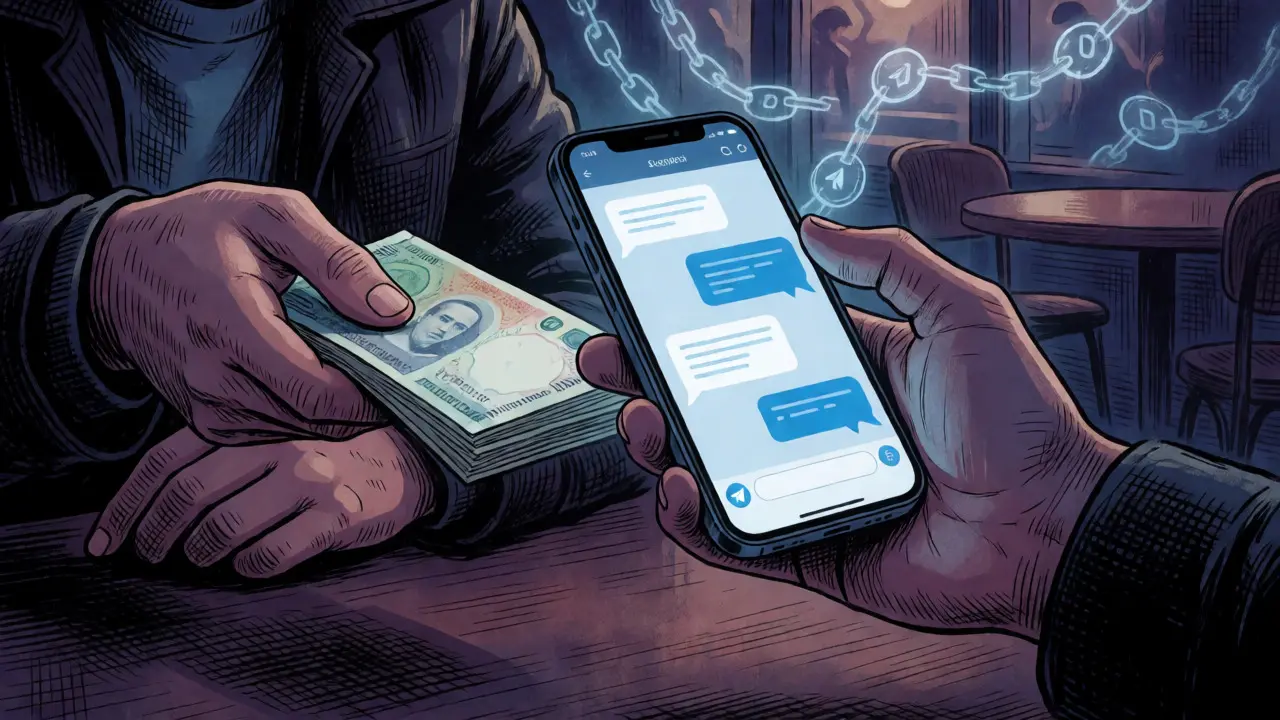
So, how do people trade when every transaction is a crime? They rely on three main mechanisms: peer-to-peer (P2P) networks, international exchanges, and stablecoins. The open marketplaces like Binance or Coinbase are effectively blocked or risky to access directly. Instead, transactions happen in private groups on Telegram or WhatsApp. These are closed circles where trust is paramount. You don't just send money to a stranger; you send it to someone vetted by the group.
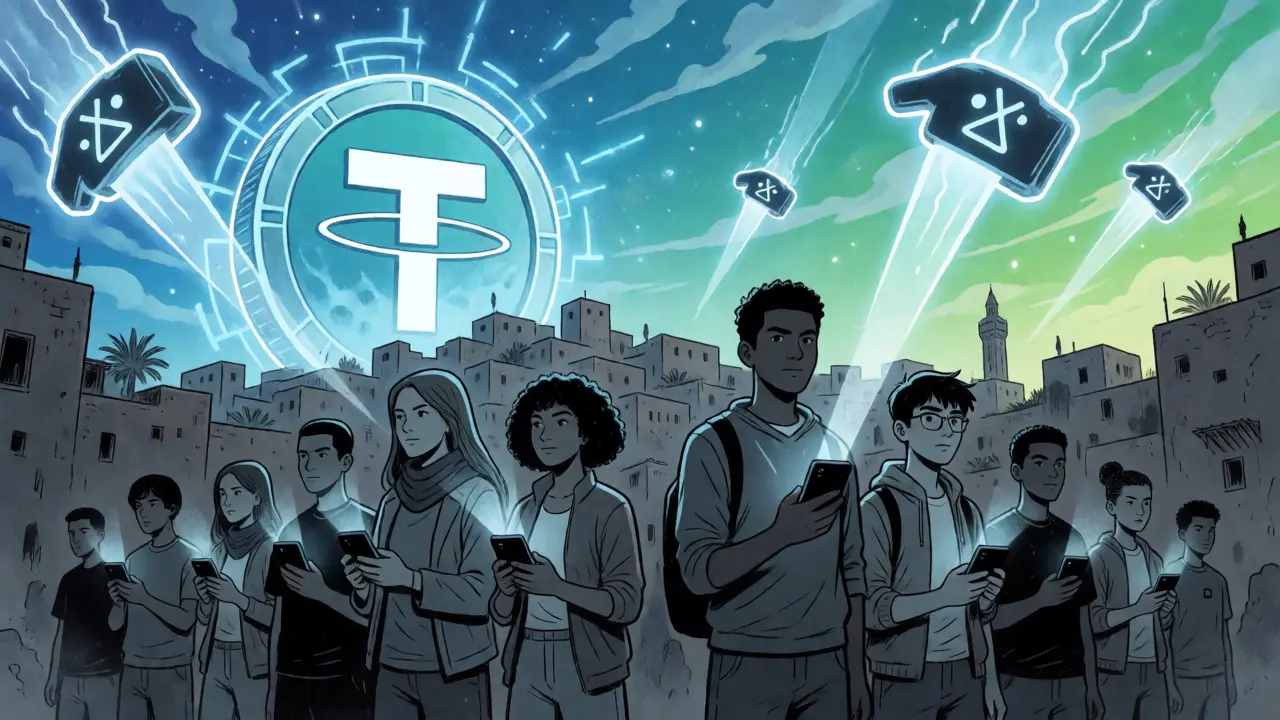
Stablecoins, particularly USDT (Tether), play a huge role here. Because the Algerian Dinar faces inflationary pressures and devaluation risks, many locals prefer to hold their savings in dollar-pegged digital assets. It acts as a hedge against local economic instability. However, acquiring these stablecoins requires navigating a complex web of intermediaries. A typical transaction might involve sending cash to a local agent who then releases USDT from their own wallet. This physical-digital bridge adds layers of complexity and cost.
Privacy is the currency of the realm. Users employ Virtual Private Networks (VPNs) to mask their IP addresses when accessing international platforms. They use privacy-focused wallets and often rotate addresses frequently to avoid chain analysis. The operational security required is far higher than in countries where crypto is legal. One slip-up-a public Instagram story showing a portfolio balance-could lead to scrutiny. Consequently, the user base has shrunk to those who are technically savvy and willing to accept significant risk.
Risks and Rewards in the Dark
Living on the edge comes with a price tag. The most obvious risk is legal prosecution. But beyond jail time, there is the fear of asset seizure. If authorities seize your digital wallet keys, you have no legal recourse. You cannot go to court and say, "That Bitcoin was mine," because the asset itself is contraband. This lack of legal protection opens the door to fraud. In the underground market, scams are rampant. Without regulated exchanges offering insurance or dispute resolution, losing funds to a bad actor is common.
Financially, participants pay a premium. The limited supply of liquidity and the high risk borne by agents drive up spreads. Buying USDT might cost you 5-10% more than the global market rate. Selling it back can be equally expensive. These costs eat into profits, making speculative trading less attractive for casual investors. Only serious actors, who see long-term value preservation or arbitrage opportunities, stick around.
| Feature | Pre-Ban Era (Before July 2025) | Underground Era (Post-July 2025) |
|---|---|---|
| Accessibility | High; direct access to major exchanges | Low; requires VPNs and P2P networks |
| Cost of Entry | Standard fees (0.1% - 0.5%) | Premium fees (5% - 10%+) due to risk |
| Legal Status | Gray area / Tolerated | Criminal Offense |
| Asset Protection | Some regulatory oversight | None; total loss possible |
| User Base | Broad demographic | Niche, tech-savvy, high-risk tolerance |
Why People Stay Despite the Ban
You might wonder why anyone would bother. Why not just keep money in the bank? The answer lies in distrust of the traditional banking sector and the desire for financial sovereignty. Many Algerians view the banking system as bureaucratic and slow. Cryptocurrency offers speed and borderless transfers. For freelancers working with international clients, receiving payments via crypto bypasses cumbersome foreign exchange controls. They convert the crypto to cash locally, keeping a larger portion of their earnings.
Furthermore, the cultural momentum is hard to stop. Before the ban, crypto adoption was growing rapidly among young, urban populations. These individuals saw blockchain technology as a tool for empowerment. Banning it didn't change their belief in its utility; it only forced them to adapt. As Amir Haddadi, a fintech analyst noted, the move signals Algeria's refusal to participate in the global DeFi experiment, but it doesn't erase the demand created by years of education and exposure.
The Future of Digital Money in Algeria
Will the underground market survive long-term? History suggests that prohibitions rarely kill technology; they just make it harder to use. China banned crypto mining and trading in 2021, yet activity continued in other forms. Algeria faces similar challenges. Enforcement is difficult. How does the police track a private Telegram chat? How do they prove intent without seizing devices and analyzing data, which raises privacy concerns?
However, the environment is hostile. Innovation suffers. Startups looking to build blockchain solutions in Algeria now face a chilling effect. Investors are wary of putting capital into a jurisdiction where the core product is illegal. This could stifle the growth of the digital economy. On the other hand, if the government introduces a Central Bank Digital Currency (CBDC) in the future, it might offer a sanctioned alternative that satisfies some of the demand for digital efficiency without the decentralization threat.
For now, the underground market persists. It is smaller, more expensive, and riskier, but it is alive. It serves as a testament to the resilience of human ingenuity in the face of restrictive laws. If you visit Algiers today, you won't see billboards for Bitcoin exchanges. But if you know where to look-and whom to ask-you will find that the digital economy hasn't stopped; it has just gone quiet.
Is it illegal to simply hold cryptocurrency in Algeria?
Yes. Under Law No. 25-10, enacted in July 2025, the holding of virtual currencies is strictly prohibited. The law explicitly lists "holding virtual currencies" as one of the eight criminalized activities. Possession alone can lead to fines and potential imprisonment.
What are the penalties for trading crypto in Algeria?
First-time offenders face fines ranging from 200,000 to 1 million Algerian dinars (approx. $1,540 to $7,700) and imprisonment of up to one year. Repeat offenses result in doubled penalties. Some sources indicate fines could reach up to 2 million dinars ($14,700) depending on the severity and context of the offense.
How do Algerians still buy Bitcoin despite the ban?
They primarily use Peer-to-Peer (P2P) networks via encrypted messaging apps like Telegram and WhatsApp. Transactions are often facilitated by trusted intermediaries or agents who handle the exchange of local currency (Dinars) for digital assets (like USDT or BTC) offline or through private online agreements, avoiding public exchange interfaces.
Does the ban apply to using crypto for international freelance work?
Technically, yes. Any use of crypto as a means of exchange or payment is prohibited. Freelancers who receive payments in crypto must navigate this carefully, often converting immediately to fiat through informal channels to minimize the time they hold the digital asset, thereby reducing the window of legal exposure.
Can tourists bring cryptocurrency into Algeria?
Tourists should exercise extreme caution. While carrying physical cash is standard, engaging in any crypto transaction within Algerian borders carries legal risk. The law targets the activity of purchasing, selling, and holding. Tourists are advised to avoid conducting any crypto trades while physically present in the country to prevent misunderstandings with local authorities.


16 Comments
Abid Bhatti
September 1 2026They are just trying to control the flow of information and money because they know their fiat currency is worthless in the long run. It's always the same story with these governments pretending to protect the people while actually protecting their own power structures from decentralized competition. You can see this pattern everywhere if you look past the mainstream narrative.
sri harni
September 3 2026It is sad that people have to hide their savings like criminals just to keep value. In India we also face inflation but at least we can buy gold or crypto openly without fear of jail. The resilience of these traders is amazing though, they find ways to survive even when the rules are so strict.
Ferdinand Friday
September 4 2026This situation serves as a fascinating case study in the tension between state sovereignty and individual financial liberty. When a government criminalizes the mere possession of an asset class, it effectively declares war on economic innovation and personal autonomy simultaneously. The underground market described here is not merely a workaround; it is a testament to the immutable nature of supply and demand which no legislative decree can fully suppress. One must consider the philosophical implications of such prohibitions. If the law forbids holding value in digital form, does it imply that the state has exclusive ownership over all forms of value storage? This creates a paradox where the citizen is punished for exercising rational economic behavior in response to local monetary instability. The friction generated by this ban will likely accelerate the adoption of privacy-focused technologies among the Algerian populace, creating a more sophisticated user base than those in regulated markets who take security for granted. Ultimately, history suggests that attempts to ban technological progress usually result in delayed adaptation rather than permanent suppression, leading to a more entrenched and secretive ecosystem once legality is eventually restored or ignored.
Gabriela Gonzalez
September 4 2026Wow 🤯 the spread of 5-10% is insane! 😱 But honestly, if I were living there, I would do anything to protect my savings from inflation 💸. Stay strong Algeria! 🇩🇿💪
Christian Pasamonte
September 4 2026The article fails to address the systemic inefficiencies that drive this demand. While the narrative focuses on the 'resilience' of the users, it ignores the fact that high transaction costs in the underground market negate most utility for small-scale transactions. A 10% premium on USDT acquisition renders arbitrage opportunities negligible for anyone without significant capital leverage. Furthermore, the comparison to China is superficial; China's ban was accompanied by massive infrastructure investments in digital yuan pilots, whereas Algeria lacks any credible alternative framework. The author romanticizes the 'shadow economy' without acknowledging that for the average citizen, this isn't empowerment-it's exclusion. The tech-savvy elite benefit from this opacity, but the broader population remains trapped in a low-trust environment where fraud rates are inevitably higher due to the lack of regulatory recourse. This isn't a victory for freedom; it's a failure of policy that punishes the poor for seeking basic financial stability.
Jess Emmerson
September 5 2026I think the key takeaway here is about operational security. For those of us used to centralized exchanges, the idea of trusting a random guy on Telegram with your life savings is terrifying. But in environments with capital controls, P2P networks become the only viable liquidity source. It’s risky, sure, but the alternative is holding a depreciating local currency. The trade-off is clear: pay up in spreads and risk, or lose value slowly via inflation. Neither option is great, but one keeps you solvent.
lea terrade
September 5 2026its crazy how hard it is to just exist financially sometimes i mean holding bitcoin shouldnt be a crime right? feels like big brother watching everything u do with ur money kinda scary tbh
Rachel Leet
September 6 2026People love to talk about 'financial sovereignty' until they realize they have no legal protection. If your agent runs off with your USDT, you can't sue him because the contract itself might be void under public policy. That's not freedom, that's vulnerability. The romanticization of the 'underground' often masks the reality that these markets are predatory by design because trust is expensive.
Finlay Samms
September 8 2026Interesting read. 🤔 The parallel to historical black markets is strong. Just like alcohol during prohibition, the quality and safety of the product suffer, but the demand persists. I wonder if the introduction of a CBDC could actually cannibalize this underground market by offering similar speed without the legal risk. Time will tell. 👍
Ritchie Grogg
September 8 2026Dude, that 1 year prison sentence for buying coffee with Bitcoin is brutal 😰. My heart goes out to them. It’s so stressful just thinking about having to hide your wallet keys every time you hear a siren. Hope things get better soon! ❤️
Sheryl Nelsen Hutton
September 9 2026From a sociological perspective, this phenomenon illustrates the concept of 'social capital' replacing 'legal capital'. In the absence of institutional trust, communities rely on tight-knit social graphs to enforce contracts and verify identities. The use of encrypted channels like Telegram isn't just about privacy; it's about maintaining the integrity of these informal networks. However, we must also consider the psychological toll of constant vigilance. Living in a state of perpetual low-level anxiety regarding financial assets can impact cognitive load and decision-making processes. The 'jargon-heavy' language often adopted by crypto enthusiasts in such contexts serves as both a technical necessity and a social barrier, excluding those who cannot navigate the complex lexicon of blockchain terminology. This exclusivity reinforces the divide between the tech-literate elite and the general population, potentially exacerbating existing socioeconomic inequalities within the country. Therefore, while the underground market provides a lifeline, it simultaneously creates a new hierarchy based on technical proficiency and network access.
Paige Ray
September 9 2026I feel for the freelancers mentioned. Trying to get paid for international work while avoiding legal scrutiny sounds incredibly exhausting. The mental burden of constantly converting assets immediately just to stay safe must be overwhelming.
John Lewis
September 9 2026To add to the point about stablecoins: USDT dominance is largely due to its liquidity and recognition. However, relying on a single issuer (Tether) introduces counterparty risk that is invisible to the end-user in a restricted jurisdiction. If Tether faces regulatory pressure in the US, Algerian holders have no direct channel to react quickly. This layer of dependency adds another dimension of fragility to the already precarious underground setup.
Sophie Fitzgerald
September 10 2026Yes, the cost of entry being 5-10% is really high. It makes me wonder if the government realizes they are taxing their own people twice-once through inflation and once through these premiums. Seems inefficient.
John Martin
September 11 2026Great breakdown! 📊 Really highlights the real-world consequences of heavy-handed regulation. 🛑 The part about chain analysis being harder but still possible is crucial. Users need to understand that 'private' doesn't mean 'anonymous' if metadata leaks occur. Keep learning and staying safe out there! 🛡️✅
Brittany Ross
September 11 2026Reading about the 5-10% spread made me wince 😬. That is such a huge fee just to access your own money! 😫 But I guess if the alternative is losing value to inflation, it's worth it? 🤷♀️ Still, the stress of hiding it all seems so draining. 💔 Sending good vibes to everyone navigating this tough system! 🙏✨