Halving Impact on Bitcoin Price: Analysis and Outlook for 2026
Key Takeaways
- Bitcoin Halving reduces mining rewards by 50% every four years, creating artificial scarcity.
- Historical data shows consistent long-term price appreciation following each halving event since 2012.
- The 2024 event marked the fourth reduction in rewards, setting the stage for market dynamics through 2028.
- Miner profitability often dips temporarily but recovers as hash rates stabilize and prices adjust.
- Institutional demand has matured alongside these cycles, reducing immediate volatility compared to earlier eras.
It is early 2026. If you have been watching the charts, you know exactly how much time has passed since the network adjusted again. We are sitting roughly two years removed from the most recent Bitcoin Halving event that took place in April 2024. By now, the dust has settled enough to see whether the old patterns held true or if the market matured beyond simple reactions. You aren't just seeing headlines about supply; you are feeling the weight of institutional participation mixed with retail sentiment.
This isn't about guessing what happens next. It is about understanding the mechanics that moved the market over the last two years and projecting the path toward the next adjustment in 2028. When you hold Bitcoin, you hold an asset governed by strict mathematical rules rather than central bank policy meetings. Understanding why the BTC Halving Cycle matters changes how you view your portfolio strategy.
What Actually Happens During a Halving?
You need to understand the baseline mechanics before analyzing the price chart. Bitcoin operates on a protocol designed by Satoshi Nakamoto. This protocol dictates that the supply of new coins slows down regularly. Specifically, every 210,000 blocks, which usually takes about four years, the block subsidy paid to miners gets cut in half. There is no committee voting on this. There is no algorithmic change approved by developers. It happens automatically embedded in the code.
In practical terms, this means the rate at which new Bitcoin enters circulation drops by 50%. If you compare this to gold, no one decides to stop digging gold mines, so the supply growth depends on human effort. With Bitcoin, the supply growth is forced down regardless of effort. This creates a predictable supply shock. Demand might stay flat, rise, or fall, but the new supply available is guaranteed to shrink. Basic economics suggests that when supply contraction meets steady or growing demand, value tends to increase.
A Look Back at the Four Halvings
Since the network launched in 2009, we have seen four major events. Each one taught us something different about market behavior. As we sit here in 2026, we have the luxury of looking back at the first three as established history and the fourth as fresh data.
| Date | Reward Before | Reward After | Price Trend Post-Halving |
|---|---|---|---|
| November 2012 | 50 BTC | 25 BTC | Rose from $12 to ~$1,100 within a year |
| July 2016 | 25 BTC | 12.5 BTC | Rallied to nearly $20,000 by late 2017 |
| May 2020 | 12.5 BTC | 6.25 BTC | Surpassed $60,000 in 2021 bull run |
| April 2024 | 6.25 BTC | 3.125 BTC | Market stabilization and institutional uptake continued through 2025-2026 |
The first event in 2012 felt experimental. Many participants questioned whether the network would survive the economic pressure on miners. The answer was a resounding yes. Prices grew over 1,800 percent within five months. This set the precedent that the system functions as intended during stress.
The second event in 2016 showed maturity. Bitcoin was already a recognized asset class, though still volatile. The third event in 2020 introduced a new variable: global macroeconomics. With the pandemic driving traditional currency inflation, Bitcoin's fixed supply became a more attractive hedge against debasement. The final event in 2024 occurred right after the introduction of spot ETFs in many major markets. This changed who was buying. Instead of just crypto natives, pension funds and large institutions were entering the market just as supply tightened.
How Miner Economics Influence Price
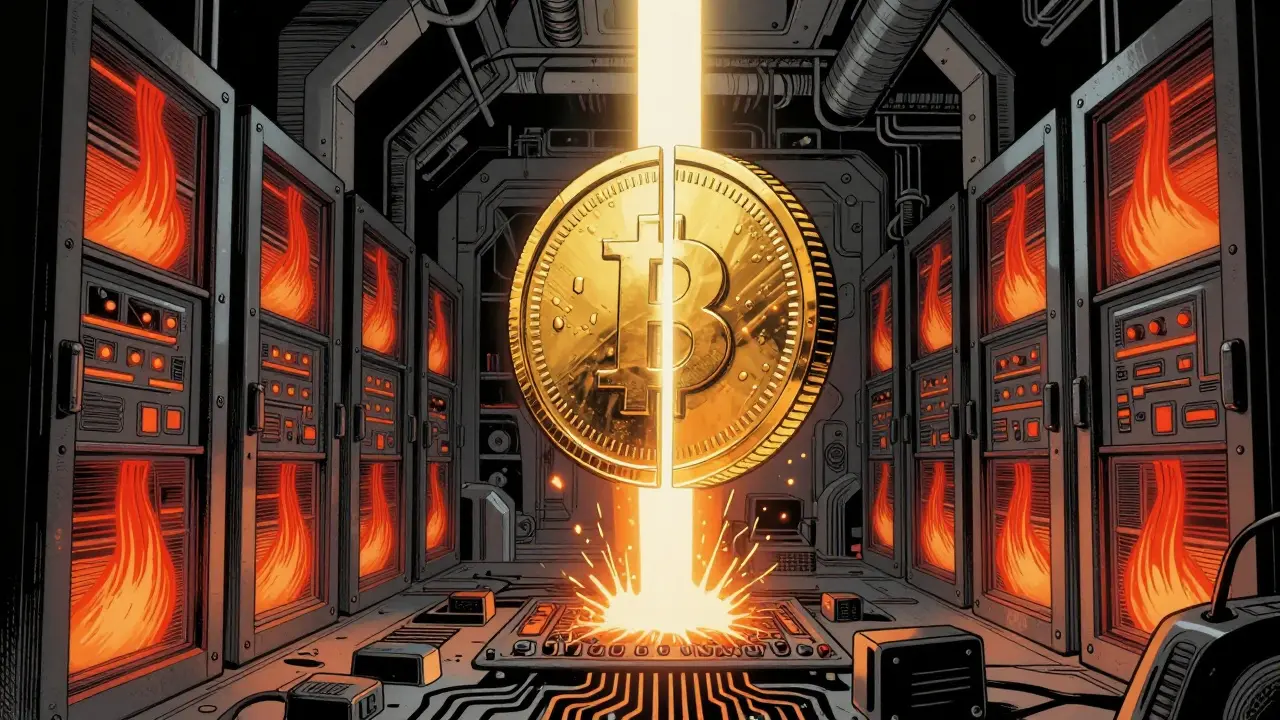
You cannot separate the price discussion from the miners. They secure the network, so their survival matters for everyone. When the block reward cuts in half, miners immediately lose 50% of their revenue income stream. Historically, this causes the total computational power, known as the Hash Rate, to drop temporarily. Less efficient hardware becomes unprofitable and shuts off.
Here is where the recovery usually happens. As less efficient miners exit, the remaining operations are often highly optimized and energy-efficient. Over the subsequent weeks and months, as the price of Bitcoin appreciates due to the scarcity narrative, mining profitability recovers. We saw this pattern repeat through 2012, 2016, and 2020. By 2026, the industry had consolidated further. Large-scale professional mining farms dominate, allowing them to weather the revenue shocks better than individual home miners could.
It is important to note that transaction fees also play a bigger role now. In previous cycles, fees made up a tiny portion of miner revenue. Following the 2024 transition, fee competition increased, especially during periods of high network congestion. This provides an extra safety net for miners even when the block subsidy shrinks.
Supply Shock vs. Market Reality
Every enthusiast talks about "supply shock." It sounds dramatic, but what does it mean for you holding assets? The daily issuance of Bitcoin dropped from roughly 900 coins a day before the April 2024 event to 450 coins afterward. Over a year, that is thousands fewer coins hitting the market.
If demand remains constant, the math favors the holder. However, demand is the wild card. In 2026, we see a more complex picture than in 2012. Regulatory clarity has improved in several jurisdictions. Corporate treasury allocations have normalized. This means the "buy side" of the equation is less reliant on speculative retail trading alone.
We are observing a divergence from the massive, instant spikes seen in 2013 or 2017. The modern market absorbs news faster. The halving is priced in well before the event occurs. By the time the actual block triggers the cut, the rally might already be underway or stabilizing. This doesn't mean the event fails; it means the market efficiency has improved.
What To Expect Between 2026 and 2028
We are currently in the middle phase of the four-year cycle following the 2024 adjustment. Most historical cycles suggest the bulk of price discovery happens in the 12 to 18 months following the halving. That window opened late 2024 and likely extended through 2025. By early 2026, we look at whether the momentum sustains.
If the trend follows the 2020 playbook, the period leading up to 2027 and 2028 might see consolidation phases. This is when retail enthusiasm cools slightly while institutional capital continues to rotate positions. The key metric to watch is the stock-to-flow ratio. This measures how scarce the asset is relative to annual production. Every halving improves this ratio significantly, reinforcing the Digital Gold comparison.
Some analysts believe that by 2028, when the next halving approaches, regulatory frameworks will make entry easier for traditional financial systems. Easier entry equals higher demand meeting lower supply. The friction remains, such as security risks and volatility management, but the barrier to entry is undeniably lower than a decade ago.
Strategic Considerations For Holders
If you are navigating this landscape in 2026, timing the exact peak is less profitable than simply understanding the cycle. Holding through the entire duration requires conviction in the underlying scarcity model. Selling into volatility is common, but missing the full upside is the biggest regret many traders report from past cycles.
Consider dollar-cost averaging rather than trying to catch the bottom or top. The volatility during these periods can swing wildly. Setting automatic buys can remove emotion from the equation. Also, keep an eye on mining difficulty adjustments. These happen roughly every two weeks and ensure block times stay near ten minutes. If difficulty rises too fast during a dip, it signals miner stress. If it falls, the network is becoming more efficient.
Does Bitcoin halving guarantee price increases?
No single event guarantees anything in finance. While history shows appreciation after every halving, external factors like regulations or economic recessions can influence short-term trends. Long-term structural scarcity supports value retention, however.
When is the next halving scheduled?
Based on the current blockchain projection, the fifth halving is estimated for April 2028. Exact dates vary slightly depending on mining speed, but the window is typically narrow.
Why do miners suffer when rewards cut?
Miners get paid in Bitcoin. If they get 50% fewer coins per block while their electricity costs stay the same, their profit margins vanish. They must sell more or improve efficiency to survive.
Is the supply cap changing?
No. The maximum supply is hard-coded at 21 million Bitcoin. Halvings are merely steps along the curve to reach zero issuance, ensuring the cap is never breached.
How does this compare to fiat currencies?
Fiat money can be printed indefinitely by central banks. Bitcoin issuance is programmed to slow down until it stops. This makes Bitcoin deflationary by design, whereas fiat is naturally inflationary.
Final Thoughts on Market Behavior
As we move through the remainder of this cycle, remember that the fundamental mechanism hasn't changed. Code executes without bias. Whether the next four years bring a record high or sideways movement depends heavily on global macro conditions. But the constraint on supply remains absolute.
You don't need to predict the price tomorrow. You just need to understand that the machine works differently than any other asset in existence. When you grasp the difference between programmed scarcity and human-managed printing, the rest of the noise fades away. The data from 2012 through 2024 supports a thesis of resilience. Now, the job is to manage risk while letting the protocol do its work.