AXL INU New Year's Eve Airdrop: Is It Real or a Scam?
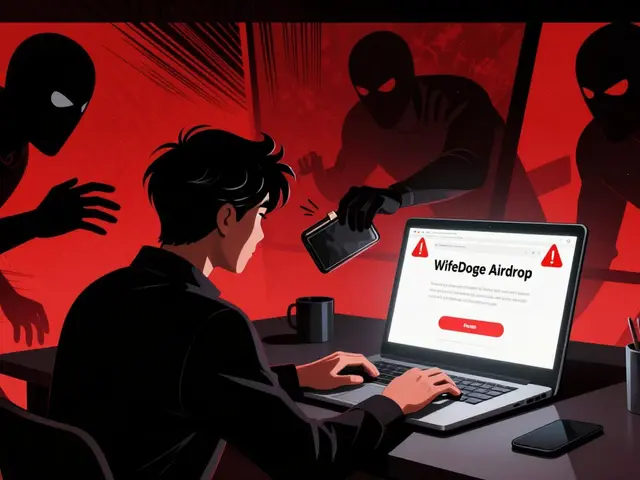
Did you just see a post claiming you can claim free AXL INU tokens for a "New Year's Eve" giveaway? If so, stop right there. You are likely looking at a sophisticated phishing trap designed to steal your digital assets. There is no legitimate airdrop for the AXL INU meme coin scheduled for New Year's Eve. In fact, recent data shows that this specific campaign is part of a coordinated effort to drain wallets by tricking users into signing malicious contracts.
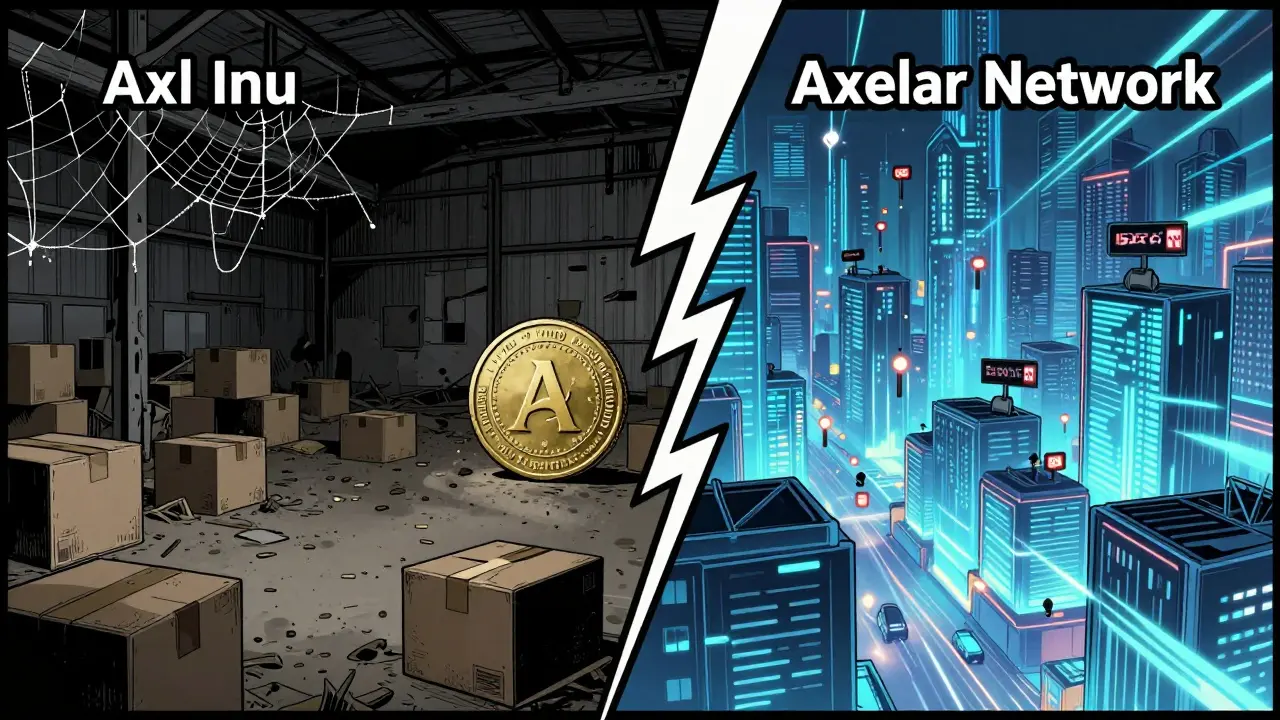
The confusion often stems from the similarity in names between Axl Inu (AXL), a low-activity meme coin, and Axelar Network, a legitimate cross-chain protocol also using the ticker AXL. While Axelar has real utility and official announcements, Axl Inu operates in the shadows with virtually zero trading volume. Understanding the difference between these two entities is crucial to keeping your funds safe.
What Is the AXL INU Token?
To understand why this airdrop is suspicious, we first need to look at the token itself. Axl Inu is a cryptocurrency token listed as #6907 on CoinMarketCap. As of late 2025, it had a market capitalization of roughly $773 and a 24-hour trading volume of $0. That is not a typo. Zero dollars in daily volume means there is no active market for buying or selling this token.
The tokenomics are equally concerning. The total supply sits at 70.35 billion tokens, but only about 8.85 billion are reported as circulating. This discrepancy, combined with a holder count of nearly 100,000, suggests a tactic known as "wallet stuffing." Scammers distribute tiny amounts of tokens to thousands of random wallets to create the illusion of widespread adoption. When you receive unsolicited AXL tokens in your wallet, it is not a gift; it is bait.
| Feature | Axl Inu (AXL) | Axelar Network (AXL) |
|---|---|---|
| Type | Meme Coin / High-Risk Token | Cross-Chain Communication Protocol |
| Trading Volume | $0 USD (Negligible) | High (Listed on Binance) |
| Legitimacy | No verifiable team or whitepaper | Founded by Illia Polosukhin et al. |
| Airdrop Status | Fake / Phishing Campaign | Official events only via verified channels |
The "New Year's Eve" Airdrop Myth
The rumor of an AXL INU New Year's Eve airdrop began circulating in October 2025, months before the actual holiday. This timing is a classic red flag. Legitimate projects announce airdrops through their official Twitter accounts, Discord servers, and blog posts well in advance. They do not rely on vague social media posts or Telegram groups with questionable membership counts.
Investigations by security firms like CertiK revealed that domains associated with this "airdrop," such as axl-inu-airdrop.live, were registered recently through obscure hosting providers. These sites contain identical code to previous successful scams. The pattern is consistent: a fake website asks you to connect your wallet, then prompts you to approve a transaction that grants the scammers unlimited access to your other tokens.
Users who fell for this trap reported losing funds immediately after clicking "approve." According to blockchain forensics from Chainalysis, over 127 wallets approved these malicious contracts, resulting in stolen funds totaling nearly $4,000 by mid-October 2025. The scammers don't care about the worthless AXL tokens; they want the ETH, BNB, or USDT sitting in your wallet.
How the Phishing Trap Works
You might be wondering how you even got involved if you never bought AXL INU. Here is the step-by-step process used by these attackers:
- Wallet Stuffing: The scammer sends small amounts of AXL INU to thousands of random public addresses. You see the notification in your wallet app.
- Social Engineering: You search online to find out what AXL INU is. You encounter fake news articles or social media posts promising a valuable "New Year's Eve" airdrop.
- The Hook: You visit the provided link to "claim" your rewards. The site looks professional, mimicking legitimate DeFi interfaces.
- The Trap: You connect your wallet. The site asks you to sign a message. This message is actually a smart contract approval. By signing, you give the attacker permission to move any token in your wallet.
- The Drain: Once approved, the scammer’s bot instantly transfers your valuable assets to their wallet. The worthless AXL tokens remain behind.
This method exploits curiosity and greed. It works because most users do not read the fine print of every transaction signature. Always remember: if you did not buy the token, you should not hold it. Unsolicited tokens are never free.
Red Flags to Watch For
Not every new token is a scam, but AXL INU exhibits almost every warning sign possible. Here are the critical indicators that helped experts classify this as a high-risk operation:
- Zero Trading Volume: A project with 100,000 holders but $0 in daily volume is statistically impossible for a legitimate community-driven coin. It indicates artificial inflation of holder numbers.
- No Official Presence: There is no verifiable development team, whitepaper, or roadmap for Axl Inu. Legitimate projects have transparent leadership.
- Recent Domain Registration: The websites promoting the airdrop were created just weeks before the campaign launched. Trustworthy projects use established domains.
- Requests for Private Keys: Some variants of this scam explicitly ask for your private key or seed phrase. No legitimate service will ever ask for this information.
- Urgency Tactics: Claims that the airdrop ends soon or is limited-time only are designed to bypass your logical thinking and trigger impulsive actions.
Dr. David Gerard, a noted critic of speculative crypto assets, noted in late 2024 that tokens with sustained zero volume typically indicate either complete abandonment or deliberate manipulation. In the case of AXL INU, it is clearly the latter.
Protecting Your Wallet
If you already received unsolicited AXL INU tokens, do not interact with them. Do not try to sell them on decentralized exchanges unless you are prepared to lose the gas fees. Instead, consider using a tool like Revoke.cash to check for any pending approvals on your wallet. If you accidentally connected to one of the fake airdrop sites, revoke those permissions immediately.
To stay safe in the future, adopt a simple rule: ignore unsolicited tokens. If you want to participate in an airdrop, go directly to the project’s official website and verify the announcement yourself. Never click links from DMs, Telegram bots, or unverified social media comments. The crypto space is full of opportunities, but it is also filled with traps disguised as gifts.
Regulatory bodies like the SEC have begun targeting these types of schemes. In October 2025, the SEC issued warnings specifically mentioning tokens with zero verifiable activity promoting fictional airdrops. Exchanges like Binance have also added AXL INU to their high-risk monitoring lists. Pay attention to these signals. They are your best defense against losing hard-earned money.
Is the AXL INU New Year's Eve airdrop real?
No, it is not real. Security researchers and blockchain analysts have identified this campaign as a phishing scam designed to steal funds from users who attempt to claim non-existent rewards.
Why did I receive AXL INU tokens in my wallet?
You likely received them through a "wallet stuffing" tactic. Scammers send worthless tokens to many wallets to create fake popularity metrics and lure victims into visiting malicious websites.
Can I sell the unsolicited AXL INU tokens?
Technically yes, but it is risky. Interacting with the token may require you to sign transactions that could expose your wallet to further attacks. It is safer to leave them alone or burn them.
What is the difference between Axl Inu and Axelar Network?
They are completely different projects. Axelar Network is a legitimate cross-chain protocol with high liquidity and official listings. Axl Inu is a low-cap meme coin with no trading volume and no verifiable team.
What should I do if I already connected my wallet to the fake site?
Immediately use a service like Revoke.cash to remove any token approvals granted to the malicious contract. Move your remaining assets to a new, secure wallet if you suspect compromise.

14 Comments
Jesse Alston
May 19 2026Hey everyone, just wanted to chime in because I see a lot of people getting confused by these fake AXL INU tokens showing up in their wallets 🛑 It is super important to understand that this is not a gift it is a trap designed to drain your ETH or USDT if you interact with it. The easiest way to stay safe is to simply ignore the token and never try to sell it on a DEX unless you are prepared to lose the gas fees involved. If you did accidentally connect your wallet to one of those suspicious sites please go to Revoke.cash immediately and revoke any approvals you granted to unknown contracts 🔒 This can save you from having your other assets stolen later on. Stay vigilant out there folks! 💪
John Gonzalez Bentham
May 21 2026typical crypto scam nothing new here but people still fall for it every time honestly its pathetic how easy it is to get drained if u dont read the fine print i bet half this subreddit already lost money to something similar last year stop expecting free money and start doing ur homework before clicking links
Bianca Vilas Boas Lourenço
May 22 2026Oh wow another day another scam 😒 Honestly I am so tired of seeing these wallet stuffing tactics everywhere it feels like the entire internet is just one big phishing site now. I saw this exact thing happen to my cousin last week and she was so upset when her wallet got drained after trying to 'claim' her rewards 📉 It makes me want to cry for all the innocent people who just want to participate in crypto without getting scammed. Can we please have some empathy for the victims instead of just calling them stupid? They are trying their best in a very confusing space 💔
Ankush Pokarana
May 22 2026the nature of trust in decentralized systems requires us to be our own guardians yet many fail to recognize the subtle signs of manipulation embedded within these digital artifacts which often masquerade as opportunities for enrichment while serving only to deplete resources and erode confidence in the broader ecosystem thereby creating a cycle of suspicion that hinders genuine innovation and collaboration among participants who seek to build rather than exploit the vulnerabilities inherent in human psychology and technological interfaces alike.
Ellie Riddell
May 23 2026I mean sure it is a scam but let us not pretend that legitimate projects do not also engage in questionable marketing tactics sometimes. The line between aggressive growth hacking and outright fraud is blurrier than most people admit. I just sit back and watch the drama unfold because honestly it is entertaining to see how quickly greed overrides logic in this community. Not that I am judging anyone just observing the human condition through the lens of blockchain transactions. 🙄
Yash Lodha
May 25 2026You are being naive if you think this is an isolated incident. The infrastructure behind these scams is likely funded by larger entities that benefit from the chaos and confusion in the market. When you see zero volume on a token with hundreds of thousands of holders it is not a coincidence it is a coordinated effort to manipulate perception and create liquidity traps for retail investors who lack the technical expertise to analyze smart contract code properly. Trust no one and verify everything yourself.
Shelby Cantu
May 26 2026Stay safe everyone!
Sarah C
May 27 2026I really appreciate this detailed breakdown of what is happening with AXL INU. It helps to have clear information so we can protect ourselves and our friends from falling into these traps. I have shared this post with my local crypto group so they know what to look out for too. Let us continue to support each other by sharing accurate warnings and staying informed about potential risks in the space.
Kimberly Herbstritt
May 27 2026I actually think some people might be overreacting to this situation. There are plenty of legitimate meme coins that start with low volume and grow into something significant over time. Just because a project has zero trading volume right now does not necessarily mean it is a scam. We should give new projects a chance to prove themselves before dismissing them entirely based on fear-mongering articles like this one. Maybe the airdrop is real and you are just missing out on an opportunity.
Tobias Gjerlufsen
May 29 2026you idiots need to wake up and realize that the entire concept of value in crypto is subjective anyway so why care if a specific token is worthless or not unless you are holding bags that are pumping hard right now this article is just noise designed to keep you focused on small threats while the real whales manipulate the market behind the scenes ignoring the obvious red flags is a choice you make every day
Sudarshan Anbazhagan
May 30 2026it is quite evident that the lack of fundamental utility combined with the absence of a verifiable development team renders this particular asset devoid of any intrinsic value whatsoever furthermore the practice of distributing unsolicited tokens to random addresses serves solely to inflate holder metrics artificially thereby creating a false sense of security among unsuspecting participants who may inadvertently expose their private keys or approve malicious transactions under the guise of claiming rewards thus leading to irreversible financial losses
Sharada Vakkund
June 1 2026Hi everyone! I wanted to add that if you are ever unsure about a token you can check tools like Etherscan or BscScan to see the transaction history and contract details. It is always good to include more voices in these discussions so we can learn from each other's experiences. Has anyone else encountered similar scams recently? I would love to hear your stories so we can help prevent others from making the same mistakes. Let us keep this community safe and supportive for everyone involved! 🌟
Destiny Kilby
June 2 2026i feel for those who have been affected by these scams it must be incredibly frustrating to lose hard earned money due to deception however it is crucial to remain calm and take immediate action by revoking approvals and moving funds to secure wallets rather than dwelling on anger or regret which will not change the outcome but rather hinder future decision making processes
Jerry CUNNINGHAM SR
June 3 2026It is imperative that we maintain a respectful dialogue regarding these security issues while acknowledging the severity of the threat posed by such phishing campaigns. By educating ourselves and adhering to best practices such as verifying sources and using hardware wallets we can collectively strengthen the resilience of our community against these malicious actors. Please refrain from spreading unverified rumors and instead rely on official announcements from reputable organizations to ensure the integrity of our interactions.