Bitcoin Adoption in Venezuela Amid Economic Crisis: How Crypto Became a Lifeline
Venezuela Crypto Savings Calculator
Venezuela's bolivar lost 70% of its value between October 2023 and June 2024. Calculate how much value you lose when holding bolivars versus converting to USDT.
VES
Your Savings Comparison
USDT Value
$0.00
Bolívar Value (After Inflation)
$0.00
Savings
$0.00
With this income, you could buy 0 loaves of bread
At current prices ($200,000 VES per loaf)
At current prices ($200,000 VES per loaf)
When your salary buys less than a loaf of bread by the end of the week, what do you do? For millions of Venezuelans, the answer isn’t to wait for government reform-it’s to turn to Bitcoin and USDT. This isn’t speculation. It’s survival.
Why Bitcoin? Because the Bolívar Is Worthless
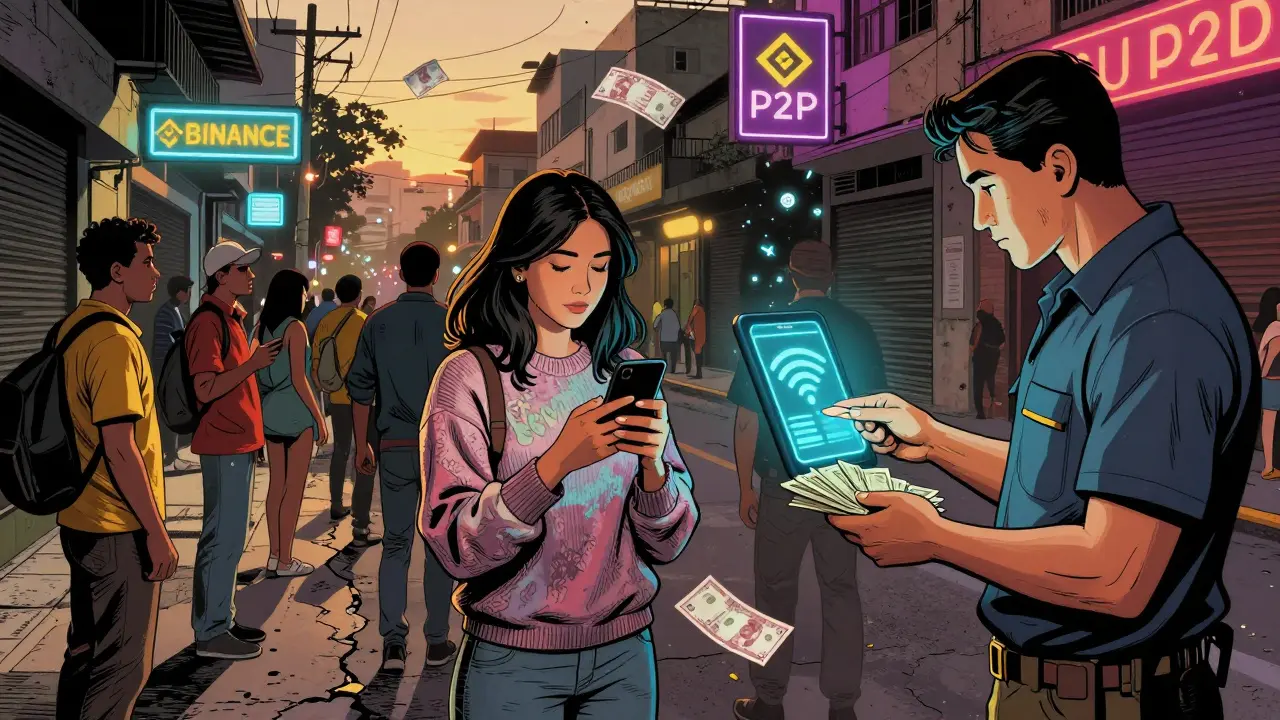
The Venezuelan bolívar has collapsed. Inflation hit 229% in May 2024, and between October 2023 and June 2024, the currency lost over 70% of its value. Wages paid in bolívars are useless by the time they hit your account. People used to line up for food. Now, they line up for internet access to send crypto. It started quietly. A few tech-savvy workers began paying for groceries with Bitcoin. Then came the merchants who realized: if they accepted crypto, they could buy real goods from abroad. No more waiting for dollars to arrive through blocked bank channels. No more paying 10x the price because of black-market exchange rates. Bitcoin, and especially USDT, became the only reliable way to store value and trade.USDT Is the Real MVP-Not Bitcoin
You might think Bitcoin is the star here. It’s not. Most daily transactions in Venezuela use USDT-Tether’s dollar-pegged stablecoin. Why? Because Bitcoin’s price swings too much. If you earn 10 USDT today and spend it tomorrow, you know exactly what you’re getting: the equivalent of $10. Bitcoin? You might wake up to a 15% drop. That’s not a payment system. That’s gambling. Locals call USDT "Binance dollars." It’s not official. It’s just what works. A Caracas mechanic who earns 50 USDT a week can pay for parts, rent, and food without losing half his income to inflation. A mother buys milk with USDT. A student pays for tutoring. A small pharmacy stocks medicine imported from Colombia because they can pay in crypto, not bolívars.How It Works: P2P, Not Banks
Venezuela’s banks are either broken or blocked. U.S. sanctions since 2017 froze most international banking relationships. So people bypassed the system entirely. Peer-to-peer (P2P) platforms like Binance P2P and LocalBitcoins became the new banks. You find someone willing to sell USDT for cash. You meet in a café, hand over bolívars, and they send you USDT to your wallet. No paperwork. No approval. No delays. In 2025, P2P crypto transactions in Venezuela hit $119 million in a single month. About 4.3 million Venezuelans-13% of the population-now use digital wallets. Binance Wallet and Airtm are the most popular. These apps let you hold crypto, send it, and even convert it to local cash through trusted traders. It’s not perfect. But it’s better than watching your money vanish overnight.The Internet Problem
Here’s the catch: you need the internet. Venezuela ranks 153rd in global internet speed, averaging just 14.79 Mbps. In rural areas, connectivity is spotty or nonexistent. A farmer in Zulia can’t use crypto if he can’t load a wallet. A grandmother in Maracaibo can’t pay her grandson’s school fees if the network goes down. Sixty-eight percent of Venezuelans have smartphones. Only 45% have reliable internet. That’s the biggest barrier. You can’t use crypto if you can’t connect. Many users rely on public Wi-Fi in parks or cafes. Others wait hours for a transaction to confirm. Bitcoin transactions take 10 to 60 minutes during peak times. USDT on Tron? Under two minutes. That’s why USDT dominates.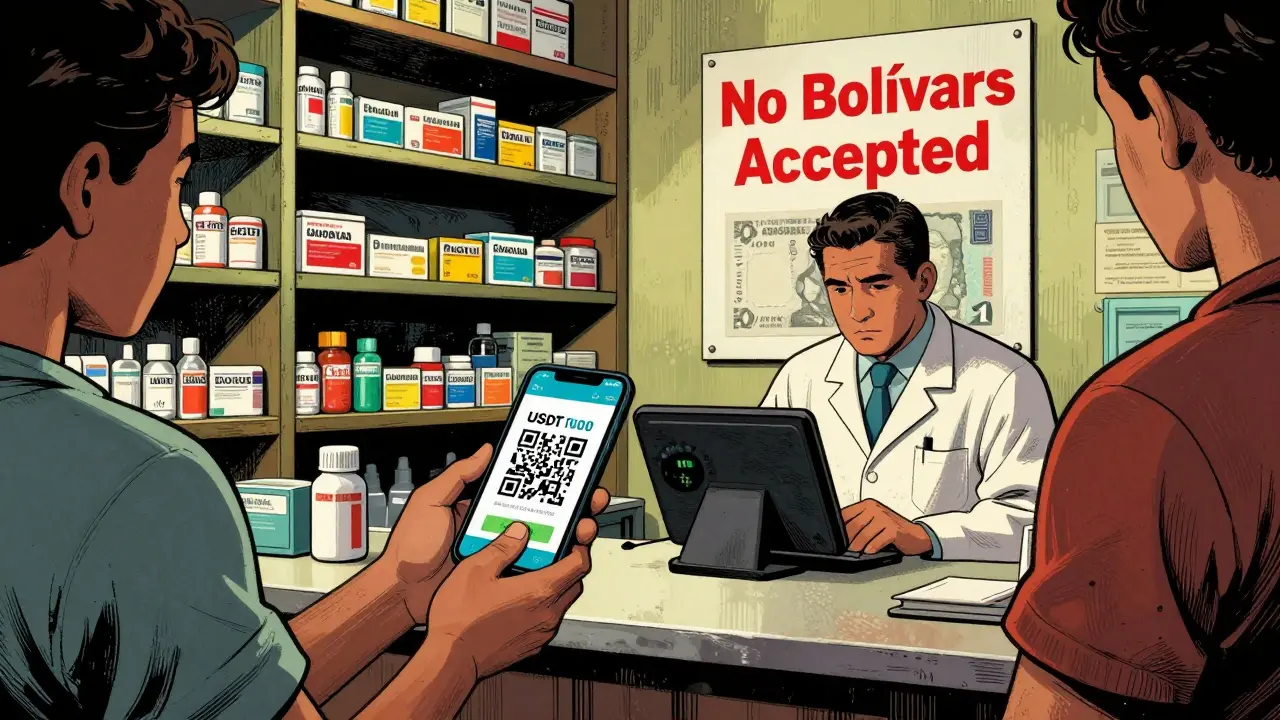
Who’s Using It-and Who’s Not
Crypto adoption isn’t equal. In Caracas, 65% of small businesses accept crypto. Supermarkets, pharmacies, repair shops, even street vendors. A 2025 survey of 1,200 businesses found nearly one in three medium-to-large companies now take crypto payments. That’s up from 9% in 2023. But in the countryside? Almost none. No internet. No access to P2P traders. No way to convert crypto into food or fuel. This isn’t a national solution. It’s an urban lifeline. And it’s not just ordinary people. Doctors, teachers, engineers-they’re all using crypto. One teacher told a reporter: "I get paid in bolívars on Friday. By Monday, it’s worth half. So I convert it to USDT the second I get it. Then I pay my bills. I don’t wait. I don’t hope. I act."The Government’s Confusing Role
The Venezuelan government doesn’t know what to do. In 2018, they launched the Petro-a state-backed cryptocurrency tied to oil. It failed. By 2024, it was dead. No one trusted it. No one used it. Then they created SUNACRIP, a crypto regulator. Then they shut it down. Now, there’s no official oversight. No rules. No protection. You’re on your own. Meanwhile, the U.S. keeps sanctions in place. Binance blocks transactions linked to sanctioned banks. About 18% of attempted transfers get flagged or rejected. If you’re using a local bank account-even if it’s just to receive a salary-your crypto transactions might get frozen. The government says crypto is illegal. But they don’t stop it. They can’t. It’s too essential.Real Stories, Real Survival
Victor Sousa, a Caracas resident, bought phone accessories with USDT and said: "There’s lots of places accepting it now. The plan is to one day have my savings in crypto." Carlos, another resident, told CoinCentral: "I use USDT for everything-buying food, paying rent. It is much more reliable than the bolívar." On Reddit’s r/BitcoinVenezuela, with over 42,000 members, users share daily struggles. One wrote: "Without USDT, I couldn’t feed my family after my bolívar salary became worthless overnight." These aren’t tech enthusiasts. They’re parents, workers, students. People doing what they have to do to survive.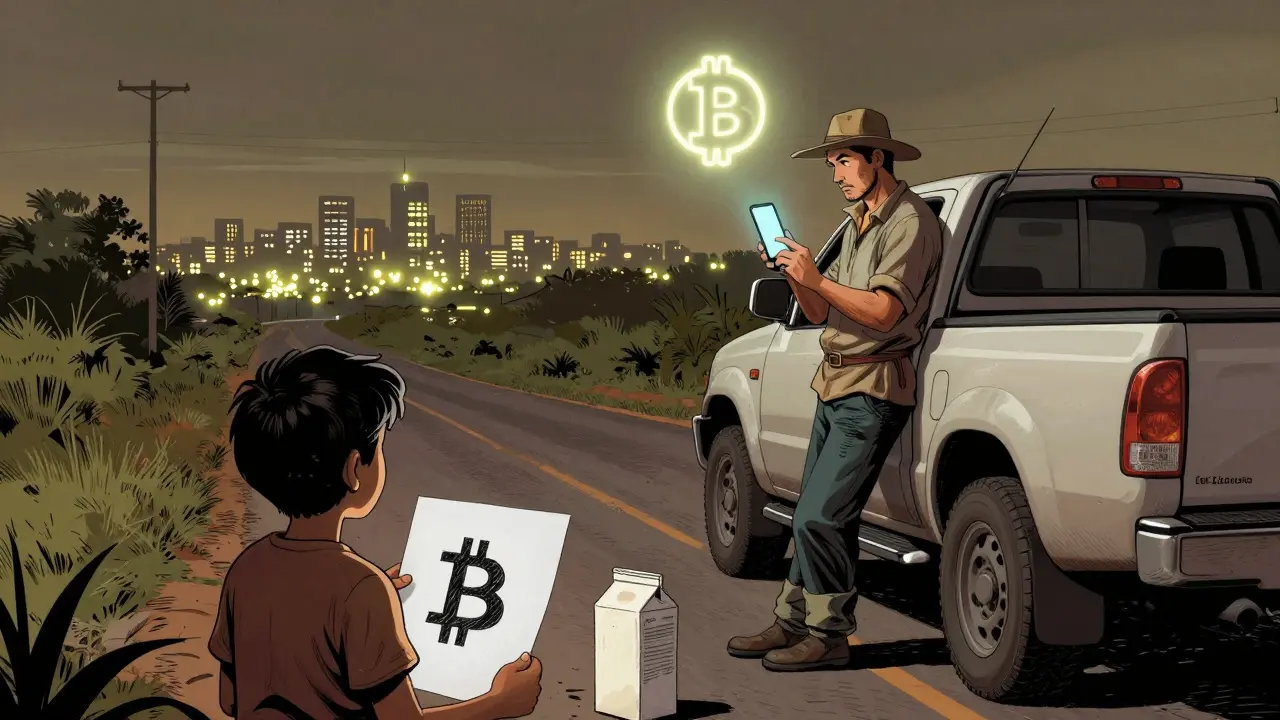
18 Comments
Layla Hu
December 6 2025It’s heartbreaking to see how people are forced to innovate just to survive. I don’t know if this is sustainable, but I can’t judge. When your basic needs vanish with the currency, you do what you can.
My heart goes out to those doing this every day.
Nora Colombie
December 6 2025Of course crypto works in Venezuela-because the government is a joke. In America, we have institutions. We have the Fed. We have rules. This is what happens when you let socialists burn down the economy. No wonder people turn to Bitcoin. It’s not a solution-it’s a symptom of failure.
Greer Dauphin
December 7 2025sooooo… usdt is basically the new bolivar? lol
also i just learned that people are meeting in cafés to hand over cash for crypto. that’s wild. no one’s getting robbed? no one’s scammed? or is that just part of the ‘vibe’ now?
also why is everyone using tron for usdt? i thought it was ethereum? 🤔
also also-anyone know if you can buy a taco with usdt in caracas? just curious. i’m hungry.
Bhoomika Agarwal
December 8 2025Oh wow, so now the poor are using crypto because the rich ruined everything? Shocking. Next you’ll tell me water is wet. In India, we don’t need crypto to survive-we just don’t let our politicians steal our future. This is what happens when you replace discipline with chaos. At least we still have rupees that don’t evaporate like morning dew.
Nelia Mcquiston
December 9 2025This isn’t about technology. It’s about trust. When institutions fail, people build their own. Not because they love decentralization, but because they have no other choice. The fact that a mother can buy milk with USDT while her government watches-it’s a quiet revolution. Not glamorous. Not ideological. Just human.
And yet, we still call it ‘crypto’ like it’s a trend. It’s not. It’s survival.
Mark Stoehr
December 9 2025people are dumb for using crypto. you think bitcoin is safe? it crashed 80% in 2018. you think usdt is backed? it almost failed in 2019. you think p2p is secure? people get mugged for their phones every day. this is not innovation this is desperation. and you call it a solution? lol. you people are delusional.
also why is everyone using binance? its a corporation. its not decentralized. its just another bank with a different logo
Reggie Herbert
December 11 2025Let’s be precise: USDT is not a currency. It’s a liability-backed token issued by a private entity with opaque reserves. The Venezuelan population has effectively outsourced its monetary sovereignty to Tether Ltd., a Cayman Islands entity with no regulatory accountability. This is not financial innovation-it’s systemic vulnerability masked as autonomy.
Moreover, the reliance on Tron’s network introduces centralized consensus risks. The fact that 76% of stablecoin usage is concentrated in a single issuer is a textbook single point of failure. This isn’t adoption. It’s entrapment.
Mani Kumar
December 12 2025While the anecdotal evidence is compelling, the structural dependency on foreign financial infrastructure undermines any claim of sovereignty. Venezuela’s experience is a cautionary tale of economic collapse, not a model for financial evolution. The absence of institutional oversight renders the entire ecosystem precarious. One cannot build a civilization on peer-to-peer cash exchanges and smartphone wallets.
Britney Power
December 14 2025It’s fascinating how the neoliberal fantasy of ‘decentralized finance’ is being weaponized by the very populations it claims to empower. The irony is thick: the same individuals who decry Wall Street are now relying on a privately issued stablecoin controlled by a company with ties to the very financial system they despise. Tether’s dominance isn’t liberation-it’s corporate capture disguised as grassroots resilience.
And let’s not ignore the gendered dimension: women are disproportionately bearing the burden of managing these volatile, unregulated systems while simultaneously navigating patriarchal economic structures. This isn’t empowerment. It’s exploitation with a blockchain logo.
Akash Kumar Yadav
December 15 2025Bro, in India we have UPI. 10 billion transactions a month. No crypto. No chaos. Just a phone, a number, and a government that actually works. You think Venezuelans are brave? We’re the ones who didn’t need to turn to crypto because we fixed our system. You call this innovation? This is just a broken country using Band-Aids on a bullet wound.
samuel goodge
December 15 2025There’s something profoundly poetic about this. The collapse of state-backed money has birthed a new social contract-not through legislation, but through trust networks, informal agreements, and shared desperation. The fact that a mechanic can pay for parts using USDT, while the state watches helplessly, reveals the true nature of legitimacy: it’s not granted by governments. It’s earned by utility.
But we must ask: what happens when the internet fails? What happens when Tether freezes accounts? What happens when the next generation grows up never knowing what a stable currency feels like? This isn’t just economics. It’s cultural trauma.
Jay Weldy
December 17 2025I just want to say-this is incredible. People are building something real out of nothing. No one gave them permission. No one handed them a plan. They just started helping each other. That’s the spirit of humanity right there.
Keep going. You’re not alone.
Melinda Kiss
December 17 2025This made me cry. Not because it’s inspiring, but because it’s so normal for them. A mother paying for milk with USDT? That’s not a headline. That’s Tuesday. I hope someone is documenting these stories before they’re lost. We need to remember: behind every transaction is a person who just wanted to feed their child.
💛
Christy Whitaker
December 18 2025Everyone’s acting like this is heroic. It’s not. It’s tragic. People are being forced to gamble with their survival because their leaders are corrupt. And now we’re glorifying it like it’s a tech startup? This isn’t innovation. It’s a funeral pyre for a nation. And you’re all just taking selfies with the flames.
Nancy Sunshine
December 19 2025It’s worth noting that the rapid adoption of crypto in Venezuela is not merely a response to hyperinflation-it’s also a direct consequence of the erosion of social trust in public institutions. When formal mechanisms for value exchange, wage distribution, and access to goods collapse, informal, decentralized alternatives emerge organically. This mirrors historical patterns seen in post-war economies and failed states, where barter systems and underground networks replace formal finance.
The key distinction here is the technological layer: digital wallets and blockchain enable scalability and traceability that traditional barter never could. This isn’t just survival-it’s the birth of a new economic substrate.
Ann Ellsworth
December 20 2025Let’s be real: USDT is just a Ponzi scheme wrapped in a blockchain. Tether doesn’t have the reserves. They’re printing it like the Fed. The only reason it works in Venezuela is because people are too desperate to check the math. And now you’re calling this ‘adoption’? Please. This is financial Stockholm syndrome. You’re not liberated-you’re addicted to a lie.
Catherine Williams
December 21 2025For anyone who thinks this is just about money: it’s about dignity.
It’s about a teacher who doesn’t have to beg for food because her salary turned to dust.
It’s about a kid who can pay for tutoring without his mom crying over a receipt.
It’s about people choosing agency over despair.
They didn’t ask for this. But they didn’t wait for permission either.
That’s the real story here.
Not Bitcoin. Not USDT.
People.
Greer Dauphin
December 23 2025wait so you’re telling me people are using public wifi to send usdt to buy milk? and if the wifi dies, they just… starve? lol
also can you send usdt to a friend who’s in another city? or do you have to meet up in person like a drug deal?
also who’s the guy who teaches people how to use binance? is he like a crypto guru or just some dude with a youtube channel? 🤨
also-anyone know if you can buy a taco with usdt? i’m still hungry.