BitDelta Crypto Exchange Review: Is This Vanuatu-Based Platform Safe?
You’ve probably seen the ads. BitDelta is a centralized cryptocurrency exchange launched in 2023 and registered in Vanuatu, offering spot and derivatives trading with a claimed user base of over 2 million. It promises high leverage, easy copy trading, and a native token called $BDT. But here’s the catch that stops many traders cold: it’s not regulated by the heavy hitters like the SEC or FCA. So, is BitDelta legit, or is it just another offshore platform waiting to happen? If you’re looking for a quick summary before diving into the details, here is what you need to know right now.
Key Takeaways
- Regulatory Risk: BitDelta operates out of Vanuatu, lacking major oversight from bodies like the US SEC or UK FCA. This means less consumer protection if things go wrong.
- Beginner Friendly: The interface is surprisingly clean, and the Copy Trading feature works well for novices who want to mirror successful strategies without doing the analysis themselves.
- Limited Asset Selection: With around 117 cryptocurrencies, it trails far behind giants like Binance (350+) or KuCoin (700+). You won’t find every niche altcoin here.
- Withdrawal Delays: User reports consistently cite withdrawal processing times averaging 72 hours, which is significantly slower than the industry standard of 24-48 hours.
- Native Token Utility: The $BDT token offers staking rewards (up to 8.5% APY) and fee discounts, but its value is tied directly to the exchange’s success and stability.
Who Is BitDelta Actually For?
Let’s be real: most people don’t choose an exchange based on complex order books. They choose it because it’s easy to use and they can make money fast. BitDelta targets exactly this demographic. It’s built for retail traders, particularly those in emerging markets like Southeast Asia, Latin America, and Africa, where access to traditional banking is often tricky. If you are in the US or EU, you might find BitDelta restrictive due to compliance hurdles, but for users in regions with fewer local options, it fills a gap.
The platform splits its services across two domains. bitdelta.com is the primary hub for cryptocurrency spot and futures trading. Meanwhile, bitdelta.pro is a separate entity offering CFDs on Forex, commodities, and indices via MetaTrader 5. Don’t mix these up. If you want to trade Bitcoin against US Dollars, you’re on bitdelta.com. If you want to trade Gold against the US Dollar using leverage, you’re likely on bitdelta.pro. Confusing these two is a common mistake new users make, leading to support tickets that could have been avoided.
The Good Stuff: Why People Stick Around
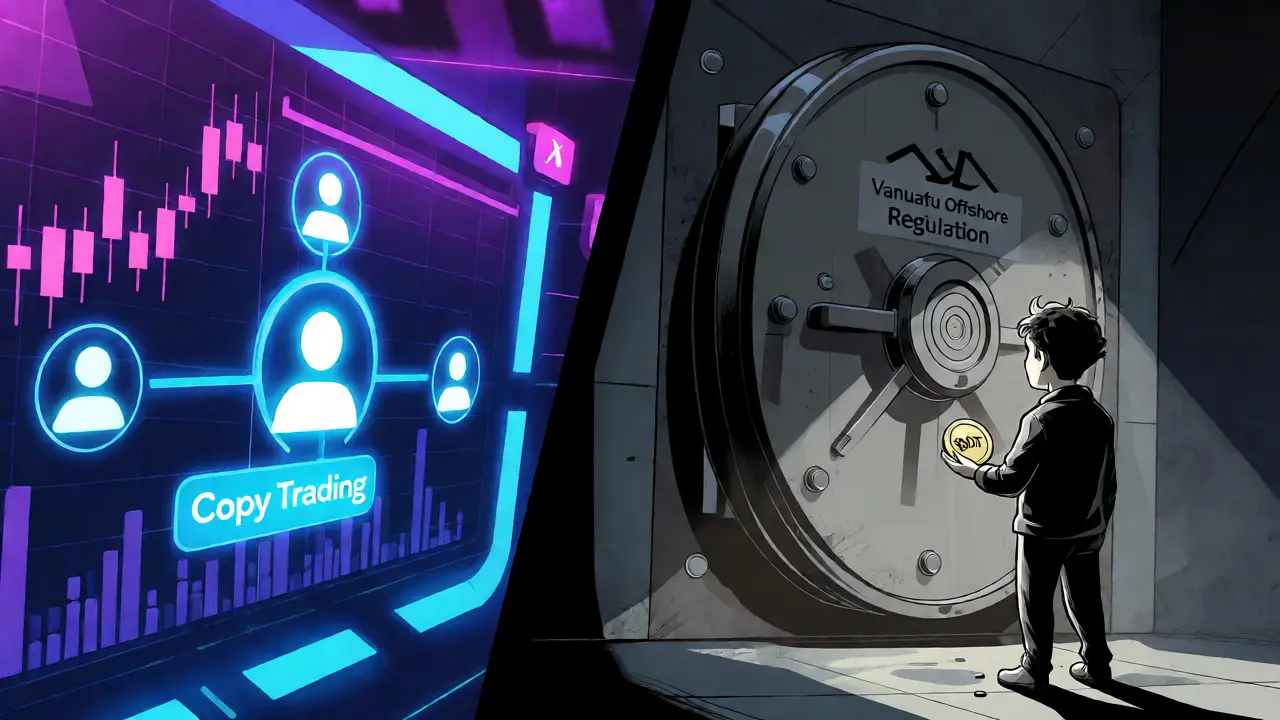
Despite the regulatory whispers, BitDelta has features that genuinely appeal to modern traders. The biggest draw is undoubtedly Copy Trading. This feature allows users to automatically replicate the trades of top-performing investors on the platform. Imagine you’re new to crypto. You don’t know when to buy or sell. Instead of guessing, you pick a trader with a solid track record, allocate your funds, and let their moves drive your portfolio. One user reported a 17% ROI in three months just by following others. That’s compelling for someone who doesn’t want to stare at charts all day.
Another unique angle is the SafePass system. This blockchain-based inheritance tool lets you nominate beneficiaries for your assets. Think about it: if something happens to you, how does your family get your Bitcoin? On most exchanges, it’s a nightmare of legal documents and frozen accounts. BitDelta tries to solve this by letting you set up digital wills on-chain. It’s a clever marketing hook, but it addresses a real pain point in the crypto world.
Then there’s the $BDT token. Launched as a bridge between Web2 and Web3, it offers rebates on trading fees and governance rights. Recently, they introduced staking with an advertised 8.5% APY. If you hold the token, you’re essentially betting on BitDelta’s growth. For active traders, the fee discounts can add up, making it cheaper to trade frequently compared to exchanges without native tokens.

The Not-So-Good Stuff: Red Flags and Friction Points
Now, let’s look at the downsides. The elephant in the room is regulation. BitDelta is registered in Vanuatu. While this allows them to operate globally with flexibility, it lacks the stringent audits and insurance requirements of platforms like Coinbase (US-regulated) or Kraken (multi-jurisdiction). There is no public proof-of-reserves documentation comparable to what Kraken publishes. This means you are trusting BitDelta’s word that they actually hold the assets they claim to manage. In the post-FTX era, trust is expensive.
User experience also reveals some cracks. While the app looks slick, reviews on Google Play mention crashes during high-volatility periods. When the market moves fast, you need your platform to work instantly. A crash then can mean missed opportunities or unexpected losses. Furthermore, customer support is limited. Live chat is available only during specific business hours (UTC+2), and response times can stretch beyond 48 hours for non-VIP users. If you’re in New Zealand, like me, or anywhere in the Americas, those hours might not align with your trading day.
Withdrawals are another sticking point. Industry standards suggest 24-48 hours for processing. BitDelta users report averages closer to 72 hours. In a bear market, waiting three days to move your funds to a cold wallet feels like an eternity. Some users suspect this delay helps the exchange manage liquidity, while others blame technical bottlenecks. Either way, it’s a friction point for serious traders.
BitDelta vs. The Competition
To understand where BitDelta fits, we need to compare it to the leaders. It’s not trying to beat Binance on volume; it’s carving out a niche. Here is how it stacks up against key rivals.
| Feature | BitDelta | Binance | Coinbase |
|---|---|---|---|
| Regulation | Vanuatu (Offshore) | Global (Varied licenses) | US Regulated (SEC/FINRA) |
| Supported Coins | ~117 | 350+ | 250+ |
| 24h Volume (Approx) | $365 Million | $15 Billion+ | $1.8 Billion+ |
| Copy Trading | Yes (Core Feature) | Yes | No (Limited) |
| Withdrawal Speed | Slow (~72 hrs) | Fast (<24 hrs) | Fast (<24 hrs) |
| Best For | Emerging Markets / Beginners | High Volume / Advanced | Security / US Users |
Notice the pattern? BitDelta wins on accessibility and specific features like Copy Trading for beginners. It loses on security perception, asset variety, and speed. If you are a whale moving millions, BitDelta isn’t your venue. If you are a student in Jakarta wanting to try trading with small amounts, it might be perfect.

Fees and Costs: What’s the Real Price?
Everyone hates hidden fees. BitDelta keeps its structure relatively simple, though you need to dig into their "Fees & Conditions" page for exact percentages. Generally, maker/taker fees for spot trading are competitive with mid-tier exchanges. Using the $BDT token reduces these costs further. For futures trading, leverage amplifies both gains and fees, so keep an eye on funding rates.
Deposit methods include bank transfers, credit cards, and crypto transfers. Standard fiat deposits often come with no direct fees from BitDelta, but your bank might charge you. Withdrawal fees vary by coin. Always check the current network congestion before withdrawing large sums. Remember, the 72-hour processing time doesn’t always include blockchain confirmation time. So, your total wait could be longer.
Security Measures: Are Your Funds Safe?
BitDelta claims to use advanced encryption, multi-factor authentication (MFA), and cold storage for the majority of assets. Cold storage is good-it keeps coins offline, away from hackers. However, unlike Crypto.com or Kraken, BitDelta does not publish regular third-party security audit reports from firms like Quantstamp. This lack of transparency is a concern for security-conscious users.
Their Trust Score on CoinGecko sits at 7.2/10. That’s decent, but not great. It reflects the balance between their operational longevity (since 2023) and the risks associated with offshore registration. If you decide to use BitDelta, treat it as a hot wallet, not a vault. Move profits to a hardware wallet regularly. Do not leave significant balances on the exchange for long periods.
Final Verdict: Should You Trade Here?
BitDelta is a polarizing platform. It’s not for everyone. If you live in the US or Europe and prioritize regulatory peace of mind, stick to Coinbase or Kraken. The hassle of offshore compliance isn’t worth the marginal savings. However, if you are in an emerging market, or if you are a beginner who wants to test the waters with Copy Trading without overwhelming complexity, BitDelta offers a viable path.
The rapid growth-jumping from rank #45 to #28 in global volume in six months-shows demand exists. But growth doesn’t equal safety. Approach BitDelta with caution. Start small. Test withdrawals early. Use MFA. And never invest more than you can afford to lock up for a few days due to processing delays. It’s a tool, not a bank. Treat it that way.
Is BitDelta safe to use?
BitDelta uses standard security measures like MFA and cold storage, but it lacks major regulatory oversight and public proof-of-reserves audits. It is generally considered safe for small to medium trades, but carries higher risk than fully regulated exchanges like Coinbase. Users should withdraw profits regularly to mitigate counterparty risk.
Does BitDelta allow US customers?
Generally, no. Due to its Vanuatu registration and lack of specific US licensing, BitDelta typically restricts US residents from opening accounts. This is common for offshore exchanges to avoid strict SEC compliance burdens. Always check the latest terms of service before signing up.
How long do BitDelta withdrawals take?
User reports indicate that internal processing takes approximately 72 hours on average, which is slower than the industry standard of 24-48 hours. Once processed, the time depends on blockchain network congestion. Planning ahead is essential if you need immediate access to funds.
What is the BitDelta $BDT token used for?
The $BDT token serves multiple purposes: it provides discounts on trading fees, offers staking rewards (currently around 8.5% APY), and grants governance rights for voting on new listings. It acts as a utility token within the BitDelta ecosystem, incentivizing loyalty among active traders.
Can I use BitDelta for copy trading?
Yes, Copy Trading is one of BitDelta’s flagship features. It allows beginners to automatically mirror the trades of experienced investors on the platform. This lowers the barrier to entry for those unfamiliar with technical analysis, though past performance of copied traders does not guarantee future results.