Blockchain Technology Explained: A Complete Guide for Beginners
Imagine a shared spreadsheet that everyone can see but no one can delete or change without permission. That is the simplest way to understand blockchain technology. It is not just about Bitcoin or crypto prices. At its core, it is a new way for computers to agree on truth without needing a middleman like a bank or a government. This guide cuts through the jargon to explain how it works, why it matters, and where it is heading in 2026.
What Is Blockchain Technology?
Blockchain technology is a distributed ledger system that enables transparent information sharing within a business network through an advanced database mechanism where data is stored in a secure, immutable sequence of records known as blocks. Think of it as a digital diary. In a traditional database, one company owns the diary. If they make a mistake-or worse, change a record-you might never know. With a blockchain, copies of the diary exist on thousands of computers at once. To change a page, you need the agreement of most of those computers. This makes fraud incredibly difficult.
The concept was introduced in 2008 by Satoshi Nakamoto in the Bitcoin whitepaper. While we still don’t know who that person is, their idea revolutionized how we think about trust. Instead of trusting a single institution, we trust mathematics and code. This shift from institutional trust to cryptographic trust is what drives the entire industry today.
How Does Blockchain Actually Work?
You don’t need a computer science degree to grasp the mechanics. The process happens in four clear steps:
- Transaction Recording: When you send money or transfer data, the details are recorded. This includes who sent it, who received it, when it happened, and what was transferred.
- Consensus: Network participants (called nodes) check if the transaction is valid. They use specific rules, called consensus mechanisms, to agree. For example, in Proof-of-Work, miners solve complex puzzles. In Proof-of-Stake, validators lock up coins to prove they have skin in the game.
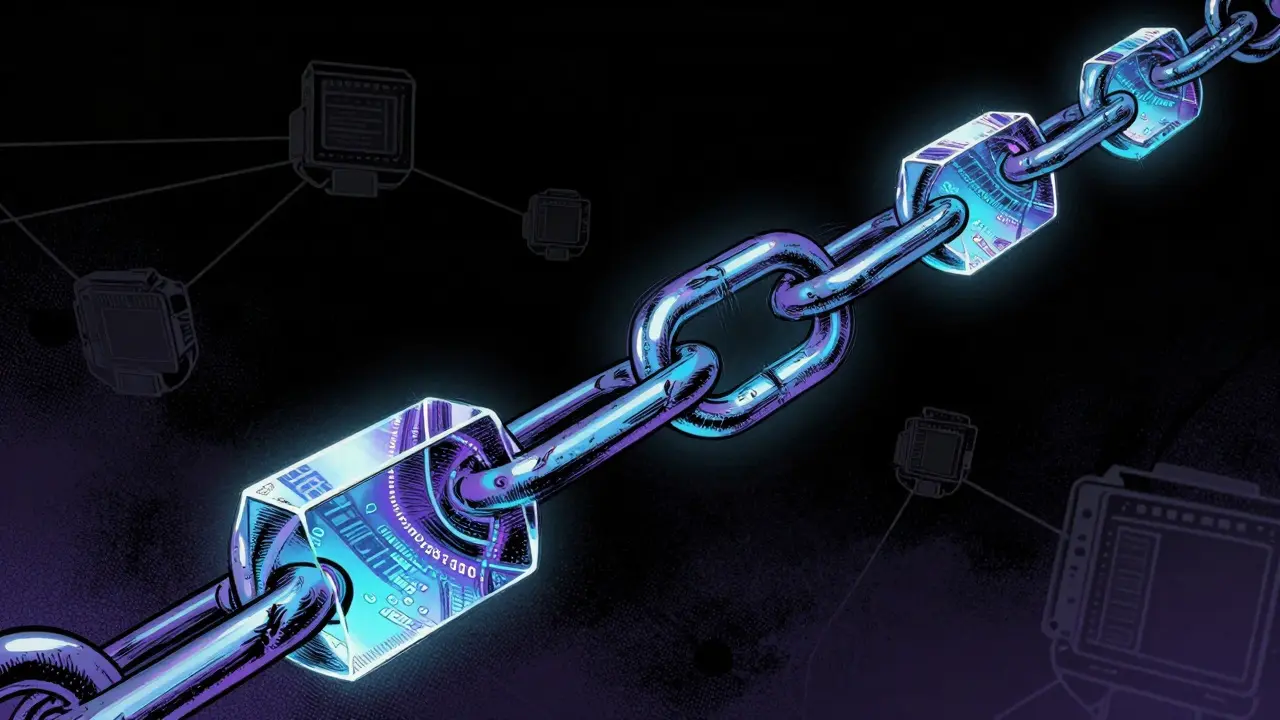
- Block Creation: Valid transactions are grouped into a "block." This block contains a unique digital fingerprint (hash) of the previous block. This links them together like a chain.
- Distribution: The updated ledger is sent to all participants simultaneously. Everyone’s copy matches perfectly.
This structure creates immutability. If someone tries to alter a past block, the hash changes. Since every subsequent block references the old hash, the whole chain breaks. The network rejects the fake version immediately. This is why blockchain is often described as tamper-proof.
Key Features That Make Blockchain Unique
Why do companies care? Because blockchain offers four distinct advantages over traditional databases:
- Decentralization: No single entity controls the network. There is no central server to hack or shut down.
- Transparency: All transactions are visible to authorized participants. This reduces corruption and increases accountability.
- Immutability: Once data is written, it cannot be changed. This creates a permanent audit trail.
- Security: Cryptographic hashing ensures data integrity. Breaking the encryption would require more computing power than exists on Earth.
However, these benefits come with trade-offs. Traditional databases are faster and cheaper to run. Blockchain prioritizes security and trust over speed. You choose blockchain when trust is expensive, not when speed is critical.
Types of Blockchains: Public vs. Private
Not all blockchains are the same. Understanding the difference between public and private networks is crucial for choosing the right tool.
| Feature | Public Blockchain | Private Blockchain |
|---|---|---|
| Access | Open to anyone | Restricted to invited users |
| Control | Decentralized (community) | Centralized (organization) |
| Speed | Slower (e.g., Bitcoin: 4-7 TPS) | Faster (e.g., Hyperledger: 3,500+ TPS) |
| Use Case | Cryptocurrencies, DeFi | Supply chain, enterprise records |
| Anonymity | Pseudonymous | Identified participants |
Public blockchains like Bitcoin and Ethereum allow anyone to join. They are highly secure but slower and more expensive. Private blockchains, such as Hyperledger Fabric, are used by corporations. They offer higher speed and privacy but rely on trusted participants. Most enterprise solutions fall somewhere in between, using consortium models where multiple organizations share control.
Real-World Applications Beyond Crypto
While cryptocurrency started the trend, the real value lies in other industries. Here are three areas where blockchain is making a tangible impact:
1. Supply Chain Transparency
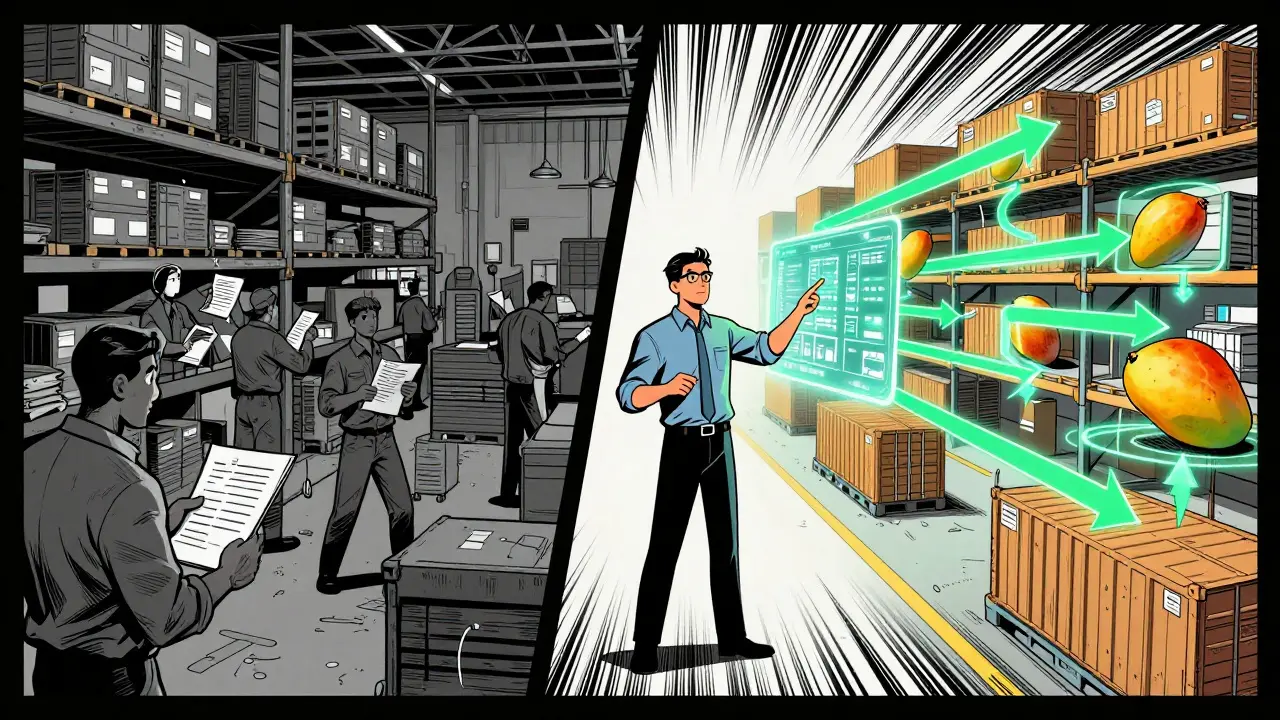
Walmart uses blockchain to track mangoes from farm to store. Previously, tracing contamination took seven days. Now, it takes 2.2 seconds. This speed saves lives and reduces waste. Companies like Maersk and IBM use similar systems for shipping containers.
2. Digital Identity
Managing passwords is a nightmare. Blockchain allows for self-sovereign identity. You own your data and share only what is necessary. Governments in Estonia and India are piloting systems where citizens control their health and tax records via blockchain.
3. Financial Settlements
Cross-border payments usually take days and cost high fees. Blockchain enables near-instant settlement. Ripple and Stellar focus on this niche, allowing banks to move funds directly without correspondent banking networks.

Challenges and Limitations
Blockchain is not a magic bullet. It faces significant hurdles that prevent mass adoption:
- Scalability: Public blockchains struggle with volume. Bitcoin handles 7 transactions per second. Visa handles 24,000. Layer-2 solutions help, but the base layer remains slow.
- Energy Consumption: Proof-of-Work consumes vast amounts of electricity. Bitcoin uses 707 kWh per transaction. However, Ethereum switched to Proof-of-Stake in 2022, reducing energy use by 99.9%.
- Integration Complexity: Connecting blockchain to legacy IT systems is hard. Gartner reports that 70% of enterprise projects fail due to misalignment with business needs.
- Regulatory Uncertainty: Laws vary wildly by country. The EU’s MiCA regulation provides clarity, but global standards remain fragmented.
Experts warn against "blockchain fatigue." Just because a problem involves data doesn’t mean it needs a blockchain. If you trust your database administrator, a standard SQL database is better. Use blockchain only when multiple untrusted parties need to share data.
The Future of Blockchain in 2026 and Beyond
We are entering a phase of maturation. The hype has cooled, and practical applications are emerging. Key trends include:
Interoperability: Different blockchains are learning to talk to each other. Protocols like Polkadot and Cosmos enable cross-chain communication. This solves the silo problem.
Central Bank Digital Currencies (CBDCs): The European Central Bank is piloting the Digital Euro. China’s Digital Yuan is already live. These state-backed tokens will likely use blockchain infrastructure.
Quantum Resistance: Quantum computers threaten current encryption. NIST is finalizing post-quantum cryptographic standards. Blockchains must upgrade to survive beyond 2030.
Gartner predicts mainstream adoption between 2026 and 2028. Spending is expected to reach $33.5 billion by 2027. The focus is shifting from speculation to utility. As Dr. Gideon Greenspan noted, the innovation isn’t just the tech-it’s aligning economic incentives.
Conclusion
Blockchain technology is a powerful tool for building trust in digital interactions. It replaces intermediaries with code, ensuring transparency and security. While challenges like scalability and regulation persist, the underlying architecture is robust. Whether you are a developer, business leader, or curious learner, understanding blockchain is essential for navigating the future of digital economy. Start by identifying problems where trust is broken, and ask if a decentralized ledger could fix it.
Is blockchain the same as Bitcoin?
No. Bitcoin is a cryptocurrency that runs on a blockchain. Blockchain is the underlying technology, like the internet. Bitcoin is an application, like email. Many other cryptocurrencies and non-crypto applications also use blockchain.
Can blockchain data be hacked?
The blockchain itself is extremely secure due to cryptography and decentralization. However, exchanges, wallets, and smart contracts can be vulnerable. Most hacks target weak points in user interfaces or code bugs, not the blockchain ledger itself.
What is a smart contract?
A smart contract is a self-executing program stored on a blockchain. It automatically enforces terms when conditions are met. For example, releasing payment only when a shipment is confirmed delivered. They remove the need for lawyers in simple transactions.
Why is blockchain so slow?
Public blockchains prioritize security and decentralization over speed. Every node must verify every transaction, which takes time. Private blockchains are faster because they have fewer, trusted participants. Layer-2 solutions are improving speeds significantly.
Do I need blockchain for my business?
Only if you deal with multiple untrusted parties who need to share data securely. If you have a single source of truth and trust your IT team, a traditional database is cheaper and faster. Use blockchain to eliminate reconciliation costs and fraud risks.