Real-Name Bank Accounts for Crypto Trading in Korea: How It Works and Who Can Use It
South Korea doesn’t just allow crypto trading-it demands you prove who you are before you can even start. If you want to buy Bitcoin, Ethereum, or any other digital asset in Korea, you can’t just sign up and deposit money. You need a real-name bank account linked directly to a government-approved crypto exchange. This isn’t a suggestion. It’s the law. And it’s one of the strictest systems in the world.
Why Korea Forces You to Use Your Real Name
In 2018, South Korea was on the verge of banning cryptocurrency entirely. Public panic over scams, money laundering, and unregulated trading had reached a boiling point. The Justice Minister at the time, Park Sang-ki, openly threatened a total shutdown. But then over 220,000 citizens signed a petition demanding regulation-not prohibition. The government listened. Instead of banning crypto, they built one of the most tightly controlled systems on earth: the real-name bank account requirement. The goal? Cut off anonymity. Make every trade traceable. Link every Bitcoin purchase to a person’s national ID, bank account, and phone number. The Financial Services Commission (FSC) and the Financial Intelligence Unit (FIU) now oversee this system. No exceptions. No loopholes. If your bank account isn’t verified under your real name, you can’t trade crypto in Korea.How the System Actually Works
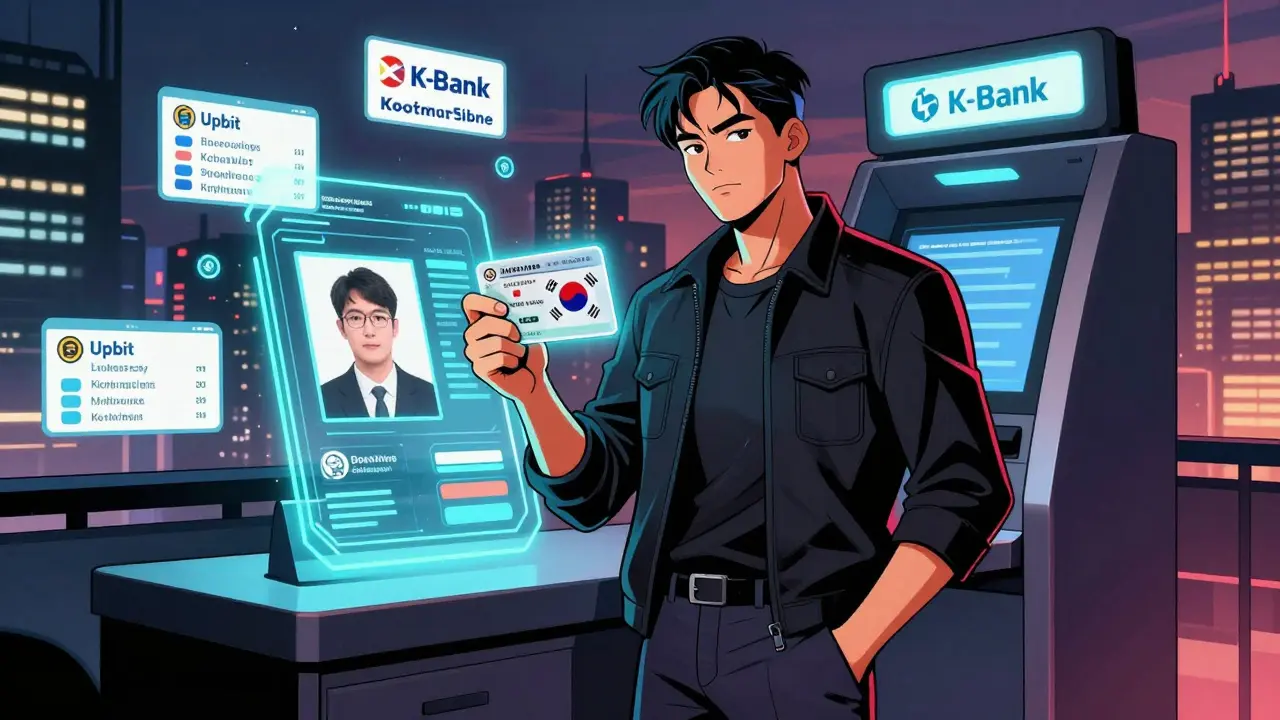
It’s not enough to have a Korean bank account. You need one that’s been approved for crypto transactions-and it has to match the exchange you’re using. Here’s the step-by-step:- You pick a crypto exchange that’s partnered with a bank-like Upbit with K-Bank, Bithumb with Kookmin Bank, or Korbit with Shinhan Bank.
- You open a real-name bank account under your legal Korean ID.
- You link that bank account to your exchange account. The names must match exactly.
- When you deposit KRW, the money moves from your bank to the exchange’s account at the same bank.
- The exchange sends your transaction data back to the bank. If anything looks suspicious, the bank can freeze the transfer.
Who Can Use It? (Spoiler: Not Many Foreigners)
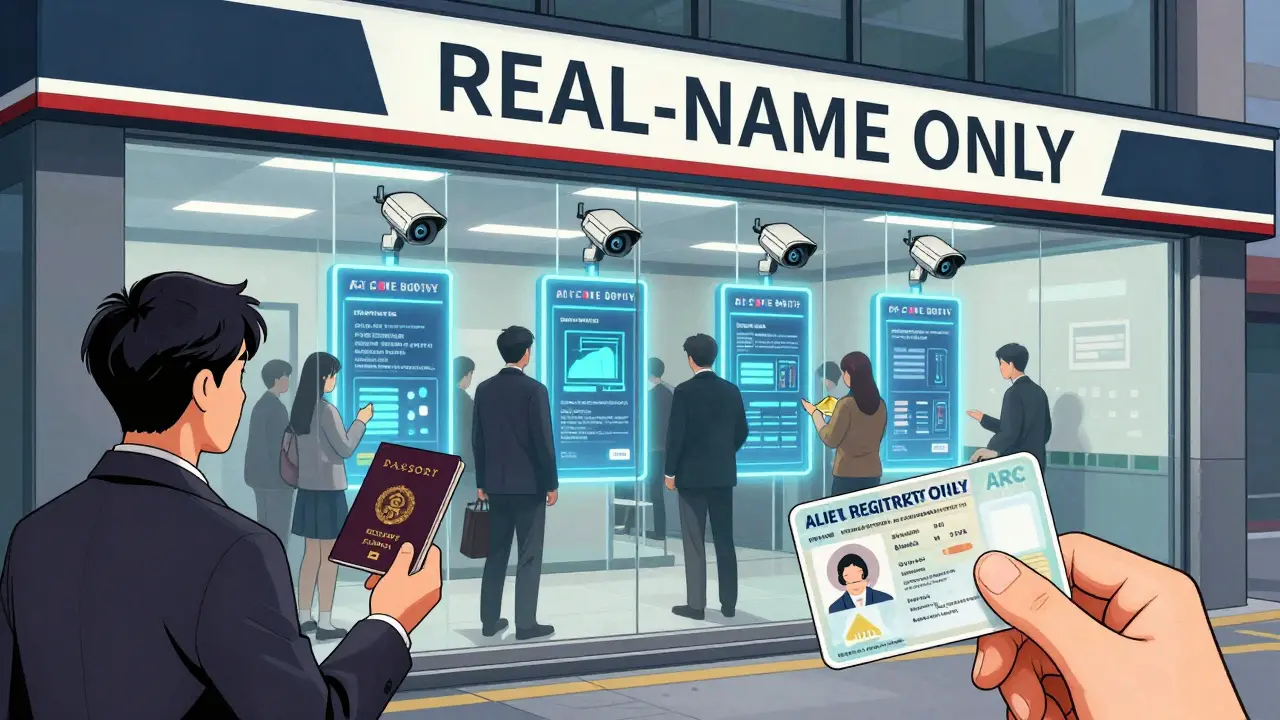
If you’re a South Korean citizen with a national ID card, a Korean phone number, and a local bank account, you’re in. The process takes about 15 minutes online. But if you’re not Korean? It’s nearly impossible. Foreigners need:- A valid long-term visa (not tourist)
- An Alien Registration Card (ARC)
- A Korean mobile number registered under your name
- A real-name bank account opened in person at a Korean branch
The Exchanges That Actually Work
Not every crypto exchange in Korea can touch real-name bank accounts. Only five have been granted full approval by the FIU as of April 2025. Here’s who’s in:| Exchange | Partner Bank | English Support | Notes |
|---|---|---|---|
| Upbit | K-Bank | Limited | Largest by volume; best mobile app |
| Bithumb | Kookmin Bank | Minimal | Oldest exchange; high fees |
| Korbit | Shinhan Bank | Good | Most beginner-friendly interface |
| Coinone | Kakao Bank | Basic | Integrated with KakaoTalk |
| Digital Asset Exchange (DAE) | Hana Bank | Very limited | Smaller player; institutional focus |
What Happens If You Try to Bypass It?
Some people try to use third-party payment processors or fake accounts. Others send money through offshore wallets and hope it slips through. It doesn’t work. Banks have AI systems that flag any transaction that doesn’t match the real-name system. If you deposit from a non-linked account, the bank blocks it. If you try to withdraw to a wallet under a different name, the exchange freezes your funds and reports you to the FIU. Penalties include:- Account suspension for up to 12 months
- Fines up to 50 million KRW (about $37,000 USD)
- Criminal charges for repeated violations
What About Taxes? (Yes, They’re Coming)
Right now, crypto profits in Korea are technically taxable-but enforcement is light. That changes in 2027. The Korean government passed amendments to the Income Tax Act and Corporate Tax Act that will take effect January 1, 2027. From that date:- Individuals must pay 20-24.2% tax on crypto trading profits
- Foreign corporations earning income from Korean crypto trades are taxed as if they’re domestic entities
- Exchanges must report all user transactions to the National Tax Service
15 Comments
Bryan Muñoz
January 14 2026This is just the government playing god with our money bro 😤 They think they can lock crypto down but the blockchain don't care about your ARC or bank account. Next thing you know they'll scan your retina to let you buy Dogecoin.
Tony Loneman
January 14 2026Lmao so Korea banned anonymity but let’s be real-every single one of those ‘approved’ exchanges are basically government puppets. You think Upbit gives a damn about your privacy? Nah. They’re just the FBI’s favorite crypto bodega.
Nishakar Rath
January 16 2026You call this regulation? This is apartheid for crypto. If you ain't Korean you're basically a digital second-class citizen. Meanwhile China bans it outright and the US lets you buy BTC with your credit card like a wild animal. Korea's the middle finger to freedom and they call it progress?
Alexandra Heller
January 17 2026It's not about control. It's about consequences. When people lose their life savings to rug pulls because some guy in a basement with a VPN can fake his identity, that's not freedom-that's negligence. Korea didn't crush crypto. It saved it from itself.
And yes, it's exclusionary. But exclusion isn't always evil. Fire codes exclude untrained people from operating blowtorches. This is the same. The cost of safety is a little bureaucracy.
myrna stovel
January 18 2026I'm a foreigner who lived in Seoul for two years and tried to get a real-name account. The paperwork felt like applying for citizenship. You need your ARC, your phone number, your bank account, and then you still have to wait 3 days for the exchange to verify it. And if your name on your passport doesn't match your Korean ID? Good luck.
I get why they did it. But it's not just hard for foreigners-it's designed to make us give up. And honestly? I did.
Shaun Beckford
January 19 2026Korea’s system is the only one that actually works. You want to know why scams dropped 90%? Because you can’t ghost your way out of a crime when your face is on the transaction. The banks are the cops. The exchanges are the cameras. And the government? They’re the judge, jury, and executioner. And you know what? It’s beautiful.
Meanwhile in the US, some 19-year-old in Ohio buys $50k of Shiba with a stolen card and vanishes into the ether. Korea doesn’t let that happen. They don’t care if you think it’s ‘authoritarian’-they care if you’re a criminal.
Katherine Melgarejo
January 19 2026So Korea built a fortress for crypto and then locked the door and threw away the key. Cool. Now who's gonna pay the rent on that fortress? The 12 million Koreans who can't even buy a sandwich without their ID?
Christina Shrader
January 21 2026I used to think this was oppressive. Then I watched my cousin lose $80k to a fake exchange in 2021. Now I get it. If you're going to play with fire, you need rules. Korea didn't take away freedom-they gave people back their peace of mind.
Kelly Post
January 21 2026The tax part terrifies me. 24.2% on profits? That’s worse than capital gains in the US. And they’re going to force exchanges to report everything? That’s not regulation-that’s surveillance capitalism with a Korean accent. If I were Korean, I’d be scared. Not because I’m doing anything illegal-but because they’re building a system that never forgets.
Anthony Ventresque
January 22 2026I’ve traded on Upbit and Bithumb. The UI is clunky, the fees are brutal, and the customer service is non-existent unless you speak Korean. But the one thing I can’t deny? My deposits never got frozen. My withdrawals always cleared. No drama. No delays. That’s more than I can say for most US exchanges. Maybe Korea’s system is rigid-but it’s reliable.
Jason Zhang
January 24 2026They say this stops money laundering. But guess what? The rich Koreans still move crypto through offshore wallets. The system just makes it harder for the little guy to play. Classic. The law doesn’t punish the wolves-it just puts a leash on the sheep.
Chris O'Carroll
January 24 2026So Korea spent 7 years building a system where you need 5 documents to buy Bitcoin. Meanwhile, in Canada you can do it with a selfie and a bank app. Who’s really more progressive here? The country that locks the door or the one that lets you in but watches you?
Callan Burdett
January 25 2026Man, I love how Korea turned crypto into a bureaucratic obstacle course. You gotta be a citizen, you gotta have the right bank, you gotta have the right phone, you gotta have the right exchange. It’s like trying to get a driver’s license in 1950s Alabama. But hey-at least you know who’s trading. I’ll take that over some anonymous dude pumping pumpkins on Twitter.
Pat G
January 25 2026This is exactly why the West is doomed. We let chaos rule. Korea didn’t. They said NO MORE. If you want to trade crypto, you play by OUR rules. And you know what? Maybe that’s what the world needs. Not freedom. Responsibility.
Chris Evans
January 27 2026The real-name system isn’t just about compliance-it’s a sociopolitical statement. It redefines the relationship between capital and identity. In liberal democracies, money is abstract. In Korea, money is embodied. Your wallet is your face. Your transaction is your signature. This isn’t regulation-it’s ontological engineering. The blockchain is no longer a ledger of transactions. It’s a ledger of personhood.
And if you think that’s oppressive? You’ve never lived under a system where anonymity was weaponized against the vulnerable. Korea didn’t take away freedom. They gave it back to the people who were always getting screwed.