dYdX Restricted Countries: Why a Decentralized Exchange Blocks Users
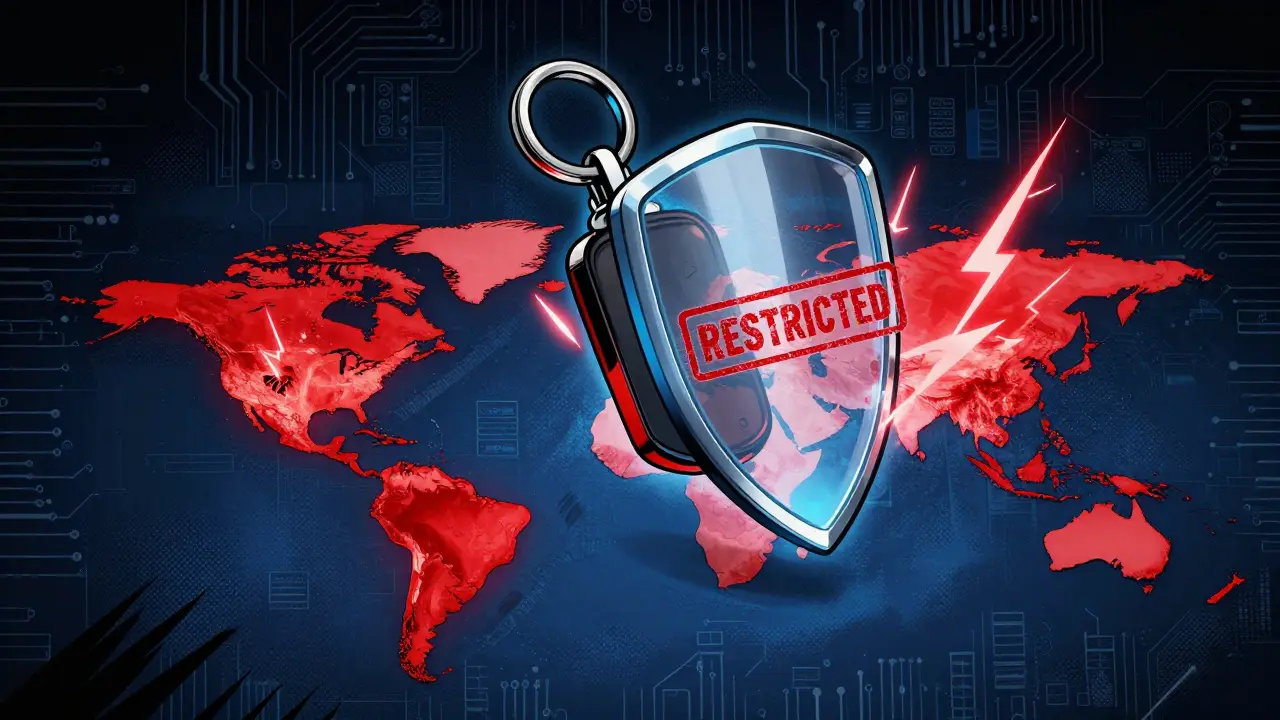
You connect your wallet to dYdX, a platform that bills itself as a decentralized derivatives exchange. You see the familiar interface, ready to trade Bitcoin or Ethereum perpetuals. But suddenly, a red banner flashes across your screen. Your access is limited. If you are reading this from certain parts of the world, you might be locked out entirely. This raises a glaring question: if dYdX is truly decentralized, why does it care where you live?
The short answer is that while the underlying blockchain protocol may be distributed, the user experience relies on centralized services that must obey local laws. This contradiction sits at the heart of modern decentralized finance (DeFi). Let’s look at exactly which countries are blocked, how dYdX enforces these rules, and what happens to your funds if you trigger a compliance alert.
Which Countries Are Restricted on dYdX?
dYdX claims availability in over 180 countries, but the list of prohibited jurisdictions is substantial and strictly enforced. The platform blocks users based on residency, citizenship, or incorporation. If you fall into any of these categories, you cannot use the service.
The most notable exclusions include major Western economies:
- United States: Due to strict SEC regulations and OFAC requirements.
- United Kingdom: Following FCA guidelines on crypto derivatives.
- Canada: Compliant with provincial securities laws.
Beyond these, dYdX adheres to international sanctions programs. This means access is denied to individuals and entities in:
- Sanctioned Nations: Iran, Cuba, North Korea, Syria, Myanmar (Burma).
- Conflict Zones & Sanctioned Regions: Crimea, Donetsk, Luhansk.
- High-Risk Jurisdictions: Iraq, Libya, Mali, Democratic Republic of Congo, Côte d'Ivoire, Nicaragua, Somalia, Sudan, Yemen, and Zimbabwe.
Interestingly, some countries that are often banned by other crypto platforms remain accessible on dYdX. These include China, Russia, South Korea, Japan, and Vietnam. This suggests a selective compliance strategy rather than a blanket conservative approach. However, this list is not static. Regulatory landscapes shift, and dYdX updates its terms accordingly. Always check the latest terms before depositing funds.
How dYdX Enforces Geographic Restrictions
If dYdX were a purely peer-to-peer protocol like early Bitcoin, it would be nearly impossible to block specific users. Transactions happen on-chain, and nodes validate them without knowing who is behind the wallet address. So, how does dYdX stop you?
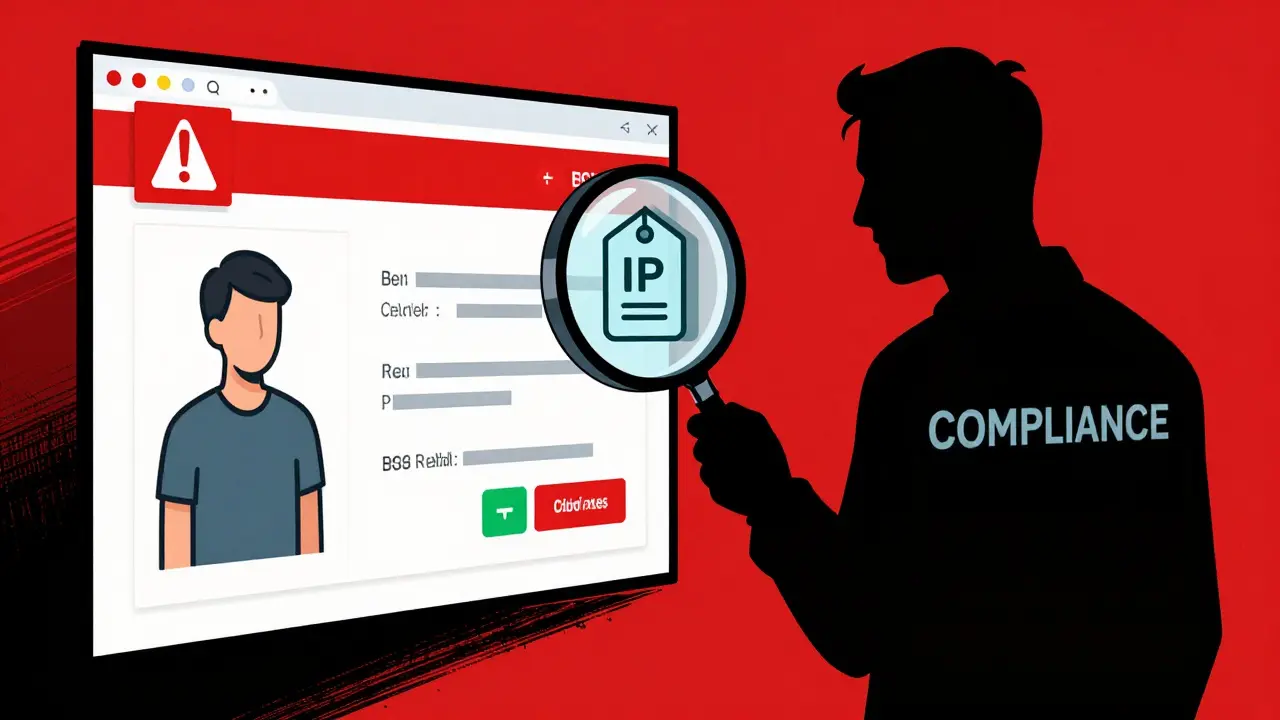
The enforcement happens at the frontend level. The website you visit, typically dydx.trade, is operated by dYdX Operations Services Ltd. (DOS). This entity controls the user interface and implements geographic blocking technology. When you connect your wallet, the system checks your IP address against known geolocation databases.
If your IP indicates you are in a restricted country, the system flags your wallet. It doesn’t just ban you immediately; it initiates a compliance process designed to protect the platform from legal liability. This reveals the centralized nature of the "decentralized" exchange. The blockchain itself doesn’t care about borders, but the company providing the gateway to that blockchain does.
Understanding Close-Only Mode and Blocked Status
If you trigger a restriction, you won’t lose your money instantly, but your ability to trade changes drastically. dYdX uses a two-stage enforcement mechanism: Close-Only Mode and Blocked Status.
Stage 1: Close-Only Mode
When first flagged, your account enters close-only mode. Here is what you can and cannot do:
- You CAN: Cancel existing orders, reduce open positions using reduce-only orders, fully close positions, and withdraw funds to an external wallet.
- You CANNOT: Deposit new funds, transfer assets between accounts, or open new trading positions.
All new orders automatically default to reduce-only status. A red warning banner appears on the interface, alerting you to the compliance issue. This gives you a window to exit the market safely.
Stage 2: Blocked Status
If your wallet remains in close-only mode for seven consecutive days without resolving the issue, it transitions to "Blocked" status. This is more severe:
- Access to subaccounts is revoked.
- You cannot view trading history via the frontend.
- No trading or withdrawal activities are possible through the dYdX interface.
However, because your funds are held in a smart contract on the blockchain (specifically on Starknet), they are not confiscated by dYdX. You can still export your Secret Recovery Phrase and interact with the protocol directly via alternative frontends or wallet interfaces, though this requires technical expertise.
| Feature | Normal Access | Close-Only Mode | Blocked Status |
|---|---|---|---|
| Open New Positions | Yes | No | No |
| Deposit Funds | Yes | No | No |
| Withdraw Funds | Yes | Yes | No (via frontend) |
| View History | Yes | Yes | No |
| Duration | Ongoing | Up to 7 Days | Indefinite |
The Centralization Paradox in DeFi
The case of dYdX highlights a fundamental tension in the cryptocurrency industry. True decentralization implies no central authority can censor transactions or restrict access. Yet, dYdX operates under the umbrella of corporate entities like dYdX Trading Inc. (headquartered in New York) and the dYdX Foundation (based in Zug, Switzerland).
These entities enable regulatory compliance but contradict pure decentralization principles. They allow dYdX to operate legally within existing frameworks, such as the U.S. Bank Secrecy Act and Anti-Money Laundering (AML) protocols. Without these centralized components, the platform would face immediate shutdown orders from regulators in key markets.
This hybrid model is common among large DeFi projects. While the core logic runs on a public blockchain, the user-facing layer remains centralized to provide customer support, dispute resolution, and legal compliance. For users, this means convenience and safety come with the cost of censorship resistance.
Why Some Countries Are Allowed
It is worth noting that dYdX allows users from countries like China and Russia, which are often banned by centralized exchanges like Binance or Coinbase. Why the difference?
dYdX’s restrictions are primarily driven by U.S. sanctions and Western regulatory pressure. Since dYdX has significant ties to the U.S. financial system through its corporate structure, it must adhere to OFAC (Office of Foreign Assets Control) lists. Countries like China are not under U.S. sanctions in the same way, so they are not automatically blocked. However, this creates a complex web of eligibility. A user in a non-sanctioned country might still be blocked if they are designated on a prohibited parties list.
This selective compliance demonstrates that dYdX is not aiming for total anonymity or borderless freedom. Instead, it seeks a middle ground: offering advanced derivatives trading to a global audience while staying within the legal boundaries of its primary operational hubs.
What Should You Do If You Are Restricted?
If you suspect you are in a restricted jurisdiction, take these steps immediately:
- Check Your IP Address: Use a reliable IP checker to confirm your location. Sometimes, VPNs or proxy servers can cause false positives.
- Review Terms of Service: Read the latest dYdX terms to ensure you do not fall under any newly added restrictions.
- Exit Positions Safely: If you are already trading, move to close-only mode manually if possible, or wait for the system to flag you. Do not try to bypass restrictions with new deposits.
- Secure Your Keys: Ensure you have your Secret Recovery Phrase backed up. In a blocked state, this is your only way to recover funds via alternative methods.
Attempting to circumvent restrictions using VPNs or fake identities violates dYdX’s terms and can lead to permanent blocking. The platform actively monitors for such behavior. Compliance is not optional if you want to keep your account active.
Is dYdX truly decentralized if it blocks countries?
No, not in the purest sense. While the underlying protocol runs on a decentralized blockchain (Starknet), the frontend and user access are controlled by centralized entities. This allows dYdX to enforce geographic restrictions, which contradicts the ideal of a censorship-resistant system.
Can I use dYdX from the United States?
No. dYdX explicitly prohibits users who are residents, citizens, or incorporated in the United States due to SEC regulations and OFAC compliance requirements.
What happens if my wallet is blocked?
If your wallet is blocked, you cannot trade or withdraw funds via the dYdX frontend. However, your funds remain on the blockchain. You can potentially recover them by exporting your Secret Recovery Phrase and interacting with the protocol through alternative, non-restricted frontends, though this requires technical skill.
Does dYdX allow users from China or Russia?
Yes, unlike many centralized exchanges, dYdX currently allows users from China and Russia, provided they are not on specific international sanctions lists. However, this policy can change based on evolving regulations.
How long does close-only mode last?
Close-only mode lasts for up to seven consecutive days. After this period, if the issue is not resolved, the wallet transitions to "Blocked" status, restricting further access to the frontend.
Who operates the dYdX frontend?
The dYdX frontend is operated by dYdX Operations Services Ltd. (DOS), a corporate entity that implements geographic blocking and compliance measures to adhere to global regulations.
Can I appeal a geographic restriction?
Generally, no. Geographic restrictions are automated based on IP addresses and regulatory lists. If you believe there was an error, you can contact support, but appeals are rarely successful if you reside in a sanctioned jurisdiction.
What is the role of the dYdX Foundation?
The dYdX Foundation, based in Zug, Switzerland, oversees the development of the protocol and launched the DYDX token. It plays a key role in maintaining the ecosystem while navigating regulatory challenges alongside dYdX Trading Inc.

15 Comments
Barclay Chantel
May 27 2026the entire premise of this article is a bit redundant for anyone who actually understands the tech stack. calling it decentralized while having a centralized frontend operated by a corp in Zug and NY is like calling a library public because the books are open source but the doors are locked. typical DeFi marketing speak trying to sell you on 'censorship resistance' while they hold your keys hostage via IP bans. pathetic.
Dianne Wright
May 28 2026i am so angry about this right now why do they get to decide who can trade and who cant its not fair at all i just want to make money with my crypto and they block me because of where i live its disgusting how they treat us users like we are nothing but numbers on a screen that they can delete whenever they feel like it
trisya hazriyana
May 30 2026oh look another person crying about regulations as if the SEC doesn't exist for a reason lol. you think decentralization means you can ignore laws? no it just means you have to be smarter than the regulators or you get banned. dYdX is playing chess while you are playing checkers. stop whining and use a non-custodial protocol if you hate rules so much. jargon alert: MEV protection isn't free either buddy.
Crystal Davis
May 30 2026let's break down the actual mechanics here because most people miss the nuance. the smart contract on Starknet does not care about your IP. the bottleneck is strictly the UI layer provided by DOS. this is a classic case of 'decentralized in name only' for the user experience. if you really want censorship resistance you need to interact directly with the contracts via a browser extension or command line interface which most retail users cannot handle. therefore the restriction is effective against the target demographic even if technically bypassable for experts.
Joe Clements
May 31 2026i totally get why people are frustrated with this setup. it feels like a betrayal of trust when you sign up expecting freedom but get hit with red tape. i had a friend who got stuck in close-only mode and was super stressed out not knowing if he would lose his funds. it is really important to keep those recovery phrases safe because that is literally the only thing standing between you and losing everything if the frontend goes dark on you.
Rosie Morris
June 1 2026omg i had no idea it was this complicated i always thought if i used a vpn i could just trade from anywhere but reading this makes me scared what if i accidentally trigger something and lose access to my account forever that sounds like a nightmare i better check my settings right now before i deposit any more money
Debbie Lewis
June 2 2026hey there just wanted to say that keeping your keys secure is the best advice here. don't panic over the restrictions unless you are actually in a sanctioned zone. most people are fine if they just stick to the terms of service. take a breath and read the docs carefully.
Eric Grosso
June 4 2026so basically if u r in usa u r screwed right? i mean its kinda obvious but still weird that they let russians in but not americans. seems backwards to me. maybe i should move to china then lol just kidding but seriously why is it like this?
Edith Mair
June 5 2026it is not backwards it is compliance driven. OFAC lists are what matter to US-based entities. Russia is not on the primary sanctions list for financial services in the same way Iran or North Korea are. China is also not sanctioned globally so they allow it. the US government has long-arm jurisdiction so any company touching US dollars or US citizens must comply. it is simple legal reality not some conspiracy.
lorna erni
June 6 2026EXACTLY! stop making excuses for these corporate shills. they choose profit over principles every single time. if they were truly decentralized they would not have a CEO in New York taking orders from the SEC. they are selling a lie to get your liquidity. wake up people!
kamal ifrani
June 7 2026you are all missing the bigger picture here. this is exactly why crypto fails to adopt mass scale. you have moral hypocrites complaining about censorship while ignoring that their trading activity fuels speculation and market manipulation. dYdX is doing what it must to survive in a capitalist framework. if you think otherwise you are delusional. the system is rigged against the little guy regardless of whether you use a VPN or not. drama aside the tech is sound but the ethics are bankrupt.
Sam Dashti
June 9 2026whoa easy there tiger. nobody said anything about ethics being perfect. we are just talking about the technical implementation of geo-blocking. it is a fascinating paradox how blockchain technology which was designed to be borderless is being forced into borders by law. it creates this weird hybrid state where you have permissionless code but permissioned access. kind of like a gated community built on public land.
stalin brian
June 9 2026good point sam. i think many people dont realize that using a vpn to bypass these blocks is actually a violation of terms and can get you permanently banned. i learned this the hard way when i tried to trade from a hotel in canada while holding a us passport. support was very clear that they monitor for this behavior. so its risky business indeed.
Christina Pearce
June 11 2026i appreciate the detailed breakdown of the close-only mode vs blocked status. it is reassuring to know that funds are not confiscated immediately. however i wonder if there are any alternative frontends that are easier to use for non-technical users? interacting with raw contracts seems daunting for the average joe who just wants to hedge their bitcoin exposure.
Miss Masquer
June 12 2026that is an excellent question Christina and one that highlights the current gap in the DeFi ecosystem. while there are several alternative interfaces such as DefiLlama's swap tool or direct wallet interactions through Rainbow or MetaMask, none of them offer the sophisticated derivatives trading experience that dYdX provides out of the box. most alternative frontends are basic spot trading interfaces or require significant gas optimization knowledge. until a fully decentralized derivative exchange with a polished UX emerges, users in restricted jurisdictions will likely remain dependent on these gray-area workarounds which carry inherent risks including potential smart contract vulnerabilities or lack of customer support when things go wrong.