Environmental Impact of Proof of Work Blockchains: The Real Cost
You send a single Bitcoin to a friend. It feels instant, digital, and clean. But behind that simple transaction lies a massive industrial machine humming in the background, burning through electricity at a rate that rivals small nations. This is the Proof of Work consensus mechanism, the engine that powers Bitcoin and other major cryptocurrencies. While it provides unmatched security and decentralization, its environmental price tag has sparked a global debate that shows no signs of cooling down.
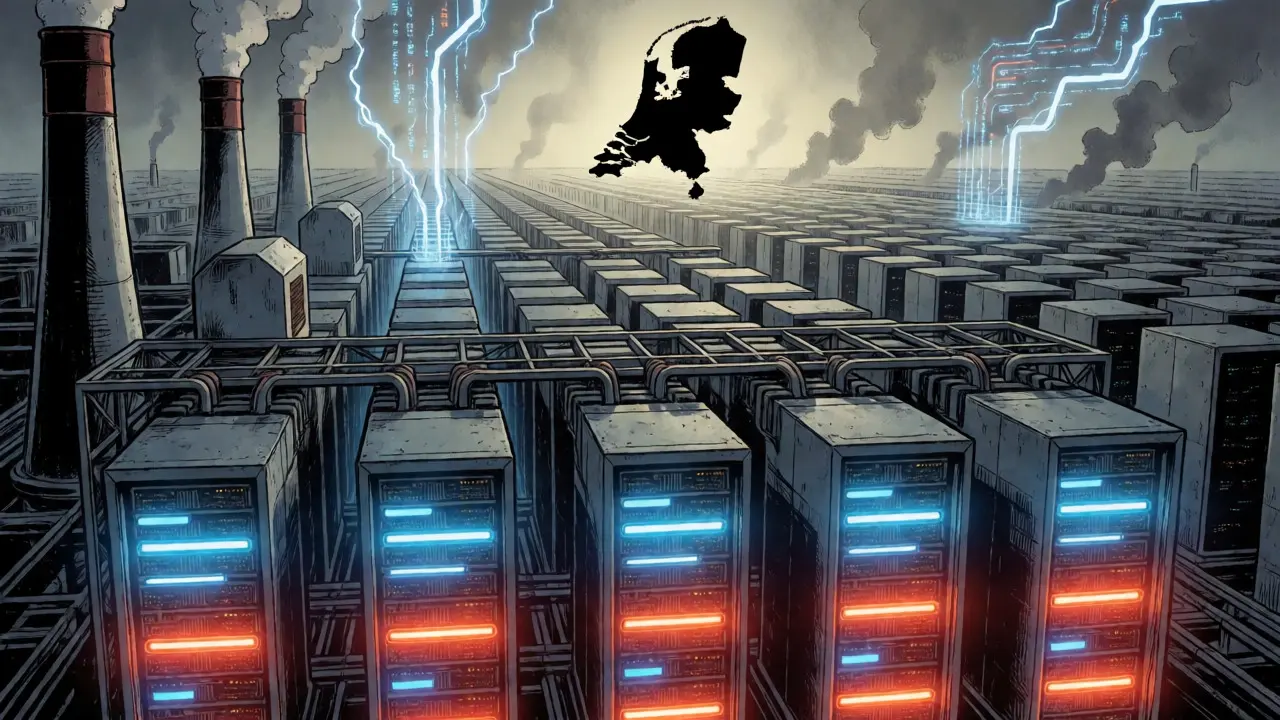
If you’ve ever wondered why your electric bill doesn’t look like a mining farm’s, or why banks hesitate to adopt certain coins, the answer often comes back to energy. We’re not talking about minor inefficiencies here. We are looking at a system that consumes more power annually than countries like the Netherlands or Argentina. As we move deeper into 2026, understanding this impact isn't just for environmentalists; it’s crucial for anyone holding crypto assets or building on-chain applications.
The Mechanics Behind the Heat
To grasp the environmental cost, you have to understand how Proof of Work (PoW) actually works. Unlike traditional banking where a central server verifies transactions, PoW relies on a decentralized network of miners. These miners use powerful computers to solve complex mathematical puzzles. The first one to solve the puzzle gets to add the next block of transactions to the chain and earns a reward.
This process is intentionally difficult. It requires brute-force computational power. Miners compete against each other, meaning if one miner upgrades their hardware, others must do the same to stay competitive. This creates an endless arms race for efficiency and speed. The result? A constant, 24/7 demand for electricity that cannot be easily throttled. You can’t just pause Bitcoin when the grid is stressed. The network must remain active to maintain security, leading to sustained energy consumption regardless of transaction volume fluctuations.
| Metric | Bitcoin (PoW) | Ethereum (Post-Merge PoS) | Global Context |
|---|---|---|---|
| Annual Electricity Use | ~112 TWh | < 0.01 TWh | Netherlands (~110 TWh) |
| Carbon Emissions | ~62 Mt CO2 | ~0.01 Mt CO2 | Small Nation Level |
| Energy per Transaction | ~707 kWh | Negligible | US Household Monthly Use |
| Consensus Type | Computational Race | Stake Validation | Different Security Models |
The Scale of Energy Consumption
Let’s put those numbers in perspective. According to data tracked by the Cambridge Centre for Alternative Finance, Bitcoin’s annualized electricity consumption hovers between 100 and 125 terawatt-hours (TWh). To visualize this, imagine every household in a medium-sized European country running all their appliances simultaneously, non-stop, for a year. That is roughly what Bitcoin mining demands.
But total consumption is only half the story. Efficiency matters too. A single Bitcoin transaction consumes approximately 707 kilowatt-hours (kWh) of electricity. For context, that’s enough power to run an average American home for over three weeks. Compare this to Visa, which processes thousands of times more transactions using a fraction of the energy. The disparity arises because PoW secures the entire network with every block, regardless of how many transactions are included. Whether you send $10 or $1 million, the energy cost to secure the block remains largely the same.
Critics argue that this inefficiency is unsustainable. Proponents counter that this "waste" is the price of trustless security. By making attacks expensive-requiring attackers to control over 50% of the network's hash rate-the system ensures that cheating costs more than the potential gain. However, as climate concerns mount, the question shifts from "Is it secure?" to "Is it worth the carbon?"

Carbon Footprint and Grid Mix
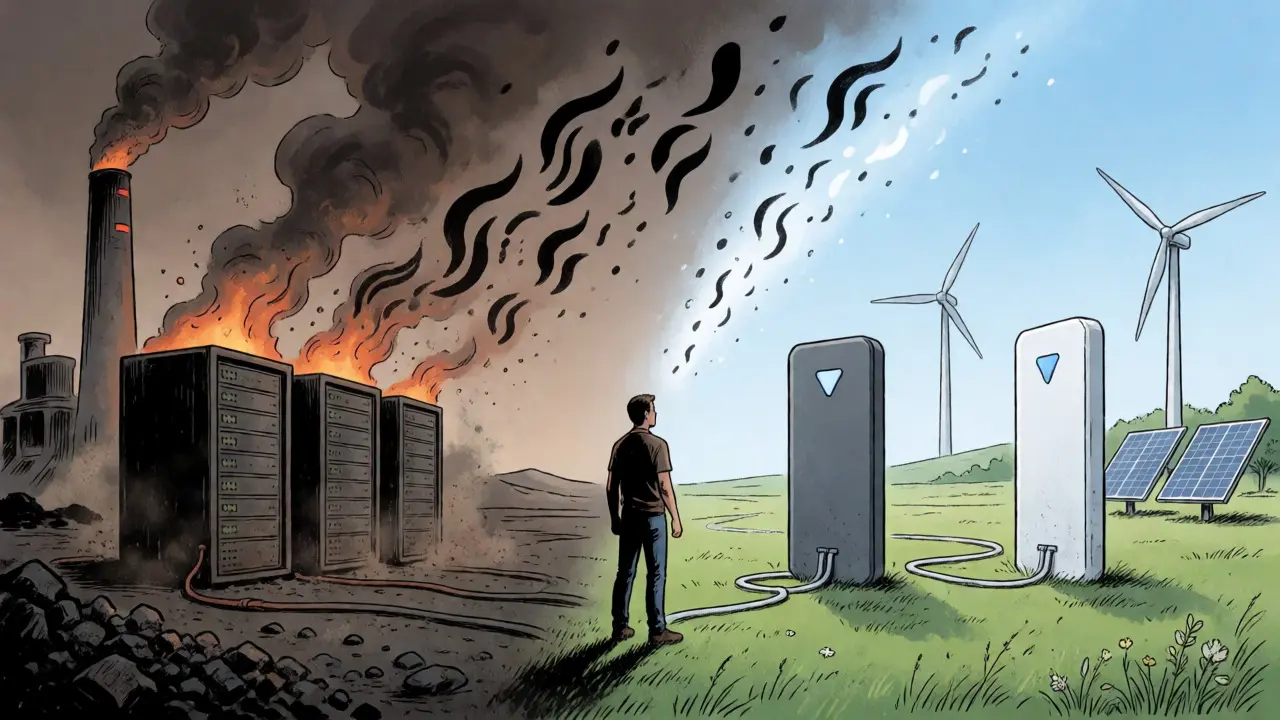
Not all electricity is created equal. Mining operations often chase the cheapest power sources, which historically meant coal-heavy grids in regions like Inner Mongolia or Kazakhstan. Today, the landscape is shifting. Many miners relocate to areas with abundant hydroelectric power, such as parts of Canada, Iceland, or Texas during windy nights.
However, relying on renewable surpluses introduces a new problem: opportunity cost. If green energy is used to mine Bitcoin, it might not be available for local homes or industries. Furthermore, renewable sources like wind and solar are intermittent. They don’t produce power consistently. Mining rigs need stable loads. When the sun sets or the wind dies, miners either shut down (losing revenue) or switch to backup generators, often fueled by natural gas. This volatility makes calculating a true "green" score for PoW mining incredibly difficult.
Studies suggest that while the percentage of renewable energy in mining has increased, the absolute amount of fossil fuels burned continues to rise due to the growing hash rate. The network grows faster than the renewable infrastructure supporting it. This dynamic creates a feedback loop where higher prices attract more miners, increasing energy demand and potentially pushing operators back toward cheaper, dirtier fuels.
The Proof of Stake Alternative
The most significant shift in recent years has been the rise of Proof of Stake (PoS). Ethereum’s transition to PoS in 2022, known as "The Merge," serves as the definitive case study. Before the merge, Ethereum consumed about 8.5 gigawatts of power. After switching to PoS, that number dropped by 99.95%, falling below 85 megawatts.
PoS works differently. Instead of competing to solve puzzles, validators are chosen based on the amount of cryptocurrency they hold and are willing to "stake" as collateral. There is no massive computational race. Validators simply check transactions and sign blocks. This method slashes energy usage to a fraction of PoW’s requirements. Critics worry about centralization risks in PoS, arguing that wealthier users have more influence. Yet, the environmental benefits are undeniable. PoS networks collectively consume less than 0.001% of Bitcoin’s energy.
This dramatic difference has influenced market behavior. New blockchain projects overwhelmingly choose PoS or hybrid models. Investors increasingly view energy efficiency as a proxy for technological modernity and regulatory safety. Companies like Tesla, which briefly accepted Bitcoin payments, cited environmental concerns when suspending them. While they later reversed course, the initial backlash highlighted how sensitive corporate ESG (Environmental, Social, and Governance) criteria are to blockchain choices.
Regulatory Pressure and Future Outlook
Governments are taking notice. In the United States and Europe, regulators are exploring ways to tax or restrict high-energy consensus mechanisms. The OECD has recommended mandatory environmental impact assessments for crypto-assets. Some jurisdictions have even considered banning PoW mining outright if it strains local grids.
For Bitcoin holders, this presents a dilemma. Bitcoin’s community values stability and decentralization above all else. Changing the consensus mechanism would require near-universal agreement, which is rare in crypto politics. Consequently, Bitcoin remains committed to PoW. Its advocates argue that the network’s resilience justifies the energy cost, pointing to its decade-long track record without a successful double-spend attack.
Meanwhile, the broader industry moves toward sustainability. Layer-2 scaling solutions reduce the load on main chains, and newer blockchains prioritize low-energy designs from day one. The trend is clear: while PoW will likely persist for legacy networks like Bitcoin, the future of scalable, everyday blockchain applications leans heavily toward lower-energy alternatives.
Key Takeaways
- High Energy Demand: Proof of Work blockchains consume electricity comparable to mid-sized nations due to continuous computational competition.
- Transaction Inefficiency: Individual PoW transactions require significantly more energy than traditional payment systems or PoS networks.
- Grid Dependency: Mining locations often depend on cheap, sometimes fossil-fuel-heavy energy sources, complicating carbon accounting.
- PoS Dominance: Proof of Stake offers a 99%+ reduction in energy use, driving new project adoption and investor preference.
- Regulatory Risk: Increasing government scrutiny on carbon footprints may impact the valuation and usability of high-energy blockchains.
Why does Proof of Work use so much electricity?
Proof of Work requires miners to compete in solving complex cryptographic puzzles. This competition drives up computational power usage globally. Miners must run high-performance hardware 24/7 to stay competitive, creating a constant and substantial demand for electricity that scales with the network's value and difficulty.
Is Bitcoin mining always bad for the environment?
It depends on the energy source. If miners use stranded renewable energy (like excess hydro or wind that would otherwise go unused), the net environmental impact is lower. However, if mining displaces existing renewable capacity or relies on coal, the carbon footprint increases significantly. The lack of transparency in some regions makes precise assessment difficult.
How does Proof of Stake compare to Proof of Work environmentally?
Proof of Stake reduces energy consumption by over 99% compared to Proof of Work. Instead of energy-intensive computations, PoS uses staked capital to validate transactions. This eliminates the need for massive server farms and drastically lowers the carbon footprint, making it far more sustainable for large-scale adoption.
Will regulations ban Proof of Work blockchains?
A complete ban is unlikely for established networks like Bitcoin due to their economic size and political influence. However, regulations may impose carbon taxes, require disclosure of energy sources, or restrict mining in specific regions with tight grid constraints. These measures aim to mitigate impact rather than eliminate the technology entirely.
Can renewable energy solve the PoW problem?
Renewables help but don't fully solve the issue. Renewable sources are intermittent, while PoW requires consistent power. Using renewables for mining can also create opportunity costs, diverting clean energy from residential or industrial needs. Therefore, while greener, PoW remains inherently less efficient than consensus mechanisms designed for low energy use.