Famous Genesis Blocks in Cryptocurrency History: Bitcoin, Ethereum, and More
Every blockchain starts with a single moment of creation. In technical terms, this is called the genesis block. It is Block 0. It has no parent. It stands alone at the very beginning of the chain, anchoring everything that follows. For most people, this sounds like boring code. But for those who understand cryptocurrency history, these blocks are digital time capsules. They contain messages, political statements, and technical secrets that define the spirit of each network.
Bitcoin’s genesis block is famous for its anti-bank message. But it is not the only one worth knowing. Ethereum embedded a quote from *The Hitchhiker’s Guide to the Galaxy*. Litecoin included a reference to its own launch date. These aren’t random choices. They reflect the values, goals, and even the humor of the creators behind some of the world’s largest digital assets. Understanding these origins helps you see why different cryptocurrencies behave the way they do today.
The Bitcoin Genesis Block: A Declaration of Independence
If you only remember one genesis block, make it Bitcoin’s. Created by the pseudonymous Satoshi Nakamoto on January 3, 2009, this block launched the entire cryptocurrency movement. The timestamp is precise: 18:15:05 GMT. But the real story lies in the data hidden inside the block’s coinbase transaction.
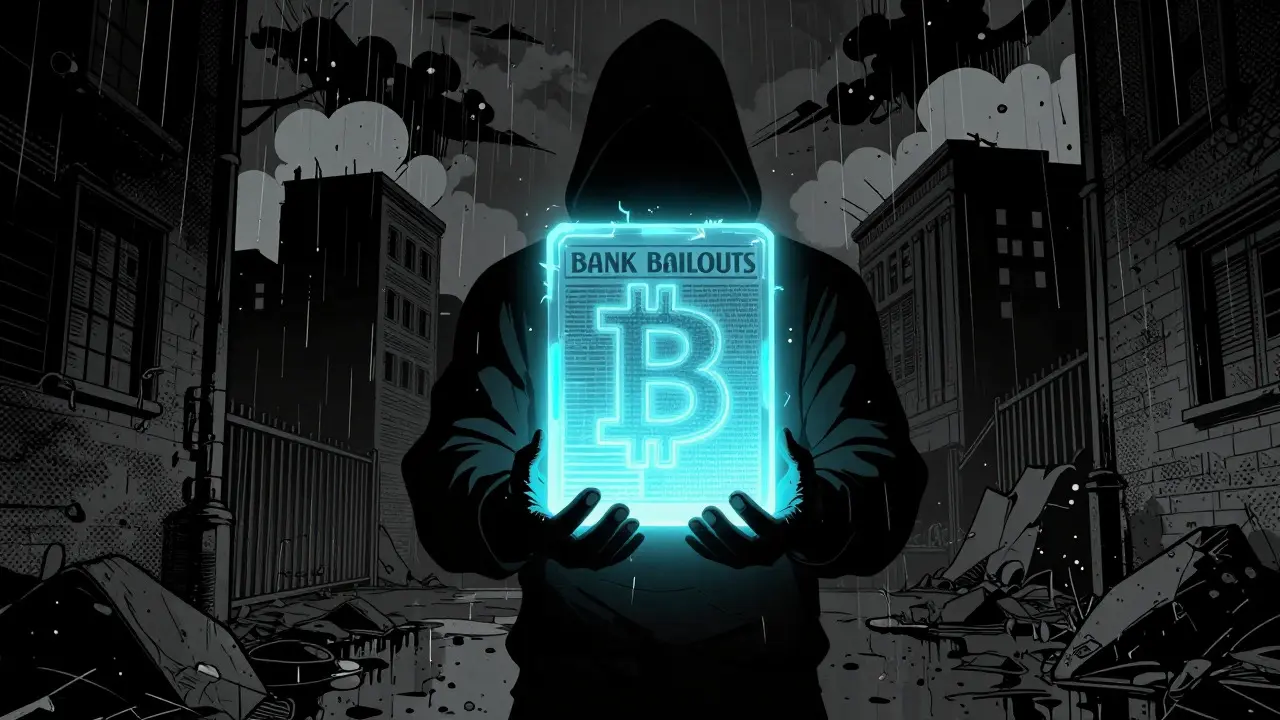
Satoshi embedded a headline from *The Times* newspaper: "The Times 03/Jan/2009 Chancellor on brink of second bailout for banks." This wasn’t just a timestamp. It was a protest. At the height of the 2008 global financial crisis, governments were bailing out failing banks while ordinary people suffered. By embedding this news story into the first block, Satoshi made a clear statement: Bitcoin exists because traditional finance failed us.
Technically, the Bitcoin genesis block is unique. Its hash value starts with an unusually high number of zeros: `000000000019d6689c085ae165831e93`. This reflects the proof-of-work difficulty built into the system from day one. Unlike every other block in the Bitcoin network, the genesis block was not mined through competition. It was hard-coded into the software. There is no previous block to reference. And the 50 BTC reward created in this block? It can never be spent. It sits there forever, unspendable, as a permanent monument to the network’s origin.
As of 2025, the Bitcoin network has processed over 1.13 billion transactions across approximately 800,000 blocks. The market capitalization peaked above $2 trillion in late 2024. Yet none of this would exist without that single, silent block from 2009. Community members still celebrate January 3rd as an unofficial holiday, marking the birth of financial sovereignty.
Ethereum’s Genesis Block: Optimism Meets Code
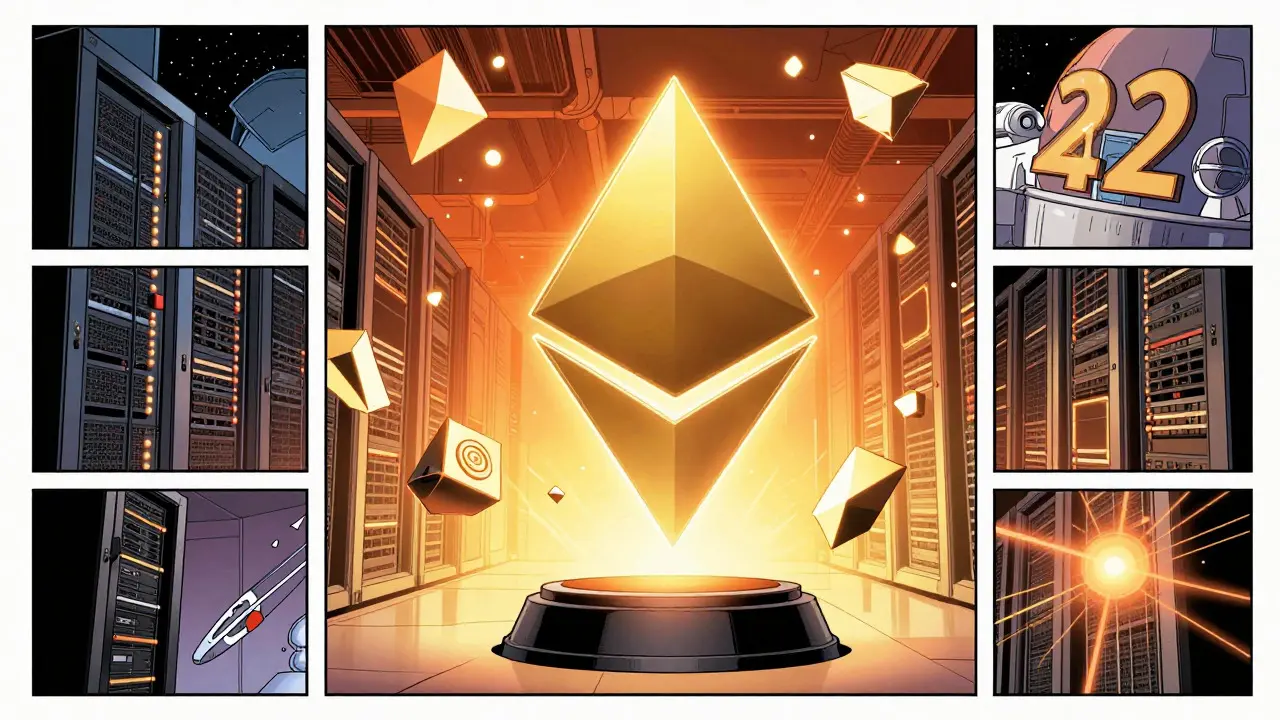
While Bitcoin focused on money, Ethereum aimed for something bigger: programmable contracts. When Vitalik Buterin and his team launched Ethereum in July 2015, they didn’t embed a newspaper headline. Instead, they chose a line from Douglas Adams’ *The Hitchhiker’s Guide to the Galaxy*: "42".
This might seem like a joke, but it carries weight. In the book, "42" is the Answer to the Ultimate Question of Life, the Universe, and Everything. By putting this in the genesis block, the Ethereum team signaled that their platform was about solving complex problems-not just storing value. It was optimistic, intellectual, and slightly playful.
The technical setup was also different. Ethereum’s genesis block had a much higher initial supply distributed via a pre-sale. This allowed early supporters to buy tokens before the network went live, funding development. The block itself served as the starting point for smart contracts-self-executing agreements that run on the blockchain. Today, Ethereum powers decentralized finance (DeFi), non-fungible tokens (NFTs), and thousands of applications. All of it traces back to that simple two-digit number.
Litecoin’s Genesis Block: Speed and Simplicity
Litecoin was created by Charlie Lee in 2011 as a lighter, faster version of Bitcoin. Its genesis block reflects this philosophy. The embedded message reads: "The Wall Street Journal 02/08/2011 Banks get bailout $1T." Like Bitcoin, it references financial instability-but with a twist. The date marks when Litecoin actually launched, tying the network’s birth directly to ongoing economic concerns.
Unlike Bitcoin’s unspendable reward, Litecoin’s genesis block behaves more like standard blocks. It uses Scrypt hashing instead of SHA-256, making it easier to mine with consumer hardware. This design choice kept mining decentralized longer than Bitcoin did. The message serves as both a timestamp and a reminder: central banks were printing trillions, and here was a fast, accessible alternative.
Ripple’s XRP Ledger: Corporate Roots
Not all genesis blocks come from open-source communities. Ripple’s XRP Ledger took a different path. Before the network went live, 100 billion XRP tokens were pre-mined. Half went to the Ripple Labs founders, half to early investors. The genesis block doesn’t contain a poetic quote or a political statement. It contains distribution records.
This approach drew criticism from purists who valued decentralization. Supporters argued it ensured stability and prevented wild price swings at launch. The trade-off? Less community ownership from day one. Still, the XRP Ledger processes thousands of transactions per second, focusing on cross-border payments rather than store-of-value narratives. Its genesis block tells a story of corporate efficiency, not rebellion.
Dogecoin: Meme Culture Goes Mainstream
In 2013, Billy Markus and Jackson Palmer created Dogecoin as a joke. Based on the Shiba Inu meme, it started as a parody of Bitcoin. But its genesis block reveals deeper intent. The embedded message includes a reference to the original Doge meme image, along with a playful tone that matches the coin’s branding.
Despite its humorous origins, Dogecoin gained serious traction. Elon Musk’s tweets boosted its visibility. Merchants began accepting it. And unlike many memes, it stuck around. The genesis block’s lighthearted nature helped build a friendly, inclusive community. It proved that cryptocurrency doesn’t always need to be serious to be valuable.
Comparing Genesis Blocks Across Networks
| Cryptocurrency | Launch Date | Embedded Message | Purpose | Initial Supply Model |
|---|---|---|---|---|
| Bitcoin | Jan 3, 2009 | The Times headline on bank bailouts | Decentralized currency | Mined (50 BTC unspendable) |
| Ethereum | July 30, 2015 | "42" from Hitchhiker’s Guide | Smart contracts & apps | Pre-sale + mining |
| Litecoin | Oct 7, 2011 | WSJ article on $1T bailout | Faster payments | Mined (Scrypt) |
| XRP | Jun 2, 2012 | Distribution records | Cross-border settlements | Pre-mined (100B total) |
| Dogecoin | Dec 6, 2013 | Doge meme reference | Micropayments / fun | Mined (inflationary) |
Why Genesis Blocks Matter Beyond Code
You don’t need to be a developer to appreciate genesis blocks. They tell stories. Bitcoin’s block says, "Trust no one." Ethereum’s says, "Solve big problems." Dogecoin’s says, "Have fun." These messages shape culture. They attract certain types of users. They influence how projects grow.
When you buy Bitcoin, you’re buying into a narrative of scarcity and independence. When you use Ethereum, you’re participating in a platform built for innovation. When you send Dogecoin, you’re joining a community that values humor and accessibility. The genesis block sets the tone. Everything else builds on top of it.
For developers, understanding these origins helps with decision-making. Should your new blockchain include a meaningful message? Should you pre-mine or let miners discover the first block? Should you follow Bitcoin’s model or try something new? The answers depend on your goals. But looking at past examples gives you a roadmap.
How to Explore Genesis Blocks Yourself
Curious about what’s really inside these blocks? You don’t need advanced skills. Most major cryptocurrencies have public explorers where you can view block details. Here’s how to start:
- Bitcoin: Visit blockchain.com/explorer or mempool.space. Search for block height 0. Look at the "Coinbase" field to see the embedded message.
- Ethereum: Use etherscan.io. Go to block 0. Check the extra data section for the "42" reference.
- Litecoin: Try blockchair.com/litecoin. Find block 0 and read the coinbase input.
- XRP: Use xrpscan.com. Note that the ledger structure differs-it shows account distributions instead of messages.
- Dogecoin: Use dogechain.info. Locate block 0 and observe the casual, meme-inspired content.
Taking five minutes to explore these blocks changes how you see cryptocurrency. It stops being abstract tech and becomes human expression. Each block is a snapshot of a moment in time-a reaction to politics, technology, or culture.
Common Misconceptions About Genesis Blocks
People often misunderstand what genesis blocks do. Let’s clear up three common myths:
- Myth: "Genesis blocks are mined like regular blocks."
Truth: Most are hard-coded. No one competed to solve them. They were placed there intentionally by developers. - Myth: "You can spend the coins in the genesis block."
Truth: In Bitcoin, the 50 BTC reward is permanently locked. Other networks vary, but usually, the first rewards go to founders or are burned. - Myth: "All genesis blocks look the same."
Truth: While they share structural similarities, their content varies wildly-from political protests to sci-fi quotes to corporate ledgers.
Understanding these differences helps you evaluate new projects. If a startup claims its blockchain is revolutionary, check its genesis block. Does it align with its promises? Or does it hide contradictions?
The Future of Genesis Blocks
As blockchain technology evolves, so do genesis blocks. Central Bank Digital Currencies (CBDCs) will likely have their own versions-controlled, regulated, and devoid of rebellious messages. Enterprise blockchains may skip the concept entirely, using private keys and permissioned access instead.
Yet the spirit remains. Every new network needs a starting point. Whether it’s a poetic quote, a technical marker, or a legal document, the genesis block defines identity. As we move toward Web3, decentralized identity, and tokenized assets, these foundational moments will continue shaping our digital economy.
Remember: behind every line of code is a person. Behind every genesis block is a reason. Take time to learn them. You’ll gain more than knowledge-you’ll gain perspective.
What is a genesis block in simple terms?
A genesis block is the very first block in a blockchain. It has no parent block and serves as the foundation for all future blocks. Think of it as the starting line for the entire network.
Why does Bitcoin’s genesis block have a newspaper headline?
Satoshi Nakamoto included the headline "Chancellor on brink of second bailout for banks" to show why Bitcoin was created. It was a response to the 2008 financial crisis and government bailouts, signaling Bitcoin’s role as an independent alternative to traditional banking.
Can you spend the Bitcoin from the genesis block?
No. The 50 BTC reward in Bitcoin’s genesis block is permanently unspendable. It was hard-coded into the software and cannot be moved or transferred. It exists only as a historical record.
What message is in Ethereum’s genesis block?
Ethereum’s genesis block contains the number "42," referencing Douglas Adams’ *The Hitchhiker’s Guide to the Galaxy*. It symbolizes optimism and problem-solving, reflecting Ethereum’s goal of enabling complex applications beyond simple payments.
Are all genesis blocks the same?
No. While they all serve as the first block, their content varies greatly. Some include political statements, others feature pop culture references, and some contain technical distribution data. Each reflects the creator’s vision.
How can I view a genesis block online?
Use blockchain explorers like blockchain.com for Bitcoin, etherscan.io for Ethereum, or blockchair.com for Litecoin. Search for block height 0 to see the raw data, including any embedded messages or transactions.
Did anyone mine the Bitcoin genesis block?
Not in the traditional sense. Satoshi Nakamoto hard-coded the genesis block into the original software. It wasn’t discovered through mining competition like later blocks. It was placed there deliberately.
Why do some cryptocurrencies pre-mine their tokens?
Pre-mining allows developers to distribute tokens before the network launches. This funds development, rewards early supporters, and ensures liquidity. Examples include Ethereum and XRP, which used pre-sales or initial allocations to bootstrap their ecosystems.
Is Dogecoin’s genesis block serious?
No. Dogecoin was created as a joke based on the Doge meme. Its genesis block reflects this playful origin, featuring casual language and meme references. Despite its humorous start, it grew into a widely used cryptocurrency.
Do CBDCs have genesis blocks?
Yes, but they differ significantly. Central Bank Digital Currencies typically use permissioned blockchains with controlled issuance. Their "genesis" events involve regulatory approval and official launch dates rather than open-source declarations or embedded messages.