
What Is Green Blockchain Technology? A Clear Breakdown of Sustainable Blockchain Systems
Green blockchain technology isn’t just a buzzword-it’s a necessary upgrade to the way blockchains operate. If you’ve heard that Bitcoin uses more electricity than some countries, you’re not wrong. But what if you could keep all the benefits of blockchain-decentralization, security, transparency-without the massive carbon footprint? That’s what green blockchain is designed to do.
Why Traditional Blockchains Are Energy Hogs
Most people think of blockchain as a single thing, but there are different ways to run it. The original and most famous method, used by Bitcoin and early Ethereum, is called Proof-of-Work (PoW). In PoW, miners compete to solve complex math puzzles using powerful computers. The first one to solve it gets rewarded with new cryptocurrency. Sounds fair, right? But here’s the catch: millions of these machines are running 24/7, consuming huge amounts of electricity. Most of that power still comes from fossil fuels, especially in places like Kazakhstan and parts of China where mining farms cluster for cheap energy. In 2024, Bitcoin’s annual electricity use was estimated at over 150 terawatt-hours-more than the entire country of Argentina. That’s not sustainable. And it’s not just about the numbers. Every kilowatt-hour burned for mining adds to global CO2 emissions. As climate concerns grow, this model is under serious pressure from regulators, investors, and the public.How Green Blockchain Solves the Problem
Green blockchain replaces the energy-intensive PoW system with consensus methods that don’t require massive computing power. The most common alternative is Proof-of-Stake (PoS). Instead of miners competing to solve puzzles, validators are chosen based on how much cryptocurrency they’re willing to "stake" as collateral. If they act honestly, they earn rewards. If they cheat, they lose their stake. No mining rigs. No overheating data centers. Just a digital vote. Ethereum switched from PoW to PoS in 2022 and cut its energy use by over 99.9%. That’s not a small tweak-it’s a total redesign. Other networks like Cardano, Solana, and Polygon also use PoS or similar low-energy methods. These networks don’t just claim to be green-they prove it with real-time energy metrics. Beyond consensus, green blockchain networks often run on renewable energy. Some, like Algorand, power their entire infrastructure with hydroelectric or solar energy. Others partner with clean energy providers to offset their remaining usage. It’s not enough to just use less power-you need to make sure the power you do use is clean.Layer 2 Solutions: Doing More With Less
Another key part of green blockchain is scaling without adding more load. Layer 2 solutions like the Lightning Network (for Bitcoin) or Polygon (for Ethereum) handle transactions off the main chain. Think of it like a toll road that only records the total number of cars passing through, instead of tracking each one individually. This reduces the number of transactions that need to be verified on the main blockchain, which means less energy used overall. These systems don’t sacrifice security. They still rely on the main chain for final settlement, but they cut down on the repetitive work that eats up energy. For everyday users, this means faster transactions and lower fees. For the planet, it means a lighter digital footprint.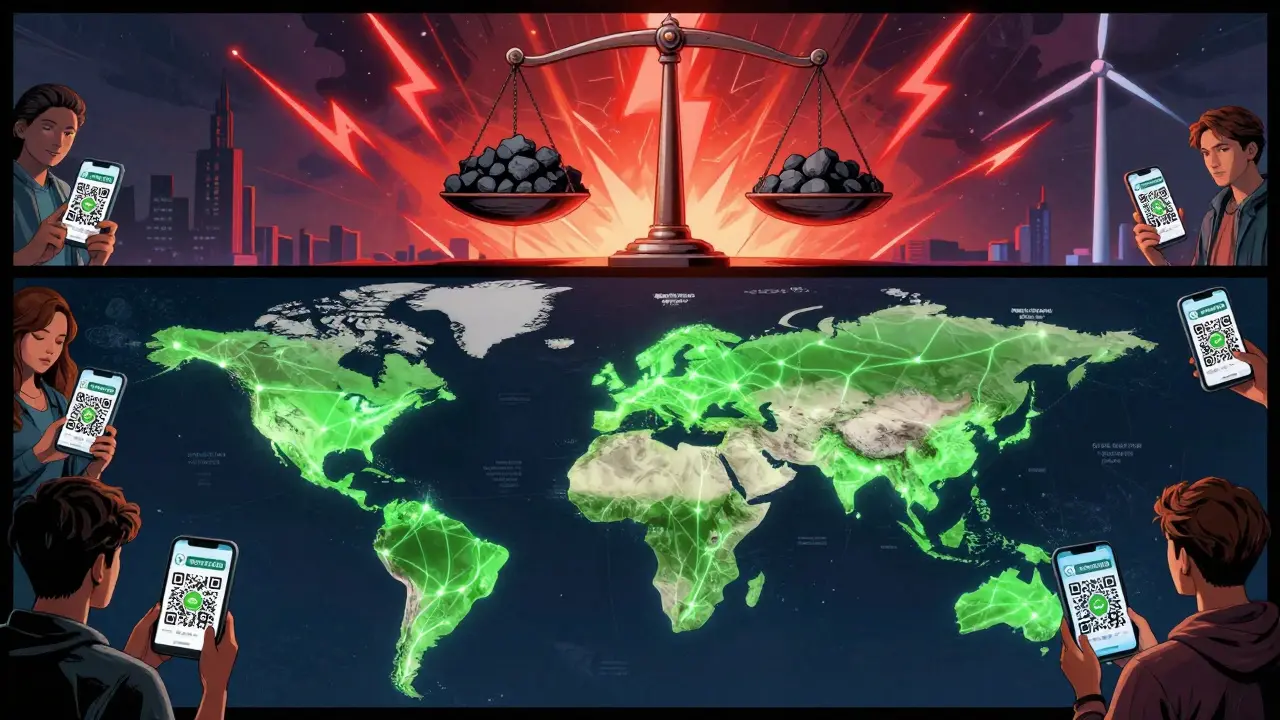
What Green Blockchain Can Actually Do
It’s not just about making crypto less harmful. Green blockchain is becoming a tool for real environmental action. Companies and governments are using it to track carbon credits, verify sustainable supply chains, and monitor deforestation. For example, a coffee farmer in Colombia can use a green blockchain to prove their beans were grown without deforestation. Each step-from harvest to shipment-is recorded on an immutable ledger. Buyers, from supermarkets to eco-conscious consumers, can scan a QR code and see the full history. No guesswork. No greenwashing. In Europe, pilot programs are using blockchain to track renewable energy certificates. If a wind farm generates 100 megawatt-hours of power, that’s recorded on-chain. Utilities can then buy and trade those credits transparently, ensuring every "green" kilowatt is accounted for. These aren’t theoretical ideas. They’re live projects running today, built on green blockchain networks that don’t drain the grid.Challenges and Trade-Offs
Green blockchain isn’t perfect. Critics argue that PoS systems are less secure than PoW because they rely on economic incentives rather than physical hardware costs. In PoW, attacking the network requires buying and running more computers than everyone else combined-expensive and obvious. In PoS, you’d need to buy up a majority of the cryptocurrency, which is also expensive but harder to detect. There’s also the issue of centralization. Some PoS networks are dominated by a few large stakers, which goes against the spirit of decentralization. But this isn’t a flaw in the concept-it’s a design choice that’s being actively improved. Projects like Cosmos and Tezos are experimenting with decentralized staking pools and democratic validator elections to keep power distributed. And while green blockchains use far less energy, they still need electricity. The goal isn’t zero impact-it’s minimal impact. That’s why transparency matters. Leading green blockchain projects publish their energy usage publicly, so anyone can verify their claims.The Future Is Already Here
By 2025, over 80% of active blockchain networks use energy-efficient consensus mechanisms. Bitcoin might still be PoW, but it’s no longer the standard. New projects, from DeFi platforms to NFT marketplaces, are choosing green chains by default. Even big tech companies like Microsoft and SAP are exploring green blockchain for supply chain tracking because investors demand it. Regulators are catching up too. The European Union’s MiCA law, effective in 2025, requires crypto projects to disclose their environmental impact. Networks that don’t meet sustainability thresholds could be restricted from operating in Europe. The message is clear: if you’re building or investing in blockchain today, you can’t ignore sustainability. Green blockchain isn’t a niche trend-it’s becoming the baseline expectation.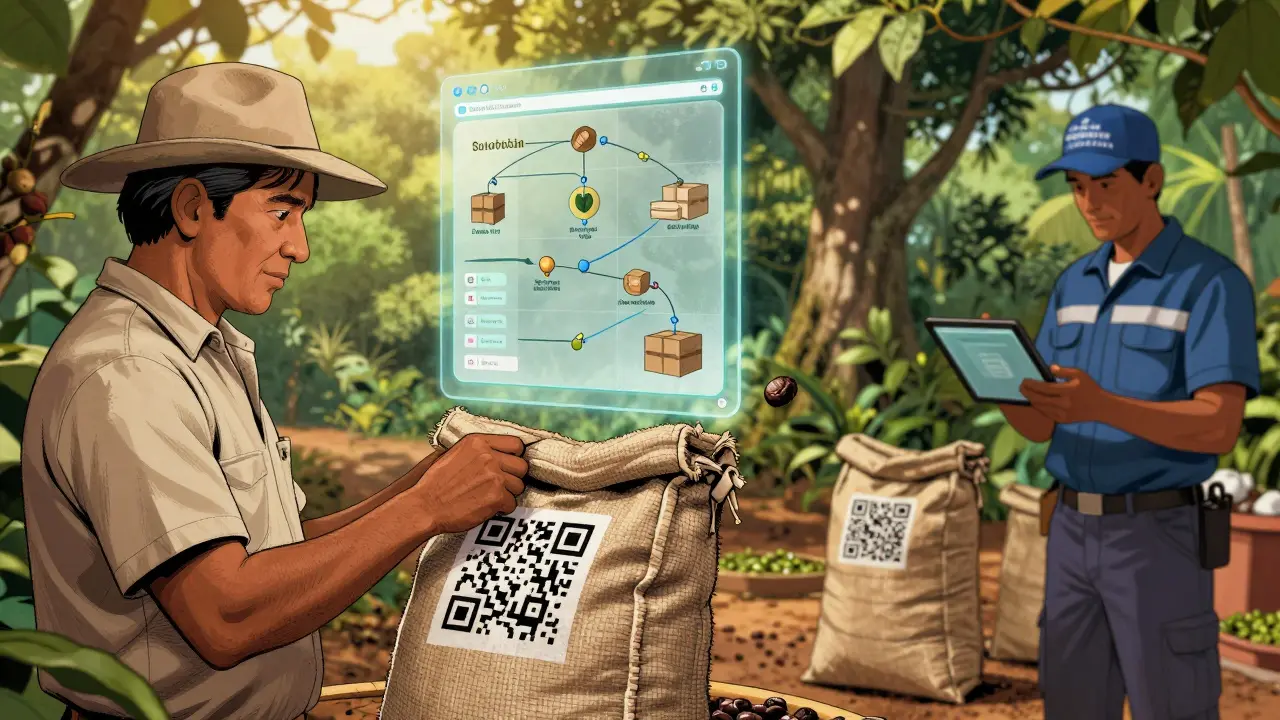
How to Spot a Real Green Blockchain
Not every project calling itself "eco-friendly" is telling the truth. Here’s how to tell the difference:- Check the consensus mechanism. If it’s PoW, it’s not green.
- Look for public energy usage reports. Real green projects publish them.
- See if they use renewable energy sources. Some even link to their power provider.
- Ask if they use Layer 2 scaling. If they rely only on the main chain, they’re probably inefficient.
- Don’t trust buzzwords like "carbon neutral" unless they show how they offset emissions.
What You Can Do
If you’re using crypto, you have more power than you think. Choose wallets and exchanges that support green blockchains. When you buy NFTs or use DeFi apps, pick platforms built on Ethereum (post-merge), Solana, or Cardano instead of Bitcoin or Dogecoin. If you’re a developer, consider building on a low-energy chain. The tools are there. The community is growing. And the planet will thank you.Final Thought
Green blockchain doesn’t mean giving up on decentralization or innovation. It means building better. It’s like switching from a gas-guzzling truck to a hybrid car-you still get where you’re going, but you’re not wrecking the environment along the way. The technology is here. The question is no longer if we can make blockchain sustainable, but whether we’ll choose to.Is Bitcoin a green blockchain?
No, Bitcoin is not a green blockchain. It still uses Proof-of-Work, which requires massive amounts of electricity. While some Bitcoin miners use renewable energy, the network as a whole has not changed its core mechanism and remains one of the most energy-intensive digital systems in the world.
Does green blockchain sacrifice security?
Not necessarily. Proof-of-Stake and other energy-efficient mechanisms have been proven secure over time. Ethereum’s switch to PoS in 2022 didn’t lead to any major breaches. Security in green blockchains comes from economic incentives and cryptography, not brute-force computing power. However, some trade-offs exist-like the risk of centralization if too much stake is held by a few parties.
What’s the difference between Proof-of-Stake and Proof-of-Work?
Proof-of-Work requires miners to solve hard math problems using powerful computers, consuming large amounts of electricity. Proof-of-Stake selects validators based on how much cryptocurrency they lock up (stake). No mining needed. PoS uses less than 1% of the energy of PoW while maintaining the same level of security and decentralization.
Are all PoS blockchains truly green?
Not always. While PoS is far more efficient than PoW, a network’s overall environmental impact depends on where its nodes are located and what energy sources they use. A PoS chain running on coal-powered servers in one region may still have a significant footprint. The most transparent projects disclose their energy sources and carbon offsets.
Can green blockchain help fight climate change?
Yes, beyond reducing crypto’s own emissions, green blockchain is being used to track carbon credits, verify sustainable sourcing, and prevent fraud in environmental markets. By making data tamper-proof and transparent, it helps ensure that climate pledges are real-not just marketing.




16 Comments
Jacob Lawrenson
December 24 2025This is literally the most hopeful thing I've read all year 🚀 Green blockchain isn't just nice-it's necessary. I switched my whole portfolio to PoS chains last year and my conscience finally stopped screaming. The planet's not gonna wait for us to get our shit together.
SHEFFIN ANTONY
December 24 2025You people are so naive. PoS is just centralization with glitter on it. Who controls the stakes? Big funds. Big banks. Big crypto bros with their private jets. You think this is green? It's just a new way for the rich to control the narrative. And don't even get me started on "carbon neutral"-that's just a fancy word for "I paid someone to plant a tree I'll never see."
Vyas Koduvayur
December 26 2025Let's be real-PoW isn't the villain here. The villain is the global energy infrastructure that hasn't evolved since the 19th century. Bitcoin mining is actually helping drive renewable adoption in places like Texas and Canada because miners go where the cheapest, most abundant energy is-and increasingly, that's surplus wind and solar. The real problem isn't blockchain-it's that we still think coal and gas are normal. Also, the 150 TWh figure? Misleading. It's less than global data centers, which nobody talks about. Why pick on crypto when the real culprits are streaming services and cloud computing?
Ellen Sales
December 28 2025so like... green blockchain? sounds like a new type of yoga mat. but also, i love that people are finally realizing you don't need to burn down the planet to send a digital note. also, my dog just licked my keyboard and now i think i'm part of the blockchain. 🐶💚
Alison Fenske
December 28 2025I’ve been using Polygon for my NFTs and honestly? It feels better. Not just because my wallet’s not bleeding gas fees, but because I don’t feel like I’m stealing electricity from my grandma’s heater. There’s something deeply healing about knowing your digital art didn’t require a power plant to exist. We’re not just building tech-we’re rebuilding trust. With the planet. With each other.
Shubham Singh
December 28 2025The notion that Proof-of-Stake is inherently more secure than Proof-of-Work is a fallacy propagated by venture capitalists who wish to avoid regulatory scrutiny. The economic incentives in PoS are easily manipulated through whale collusion and delegated staking pools. Furthermore, the claim that Ethereum's energy consumption dropped by 99.9% is statistically dubious. The measurement methodology omits the energy used by validators' home servers and cloud infrastructure. One must question the integrity of the data.
Rishav Ranjan
December 28 2025PoW bad. PoS good. Done.
Charles Freitas
December 29 2025Oh wow, another crypto bro pretending he's saving the planet. Let me guess-you're the same guy who flies private to Davos and then posts about carbon offsets? PoS doesn't make you green. It makes you richer. And the fact that you think transparency is enough? Please. The only thing that's transparent here is how badly you want to feel virtuous without changing your lifestyle.
Dustin Bright
December 30 2025i just wanna say thank you for writing this. i’m not into crypto but i’ve been following the climate stuff and honestly? this made me feel less hopeless. like maybe tech can be kind sometimes 🫶
chris yusunas
December 31 2025Naija wey dey say blockchain dey kill earth, but you go see the generators dey run the whole village? Who you think dey power those? The blockchain? Na your phone charger be the real villain. We just use the tech to track our palm oil. No be magic, no be witchcraft-just smart.
Sheila Ayu
December 31 2025But what about the rare earth minerals used in the servers? And the e-waste from obsolete mining rigs? And the fact that PoS validators still need to run 24/7 nodes? You're ignoring the entire supply chain! This isn't green-it's greenwashing with a side of arrogance! And don't even get me started on the carbon credits-those are scams, people! Scams! Scams!
Craig Fraser
January 2 2026I find it mildly amusing that people are celebrating blockchain as a climate solution. The entire concept is predicated on creating artificial scarcity in a digital space. If we're going to obsess over energy use, why not start by turning off our smart fridges and streaming services? Or perhaps, just... stop buying things we don't need? But no, let's make a whole new industry to feel morally superior while we keep scrolling.
Vijay n
January 4 2026The government is controlling the PoS validators through the central banks and the IMF and the UN and the Bilderberg group they are using blockchain to track your thoughts and your shopping habits and your sleep patterns and soon they will know when you are lying even your dog will be monitored by the blockchain and your cat will be forced to stake its nine lives
Grace Simmons
January 4 2026America built the internet. America built Bitcoin. America doesn't need to bow to European green mandates. If Europe wants to shut down their own crypto, fine. But don't dictate to the world what energy source we use. We have shale. We have nuclear. We have innovation. We don't need your carbon taxes to tell us how to run our tech.
Brian Martitsch
January 5 2026PoS? Cute. But you still need hardware. You still need data centers. You still need cooling. And let’s be honest-most "green" chains are just rebranded Ponzi schemes with better PR. If you’re not mining with solar in Iceland, you’re not green. You’re just... less loud.
Sophia Wade
January 6 2026There's a deeper philosophical question here: if we can create a system that replicates trust without physical cost, does that not redefine value itself? We're not merely reducing energy-we're reimagining how human cooperation can function without exploitation. The blockchain, in its greenest form, is not a tool for finance. It's a mirror. And right now, it's showing us that we can choose to build gently.