Germany's Zero Crypto Tax Rule: How to Hold Assets for 1 Year and Pay Nothing
You can hold Bitcoin in Germany for more than a year and sell it without paying a single cent in capital gains tax. That is not a loophole. It is the law. While many countries treat cryptocurrency profits as taxable income or apply flat rates regardless of how long you hold your assets, Germany is a European nation with one of the most investor-friendly crypto tax regimes globally, offering complete exemption on long-term holdings. This policy has made Germany a magnet for digital asset investors across Europe.
If you are navigating the world of digital finance, understanding this rule is crucial. The difference between paying zero percent and paying up to 47% in taxes comes down to one simple metric: time. Let’s break down exactly how this works, what counts as a "sale," and how to keep your records clean so the Bundeszentralamt für Steuern (BZSt), or Federal Central Tax Office, never sends you an unexpected bill.
The One-Year Rule Explained
The core of Germany’s crypto tax advantage lies in Section 23 of the Income Tax Act (EStG), which classifies cryptocurrencies as private assets rather than securities, exempting gains from assets held longer than 12 months from taxation. Here is the mechanism:
- Hold for less than one year: You pay progressive income tax on your profits. Rates range from 14% to 45%, plus a potential 5.5% Solidarity Surcharge. This means short-term traders can face effective tax rates nearing 47%.
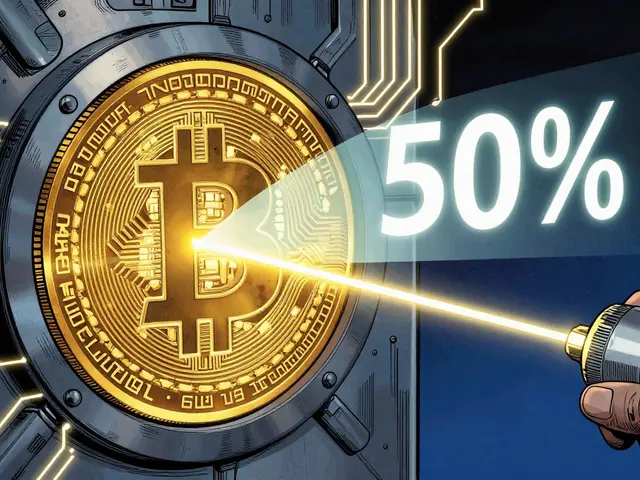
- Hold for one year or more: Your capital gains are completely tax-free. It does not matter if you made €100 or €100,000. If the clock has ticked past 365 days from the moment you bought the asset, the profit is yours to keep.
This rule applies to almost all digital assets. Whether you own Bitcoin, the original decentralized cryptocurrency created by Satoshi Nakamoto, Ethereum, a blockchain platform supporting smart contracts and decentralized applications, altcoins, stablecoins, or even NFTs, the timeline is the same. The clock starts the exact minute you acquire the asset. It stops the minute you dispose of it.
What Counts as Disposing of Crypto?
Many investors make a critical mistake here. They think they only owe taxes when they cash out to a bank account. In Germany, that is incorrect. "Disposal" happens whenever you part with ownership of the asset. This includes:
- Selling for Fiat: Converting crypto to Euros, Dollars, or any government-issued currency.
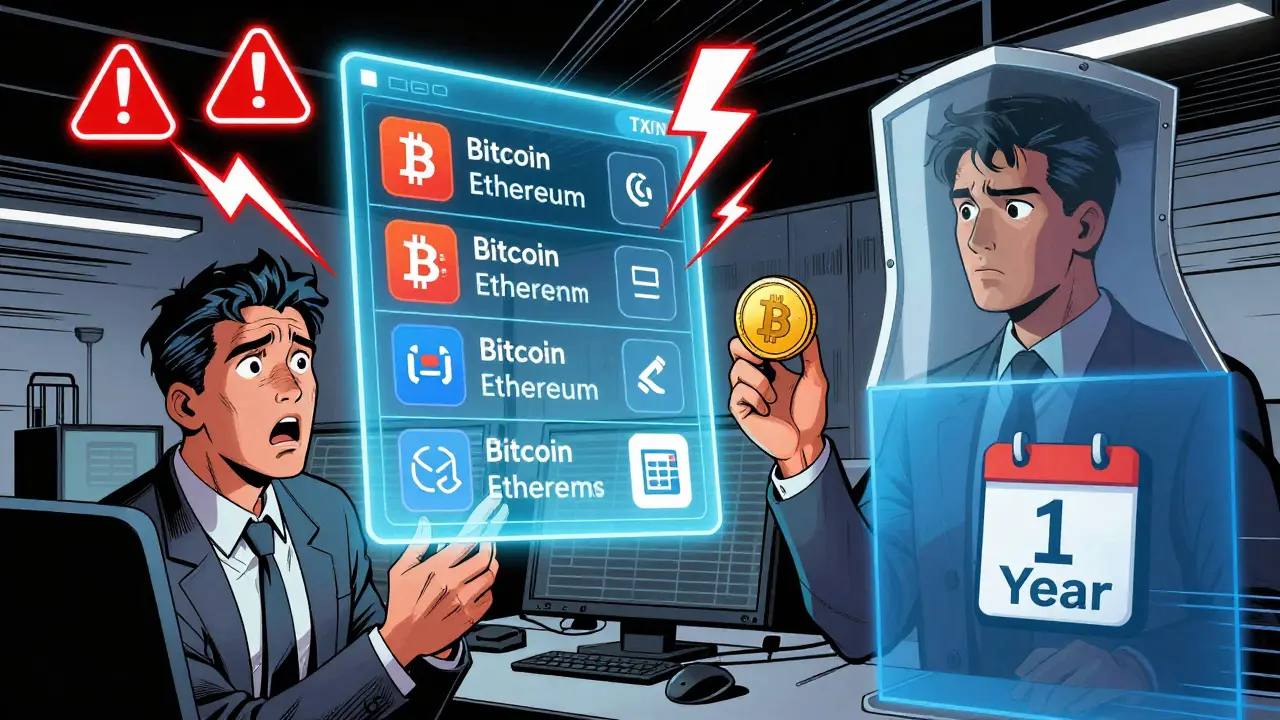
- Crypto-to-Crypto Swaps: Trading Bitcoin for Ethereum triggers a taxable event if the holding period is under a year. You are deemed to have sold the Bitcoin at market value and immediately bought the Ethereum.
- Spending Crypto: Using Bitcoin to buy coffee, electronics, or services counts as a sale. The value of the goods received is treated as the sale price.
- Gifting: Giving crypto to a friend or family member is generally considered a disposal for tax purposes unless specific inheritance laws apply later.
If you swap BTC for ETH after six months, you must calculate the gain on the BTC. However, if you hold that new ETH for another 18 months before selling it for Euros, the gain on the ETH itself may be tax-free because its individual holding period exceeded one year. Each asset gets its own clock.
The Short-Term Safety Net: The €1,000 Allowance
Not every trade requires immediate panic about high tax rates. Germany offers a lifeline for small-scale or occasional traders. Under recent updates to Section 23 EStG, there is an annual tax-free allowance of €1,000 (increased from €600 in 2024).
If your total realized gains from short-term crypto trades (held less than a year) stay below €1,000 in a calendar year, you pay nothing. You do not even need to report these transactions to the tax office. This makes the system highly accessible for beginners who dabble with small amounts. However, once you cross that €1,000 threshold, the entire amount becomes subject to your personal income tax rate, not just the excess. This creates a "cliff effect" that savvy investors watch closely.
Germany vs. The Rest of Europe
To understand why Germany is unique, look at its neighbors. The contrast is stark.
| Country | Tax Rate on Gains | Long-Term Exemption | Annual Allowance |
|---|---|---|---|
| Germany | Progressive (14%-45%) + Soli | Yes (after 1 year) | €1,000 |
| France | Flat 30% (PFU) | No | Variable (lower rates for large sums) |
| United Kingdom | 10% or 20% (CGT) | No | £3,000 (for 2025) |
| Portugal | 28% | Historically yes, but changing | None specific |
| Switzerland | Varies by canton (Wealth Tax) | No specific CGT exemption | Depends on local laws |
France imposes a flat 30% tax on all crypto gains, combining capital gains tax and social contributions. There is no reward for holding long-term. The UK charges Capital Gains Tax based on your income bracket, with no time-based exemption. Germany stands alone in the EU for offering a clear, bright-line rule that rewards patience. This clarity reduces compliance costs and encourages long-term investment behavior, aligning with traditional savings models.
Record Keeping: Your Best Defense
The tax law is simple; the administration is where things get tricky. The burden of proof is on you. If the BZSt questions your return, you must prove the acquisition date and the disposal date for every transaction.
Why is this hard? Because of Dollar-Cost Averaging (DCA). If you buy 0.1 BTC every month for two years, you have twelve different lots of Bitcoin, each with a different purchase date and price. When you sell 0.1 BTC after 25 months, which lot did you sell? The oldest? The newest?
In Germany, the default method for calculating gains is the FIFO (First-In, First-Out) method. This means the first coins you bought are the first ones considered sold. To maximize tax efficiency, you need software that tracks these lots automatically. Manual spreadsheets often fail when dealing with hundreds of transactions.
Popular tools like Koinly, a crypto tax accounting platform that integrates with exchanges to automate transaction tracking, CoinTracker, software designed to simplify crypto tax reporting for individuals and businesses, and Blockpit, a German-focused crypto tax calculator compliant with local regulations offer specific modules for German tax law. These platforms connect to your exchange APIs, categorize transactions, and generate reports ready for submission. Setup typically takes 2-4 hours. For complex portfolios involving DeFi, professional accountants charge between €150 and €500 annually.

The Gray Areas: Staking and DeFi
While buying and holding is clear, earning yield is murkier. The BZSt has provided some guidance, but gaps remain.
- Staking Rewards: Generally, staking rewards are taxed as income at the moment you receive them, not when you sell the resulting tokens. The fair market value of the reward on the day you receive it becomes your cost basis. If you then hold those new tokens for over a year, future sales are tax-free.
- Lending Protocols: Interest earned from lending crypto is also treated as income, taxable immediately. The holding period for the principal loan amount usually continues, but the interest payments reset the clock for those specific units.
- DeFi Yield Farming: This area lacks specific federal guidance. Most experts advise treating farming rewards as income upon receipt. However, case-by-case analysis is common due to the complexity of liquidity pool mechanics.
Always consult a specialized tax advisor for DeFi activities. The risk of audit increases significantly when passive income streams are involved, as these do not benefit from the one-year capital gains exemption in the same way pure trading does.
Future Outlook: Will the Rules Change?
As of mid-2026, the one-year exemption remains intact. However, pressure is mounting from the European Union. The Markets in Crypto-Assets Regulation (MiCA), which an EU-wide regulatory framework governing cryptocurrency markets to ensure consumer protection and financial stability, focuses heavily on market conduct and licensing, not directly on national tax codes. Yet, the push for fiscal harmonization across the EU could lead to changes by 2027-2030.
Germany’s status as Europe’s largest crypto market by volume (according to Chainalysis data) gives it political leverage. Policymakers recognize that harsh tax reforms could drive innovation and capital to neighboring jurisdictions like Switzerland or Liechtenstein. For now, the window remains open. Investors are advised to lock in long-term positions while the current favorable regime stands.
Is crypto tax-free in Germany if I hold for more than one year?
Yes. According to Section 23 of the German Income Tax Act (EStG), capital gains from the sale of cryptocurrencies held for more than 12 months are completely exempt from income tax. This applies to all types of crypto assets, including Bitcoin, Ethereum, and NFTs.
Do I have to pay tax if I swap one crypto for another?
Yes, if you have held the original asset for less than one year. A crypto-to-crypto swap is considered a taxable disposal event. You must calculate the gain or loss based on the market value at the time of the swap. If you held the asset for over a year, the swap is tax-free.
What is the tax-free allowance for short-term crypto gains in Germany?
For the 2025 tax year and onwards, the general speculative gain exemption is €1,000 per person per year. If your total short-term crypto profits (assets held less than 12 months) are below this amount, you do not need to declare them or pay tax.
How are staking rewards taxed in Germany?
Staking rewards are typically classified as income, not capital gains. They are taxed at your marginal income tax rate in the year you receive them. The value of the reward on the day of receipt becomes your cost basis for those specific tokens. If you hold those rewarded tokens for more than a year before selling, any subsequent gain is tax-free.
Do I need to report tax-free crypto sales to the Finanzamt?
Generally, no. If your gains are fully exempt because you held the assets for more than one year, you do not need to include them in your annual tax return. However, you must maintain detailed records of acquisition and disposal dates in case of an audit. Reporting is mandatory for short-term gains exceeding the €1,000 allowance.