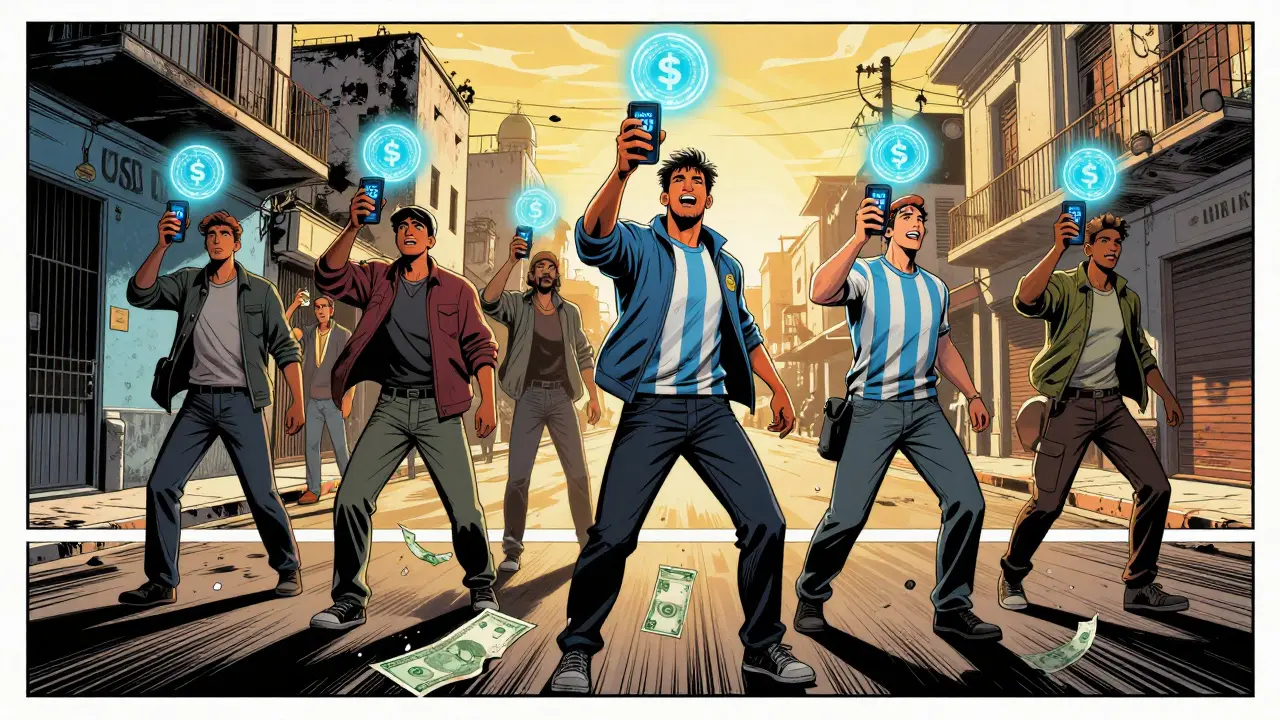
How Argentines Use Crypto for Savings Against Inflation
When the Argentine peso loses half its value in a single year, what do you do with your savings? For millions of Argentines, the answer isn’t a bank account - it’s cryptocurrency. In a country where inflation hit 43.5% in May 2025 after peaking at 161% the year before, people aren’t waiting for government fixes. They’re turning to digital assets to keep their money worth something.
Why Crypto? Because the Peso Keeps Crashing
The Argentine peso has been losing value for decades. In 1989, inflation hit 2,600%. Today, it’s still high enough to erase savings in months. A salary of 500,000 pesos in January might buy the same groceries in June that 300,000 pesos bought in January. That’s not just inconvenient - it’s devastating for families trying to plan for the future. Traditional banks don’t offer a real solution. The government blocks most citizens from opening U.S. dollar accounts. Even if you could, withdrawing dollars is nearly impossible. So people started looking elsewhere - and found crypto.Stablecoins Are the Real Hero
Not Bitcoin. Not Ethereum. Not Dogecoin. It’s USDT (Tether), USDC (USD Coin), and DAI. These are stablecoins - digital tokens pegged 1:1 to the U.S. dollar. They don’t swing up and down like Bitcoin. They stay steady. And in Argentina, that stability is worth more than gold. Here’s how it works: A worker gets paid in pesos on Friday. By Saturday, they open the Lemon app, convert their pesos into USDC, and lock it away. No bank. No paperwork. No government approval. The money sits in digital form, untouched by inflation. When they need to buy groceries or pay rent, they convert a small amount back to pesos at the app’s rate - which is still better than what the peso offers. DAI is especially popular because it’s built on Ethereum and backed by collateral locked on the blockchain. Every week, the system publishes proof that there’s enough value behind each DAI coin. Argentines trust that more than they trust the Central Bank.It’s Not Just Saving - It’s Paying, Sending, and Living
People don’t just hoard stablecoins. They use them. Lemon lets users link their USDC balance to a prepaid Visa card. That means you can swipe your card at a supermarket, and it automatically pulls dollars from your crypto wallet. No need to understand blockchain. Just tap, spend, save. Remittances are another big driver. With over 3 million Argentines living abroad - many in Spain, the U.S., or Chile - families rely on money sent home. Traditional services like Western Union charge up to 10% in fees and take days. With crypto? Send $200 in minutes for under $2. Recipients convert it to pesos instantly. One mother in Córdoba told a local news outlet: “My son sends me USDC every month. I don’t have to wait. I don’t have to pay extra. It’s like magic.”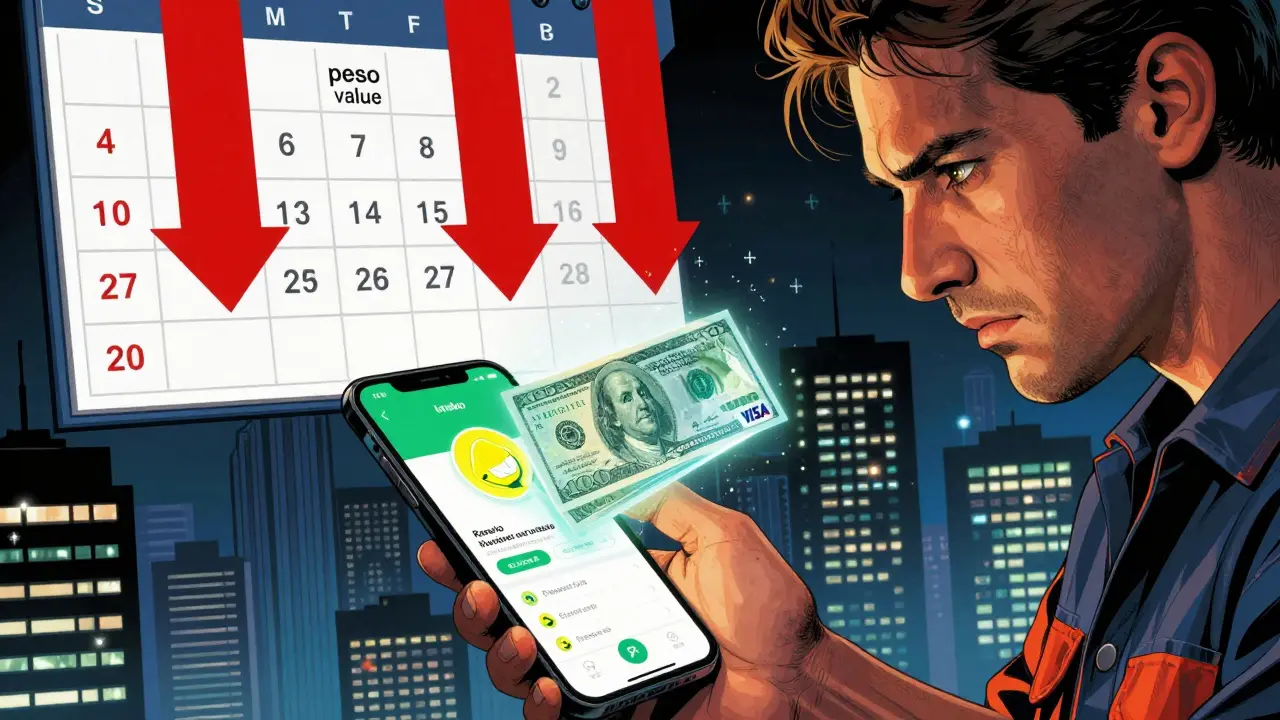
Why Argentina Leads Latin America
Brazil has more people. Mexico has more banks. But Argentina has the most crypto users in Latin America - 19.8% of the population, according to Chainalysis. That’s over 10 million people actively using digital assets. Why? Because they have no choice. In Brazil, crypto is seen as an investment. In Argentina, it’s survival. Platforms like Binance and Lemon have grown fast because they’re built for this reality. Binance offers peso-to-USDT trading with low fees. Lemon turns paychecks into digital dollars. Neither requires a passport, a foreign bank account, or a visa. Just a smartphone and a Wi-Fi connection.Regulation Isn’t Stopping It - It’s Helping
In March 2025, Argentina’s National Securities Commission (CNV) released Resolution 1058/2025. It didn’t ban crypto. It didn’t shut it down. It made it official. The CNV now regulates crypto exchanges, requires transparency, and protects users. President Javier Milei - a known crypto supporter - backs it. He doesn’t want to control crypto. He wants Argentines to use it. This isn’t just about politics. It’s about economics. With regulation, businesses can build real services. Banks can integrate crypto. Schools can teach it. The ecosystem is growing. Startups are popping up in Buenos Aires, offering crypto-based loans, insurance, and payroll systems.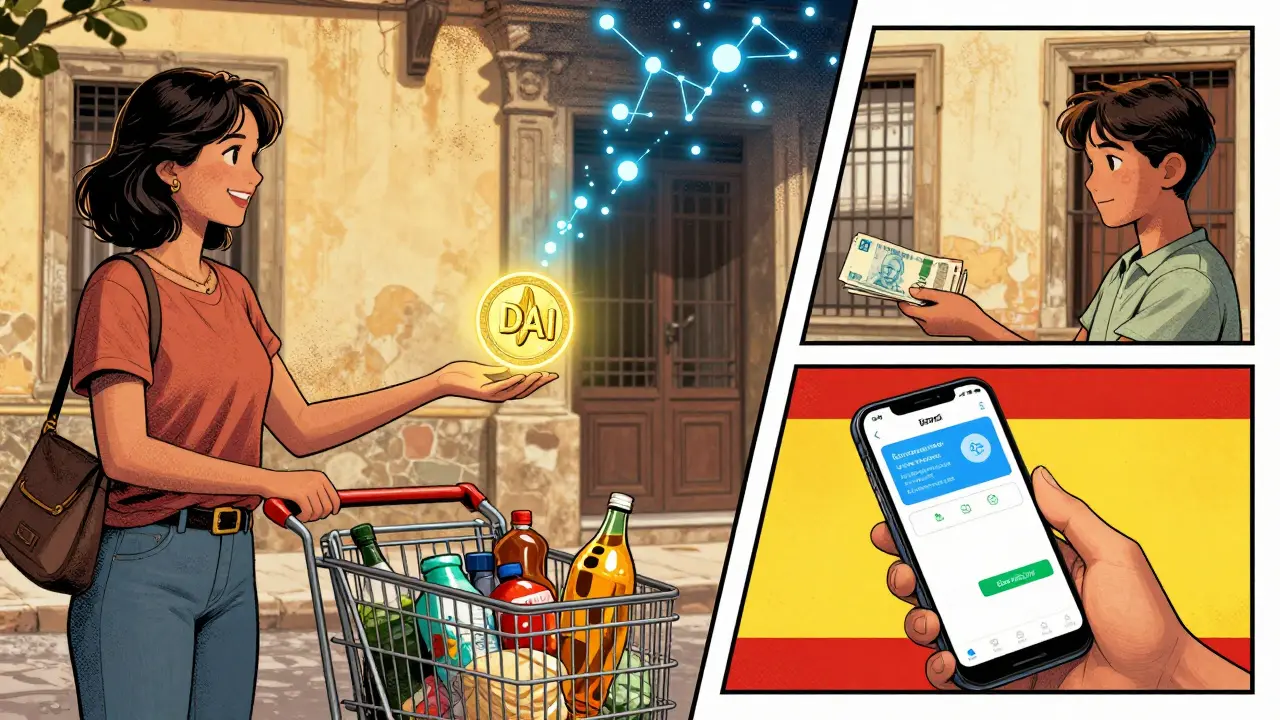
What’s Next? The System Is Already Working
There’s no grand plan. No government mandate. Just people - ordinary workers, teachers, shop owners - using what works. A mechanic in Rosario saves 30% of his paycheck in USDC. A teacher in Mendoza sends her daughter’s tuition in DAI. A small business owner in Salta pays her supplier in USDC because the peso dropped 12% overnight. The banks? They’re still trying to catch up. The government? Still arguing about exchange controls. But for millions of Argentines, the solution isn’t coming - it’s already here.It’s Not About Speculation. It’s About Survival
Crypto isn’t a gamble here. It’s not a get-rich-quick scheme. It’s a lifeline. When you live in a country where your savings vanish faster than a summer rain, you don’t wait for permission. You act. And Argentina didn’t just adopt crypto - it built a new financial system around it. Other countries with high inflation - Venezuela, Nigeria, Turkey - are watching. But Argentina is the first where crypto became part of daily life. Not because of hype. Not because of tech lovers. But because it’s the only thing that still works.Why don’t Argentines just use U.S. dollars directly?
The Argentine government strictly limits access to U.S. dollars. Citizens can’t open dollar bank accounts without special permits, and even then, withdrawals are capped or blocked. Stablecoins like USDT and USDC act as digital dollars - you can hold them without needing a foreign bank account, and you can spend them locally through apps like Lemon.
Is Bitcoin the main crypto used in Argentina?
Bitcoin is popular for long-term savings and investment, but stablecoins like USDT and USDC are used daily for transactions, payroll, and remittances. Bitcoin’s price swings make it risky for buying groceries or paying rent. Stablecoins keep their value, so they’re the practical choice for everyday use.
How do people buy stablecoins with pesos?
Most Argentines use apps like Lemon, Binance, or Ripio. They deposit pesos via bank transfer or cash deposit, then instantly swap them for USDT or USDC. The process takes under five minutes. No paperwork. No approval. Just a smartphone and an internet connection.
Is crypto legal in Argentina?
Yes. In March 2025, the National Securities Commission (CNV) officially began regulating cryptocurrency exchanges under Resolution 1058/2025. This gives users legal protections and makes crypto platforms accountable. It’s not a ban - it’s formal recognition.
Can I use crypto in Argentina if I’m not from there?
Yes. Foreigners can use Argentine crypto platforms to send or receive stablecoins. Many use them to pay for services, send remittances, or even rent property. The system is open and designed for global use - no local ID is required to hold USDT or USDC.
What happens if the internet goes down?
If the internet is down, you can’t access your crypto wallet. But most Argentines keep small amounts in apps for daily spending and larger sums in cold wallets (offline devices) for safety. Many also use local peer-to-peer networks where cash and crypto trades happen face-to-face - no internet needed.
Is this system safe from hacking or fraud?
Like any financial system, there are risks. But regulated platforms like Lemon and Binance now follow strict security rules. Most users avoid keeping large amounts on apps. They move funds to hardware wallets like Ledger or Trezor. The real danger isn’t hacking - it’s trusting unregulated exchanges. That’s why the CNV’s 2025 rules matter: they cut out shady operators.




27 Comments
Leah Dallaire
March 5 2026They say crypto is freedom. But what if the blockchain is just another pyramid scheme disguised as decentralization? The same people who scream about central banks are now blindly trusting algorithms written by anonymous devs in Silicon Valley. Who audits these 'stablecoins'? Who controls the private keys behind USDT? It's not freedom - it's just a new kind of hostage situation, with your wallet as the ransom.
Jeffrey Dean
March 5 2026You think Argentina’s crypto adoption is revolutionary? It’s desperation dressed up as innovation. When a society collapses, people don’t build systems - they cling to whatever glows. Bitcoin isn’t money. It’s a placebo for the economically traumatized. The real story isn’t stablecoins - it’s a nation that lost faith in everything but code.
Julie Potter
March 6 2026OMG I CANNOT BELIEVE THIS IS HAPPENING. I WAS JUST WATCHING A DOCUMENTARY ON VENEZUELA AND NOW ARGENTINA? IT’S LIKE A POST-APOCALYPTIC FINANCIAL MOVIE BUT REAL. I’M CRYING. PEOPLE ARE USING CRYPTO TO BUY GROCERIES. I’M SITTING HERE IN MY $4000 MATTRESS AND I FEEL LIKE A CLOWN. THIS IS THE FUTURE. I WANT TO MOVE THERE. 🥹💸
Bill Pommier
March 7 2026It is imperative to note that the institutionalization of cryptocurrency through Resolution 1058/2025 represents a dangerous abdication of monetary sovereignty. The National Securities Commission, by regulating exchanges, effectively legitimizes a system that operates outside the legal tender framework. This is not progress. It is surrender. The state has ceased to be the guarantor of value and has instead become the facilitator of digital anarchy.
Olivia Parsons
March 7 2026Just curious - how do people without smartphones or internet access participate? Is this only for urban, tech-savvy folks? What about rural teachers or elderly pensioners? It feels like a solution that leaves behind the most vulnerable. Not saying crypto is bad - just wondering who’s left out.
Nick Greening
March 8 2026Everyone’s acting like stablecoins are magic. Nah. They’re just dollars with extra steps. You still need a bank to get pesos in, and a phone to convert them out. If the government shuts down the internet or bans Lemon? Poof. All your 'savings' are gone. This isn’t a system. It’s a glitch waiting to happen.
Issack Vaid
March 10 2026It is fascinating how Argentina has become a living laboratory for post-national finance. The peso is no longer a currency - it is a cultural artifact. Stablecoins function not as assets, but as social contracts between individuals, bypassing the state entirely. This is not economic innovation - it is civil society reconstituting itself through cryptography.
Shawn Warren
March 11 2026Imagine a world where your paycheck doesn't vanish overnight
Imagine your child's tuition isn't stolen by inflation
Imagine sending money home without paying 10 percent in fees
This isn't speculation
This is dignity
And Argentina is showing us how to rebuild
From the ground up
Without permission
Without apology
Just code
And courage
Jackson Dambz
March 12 2026So let me get this straight. People are risking their life savings on a digital token backed by... what? A company in the Cayman Islands? And you call this stability? This isn't innovation. It's a Ponzi with better UI. The fact that this is being celebrated as progress is terrifying.
Megan Lutz
March 13 2026The real genius here isn’t the tech - it’s the cultural shift. People stopped waiting for permission. They stopped hoping for reform. They built a parallel economy with what they had: smartphones, Wi-Fi, and mutual trust. No one asked the government. No one waited for a law. They just started doing it. That’s the quiet revolution.
Jesse VanDerPol
March 13 2026Interesting. I wonder how many of these users understand the difference between custody and control. Do they know that if Lemon goes down, their USDC is still on the blockchain? Or do they think their app balance is their money? There’s a gap between perception and reality here.
jonathan swift
March 13 2026Uhhhh yeah sure 🤡. USDT is controlled by Tether Ltd which is owned by Bitfinex which is owned by... wait for it... THE SAME PEOPLE WHO RUN THE FED. This is all a psyop. They want us to trust digital money so they can track every transaction. Next thing you know, they’ll freeze your crypto if you buy too much toilet paper. 🚫📱 #DeepStateCrypto
Datta Yadav
March 15 2026Let me break this down with some real data. Argentina has 19.8% crypto adoption? That’s impressive until you realize that 70% of those users are under 30. The median age in Argentina is 32. So this isn’t a national movement - it’s a youth rebellion. The older generation? Still using cash under the mattress. The middle class? Still trying to convert pesos at the black market. What you’re seeing isn’t systemic adoption - it’s generational fracture. And that’s not sustainable. When these 20-somethings get older, they’ll want pensions, healthcare, mortgages. Can USDC pay for that? No. Can DAI buy a house? Only if the bank accepts it. And banks don’t. So this isn’t a solution. It’s a temporary Band-Aid on a severed artery.
Lydia Meier
March 16 2026The article romanticizes this as empowerment. But where are the audits? Where are the consumer protections? Who is liable when a user loses funds due to a bug in Lemon’s app? The CNV’s regulation is performative. It doesn’t prevent fraud - it just gives the illusion of oversight. This isn’t progress. It’s a regulatory shell game.
Basil Bacor
March 17 2026crypto is just digital gold but with more steps and less privacy. they say stablecoins are pegged to the dollar but who says they actually have the reserves? i heard a guy on a podcast say tethers got 0.8 cents backing for every coin. not even close. and now argentinians are trusting this? lol. theyre just swapping one scam for another.
Emily Pegg
March 18 2026I just feel so bad for these people. They’re doing everything right - saving, working hard, trying to protect their families - and the system still fails them. It’s heartbreaking. I’m crying. I wish I could send them all some USDC. 💔😭
Ethan Grace
March 18 2026It’s not about crypto. It’s about trust. Argentines don’t trust their government. They don’t trust their banks. They don’t even trust their neighbors anymore. So they turned to code - because code doesn’t lie. Blockchain doesn’t break promises. Algorithms don’t change rules overnight. The real story isn’t inflation. It’s the collapse of institutional trust. And crypto? It’s the only thing left standing.
Jamie Hoyle
March 19 2026Oh please. You think this is unique? Nigeria’s doing the same thing. Venezuela’s been doing it for a decade. Turkey? Oh yeah. This isn’t Argentina’s genius - it’s the global reality of failing states. The article makes it sound like they invented something. They didn’t. They just refused to die quietly. That’s not innovation. That’s survival. And it’s happening everywhere.
Brian T
March 20 2026Why are we celebrating this? It’s not a solution - it’s a symptom. The real problem is a broken state. Instead of fixing institutions, we’re just letting people escape into digital bubbles. That’s not progress. It’s abandonment. And if this becomes the norm, what’s left for democracy? A society that abandons its currency abandons its people.
Nash Tree Service
March 21 2026The tragedy here is not inflation. It is the normalization of financial precarity. When a teacher must convert her salary into USDC to afford bread, we have failed as a species. This is not innovation. This is systemic collapse dressed in blockchain aesthetics. The world is watching Argentina - not as a model, but as a warning.
Ken Kemp
March 23 2026Hey I work with a nonprofit in Latin America and I’ve seen this up close. The real MVPs aren’t the apps - they’re the local P2P traders. The guy who meets you at the coffee shop with cash in exchange for USDC. No app. No ID. Just trust. That’s the hidden network. The apps make it look easy - but it’s these underground networks keeping people alive. And they don’t get enough credit.
Jonathan Chretien
March 23 2026Let’s be real - this isn’t crypto. It’s digital dollarization. Argentina didn’t adopt blockchain. They adopted the U.S. dollar… but with more emojis and less paperwork. And honestly? Good for them. If your currency is garbage, why not use the one that isn’t? The rest of us are just jealous because we’re still stuck with fiat and fake promises.
Cerissa Kimball
March 24 2026Most people dont realize that stablecoins rely on centralized entities to maintain their peg. If Tether loses its dollar reserves even slightly the whole system could unravel. This isnt freedom its a house of cards held together by trust in corporations that dont even have to disclose their balance sheets
Jane Darrah
March 25 2026I used to think crypto was for rich tech bros. Then I met a single mom in Buenos Aires who uses USDC to pay her kid’s school fees. She told me, ‘I don’t care if it’s blockchain or magic. All I care is that my money doesn’t disappear before I buy milk.’ And that? That hit me harder than any TED Talk. I cried. I’m still crying. This isn’t finance. This is motherhood. And it’s beautiful.
Denise Folituu
March 27 2026They say crypto is the future. But what if the future is just people crying in front of their phones, trying to convert pesos before the app crashes? What if the revolution isn’t about freedom - it’s about panic? I’m not against crypto. I’m just scared. What happens when the Wi-Fi dies? What happens when the app gets hacked? What happens when the next president bans it? This isn’t empowerment. It’s a countdown.
Leah Dallaire
March 27 2026Good point about the centralization risk. But here’s the twist: even if Tether collapses, the blockchain still exists. People can move to DAI or other decentralized stablecoins. The system isn’t dependent on one company - it’s a network of alternatives. Argentina didn’t bet on one horse. They bet on the whole damn racetrack.
Megan Lutz
March 29 2026Exactly. The beauty is in the redundancy. If one platform fails, another pops up. The people aren’t waiting for permission - they’re building alternatives. That’s how real resilience forms. Not through regulation. Through iteration.