Understanding Liquidation Risk in Crypto Lending: How to Protect Your Assets
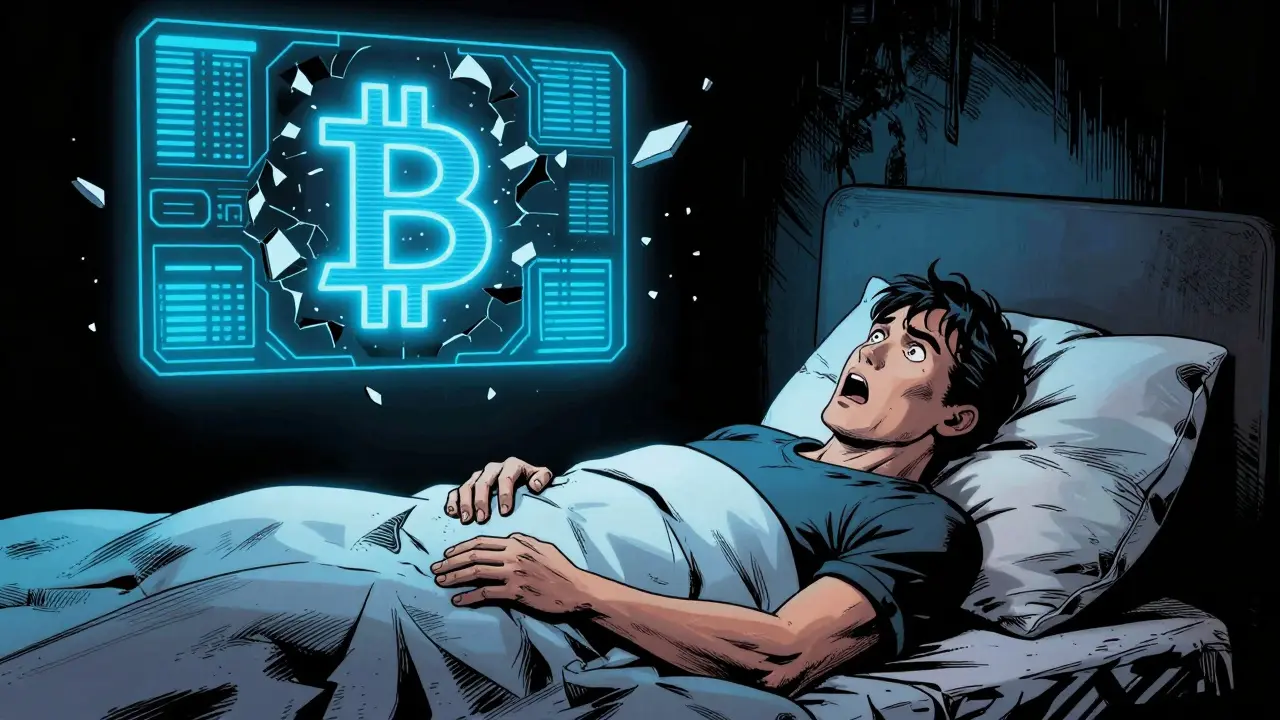
Imagine waking up to find a huge chunk of your Bitcoin gone, not because you spent it, but because a computer program decided your loan was too risky. This is the reality of liquidation risk is the possibility that a borrower's collateral will be forcibly sold by a lending platform when the value of the assets falls below a required threshold. In the fast-moving world of crypto, where a coin can drop 30% while you're asleep, this isn't just a theoretical danger-it's a constant mechanical process that keeps the entire lending ecosystem from collapsing.
The Mechanics of Crypto Liquidations
At its core, crypto lending relies on overcollateralization. Unlike a bank loan where you provide a credit score and a promise to pay, DeFi (Decentralized Finance) protocols require you to put up more value in assets than you are actually borrowing. This acts as a safety net for the lender.
The most critical metric here is the Loan-to-Value (LTV) ratio. If you deposit $20,000 worth of Ethereum to borrow $10,000 in stablecoins, your LTV is 50%. As long as the price of Ethereum stays steady or goes up, you're fine. But if Ethereum crashes, your $20,000 collateral might shrink to $12,000. Suddenly, your LTV jumps to over 83%. Once you hit a specific "liquidation threshold" set by the platform, the system triggers an automatic sale of your assets to pay back the lender.
Many advanced protocols use a Health Factor to simplify this. A health factor above 1 means your position is safe. The moment it dips below 1, you become eligible for liquidation. To make this happen in real-time, platforms use Price Oracles like Chainlink, which feed live market prices into smart contracts. If the oracle says the price has dropped too far, the smart contract executes the liquidation instantly.
| Feature | DeFi Protocols (e.g., Aave) | Centralized Lenders (e.g., Nexo) | Traditional Finance (Banks) |
|---|---|---|---|
| Trigger | Smart Contract / Health Factor | Internal Risk Engine | Margin Call / Human Review |
| Speed | Near-instant (Seconds) | Very Fast (Minutes) | Slow (Days) |
| Collateral | Overcollateralized Crypto | Crypto / Mixed Assets | Credit Score / Physical Assets |
| Warning | Often none (User monitored) | Email/App Notifications | Phone Call/Letter |
Why Crypto Liquidations Are More Brutal Than Traditional Loans
If you've ever dealt with a traditional stock broker, you know the "margin call." The broker calls you and says, "Your account is low; please add more funds by Friday or we'll sell your shares." In crypto, there is no phone call. There is no grace period. There is no manager to negotiate with.
The 24/7 nature of the market means liquidations happen while you're eating, sleeping, or commuting. Because the system is automated, it doesn't care if you're five minutes late adding collateral. This creates a phenomenon called "cascading liquidations." When a large number of borrowers are liquidated at once, the system dumps huge amounts of assets onto the market. This drives the price down further, which triggers *more* liquidations, creating a vicious feedback loop that can wipe out thousands of accounts in a single hour.
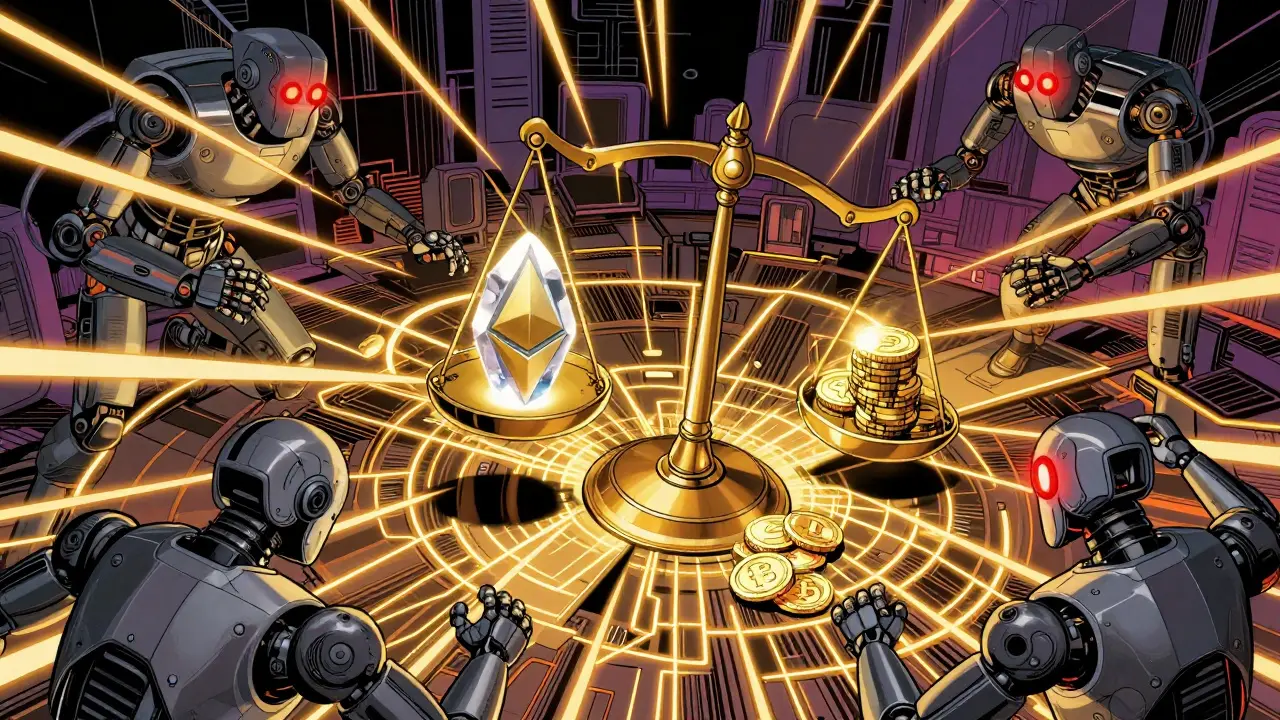
Furthermore, DeFi platforms incentivize people to be "liquidators." These are third-party actors (often bots) who monitor the blockchain for unhealthy loans. When they find one, they pay off your debt in exchange for your collateral at a discount-often a 3% to 15% liquidation bonus. They aren't doing you a favor; they are hunting for a profit, which means your assets are sold the millisecond they become eligible.
Practical Strategies to Avoid Total Wipeout
Managing liquidation risk isn't about predicting the market-it's about building a buffer that allows you to survive a crash. Experienced users generally follow a few golden rules to keep their portfolios intact.
- Keep LTV Low: While a platform might allow an LTV of 75%, seasoned lenders often stay around 30% to 40%. This gives them a massive cushion if the market drops 50% unexpectedly.
- Avoid "Dusty" Collateral: Don't use highly volatile, low-cap altcoins as collateral. Their price can swing 20% in minutes, making them far more likely to trigger a liquidation than established assets like Bitcoin or Ethereum.
- Maintain an Emergency Fund: Keep a reserve of stablecoins (like USDC or USDT) in a separate wallet. If you see your health factor dropping, you can quickly deposit these funds to boost your collateral ratio.
- Set Independent Alerts: Don't rely on the platform's notifications, which can be delayed. Use third-party monitoring tools or set price alerts on exchanges to notify you when your collateral asset hits a critical price point.

The Future of Risk Management in Lending
The industry is starting to realize that "instant wipeout" is a barrier to mainstream adoption. We are seeing a shift toward more forgiving systems. Some platforms are experimenting with gradual liquidations, where only a small portion of the collateral is sold to bring the loan back to a healthy state, rather than selling everything at once.
We are also seeing the rise of insurance protocols that can cover liquidation losses and AI-driven tools that automatically move collateral between different platforms to optimize the health factor. The goal is to move away from a system that feels like a trap and toward one that feels like a professional financial tool. As institutional money enters the space, the demand for standardized, predictable liquidation frameworks will only grow.
What happens to my money after a liquidation?
When you are liquidated, the protocol sells your collateral to cover the borrowed amount plus a small bonus for the liquidator. If there is any leftover collateral after the debt and bonus are paid, it is typically returned to the borrower. However, because the sale often happens during a price crash, you usually recover much less than you originally deposited.
Can I stop a liquidation once it has started?
In most DeFi protocols, once the health factor drops below 1 and a liquidator triggers the transaction, it cannot be stopped. The smart contract executes the sale automatically. The only way to prevent it is to add more collateral or pay back part of the loan *before* the threshold is hit.
Is a lower LTV always safer?
Yes, a lower Loan-to-Value ratio means you have more collateral backing your loan, which makes you less susceptible to price swings. However, it also means your capital is less efficient. The challenge for every borrower is finding the balance between safety and capital efficiency.
How do price oracles affect my risk?
Oracles provide the price data the protocol uses to calculate your health. If an oracle fails or provides an incorrect "flash crash" price, you could be liquidated even if the actual market price is stable. This is why using protocols with reputable oracles like Chainlink is critical for reducing technical risk.
What is a liquidation bonus?
A liquidation bonus is a reward given to the person or bot that identifies an undercollateralized loan and pays it off. This incentive ensures that there are always people motivated to keep the protocol solvent, as they get to buy the collateral at a discount (e.g., paying $90 to settle a $100 debt).
Next Steps for Safe Borrowing
If you're new to crypto lending, start by using a "paper trading" or testnet version of a protocol like Aave to see how the health factor changes with price movement. If you already have active positions, do a quick audit of your LTVs today. If any of your positions are above 60% LTV, consider adding collateral or paying down the principal to avoid being caught in a sudden market dip.


13 Comments
Scott Fenton
April 11 2026Maintaining a low Loan-to-Value ratio is indeed the most prudent course of action for anyone utilizing these protocols. One must acknowledge that the efficiency of capital is often a secondary concern when compared to the absolute preservation of principal assets in such a volatile environment.
Tracie and Matthew Hartley
April 13 2026idk why everyone is so scared of LTV. just ride the wave and hope for the best lol. it is not that deep
daniella davis
April 14 2026honestly the way some people handle their portfolios is just embarrassing. like if you dont understand how a basic health factor works you probably shouldnt even be in defi. it is literally basic math but people act like its rocket science... pls just read a book before you lose your entire life savings on some random altcoin
Jonathan Chamma
April 15 2026It is a bit like walking a tightrope in a windstorm. While the technical side is scary, remember that we are all learning together in this wild digital frontier. Just keep your head clear and your buffers wide, and you'll find your footing. A little bit of patience goes a long way when the markets get spicy!
jennelle williams
April 16 2026stay safe everyone. money comes and goes but peace of mind is everything
Lane Montgomery
April 17 2026How much you got in your wallet right now?
EDOZIEM MICHAEL
April 18 2026the market is just a mirror of human greed and fear reflecting the chaos within us all
Jessie Tayaban
April 19 2026OH MY GOD this is exactly what happened to me last year!! I literally woke up and my eth was GONE. I was screaming at my screen for an hour because i didnt set an alert. It was the most traumatizing thing ever!! I will NEVER let my LTV get that high again, never ever!!
aletheia wittman
April 19 2026literally the worst feeling in the world when u see that liquidation notification pop up and u know u messed up big time lol
Chidinma Sandra okafor
April 20 2026So cute how people think these platforms care about them. The bots are just eating your money while you cry about it. Truly a masterpiece of a system for the elite few while we just provide the liquidity. But hey, at least the code is a law, right? How charming.
Akshay Gorad
April 22 2026The mention of Chainlink is important here. Using a reliable oracle is the only way to ensure the system doesn't fail due to bad data.
Mikayla Murphy
April 23 2026I appreciate the reminder to keep an emergency fund. It is easy to get caught up in the excitement and forget the basics of risk management. Keeping a bit of USDC on the side really does take the pressure off during a crash.
Lauren Abrams
April 23 2026The concept of cascading liquidations is fascinating. It explains why the drops are so much more violent in crypto than in traditional stocks. The automation basically creates its own gravity that pulls everything down once a certain point is hit.