How Social Media Drives Memecoin Prices: The Viral Mechanism Explained
Imagine buying a coin because a teenager on TikTok said it was funny. Now imagine that same coin doubling in value within hours, only to crash back down by the next morning. This isn't just gambling; it's the new reality of memecoins, which are cryptocurrencies created primarily as jokes or internet memes, deriving their value from community sentiment rather than technological utility. In this digital ecosystem, traditional financial metrics like revenue, user base, or technical innovation matter far less than the velocity of a viral tweet or the reach of an influencer's video.
The shift is stark. In 2024, the total market capitalization of memecoins surged from under $60 billion to nearly $100 billion. That’s a year-over-year increase of more than 50%, driven almost entirely by attention economies on platforms like Twitter, Reddit, and TikTok. Daily trading volumes rose by 45% in the first three quarters alone. These numbers prove one thing: social media doesn't just reflect memecoin prices; it dictates them.
The Psychology of Viral Valuation
To understand why a picture of a dog or a frog can be worth millions, you have to look at the psychology behind the trade. Unlike Bitcoin, which has a narrative of decentralized money, or Ethereum, which powers smart contracts, memecoins run on Fear of Missing Out (FOMO) and community belonging. When a hashtag trends, it creates a sense of urgency. You feel left out if you aren't part of the conversation.
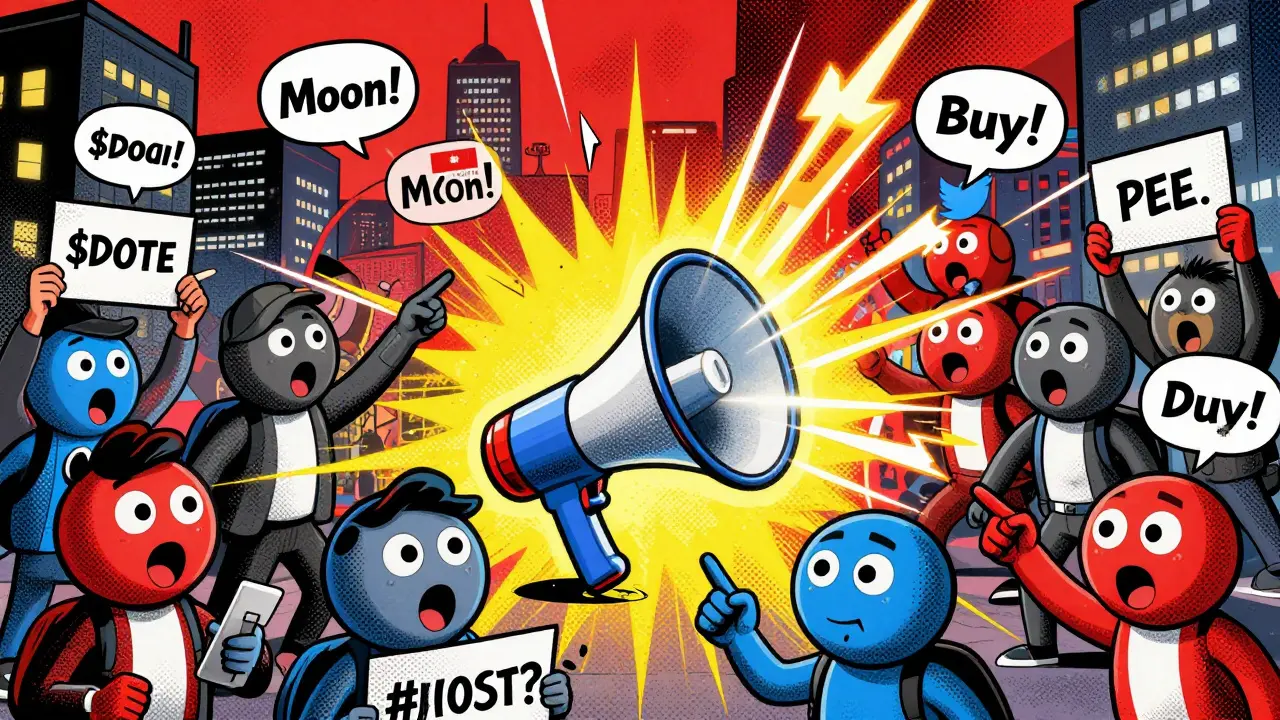
This emotional trigger is amplified by the structure of social media algorithms. Platforms prioritize engagement-likes, shares, comments-and controversial or exciting content generates the most engagement. A post claiming "Dogecoin is going to the moon!" gets more traction than a dry technical audit report. As more people see the hype, they buy in, driving up the price, which validates the hype, creating a self-fulfilling prophecy until the music stops.
Research shows that memecoins exhibit extreme sensitivity to these sentiment shifts. Price fluctuations can occur within hours of viral content creation. For stablecoins, which are pegged to fiat currencies, social media noise barely registers. But for a memecoin with no intrinsic yield or utility, every tweet is a potential market mover.
Platform-Specific Dynamics: Who Moves the Market?
Not all social media platforms drive prices in the same way. Each platform has a unique role in the memecoin lifecycle, acting as different stages of the pump-and-dump cycle.
| Platform | Primary Role | Impact Type | Key Metric |
|---|---|---|---|
| TikTok | Viral Discovery & Short-Term Hype | High Volatility, Rapid Spikes | 35% improvement in short-term prediction accuracy |
| Twitter (X) | Trend Amplification & Influencer Endorsement | Sustained Momentum, Volume Spillover | 4.65% volatility shock transmission |
| Community Building & Narrative Formation | Long-Term Sentiment, Initial Momentum | Discussion depth correlates with retention | |
| YouTube | Deep-Dive Analysis & Education | Legitimization, Mid-Term Trends | Influencer trust scores impact adoption |
TikTok is the spark. Its algorithm favors visual, entertaining content, making it perfect for introducing new, obscure tokens to a younger, retail-heavy audience. Studies using multimodal sentiment analysis show that TikTok data alone can improve short-term predictions for coins like Dogecoin by 35%. It’s where the "meme" aspect shines brightest.
Twitter is the amplifier. Once a token gains traction on TikTok, it moves to Twitter, where influencers, developers, and traders discuss it. Twitter receives significant volatility shocks (4.65%), meaning news breaks here and spreads fast. It’s also where "powertags"-hashtags starting with a dollar sign like $PEPE or $DOGE-are tracked. Researchers analyzed 1.36 million tweets to find that engagement with these tags directly correlates with trading volume.
Reddit serves as the town square. Communities like r/WallStreetBets or specific coin subreddits build the narrative. Here, users debate fundamentals (however thin they may be) and coordinate buying pressure. While slower than TikTok, Reddit discussions often sustain interest longer, providing a floor for the price during dips.
The Data Behind the Hype: Sentiment Analysis
It’s not just guesswork anymore. Institutional investors and sophisticated traders now use sentiment analysis, which is the computational process of identifying and extracting subjective information from text, audio, and video to determine public opinion. AI tools scan millions of posts per minute to gauge whether the mood is bullish (positive) or bearish (negative).
Here’s what the data tells us:
- Correlation Strength: There is a high correlation coefficient of 0.85 between Bitcoin and major memecoins like DOGE, SHIB, and PEPE. However, social media amplifies these movements beyond standard market correlations. When Bitcoin rises, memecoins often rise faster due to risk-on sentiment fueled by social chatter.
- Predictive Power: Combining sentiment signals from both TikTok and Twitter enhances cryptocurrency return and volume forecasts by up to 20%. Relying on one platform gives you a partial picture; combining them provides a clearer signal.
- Volatility Transmission: Dogecoin acts as a primary transmitter of volume spillovers, accounting for 83.90% of the effect. This means when Dogecoin moves based on social hype, it drags other memecoins along with it.
This data-driven approach allows traders to enter positions before the mass market reacts. If sentiment on TikTok turns positive for a new token, algorithms can detect the trend spike and execute buys milliseconds after the pattern emerges.
Case Study: The Rise and Fall of $WOLF
Theory is one thing; real-world examples make the risks clear. Consider the case of the $WOLF memecoin. It started as a joke among the WallStreetBets community on Reddit. The humor resonated, and soon, influencers on Twitter began posting about it. The narrative spread to TikTok, where short videos mocked the concept while simultaneously hyping its potential.
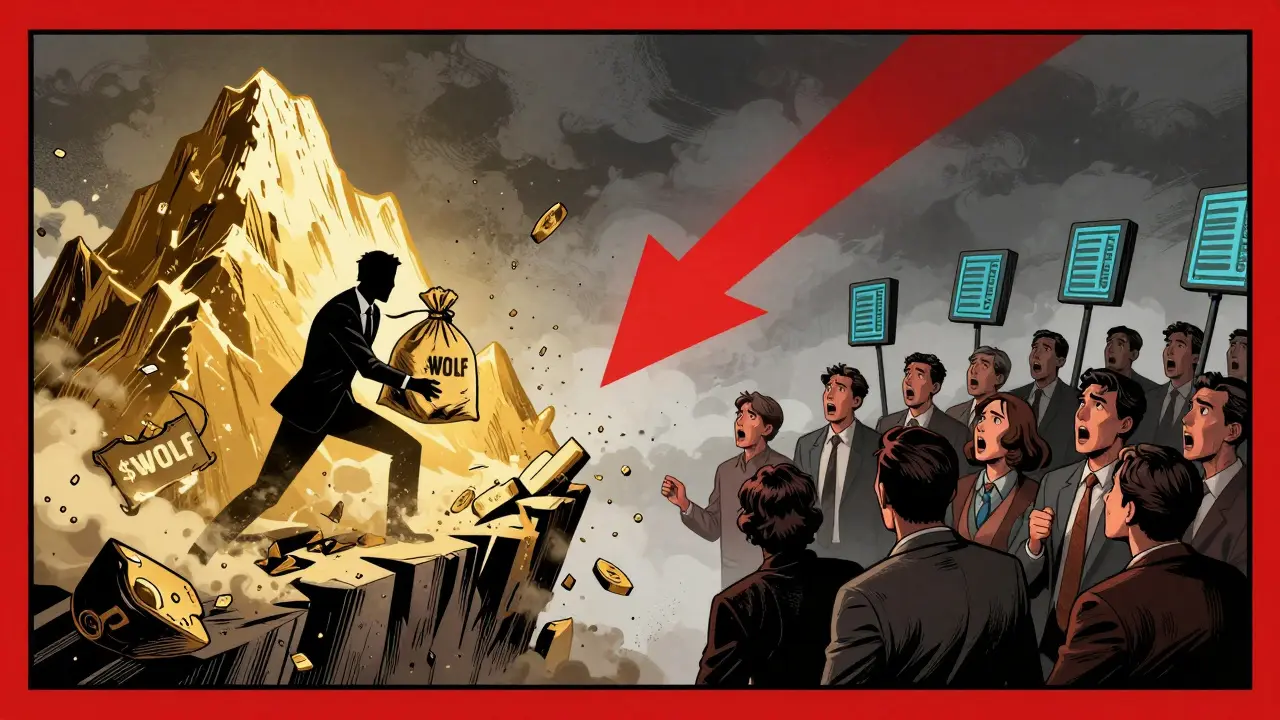
Within days, the market cap of $WOLF reached $40 million. Traders who bought early saw massive returns. But then, on-chain analysts stepped in. They looked past the social media noise and examined the blockchain ledger. What they found was alarming: 82% of the total supply was concentrated in just a handful of wallets controlled by the creators.
Once this information leaked onto social media, the sentiment flipped instantly. From "to the moon" to "rug pull" in hours. The price crashed, wiping out late entrants. This example highlights a critical danger: social media drives prices up, but lack of transparency can destroy them just as quickly. Always check the on-chain data, not just the tweets.
Risks and Red Flags in Social-Driven Trading
Trading memecoins based on social media trends is akin to surfing a tsunami. It’s thrilling, but dangerous. Here are the key risks you need to watch for:
- Coordinated Pump Schemes: Groups of bots or paid promoters often create artificial buzz. They flood Twitter and Telegram with positive messages to lure retail investors in. Once the price rises, the coordinators sell their holdings, causing a crash.
- Influencer Bias: Many crypto influencers are paid to promote certain tokens. They may hold large bags of the coin they’re recommending. Their endorsement isn’t always genuine belief; it’s often a marketing transaction.
- Fatigue and Churn: Attention spans on social media are short. A meme that’s funny today might be cringe tomorrow. If the narrative dies, the price follows. There is no fundamental value to catch the fall.
- Regulatory Scrutiny: Authorities are increasingly watching social media for coordinated manipulation. In 2025 and 2026, we’ve seen stricter policies on cryptocurrency promotional content. Platforms like TikTok and X have begun limiting the reach of unverified financial advice, which could dampen future viral spikes.
User experiences frequently describe this environment as addictive. Monitoring feeds for the next big thing feels like gambling. Many traders report anxiety and impulsive decisions driven by FOMO. Remember: if you feel pressured to buy immediately because everyone else is talking about it, pause. That’s exactly when the risk is highest.
How to Navigate the Memecoin Market Safely
You don’t have to stay on the sidelines, but you do need a strategy. Here’s how to approach social media-driven memecoin trading with your eyes open:
- Diversify Your Sources: Don’t rely on one platform. Check TikTok for emerging trends, Twitter for influencer reactions, and Reddit for community sentiment. Cross-reference what you see.
- Use On-Chain Tools: Tools like Etherscan or Solscan allow you to view wallet distributions. Look for projects where the top holders own a small percentage of the supply. Avoid coins where one wallet holds more than 10-15%.
- Set Stop-Losses: Because memecoins are volatile, prices can drop 50% in minutes. Use automated stop-loss orders to limit your downside. Never invest more than you can afford to lose completely.
- Ignore the Noise: Develop a filter for spam. Mute accounts that constantly shill low-cap tokens. Focus on communities that discuss technology or long-term vision, even if it’s just a fun project.
- Take Profits Early: In a social media-driven rally, greed is your enemy. If you double your money, consider taking out your initial investment. Let the rest ride, but secure your wins.
The future of memecoin valuation likely involves a hybrid model. As the market matures, we’ll see more integration of social media metrics with traditional financial analysis. AI-driven sentiment indexes will become standard tools, helping traders distinguish between organic hype and manipulated schemes. While the wild west era of unchecked viral pumps may cool due to regulation, the power of community remains undeniable. Understanding how social media drives prices isn’t just about making money; it’s about understanding the modern digital economy.
What is the main driver of memecoin prices?
The main driver of memecoin prices is social media sentiment and viral marketing. Unlike traditional assets, memecoins lack fundamental utility, so their value is determined by community engagement, influencer endorsements, and the speed at which content spreads across platforms like Twitter, TikTok, and Reddit.
How does TikTok influence cryptocurrency markets?
TikTok influences crypto markets by introducing new tokens to a younger, retail-heavy audience through short-form video content. Research shows TikTok sentiment can improve short-term price predictions by 35%, making it a powerful catalyst for rapid, speculative buying surges.
Is it safe to invest in memecoins based on social media trends?
Investing in memecoins based solely on social media trends is highly risky. Many viral campaigns are coordinated pump-and-dump schemes or involve insider manipulation. Without verifying on-chain data and understanding the risks of extreme volatility, investors can lose their entire principal quickly.
What is sentiment analysis in crypto trading?
Sentiment analysis is the use of AI and natural language processing to evaluate public opinion on social media platforms. In crypto trading, it helps identify whether the overall mood toward a specific coin is positive (bullish) or negative (bearish), allowing traders to anticipate price movements before they happen.
Why did the $WOLF memecoin crash?
The $WOLF memecoin crashed because on-chain analysis revealed that 82% of the token supply was held by a few wallets controlled by the creators. Once this concentration of ownership was exposed on social media, trust collapsed, leading to a massive sell-off and price crash.