Privacy Concerns with Crypto KYC: Why Your Identity Data Is at Risk
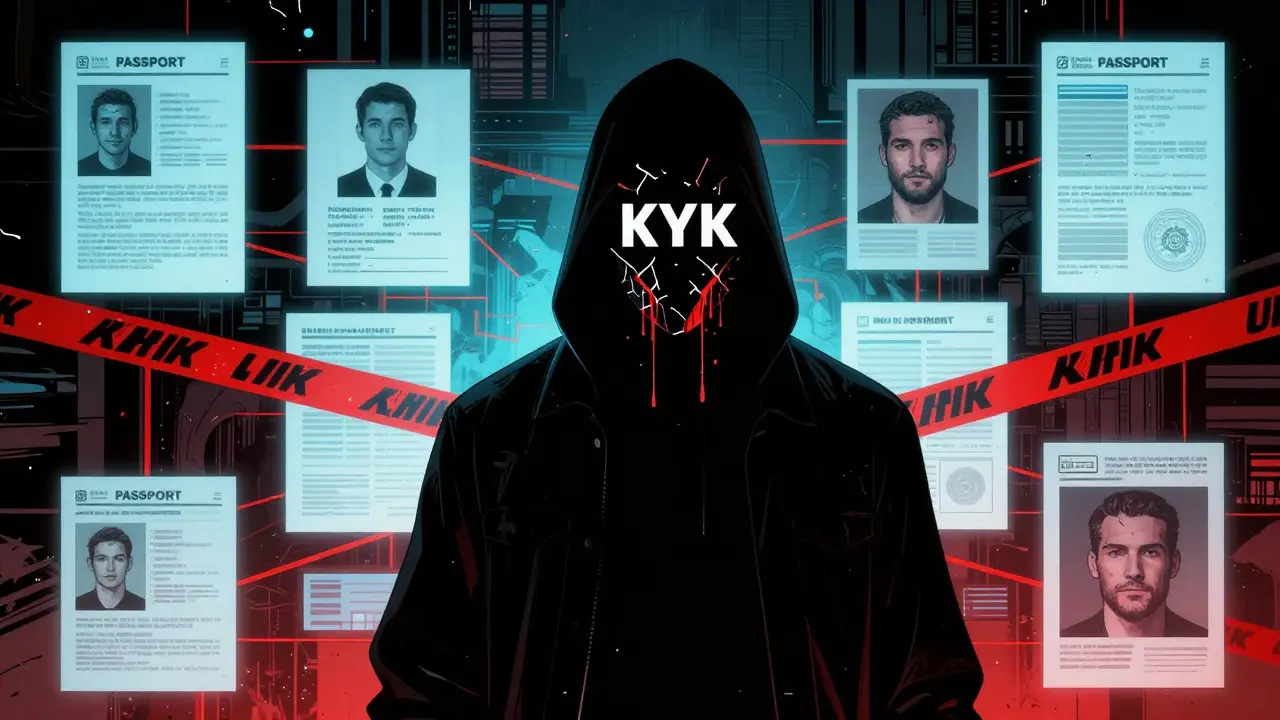
When you sign up for a crypto exchange like Coinbase or Binance, you’re asked to upload your passport, selfie, and proof of address. It feels normal-like opening a bank account. But here’s the catch: crypto KYC doesn’t just verify your identity. It creates a digital fingerprint of your life that can be stolen, sold, or used against you-and there’s almost nothing you can do to erase it.
What Crypto KYC Actually Collects (And Why It’s Dangerous)
KYC stands for "Know Your Customer." In traditional banking, it means checking your ID and address. In crypto, it’s far more invasive. Exchanges don’t just want your name. They demand your full government-issued ID, a live video of your face doing specific movements, your phone number, email, home address, and sometimes even your bank statements or utility bills. Some platforms, like Kraken and Binance, require you to submit a selfie holding your ID-capturing your facial structure, iris patterns, and even your skin texture. This isn’t just data. It’s biometric identity, stored in centralized databases that hackers target.
According to a 2024 audit by Trail of Bits, 78% of major crypto exchanges store KYC data in single, unsecured servers. That means if one system gets breached, millions of identities go with it. In January 2022, Crypto.com suffered a breach that exposed the personal details of 4.5 million users. Names, addresses, passport scans-all leaked. Victims reported phishing emails referencing their exact date of birth and street address within 48 hours. That’s not coincidence. That’s data monetization.
Why Crypto KYC Is Different From Bank KYC
Traditional banks collect your name, address, and Social Security number. Crypto exchanges collect all that-and then add your wallet address, transaction history, and even your spending habits across DeFi protocols. Why? Because your crypto activity reveals more than your income. It shows who you send money to, how often, and what you buy. A wallet that regularly sends funds to privacy coins like Monero? That’s a red flag. A wallet that receives small, frequent transfers from overseas? That’s suspicious.
The International Association of Privacy Professionals found crypto KYC creates a 43% higher privacy risk than traditional financial verification. That’s because banks don’t track your purchases in real time. Crypto exchanges do. And unlike banks, they’re not protected by decades of legal safeguards. Your crypto KYC data can be subpoenaed without your knowledge. In 2024, Coinbase received 12,453 law enforcement requests for user data-up 37% from the year before. Many of these were for low-level offenses: gambling, petty theft, even political donations.
The Rise of the Privacy-Driven Exodus
People are leaving. Not because they hate regulation. They hate losing control. A CryptoSlate survey of 5,000 users in February 2025 found 57% abandoned a crypto transaction because of KYC requirements. Among users aged 18-24, that number jumped to 72%. Why? They grew up with digital privacy as a right. They don’t trust corporations with their biometrics.
As a result, privacy-focused tools are surging. Monero’s daily active addresses rose 47% year-over-year in Q1 2025. Zcash usage climbed 31%. Non-custodial wallets like Phantom and Trust Wallet are seeing record adoption. These platforms don’t ask for your ID. You control your keys. Your transactions are hidden. But here’s the problem: regulators are cracking down. Japan banned Monero trading in November 2024. The EU’s MiCA regulation, effective since June 2024, requires all crypto service providers to verify users-even those using privacy coins. Some exchanges now block transactions to privacy wallets entirely.
The False Promise of "Privacy-Enhancing" Tech
You’ve probably heard about zero-knowledge proofs. They sound like magic: verify your identity without revealing it. Platforms like Aztec Network and Polygon ID are testing this. The idea? You prove you’re over 18 without showing your birthdate. You prove you’re not on a sanctions list without revealing your name.
It’s promising. But it’s still rare. Only 41% of exchanges are piloting these technologies-and most are small players. Big exchanges like Binance and Coinbase? They’re still using the same old system: upload your passport, wait 72 hours, hope nothing goes wrong. Why? Because zero-knowledge systems are expensive, complex, and not yet approved by regulators. The FATF, the global body that sets crypto rules, hasn’t formally endorsed them. So exchanges play it safe: collect everything, store it forever.
What Happens to Your Data After You Close Your Account?
Here’s the worst part: even if you delete your account, your KYC data might still be there. Most exchanges keep it for 7+ years. That’s longer than most credit reports. GDPR says data should only be kept "as long as necessary." But crypto exchanges argue they need it for "audit trails" and "future compliance." In reality, they’re building databases for law enforcement and third-party data brokers.
Only 37% of exchanges clearly state how long they retain your data. And even if you request deletion, 78% of users report being ignored-or told they need to submit a legal form in triplicate. The Open Rights Group found only 22% of users successfully get their data deleted. That’s not a policy. It’s a trap.

The Regulatory Tightrope: Security vs. Surveillance
Regulators say KYC stops crime. And they’re not wrong. FinCEN reported a 29% drop in crypto-related money laundering between 2023 and 2024 in places with strict KYC. The FATF claims 82% of ransomware payments happen through anonymous crypto. That’s terrifying.
But here’s the flip side: KYC doesn’t stop criminals. It stops ordinary people. Hackers don’t use KYC exchanges. They use mixers, peer-to-peer trades, or unregulated platforms in countries with no rules. Meanwhile, law-abiding users are forced to hand over their most sensitive data-data that can be used to track their movements, target their homes, or even influence their credit scores.
Dr. Sarah Meeker from MIT put it bluntly: "The current KYC regime in crypto creates honeypots of sensitive data that didn’t exist in traditional finance." She’s right. Banks don’t know if you bought Bitcoin on Tuesday and sold it on Friday. Crypto exchanges do. And they’re selling that insight to advertisers, insurers, and even employers.
What You Can Do Right Now
You don’t have to accept this. Here’s what works:
- Use non-custodial wallets for long-term holdings. Trust Wallet, Phantom, or MetaMask don’t require KYC.
- Keep your exchange account minimal. Only deposit what you plan to trade in the next 30 days. Withdraw the rest to a wallet you control.
- Use a separate email and phone number for crypto. Don’t link it to your primary accounts.
- Request data deletion after you’re done. It’s hard, but some exchanges will comply if you cite GDPR or CCPA.
- Consider privacy coins like Monero or Zcash-but know they’re under legal pressure. Use them only for personal transactions, not large transfers.
There’s no perfect solution. But there’s a difference between surrendering your privacy and protecting it. Right now, most users are surrendering. You don’t have to be one of them.
The Future: Will KYC Survive?
Deloitte predicts 68% of current KYC systems will evolve into privacy-preserving models by 2028. That’s hopeful. But it’s also slow. Meanwhile, Chainalysis warns that without fixing privacy concerns, 30-40% of crypto activity could move underground within five years. That’s not progress. That’s a warning.
The real question isn’t whether KYC should exist. It’s whether we’re willing to trade our digital freedom for a false sense of security. Crypto was built to give people control over their money. If we let exchanges become identity collectors, we’ve lost the point.
Is crypto KYC required by law everywhere?
No. While 113 countries now require KYC for crypto exchanges, some places like El Salvador have banned it for Bitcoin transactions under their 2024 Digital Asset Freedom Act. Regulations vary wildly-what’s legal in the EU is illegal in parts of Asia, and ignored in some Latin American countries. This creates "jurisdictional arbitrage," where users move their activity to regions with looser rules.
Can I delete my KYC data after closing my exchange account?
Technically, yes-under laws like GDPR and CCPA. But practically, it’s extremely difficult. Most exchanges make deletion requests hidden in fine print, require legal forms, or ignore them entirely. Research by the Open Rights Group found only 22% of users successfully get their data deleted. Even if you succeed, exchanges may retain anonymized data for "audit purposes," which still carries privacy risks.
What’s the difference between a custodial and non-custodial wallet?
A custodial wallet (like Coinbase or Binance) holds your private keys for you-and requires KYC. A non-custodial wallet (like Trust Wallet or Phantom) lets you control your keys directly. No KYC. No identity checks. You’re fully responsible for security, but you also keep your privacy intact. Most privacy-conscious users store long-term holdings in non-custodial wallets and use custodial ones only for short-term trading.
Are privacy coins like Monero illegal?
Not illegal everywhere, but increasingly restricted. Japan banned Monero trading in November 2024. The EU’s MiCA regulation forces exchanges to block transactions to privacy wallets. The U.S. has not banned them yet, but OFAC has sanctioned mixing services linked to Monero. While owning Monero isn’t illegal in most places, trading it on regulated exchanges is becoming impossible. This pushes users toward peer-to-peer platforms, which come with their own risks.
Why do exchanges need my selfie and facial movements?
They claim it’s to prevent identity fraud-making sure you’re not using someone else’s ID. But the technology creates a detailed biometric template: your facial geometry, blinking pattern, even how you move your lips. This data is stored in centralized databases and can be hacked, leaked, or sold. Unlike a passport scan, this data can’t be changed. Once it’s out, you can’t reset your face. Many users report being targeted by scams after submitting biometrics-attackers use the data to impersonate them in voice or video calls.
Can I avoid KYC entirely and still use crypto?
Yes-but with limits. You can use non-custodial wallets to buy, hold, and send crypto without KYC. You can trade peer-to-peer on platforms like LocalMonero or Paxful. You can use decentralized exchanges like Uniswap (though some now screen wallet addresses). But you won’t be able to buy crypto with a credit card or bank transfer on major platforms without KYC. Avoiding KYC means giving up convenience for control.



22 Comments
Sammy Tam
December 16 2025Man, I just deleted my Binance account last week after reading this. I had like $500 in there, but honestly? Not worth it. They’ve got my face, my passport, my address, my phone number… it’s like handing over your house keys and saying ‘hey, come over anytime.’ I’m done playing along.
Now I just use Phantom and buy crypto via P2P. Yeah, it’s slower. Yeah, I pay a bit more. But at least no one can track my entire financial life just because I bought some ETH.
Also, I started using a burner email for this stuff. No more linking it to my Gmail. Small wins, you know?
SeTSUnA Kevin
December 18 2025It’s not ‘KYC’-it’s identity colonization. The state-corporate nexus has weaponized compliance to surveil the unbanked. You’re not verifying users; you’re constructing biometric dossiers for algorithmic governance.
GDPR doesn’t apply to offshore data centers. And zero-knowledge proofs? A marketing ploy. They’re not scalable. They’re not auditable. They’re not even legally recognized as compliant by FATF. This is theater.
Abby Daguindal
December 20 2025People act like this is new, but it’s just finance with more tech jargon. You want privacy? Don’t touch crypto. Or better yet, don’t touch anything digital. Your phone tracks you. Your smart fridge tracks you. Your Fitbit knows when you’re stressed.
At least with crypto KYC, you know who’s got your data. Most apps? You’re just signing away your soul in a 300-page TOS nobody reads.
Patricia Amarante
December 20 2025I get it. I really do. I used to think I was being paranoid until my cousin got targeted after her Coinbase account got hacked. They used her passport photo to fake her voice on a call and tricked her bank into transferring $12k.
That’s not ‘fraud prevention.’ That’s identity theft on steroids. I switched to non-custodial wallets after that. No more selfies. No more scans. Just me, my seed phrase, and a whole lot of anxiety.
Jack Daniels
December 21 2025They’re all lying. Every single one. They say they protect you, but they’re just building a database for the next regime. I’m not even gonna say who I think’s behind it. You already know.
Bradley Cassidy
December 22 2025bro i just found out my ex still has access to my old crypto account bc i never deleted the KYC data and now she’s sending messages to my friends like ‘he’s been buying dogecoin again lol’ 😭 i just wanna be left alone man
also why do they need my iris scan?? i’m not a spy
Samantha West
December 23 2025The institutionalization of biometric surveillance under the guise of regulatory compliance represents a fundamental erosion of civil liberties in the digital age. The normalization of identity collection by private entities-entities with no democratic accountability-is not merely a policy failure; it is an ontological crisis.
One must ask: if one cannot own one’s own identity, can one truly own one’s assets? The answer, tragically, is no.
Craig Nikonov
December 24 2025Did you know the NSA has backdoors in most crypto exchange servers? They don’t need to hack them-they were built that way. KYC? It’s a honeypot. They’re collecting facial recognition data for their next-gen facial surveillance network. You think your selfie is just for ‘verification’? Nah. It’s training AI to track you in public. I’ve seen the leaks.
Also, Binance is owned by the Chinese government. You’re giving your data to the CCP. Wake up.
Donna Goines
December 26 2025It’s not just the exchanges. It’s the third-party data brokers they sell your info to. I got a call last month from a company offering me ‘crypto investment advice.’ They knew my exact transaction history. I didn’t even use that platform anymore.
And don’t even get me started on insurance companies. They’re using your wallet activity to adjust your premiums. If you send money to a privacy coin? You’re ‘high risk.’
They’re turning finance into a dystopian loyalty program.
Jesse Messiah
December 26 2025Hey, just wanted to say-this is super important. A lot of people don’t realize how deep this goes. You’re not just protecting your money-you’re protecting your future.
I’ve been telling my friends to use Trust Wallet and avoid custodial platforms. It’s a pain at first, but once you get used to it, you feel way more in control. And if you’re worried about security? Just write your seed phrase on paper. No cloud. No phone. Just you and a notebook.
You got this. Stay safe out there.
Rebecca Kotnik
December 27 2025The philosophical implications of centralized identity verification in decentralized systems are profoundly contradictory. The original ethos of Bitcoin was to remove intermediaries, yet we have now created a new class of intermediaries-crypto exchanges-that demand more personal data than any financial institution in history.
This paradox is not accidental. It is the result of regulatory capture, where compliance frameworks designed to prevent illicit activity have been co-opted to serve institutional interests under the banner of security. The user, once envisioned as a sovereign actor, has become a data point in a surveillance architecture masquerading as innovation.
What is the cost of convenience when convenience erodes autonomy? And who, precisely, benefits from this erosion? The answer lies not in the code, but in the boardrooms.
We must demand privacy-preserving alternatives-not because they are technically superior, but because they are ethically imperative.
Kayla Murphy
December 28 2025YOU CAN DO THIS. Seriously. I was scared too. But I switched to Phantom and now I feel like I’ve reclaimed my power. It’s not about being tech-savvy-it’s about being brave.
Start small. Move your ETH out of Coinbase. Just 0.1 ETH. See how it feels. Then do it again. You’re not losing anything-you’re gaining freedom.
And if you’re scared of losing your keys? Write it down. Put it in an envelope. Hide it. You’ve got this. I believe in you 💪✨
Dionne Wilkinson
December 29 2025I used to think privacy was just about hiding things. But now I think it’s about having space to be human. What if I want to send money to my sister who’s struggling? What if I want to buy something without someone tracking my mood? What if I just want to be left alone?
KYC doesn’t stop crime. It just makes normal people feel guilty for existing.
I don’t use crypto much anymore. But when I do, I use Monero. And I don’t feel bad about it.
Florence Maail
December 30 2025They’re all in on it. The government, the banks, the tech bros. They want to control your money so they can control your thoughts. That’s why they ban privacy coins. That’s why they want your selfie.
Next thing you know, they’ll be scanning your brainwaves to see if you’re ‘too risky’ to buy Bitcoin. 😏
They already know what you’re thinking. They just haven’t told you yet.
Chevy Guy
December 31 2025So let me get this straight-my face scan is more valuable than my crypto? Cool. I’ll just hand over my retina and get a gold star for being a good citizen.
Meanwhile, the actual criminals are trading Monero on Telegram like it’s a garage sale. Guess who’s getting surveilled? The people who follow the rules. Classic.
Kelsey Stephens
January 2 2026This is one of the most thoughtful posts I’ve read on crypto privacy. Thank you for laying it out so clearly.
I used to think I was overreacting until I got a phishing email that referenced my exact birthdate and the street I lived on 5 years ago. I didn’t even use that address anymore.
I’ve since moved everything to a hardware wallet. No KYC. No scans. Just me and my Ledger. It’s quiet. It’s peaceful. And for the first time in years, I feel like I’m not being watched.
Tom Joyner
January 2 2026Zero-knowledge proofs are a fantasy. They’re not ready. They’re not scalable. And regulators won’t approve them because they’re not controllable.
Real privacy? That’s not a feature. It’s a threat to the system. And systems don’t like threats. They neutralize them.
So yes-your data is being harvested. And no, you won’t be able to opt out. Not really.
Amy Copeland
January 4 2026Wow. So you’re saying the only way to be ‘free’ is to be a crypto hermit who trades on shady P2P sites? How noble.
Meanwhile, real people-people who just want to buy Bitcoin for their kid’s college fund-get locked out because they didn’t know they needed to submit a notarized form from the 18th century.
Maybe the problem isn’t KYC. Maybe it’s you.
Timothy Slazyk
January 6 2026Let’s be real: KYC is broken, but not because it’s evil. It’s broken because it’s outdated. The tech exists to fix it-ZKPs, decentralized identity, on-chain attestation. But the industry is stuck in legacy mode because change is expensive and regulators move slow.
Here’s the truth: most exchanges don’t *want* your data. They’re forced to collect it. The real villains are the regulators who demand invasive checks without funding the infrastructure to make privacy possible.
Don’t hate the exchanges. Hate the system that forces them to be spies.
Madhavi Shyam
January 6 2026According to RBI guidelines, KYC is mandatory for all digital asset transactions in India. Non-compliance leads to account suspension under PMLA Section 12. Your argument is invalid from a compliance standpoint.
Also, blockchain analytics firms like Chainalysis are used by Indian authorities to trace illicit flows. Your ‘privacy coins’ are already flagged.
Mark Cook
January 8 2026Wait… you’re telling me I can’t use crypto without giving up my face? That’s it. I’m going back to cash. And my gold bars. And my barter system with my neighbor who grows kale.
At least he doesn’t ask for my birth certificate before I trade him a tomato 😎
Sammy Tam
January 8 2026Just got a reply from Coinbase after I requested deletion. They said ‘your data is retained for regulatory compliance’ and attached a 12-page PDF with tiny font.
So… I’m just gonna keep using Phantom. And I’m telling everyone I know. This isn’t a niche issue. It’s the future of finance-and we’re being lied to.