How to Stake Crypto and Earn Rewards
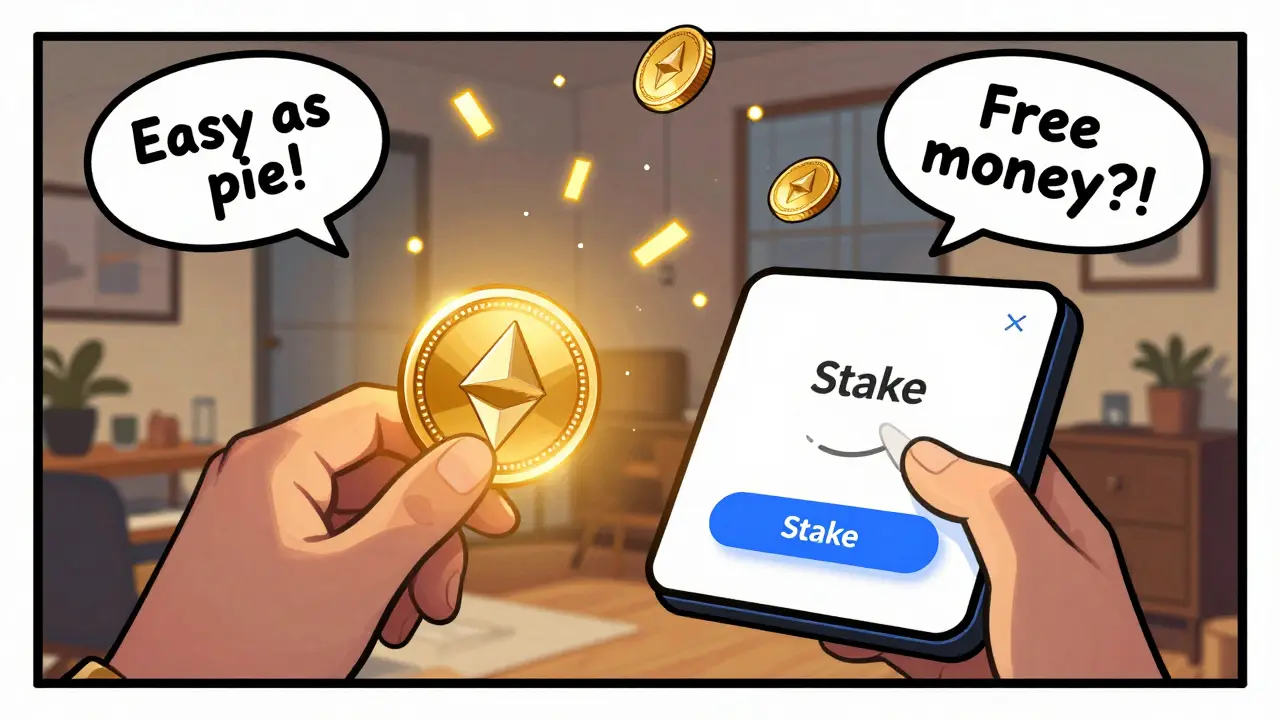
Staking crypto isn’t magic. It’s not even that complicated. At its core, it’s just locking up your cryptocurrency to help a blockchain network run smoothly - and getting paid for it. Think of it like putting money in a savings account, except instead of a bank, you’re helping secure a decentralized network like Ethereum, Polkadot, or Solana. And yes, you can earn real rewards - often weekly - just by holding your coins. But here’s the catch: not all staking is the same. Some methods are as easy as clicking a button. Others require server setup, technical know-how, and serious risk. If you’re new to this, you need to know what you’re signing up for before you lock your coins away. Let’s break it down step by step - no jargon, no fluff. Just what actually happens when you stake crypto, how to do it safely, and which way makes the most sense for you right now.
What Is Crypto Staking, Really?
Not every cryptocurrency lets you stake. Only blockchains that use proof-of-stake (PoS) or similar systems do. Bitcoin? No staking. Ethereum? Yes. Solana? Yes. Cardano? Yes. This matters because PoS replaced the old, energy-hungry mining system. Instead of computers racing to solve math problems, networks now pick validators based on how many coins they’re willing to lock up. When you stake, you’re essentially saying: "I trust this network. I’ll lock my coins to help verify transactions. In return, give me more coins." The network rewards you with new tokens - usually a percentage of your staked amount per year. That’s your APY (annual percentage yield). For example: - Staking 10 ETH might earn you 3-5% APY - so roughly 0.3-0.5 ETH per year. - Staking 500 SOL could net you 6-8% - about 30-40 SOL annually. These aren’t guaranteed. Rewards change based on network demand, total staked supply, and protocol updates. But historically, they’ve been consistent enough that people treat staking like a low-effort income stream.How Staking Works: The Five Basic Steps
If you’ve never staked before, here’s what you’ll actually do:- Pick a crypto that supports staking. Not all coins do. Stick to major ones: Ethereum (ETH), Solana (SOL), Polkadot (DOT), Cardano (ADA), or Cosmos (ATOM). Avoid obscure tokens - they’re risky and often don’t pay well.
- Buy the crypto. Get it from a reputable exchange like Coinbase, Kraken, or Bitpanda. You can’t stake coins you don’t own. And no, you can’t stake Bitcoin. Period.
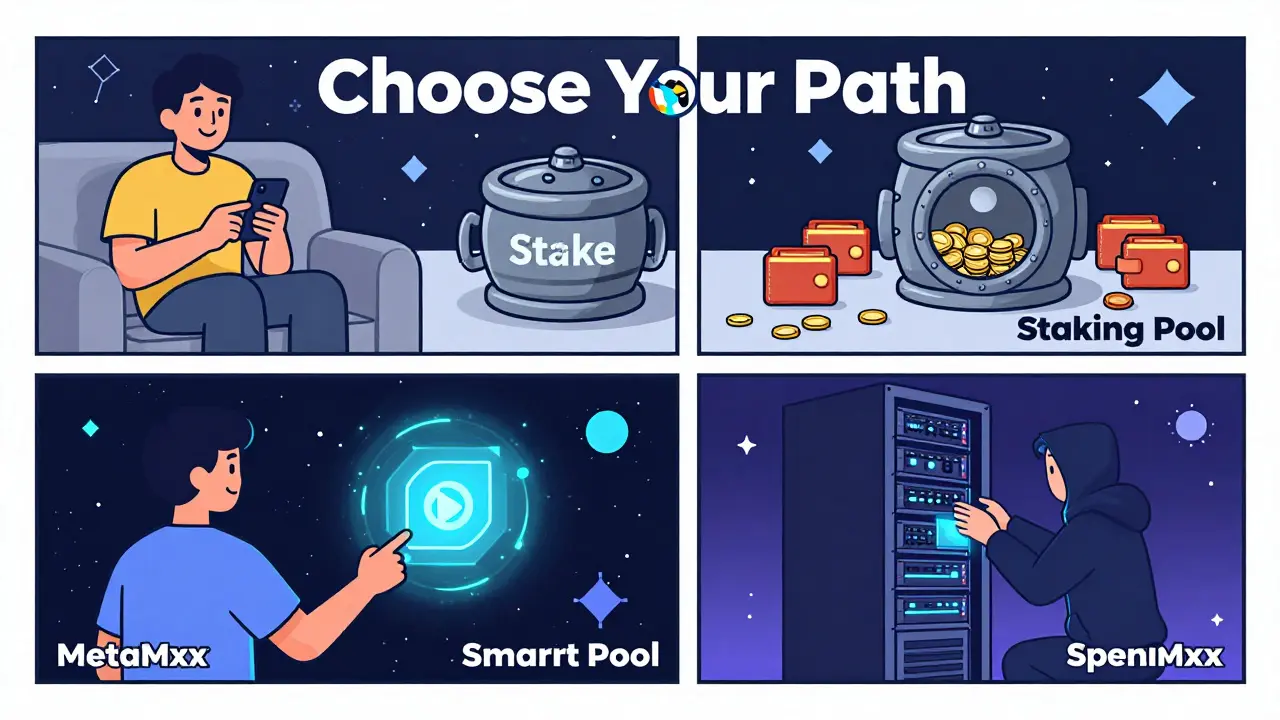
- Choose where to stake. This is the big decision. You have four main options: centralized exchanges, staking pools, decentralized platforms, or running your own validator. We’ll compare them next.
- Lock your coins. Click "Stake," confirm the transaction, and wait. Some platforms lock your funds for days. Others let you unstake anytime. Know the rules before you commit.
- Collect rewards. Rewards usually hit your wallet weekly or monthly. They’re automatic. You don’t need to do anything else.
Four Ways to Stake - Which One Fits You?
There’s no single "best" way. It depends on how much control you want, how tech-savvy you are, and how much risk you’re okay with.1. Centralized Exchange Staking (Easiest)
Platforms like Coinbase, Kraken, and Bitpanda let you stake with one click. You don’t need a wallet. You don’t need to understand blockchain. Just log in, click "Stake," and done. Pros: - Zero technical setup - Rewards auto-deposited - Simple mobile apps - No minimums (some let you stake as little as 0.001 ETH) - Customer support if something goes wrong Cons: - You don’t own your private keys. The exchange does. - If the exchange gets hacked, freezes, or shuts down - your staked coins vanish. - Rewards can be lower than other methods because the platform takes a cut. Real-world example: Kraken lets you stake ETH immediately after buying it. Rewards show up weekly. Bitpanda offers up to 25% APY on some tokens with no lock-up period - meaning you can withdraw anytime. That’s rare. Most platforms lock your coins for 18-24 hours minimum. Best for: Beginners, people who want simplicity, or anyone who doesn’t want to manage wallets.2. Staking Pools (Middle Ground)
Staking pools let you combine your coins with hundreds or thousands of others to meet minimum requirements. For example, Ethereum requires 32 ETH to run a validator solo. Most people can’t afford that. A pool lets you stake 0.1 ETH, and the pool operator handles the rest. You get rewards proportional to your share. If you put in 1% of the pool’s total, you get 1% of the rewards. Pros: - Low entry point (as little as $10) - You still control your private keys (if using a self-custodial wallet) - Higher rewards than exchanges Cons: - Pool operators take a fee (usually 5-15%) - You’re trusting the pool operator. If they get hacked or mismanage things, you lose. - Some pools have long withdrawal delays. Real-world example: A Polkadot staking pool with 10% APY on a $1,000 investment earns $100/year. That’s better than most bank accounts. But if the pool gets slashed (more on that below), you lose part of your stake. Best for: People who want better rewards than exchanges but aren’t ready to run their own node.3. Decentralized Staking (More Control)
This means using a wallet like MetaMask or Keplr to stake directly on a blockchain’s official protocol. You’re not trusting a company - you’re interacting with smart contracts. You need to: - Set up a non-custodial wallet - Understand gas fees - Approve transactions manually - Keep your seed phrase safe Pros: - Full ownership of your coins - No middleman fees (usually) - Higher potential rewards Cons: - One wrong click can lose your funds - No customer service - You’re responsible for everything Real-world example: Staking ADA directly through the Cardano wallet app. You click "Delegate," choose a pool, and confirm. No one else touches your coins. But if you lose your seed phrase? Gone forever. Best for: Intermediate users who’ve used crypto wallets before and value privacy.4. Run Your Own Validator (Advanced)
This is the hardcore route. You buy a server, install software, keep it running 24/7, monitor for errors, and handle updates. For Ethereum, you need 32 ETH (worth ~$100,000+ as of 2026) and a dedicated machine. Pros: - Highest rewards (no middleman cut) - Full control - Supports network decentralization Cons: - Requires serious tech skills - Costs money (server, electricity, maintenance) - Slashing risk is real - one mistake can erase part of your stake Real-world example: A user in Berlin runs an Ethereum validator. They earned 2.8 ETH in a year. But last month, their server went offline for 12 hours. They lost 0.03 ETH in penalties. That’s the cost of control. Best for: Technically skilled users with capital to spare. Not for beginners.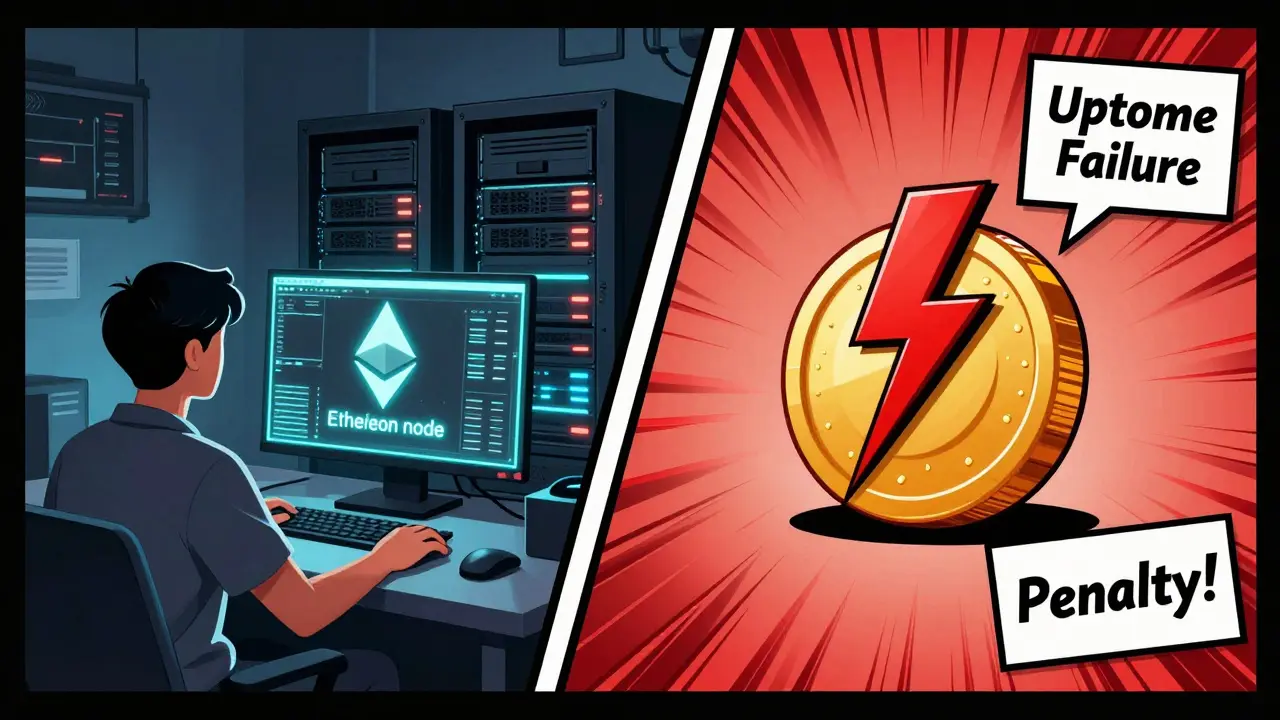
The Hidden Risks - What No One Tells You
Staking looks easy. But there are traps.Risk #1: Slashing
If you’re a validator (or in a pool), and you go offline, sign bad blocks, or double-sign transactions - you get penalized. That’s called slashing. You can lose 1-10% of your staked coins. It’s rare, but it happens. A poorly run pool or a misconfigured node can trigger it. How to avoid it: Use reputable validators. Check their uptime history. Avoid unknown pools.Risk #2: Lock-Up Periods
Some platforms lock your coins for 18-24 hours. Others lock them for 28 days. Ethereum’s withdrawal delay is 18 hours - but if you want to move your coins after unstaking, you might wait 1-7 days. That’s fine if the market is calm. Not so great if ETH crashes 30% and you can’t sell. Pro tip: Never stake money you might need in the next 30 days.Risk #3: Tax Implications
In New Zealand, staking rewards are treated as income. You pay tax on the value of the coins when you receive them - not when you sell. So if you earn 0.5 ETH worth $1,500, that’s taxable income. Keep records.Risk #4: Platform Failure
Remember Mt. Gox? Or FTX? Centralized exchanges have collapsed before. If you staked on one and they go under - your coins are gone. No recovery. No insurance. Rule of thumb: Never stake more than you’re willing to lose.How to Start Staking - A Simple Checklist
If you’re ready to try it, here’s your no-fluff action plan:- Start with ETH, SOL, or DOT - they’re stable, widely supported, and have good reward rates.
- Buy your crypto on Coinbase or Kraken - they’re reliable and easy.
- Use their built-in staking feature. Click "Stake," confirm, wait.
- Stake only what you can afford to lose - start with $100, not $10,000.
- Don’t rush into decentralized staking until you’ve used a wallet before.
- Track your rewards. Use a simple spreadsheet: Date | Coin | Amount Earned | Value at Receipt.
- Never share your seed phrase. Ever.
What’s Next? The Future of Staking
Staking is becoming standard. More blockchains are switching to PoS. More banks are exploring staking for clients. Even traditional finance is watching. Platforms are making it easier: no more 32 ETH minimums, no lock-ups, instant unstaking. But with ease comes risk. More people staking means more targets for hackers. More platforms mean more scams. The smart move? Start small. Learn one method. Stick with trusted names. Understand the risks. And never assume "it’s just crypto" - treat your staked coins like cash you’ve put in the bank.Frequently Asked Questions
Can you lose money staking crypto?
Yes. You can lose money through slashing (penalties for misbehavior), exchange hacks, or if the coin’s price drops while your funds are locked. Staking doesn’t protect you from market volatility. It only gives you extra tokens - not price stability.
Is staking crypto safe?
It’s safer than trading, but not risk-free. Centralized exchange staking is risky because you don’t control your keys. Decentralized staking is safer for your coins but harder to use. Running your own validator is the safest for the network but the riskiest for you if you make a mistake. Always research before you stake.
Do you need 32 ETH to stake Ethereum?
Only if you want to run your own validator. For everyone else - exchanges, staking pools, and decentralized platforms - you can stake any amount. As little as $10. The 32 ETH rule only applies to solo validators.
How often do you get staking rewards?
It varies. Exchanges like Kraken and Bitpanda pay weekly. Ethereum validators pay roughly every 6-8 days. Some blockchains pay daily. Always check the platform’s payout schedule before staking.
Can you unstake anytime?
Sometimes. Platforms like Bitpanda let you unstake immediately. Ethereum requires a 18-hour wait to initiate unstaking, then another 1-7 days to receive your coins. Always read the fine print - lock-up periods vary widely.
Is staking crypto worth it?
If you’re holding crypto long-term, yes. Staking turns idle coins into income. At 5-8% APY, it beats savings accounts. But don’t stake money you need for bills, emergencies, or market dips. Treat it like a side income - not a get-rich-quick scheme.



15 Comments
Elijah Young
February 13 2026Staking on exchanges is fine for beginners, but I always keep at least 50% in my own wallet. No way I'm trusting a corporation with my crypto. If you're serious about this, learn to use MetaMask or Keplr. It's not that hard.
Donna Patters
February 13 2026How quaint. You treat staking like a savings account. The market is not a bank. And neither is Ethereum. This naive optimism is precisely why retail investors get rekt.
Peggi shabaaz
February 15 2026Just started staking 50 SOL last week. Honestly? It feels weird to just sit and watch rewards trickle in. Like getting paid for doing nothing. But hey, if it’s free money and the network stays up, why not? I’m not gonna stress over 0.02% APY changes. Just keep it simple.
Desiree Foo
February 15 2026Anyone who stakes on centralized exchanges is essentially surrendering their financial sovereignty. This isn’t banking. This is crypto. If you don’t control your keys, you don’t own your assets. Period.
Robbi Hess
February 15 2026So… I just click "stake" and get paid? No catch? No fine print? No hidden fees? I’m suspicious. This feels like a pyramid scheme with better branding.
Keturah Hudson
February 17 2026In Nigeria, we call this "waiting for the market to wake up." Staking works because the network needs validators. It’s not magic. It’s math. And math doesn’t lie. But people? People lie. Always check who’s running the pool.
Brittany Meadows
February 19 2026Staking? LOL. Next they'll tell us Bitcoin will be backed by sunshine and good vibes. 🤡💸 The Fed’s gonna shut this down. Mark my words. Your "rewards" are just inflation in disguise. And your "security"? A server in Amsterdam with one sysadmin and a cat on the keyboard. 🐱
krista muzer
February 20 2026i just staked my ada like 3 months ago and honestly its been chill. i didnt even have to do anything. rewards just showed up. i thought i had to mine or something. turns out its just like putting money in a jar and someone else gives you extra coins every week. its kinda nice? like a little surprise every time i check my wallet. no stress. no drama. just coins. 🌿
blake blackner
February 20 2026Don’t let the hype fool you. Slashing is real. I lost 0.7 ETH because my node had a power glitch. No one helped. No refund. Just gone. If you’re not ready to troubleshoot Linux at 2am, don’t run your own validator. Stick to Kraken. It’s safer.
Andrea Atzori
February 20 2026As someone from Australia, I find it fascinating how Americans treat staking like a side hustle. Here, we view it as long-term wealth building. The APY isn’t the point. The decentralization is. Supporting a resilient network matters more than a 6% return.
Joe Osowski
February 22 2026Staking? More like paying the crypto elite to let you sit at their table. The rich get richer because they own the validators. You’re just feeding the machine. Wake up. This isn’t finance. It’s feudalism with blockchain.
Gaurav Mathur
February 22 202632 eth for validator? No. Only exchange. Exchange safe. People lie. Node bad. Power out. Server die. Coins gone. Better trust big company. They have money. They fix.
Jeremy Lim
February 22 2026Okay, but… what if… I just… don’t… care…? I mean… I’ve got my coins… they’re… locked… I’m… getting… rewards… and… I… haven’t… thought… about… it… since… last… Tuesday…
John Doyle
February 24 2026Just wanna say-this guide is actually really clear. I was scared to try staking because I thought I needed to be a coder. Turns out, clicking "stake" on Coinbase is all I needed. Got my first reward last week. It’s like finding $5 in your pocket. Small win. Feels good.
kelvin joseph-kanyin
February 26 2026Staking is the future. 🚀 Don’t sleep on it. Your coins are sleeping. Let them work. You’re not just holding-you’re building. Every validator is a brick in the new financial world. Go stake. Go build. Go win. 💪🔥