Payment Channels vs State Channels: How They Scale Blockchain Transactions
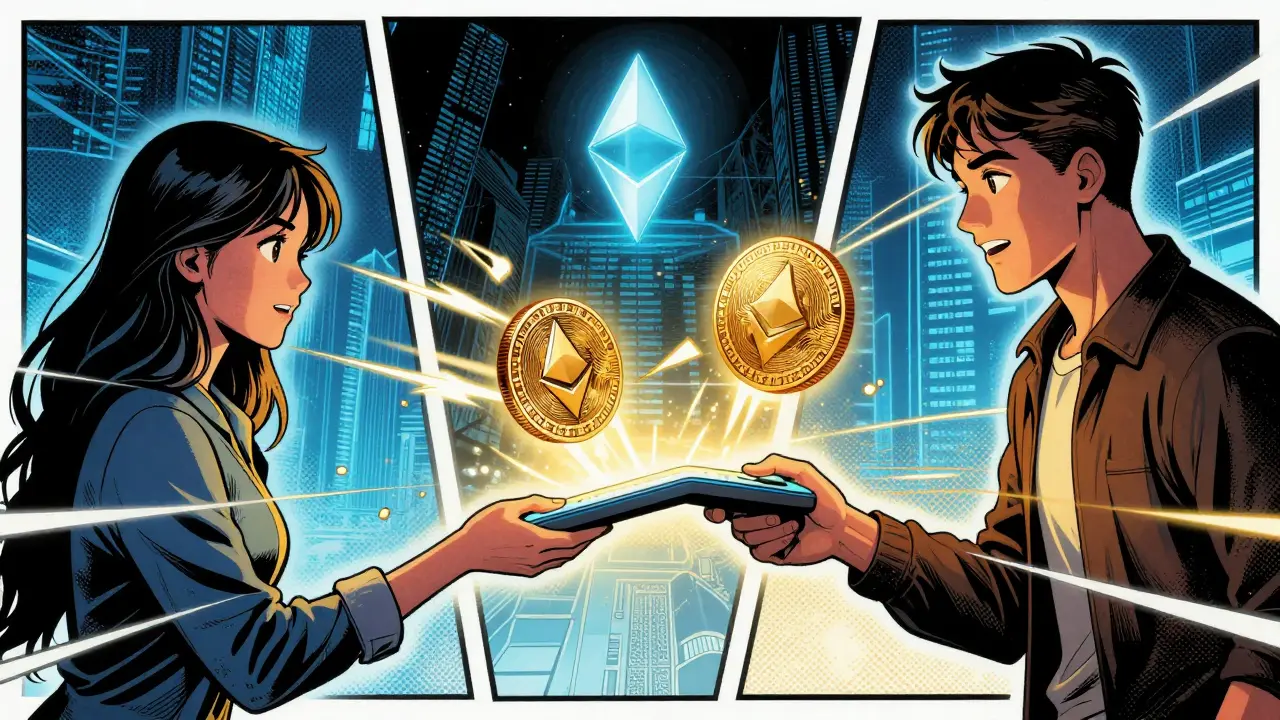
Imagine sending a dollar to a friend without waiting 10 minutes for confirmation, paying 1 cent in fees, or even touching the blockchain. That’s what payment channels and state channels do - they let you move value or data off the main blockchain, fast and cheap. But they’re not the same thing. One’s built for money. The other? It’s built for anything.
What Are Payment Channels?
Payment channels are simple: two people lock up funds on-chain, then trade money back and forth off-chain until they’re done. Think of it like a prepaid card you and a friend share. You both put $10 in. You pay them $3 for coffee. They pay you $1 for a book. You both sign each update. No blockchain needed. When you’re done, you settle the final balance - say, you owe them $6 - and that’s recorded on-chain once.The most famous example? The Lightning Network on Bitcoin. It uses Hashed Timelock Contracts (HTLCs) to make sure no one can cheat. If you send me a payment, I have to prove I received it before a timer runs out. If I don’t, you get your money back. It’s like a digital IOU with a deadline.
Payment channels can be unidirectional - one person pays the other, like a monthly subscription - or bidirectional, where money flows both ways, like a running account between neighbors. The beauty? You can do thousands of transactions for the price of two on-chain ones. No miners. No waiting. No $5 fee to send $0.50.
What Are State Channels?
State channels are payment channels’ smarter, more flexible cousin. Instead of just tracking balances, they track any kind of blockchain state. That means money, yes - but also game scores, NFT ownership, smart contract variables, or even domain names like ENS.Let’s say you and three friends play a decentralized chess game on Ethereum. Each move changes the game state. Instead of broadcasting every move to the blockchain (which would cost hundreds of dollars and take minutes), you all sign off-chain updates. Each new move invalidates the last. When you finish, you submit the final board state to the blockchain. Done. Thousands of moves. One on-chain transaction.
State channels use the same core idea as payment channels: mutual signatures, off-chain updates, and a dispute window. But they’re built on more complex smart contracts. If someone tries to submit an old state to steal your NFT, you have a time window to prove fraud by showing the latest signed state. The contract then slashes their deposit and rewards you.
Key Differences at a Glance
| Feature | Payment Channels | State Channels |
|---|---|---|
| Primary Use | Transferring cryptocurrency | Updating any blockchain state |
| Examples | Lightning Network (Bitcoin), Raiden (Ethereum) | State channels for gaming, ENS transfers, DeFi interactions |
| Locked Assets | Only native tokens (BTC, ETH) | Tokens, NFTs, domain names, contract data |
| Complexity | Lower - focused on balance updates | Higher - requires state validation logic |
| Scalability | Thousands of payments per second | Thousands of state changes per second |
| Dispute Mechanism | Timelock-based proof of receipt | Latest signed state submission |

Why They Matter for Blockchain Scaling
Ethereum handles about 15 transactions per second. Bitcoin? 7. That’s fine for banks. Not fine for apps where users click buttons 10 times a minute. On-chain transactions are slow and expensive. During peak times, gas fees spike to $50+. That kills real-time apps.Payment and state channels fix this by moving traffic off-chain. The blockchain only sees the opening and closing. Everything else? Private, instant, and nearly free. That’s why the Lightning Network now handles over 5,000 BTC per day - and growing. State channels power real-time blockchain games like CryptoKitties and decentralized marketplaces where users trade NFTs in seconds.
They’re not magic. You still need to lock up funds. You still need to stay online to monitor for fraud. But compared to paying $20 to send $10 on-chain? It’s a no-brainer.
Real-World Use Cases
Payment channels are perfect for:
- Micropayments - paying 1 cent per article read on a news site
- Recurring bills - your electricity provider deducts daily usage automatically
- Retail - buying coffee with crypto, no delay, no fee
- Content creators - fans tip instantly without waiting for confirmations
State channels shine in:
- Blockchain games - move pieces, update scores, trade items - all off-chain
- Decentralized finance (DeFi) - repeated swaps, margin adjustments, lending updates
- Enterprise DApps - private, fast contract interactions between known parties
- NFT marketplaces - listing, bidding, transferring ownership without gas fees
One company in Wellington, NZ, uses state channels to manage digital licenses for freelance designers. Instead of paying Ethereum gas every time a client updates a design file, they use a state channel. 500 updates. One on-chain settlement. Cost: $0.40.
Challenges and Trade-Offs
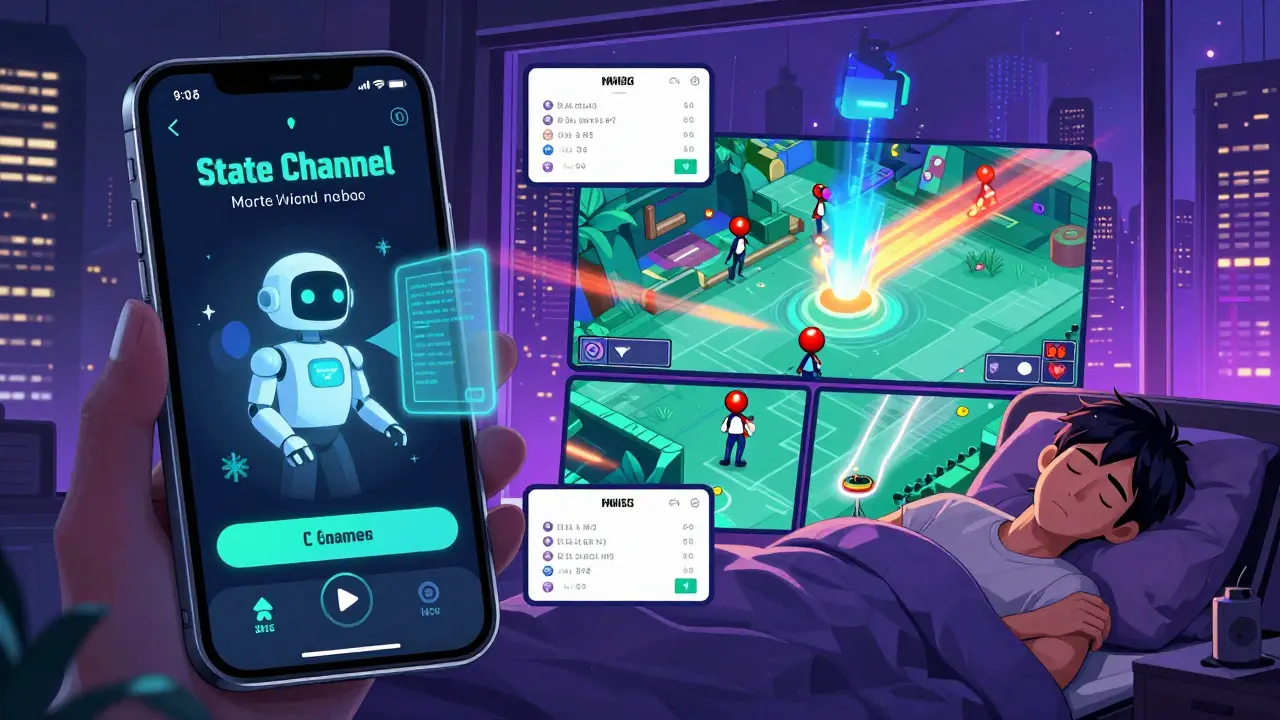
Neither solution works if you’re not online. If you’re asleep and someone tries to close your channel with a fake balance, you’ve got a window - maybe 24 hours - to dispute it. Miss it, and you lose. That’s why wallet apps now run background monitors.
Also, you need to lock up funds. That’s capital you can’t use elsewhere. If you’re sending $100 to a friend, you lock $100. You can’t lend it, stake it, or use it in another app. That’s a liquidity hit.
Payment channels have another problem: routing. If you don’t have a direct channel to the person you want to pay, you need a path through intermediaries. The Lightning Network solves this with multi-hop routing - but if one node goes offline, the payment fails. It’s like trying to send a letter through five friends, and one of them quits.
State channels require more code. Writing a smart contract that handles NFT transfers, token swaps, and game logic? That’s hard. Fewer developers can build them. That’s why payment channels came first - and are more common.
The Bigger Picture: Layer 2 and Beyond
Payment and state channels aren’t the only layer 2 solutions. Rollups (like zkSync and Optimism) are gaining ground because they don’t require participants to stay online. But they’re more complex to verify. Sidechains have their own security models - and often sacrifice decentralization.
Channels win where speed, privacy, and direct peer interaction matter. They’re the most decentralized layer 2 option. No centralized sequencers. No trusted third parties. Just cryptography and mutual trust.
As wallets get smarter and mobile apps integrate channel monitoring automatically, the friction will drop. We’re already seeing it: apps like Phoenix Wallet and Breez let you use Lightning with one tap. Soon, you won’t even know you’re using a channel.
What’s Next?
Future upgrades will focus on:
- Automated channel management - wallets opening/closing channels on your behalf
- Channel liquidity pools - third parties lend locked funds so you don’t need to lock your own
- Hybrid systems - state channels feeding into rollups for final settlement
- Cross-chain channels - moving value between Bitcoin and Ethereum without bridges
The goal? Make layer 2 invisible. You just pay. You just play. You just interact. The blockchain? It’s there, quietly settling the final balance.
Are payment channels and state channels the same thing?
No. Payment channels are a subset of state channels. All payment channels are state channels, but not all state channels are for payments. Payment channels only track balances. State channels can track any blockchain state - game progress, NFT ownership, contract variables - anything that changes over time.
Do I need to be online all the time to use a channel?
Yes, for security. If someone tries to cheat by submitting an old state, you need to respond during the dispute window - usually 24 to 72 hours. If you’re offline, you can’t prove fraud, and you might lose funds. Some wallets now run background monitors, but it’s still your responsibility.
Can I use payment channels on Ethereum?
Yes. The Raiden Network was built for Ethereum, though it’s less popular than Lightning on Bitcoin. Many newer projects now use state channels for Ethereum-based apps instead, since they’re more flexible. Lightning-style channels are possible, but state channels are the go-to for Ethereum use cases beyond simple payments.
How much does it cost to open a channel?
Only the initial on-chain transaction cost - usually $1 to $5 on Ethereum or Bitcoin, depending on network congestion. After that, off-chain transactions are free. You also lock up funds equal to your channel balance. So if you open a $100 channel, $100 is tied up until you close it.
Are state channels secure?
Yes, if used correctly. Security comes from cryptographic signatures and dispute windows. If someone tries to submit an outdated state, you can prove it’s fake by showing the latest signed version. The smart contract then penalizes the cheater. But if you don’t monitor your channel, you’re vulnerable. It’s not foolproof - just as secure as your own vigilance.
What’s better: state channels or rollups?
It depends. Rollups (like zkSync) don’t require users to stay online and handle more complex logic. But they rely on centralized sequencers and are harder to verify. State channels are more decentralized, faster for direct peer interactions, and offer true privacy. If you’re transacting with someone you know, state channels win. If you’re interacting with a public app, rollups might be easier.
Final Thoughts
Payment channels are the quiet workhorses of crypto micropayments. State channels are the hidden engines behind blockchain games and DeFi apps. Both solve the same problem - blockchain’s slow, expensive base layer - but in different ways. One is for money. The other is for everything else.
They’re not perfect. But they’re the most decentralized, trustless way to scale. And as wallets get smarter, they’ll become invisible. You won’t think about channels. You’ll just pay. You’ll just play. And the blockchain? It’ll be there, quietly doing its job - settling the final truth, one transaction at a time.



20 Comments
Shawn Roberts
January 1 2026This is literally the most boring thing I've read all week. Can we just use crypto to buy coffee already?
Phil McGinnis
January 2 2026The fundamental flaw in all layer-2 solutions is the assumption that users will remain vigilant. Human beings are not cryptographic nodes. We forget. We sleep. We get distracted. And when we do, the system punishes us with irreversible loss. This is not scalability. It is social engineering disguised as innovation.
prashant choudhari
January 3 2026State channels are superior for complex interactions. Payment channels are just a subset. The architecture is elegant but underutilized due to poor tooling.
Alex Strachan
January 3 2026So you're telling me I have to stay awake to not get robbed by a bot? 😅 I'll just stick to PayPal. At least they don't ghost me after 24 hours.
Bianca Martins
January 5 2026I used a state channel for an NFT trade last week. 12 bids, 3 counteroffers, final transfer - all off-chain. Total cost: $0.38. My gas fee on-chain was higher than my coffee that day.
Josh Seeto
January 7 2026You're all missing the point. Payment channels are dead. Lightning is a glorified wire transfer with existential dread. State channels are the real future - but only if you're willing to write your own smart contracts. Most devs won't touch them.
Andy Reynolds
January 9 2026Let’s be real - if you’re building something that needs to move faster than a blockchain can blink, you don’t need a PhD in cryptography. You need a channel. And if you’re still arguing about whether it’s 'decentralized enough,' you’re probably the same person who still thinks 'trustless' means 'no one can lie.' Spoiler: they can. You just have to catch them before they run.
Elisabeth Rigo Andrews
January 10 2026The liquidity problem is the silent killer. Locking $100 to send $5 is not a feature - it's a bug disguised as a protocol. Until we have decentralized liquidity pools that don't require KYC, this tech stays in the basement with the ASIC miners.
Brandon Woodard
January 11 2026I appreciate the technical depth - truly. But let’s not pretend this is accessible. Most people can’t even spell 'smart contract.' How are they supposed to monitor off-chain state changes? This isn’t scaling. It’s elitist engineering.
Khaitlynn Ashworth
January 13 2026Oh wow. Another whitepaper masquerading as a blog post. Let me guess - you're the one who thinks 'decentralized' means 'I don't have to talk to customer service.' Congrats. You've invented the digital equivalent of a trust fall with a $5 gas fee.
Daniel Verreault
January 15 2026state channels are the real MVP here. i mean, imagine playing chess on chain - $5 per move? no thanks. we got a dev team in vancouver using this for digital art licenses. 500 updates, $0.40. it's wild how simple it gets when you stop overcomplicating it.
Bruce Morrison
January 15 2026The real win here isn't the tech. It's the psychology. People don't care how it works. They care that it's fast and free. That’s the only metric that matters.
Johnny Delirious
January 16 2026The architectural elegance of state channels is undeniable. Their cryptographic underpinnings, rooted in verifiable state transitions and adversarial resilience, represent a paradigmatic shift from transactional to relational consensus models. One must appreciate the ontological weight of this innovation.
Emily L
January 16 2026So I’m supposed to stay awake just so I don’t lose my money to some hacker? That’s not innovation. That’s just being paranoid with extra steps. I’m out.
surendra meena
January 17 2026I TOLD YOU ALL THIS WAS A SCAM!!! THE BLOCKCHAIN ISN'T FOR PAYMENTS!!! THEY WANT YOU TO LOCK YOUR MONEY SO THEY CAN STEAL IT LATER!!! I SAW A VIDEO ON TIKTOK AND NOW I KNOW THE TRUTH!!!
Kevin Gilchrist
January 17 2026I just spent 3 hours watching a guy explain how to monitor a channel on his phone. I cried. Not because I understood it - because I realized I’m not smart enough to be part of this future. And honestly? I’m okay with that.
Mandy McDonald Hodge
January 19 2026i used a lightning channel to tip my favorite podcaster $0.25 after a great episode. it was instant. no fees. i felt like a crypto wizard. 🤖✨
Adam Hull
January 21 2026The entire layer-2 movement is a Ponzi scheme disguised as open-source software. You lock your funds. You trust strangers. You monitor your wallet like a prison guard. And for what? To save $4.99 in gas fees? The real innovation is the marketing department.
Ian Koerich Maciel
January 22 2026The elegance of this architecture lies not in its complexity, but in its restraint. By limiting the scope of on-chain interaction to only the initiation and termination of state transitions, the system achieves both efficiency and cryptographic integrity. One must admire the discipline required to design such a constrained yet powerful mechanism.
Rick Hengehold
January 22 2026Stop overthinking it. If you can’t use it without reading a 10-page whitepaper, it’s not ready. Just make it work. People don’t want theory. They want to pay for coffee without waiting.