Peanut.Trade (NUX) Airdrop Details: History, Tokenomics, and Current Status
Remember the summer of 2021? The crypto market was buzzing, and every project seemed to be handing out free tokens. If you were active on CoinMarketCap back then, you might have seen an offer for Peanut.Trade, also known as NUX. You added it to your watchlist, joined their Telegram groups, and waited. Now, in May 2026, many people are asking: what happened to those tokens? Did I miss something? Is there still value left?
The short answer is that the major public airdrop campaign for Peanut.Trade concluded in August 2021. There are no new large-scale airdrops currently running through CoinMarketCap or other major aggregators. However, understanding what happened to the NUX token requires looking at its unique technology, its dramatic price journey, and where it stands today. This guide breaks down the historical details, the tech behind the protocol, and the current reality of holding NUX.
How the 2021 Peanut.Trade Airdrop Worked
To understand the context, we need to look back at how the distribution actually happened. The primary event was a coordinated marketing push via CoinMarketCap. This wasn't just a random giveaway; it was a structured campaign designed to build community engagement.
Here is exactly what participants had to do to qualify:
- Add to Watchlist: Users had to add the NUX token to their main CoinMarketCap watchlist.
- Social Media Engagement: Participants needed to join the Peanut Telegram group (
t.me/peanuttrade) and the announcement channel (t.me/peanutann). - Follow on Twitter: Following the official account (@PeanutTrade) was mandatory.
- Registration: Completing a specific registration form on the CoinMarketCap platform sealed the entry.
The pool consisted of 71,000 NUX tokens, valued at approximately $22,000 USD at the time. These tokens were distributed among 2,000 winners. Each winner could receive up to 35.50 NUX. The winners were announced on August 27, 2021, with distributions processed between August 27 and August 31, 2021. If you participated back then, you likely received your tokens by late August 2021. If you didn't participate, this specific opportunity has passed.
What is Peanut Protocol? (The Tech Behind NUX)
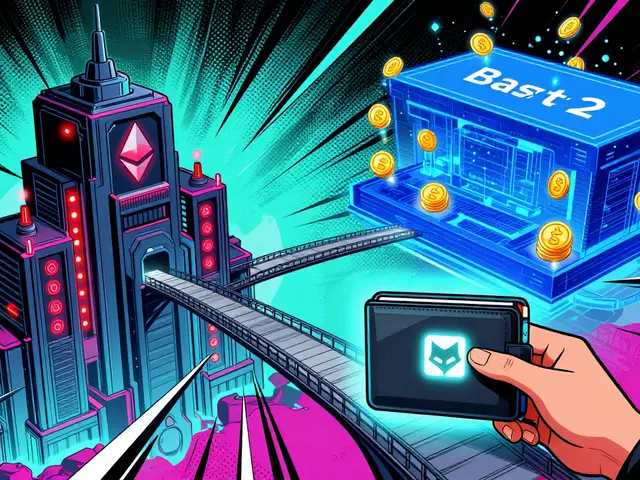
Why did anyone care about NUX in the first place? It wasn't just hype. Peanut.Trade aimed to solve a real problem in decentralized finance (DeFi): slippage and bot exploitation.
Most decentralized exchanges use Automated Market Makers (AMMs). While convenient, AMMs often suffer from high slippage when large trades occur. Worse, they are vulnerable to "MEV bots" (Maximal Extractable Value bots) that front-run regular traders, eating up profits before you can execute your trade.
Peanut’s solution was a hybrid approach. Instead of putting all assets into a standard DEX like Uniswap, Peanut split its liquidity:
- 90% to DEX: The majority of assets went to standard decentralized exchanges to provide baseline liquidity.
- 10% to Balancer: The remaining portion went to an intermediary mechanism. This part actively balanced prices between decentralized exchanges (DEXs) and centralized exchanges (CEXs).
This architecture was designed to minimize price discrepancies. By arbitraging between CEXs and DEXs automatically, the protocol aimed to keep prices stable and reduce the window of opportunity for predatory bots. In theory, this meant better execution prices for regular traders. However, innovative tech doesn't always guarantee market success.
Token Generation and Vesting Schedule
Understanding the supply dynamics is crucial for any investor. The Token Generation Event (TGE) for Peanut occurred on February 15, 2021. Unlike some projects that dump all tokens at once, Peanut implemented a strict vesting schedule to control inflation.
| Milestone / Attribute | Details |
|---|---|
| TGE Date | February 15, 2021 (02:06 UTC+3) |
| Initial Unlock | 3.5% of total supply |
| Vesting Period | Linear unlock over 700 days (~23 months) |
| Total Raised | $7.96 million across 5 rounds |
| Funding Rounds | IEO, Token Launch, 3 undisclosed rounds |
The linear unlocking meant that the remaining 96.5% of tokens were released daily over roughly two years. This gradual release was intended to prevent massive sell-offs by early investors and team members. By mid-2023, the vesting period would have largely concluded, meaning most circulating supply was already in the market.

Price Performance: From Peak to Present
This is the part that hurts for many holders. The price action of NUX tells a story of extreme volatility followed by a long decline.
At its peak, NUX reached an all-time high of $31.69. That was a massive number for a utility token. If you held the maximum 35.50 NUX from the airdrop during that peak, your allocation was worth over $1,100 USD. That kind of return turns heads.
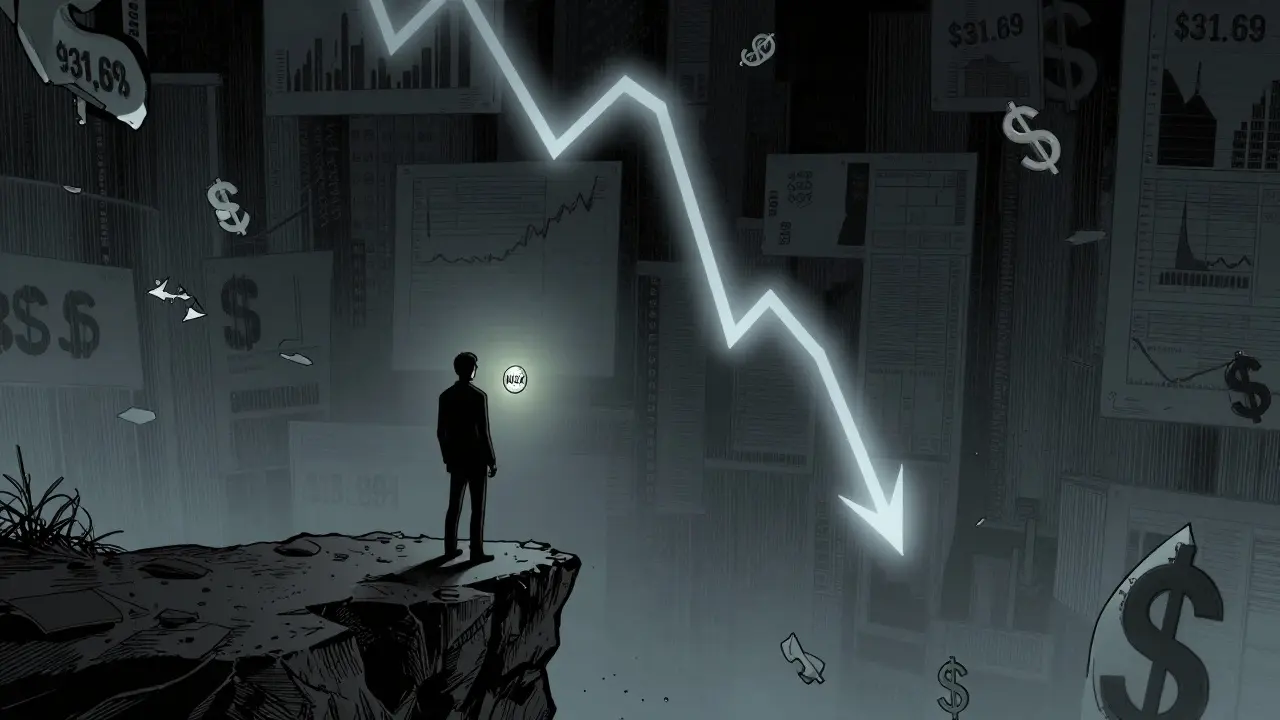
However, the crypto market is cyclical, and not all projects survive the bear markets. As of recent data leading into 2026, NUX has experienced a severe depreciation. Current trading prices hover around $0.0042. This represents a decline of approximately 99.99% from its all-time high.
Let's look at the numbers clearly:
- All-Time High: $31.69
- Current Price (Approx.): $0.0042 - $0.0050
- Circulating Supply: 50,000,000 NUX
- Market Cap: ~$210,000 USD
The drop isn't just bad luck; it reflects broader trends in the DeFi sector. Many niche protocols that relied on complex arbitrage mechanisms struggled to maintain user interest as larger, more established platforms like Uniswap and Curve improved their own interfaces and fee structures. Additionally, the rise of Layer 2 solutions shifted liquidity away from Ethereum-based legacy protocols, further squeezing smaller competitors.
Where Can You Trade NUX Today?
If you still hold NUX from the airdrop or bought in later, you might wonder where to go next. Liquidity is thin, but options exist.
The primary venue for trading NUX is Gate.io. This centralized exchange handles the bulk of the volume. The NUX/USDT pair typically sees daily volumes ranging between $60,000 and $80,000. For those preferring decentralized options, Uniswap V2 on the Ethereum network remains an option, though slippage can be high due to lower liquidity depth compared to major pairs. LATOKEN also lists the asset, providing another CEX alternative.
When trading low-cap tokens like NUX, always check the order book depth before placing large orders. With a market cap under $250,000, even moderate sell pressure can move the price significantly.
Future Predictions: Hype vs. Reality
Online prediction sites often generate wild forecasts to attract clicks. It is important to separate these algorithmic guesses from fundamental analysis.
Some models, like those from CoinLore, suggest potential rebounds to $1.80 by 2026 or even higher in subsequent years. These predictions usually rely on historical patterns from previous bull markets, assuming that all altcoins will repeat past cycles. However, they often ignore the specific health of the project.
More conservative analyses, such as those from CoinCodex, project much modest movements, staying within the $0.003-$0.006 range. These models factor in technical indicators like the Relative Strength Index (RSI) and Moving Average Convergence Divergence (MACD), which currently show weak momentum.
Ask yourself: Does Peanut.Trade still have active development? Are there new partnerships? Is the user base growing? Without strong fundamental drivers, price predictions based solely on chart patterns are speculative at best. The divergence between optimistic long-term forecasts ($28+ by 2041) and current reality ($0.004) highlights the extreme risk associated with micro-cap tokens.
Key Takeaways for Investors
If you are reading this because you missed the 2021 airdrop, don't worry-you didn't lose much. The window for that specific free distribution is closed. If you are a holder, here is your situation:
- No New Major Airdrops: Do not fall for scams claiming a "new Peanut airdrop." The legitimate campaign ended in 2021.
- High Risk Asset: NUX is a highly speculative asset with a 99.99% loss from ATH. Treat it as a lottery ticket, not a savings account.
- Liquidity Concerns: Trading volume is low. Exiting large positions may require patience or accepting significant slippage.
- Monitor Development: Check the official Telegram and GitHub repositories. If development has stalled, the token's future prospects dim further.
The crypto market rewards patience and research, but it punishes hope without evidence. Peanut.Trade was an interesting experiment in price balancing, but the market has largely moved on. Keep your eyes on newer DeFi innovations that address current pain points, rather than chasing the ghosts of 2021.
Is there still a Peanut.Trade airdrop available in 2026?
No. The major public airdrop campaign for Peanut.Trade (NUX) took place in August 2021 via CoinMarketCap. There are no active large-scale airdrops for NUX currently. Be wary of any websites or messages claiming otherwise, as they are likely scams.
How much was the Peanut airdrop worth at its peak?
Winners received up to 35.50 NUX tokens. When NUX hit its all-time high of $31.69, this maximum allocation was worth approximately $1,125 USD. However, the average value at the time of distribution in August 2021 was closer to $0.31 per token, making the initial payout worth around $11 USD.
Where can I buy or sell NUX tokens now?
The primary exchange for NUX is Gate.io. You can also find liquidity on LATOKEN and Uniswap V2 (Ethereum network). Due to low market capitalization, expect limited liquidity and potential slippage when trading.
What is the current price of NUX?
As of recent data in 2026, NUX trades at approximately $0.0042 USD. This represents a significant decline from its all-time high of $31.69. Prices fluctuate daily based on low trading volumes.
Does Peanut.Trade still operate its protocol?
While the token exists and trades on exchanges, the prominence of the Peanut protocol has diminished significantly. Always verify current activity by checking their official social media channels and documentation before investing any funds.