Play-to-Earn Gaming Economics: How Players Earn Real Money in Web3 Games
Play-to-Earn Earnings Calculator
Estimate Your Play-to-Earn Income
Enter your details to see realistic earnings estimates based on current market conditions.
 Axie Infinity (SLP)
$4.00/hour
Axie Infinity (SLP)
$4.00/hour
 Splinterlands
$2.50/hour
Splinterlands
$2.50/hour
 Thetan Arena (THT)
$1.80/hour
Thetan Arena (THT)
$1.80/hour
 Alien Worlds (TRX)
$0.75/hour
Alien Worlds (TRX)
$0.75/hour
Important: This is an estimate only. Real earnings vary based on market conditions, game updates, and individual skill. Play-to-earn is not a guaranteed income stream.
Estimated Monthly Earnings
Enter your details above to see your estimated earnings
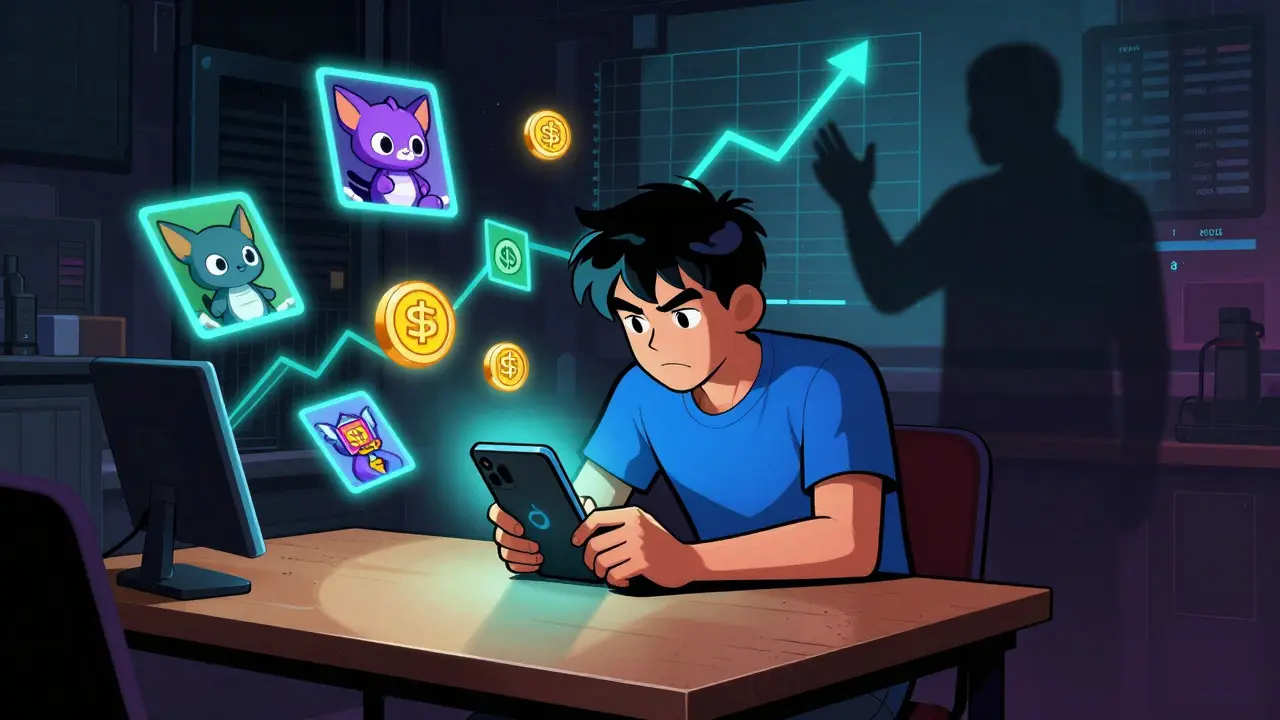
Most people think video games are just entertainment. You spend money on skins, levels, or subscriptions-and that’s it. But what if playing could actually put money in your pocket? That’s the reality of play-to-earn gaming. It’s not a gimmick. It’s a working economic system built on blockchain, where your time, skill, and strategy translate into real-world value. And it’s already changing how millions of people around the world think about work, income, and digital ownership.
How Play-to-Earn Actually Works
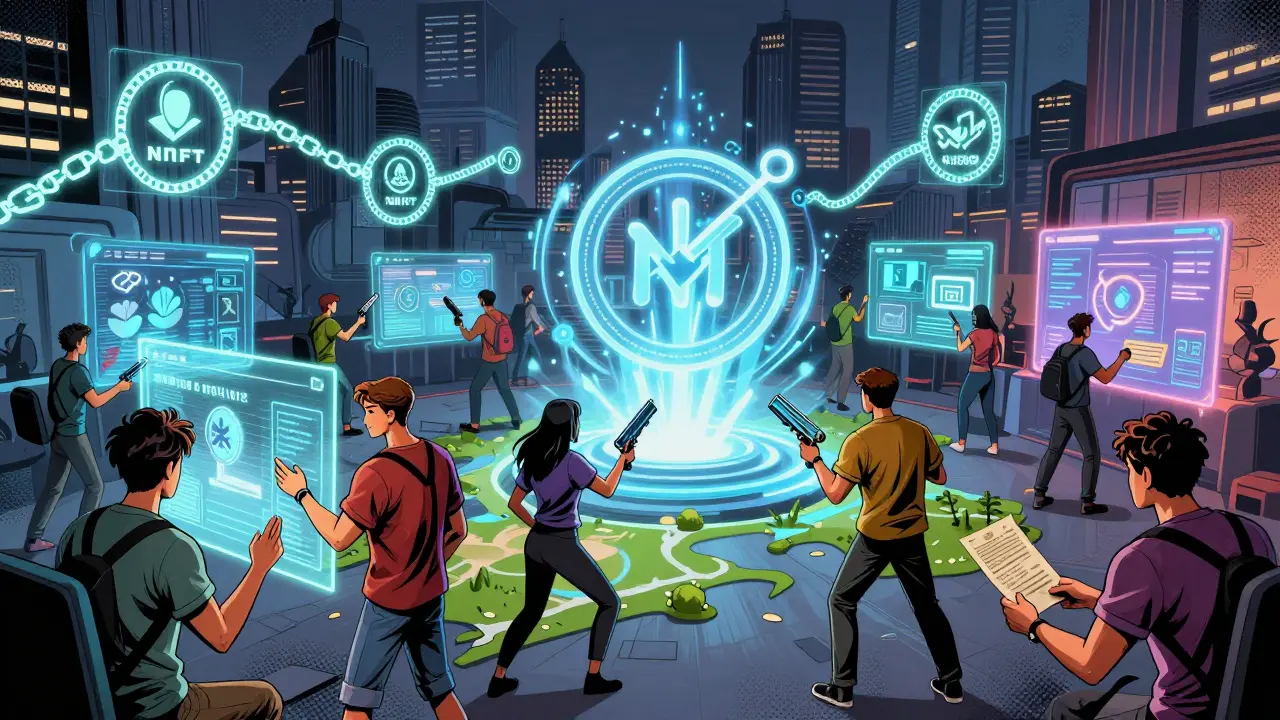
At its core, play-to-earn (P2E) flips the script. Instead of paying to play, you play to earn. You don’t just unlock a rare sword in a game-you own it. Not as a digital license, but as a non-fungible token (NFT) stored on a blockchain. That means you can sell it, rent it, or trade it outside the game. The same goes for in-game currency. These aren’t points or credits. They’re tokens, often built on Ethereum, Polygon, or Solana, that have real market prices.
Every action in these games has economic weight. Defeat a boss? You get tokens. Complete a daily quest? More tokens. Breed a rare creature? You get a new NFT to sell. Win a tournament? A limited-edition skin drops into your wallet. All of this is automated through smart contracts-self-executing code that handles rewards, ownership, and transactions without a middleman.
Take Axie Infinity, one of the earliest and most well-known P2E games. Players collect and breed digital creatures called Axies, each an NFT. They use them to battle other players and earn Smooth Love Potion (SLP), a utility token. SLP can be traded on exchanges for Bitcoin, Ethereum, or even local currency. In the Philippines, where average monthly wages hover around $300, top players were earning $500-$1,000 a month just by playing. That’s not a side hustle. That’s a livelihood.
Who Makes Money in P2E?
It’s not just players. Developers make money too-but differently than in traditional games. In regular games, revenue stops after you buy the game or a DLC. In P2E, the money keeps flowing because of royalties. Every time an NFT you bought changes hands, the original creator gets a cut. If a developer sets a 5% royalty on a character NFT, they earn 5% every time that NFT is resold-even years later.
That creates a powerful incentive: developers need the game to stay alive, trading to stay active, and players to keep earning. If the economy collapses, no one wins. So good P2E games invest in balance. They tweak token supply, adjust reward rates, and introduce new mechanics to keep the system stable.
There are also players who don’t play at all-they’re called scholars. In countries like Vietnam and Indonesia, players with capital buy NFTs and lend them to others who play. The scholar gets a share of the earnings. It’s like owning a taxi and hiring a driver. This model has opened P2E to people who can’t afford the upfront cost of NFTs, which can range from $50 to over $1,000 depending on the game.
The Hidden Costs of Playing to Earn
Don’t get fooled. This isn’t free money. There are real costs.
First, you need a crypto wallet-MetaMask, Phantom, or Trust Wallet. Then you need to buy cryptocurrency to pay for gas fees (transaction costs on the blockchain). These can spike during peak hours. A single NFT purchase might cost $10-$30 in fees alone.
Second, many P2E games require you to buy NFTs just to start playing. If you can’t afford a starter Axie, you can’t earn. That’s why some games now offer free-to-play modes or rental systems. But even then, you’re still dependent on someone else’s NFTs-and their rules.
Third, the market is volatile. Tokens can crash. NFTs can lose value. A skin worth $200 one month might be worth $20 the next. Players who treat this like a lottery often lose money. Those who treat it like a business-tracking prices, timing sales, managing risk-do better.
And don’t forget time. Top earners spend 6-10 hours a day playing. It’s not passive income. It’s a job. You need to understand game mechanics, market trends, and tokenomics. You’re not just a gamer. You’re a trader, a strategist, and a digital asset manager.
Why This Isn’t Just a Fad
Some say P2E is a bubble. Maybe. But look at the numbers. The market is projected to hit $6.3 billion by 2031, growing at over 21% a year. That’s faster than mobile gaming did in its early days.
Why? Because it solves a real problem: people in developing economies need income. Traditional jobs are scarce. Remote work is limited by infrastructure. But if you have a smartphone, internet, and a little patience, you can earn through P2E. It’s not perfect, but it’s accessible.
And it’s spreading. Games like The Sandbox and Splinterlands now let you earn by owning virtual land, hosting events, or creating content. You’re not just playing-you’re building. And that land? It’s an NFT. You can sell it. Lease it. Build on it. It’s like owning real estate, but in a digital world.
Even big companies are watching. Ubisoft, EA, and Square Enix have all filed patents for blockchain-based game economies. They’re not jumping in yet-but they’re testing the waters. That’s a sign this isn’t going away.
What You Need to Get Started
If you’re curious, here’s what you actually need:
- A crypto wallet (MetaMask is easiest for beginners)
- Some cryptocurrency (usually ETH, MATIC, or SOL) to pay for gas fees
- A game that supports P2E (start with free-to-play options like Alien Worlds or Thetan Arena)
- A basic understanding of NFT marketplaces like OpenSea or Magic Eden
- Patience and discipline
Don’t rush in. Start small. Play for a week. See how much you earn. Track your costs. Don’t invest more than you can afford to lose. Treat it like a side project, not a get-rich-quick scheme.
The best P2E players aren’t the ones who bought the most NFTs. They’re the ones who learned the system, tracked the trends, and played smart. They treat their wallet like a business ledger. They know when to sell, when to hold, and when to walk away.
The Future of Play-to-Earn
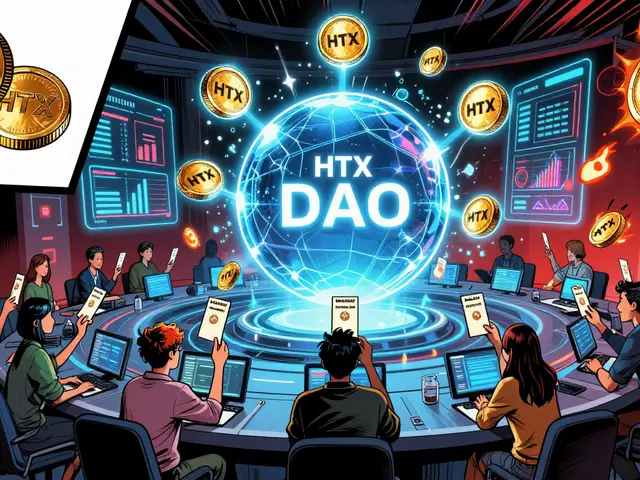
The next phase of P2E won’t just be about earning. It’ll be about ownership. Imagine playing a game where you own the rules, the economy, and even the developer’s revenue stream through governance tokens. That’s already happening in some DAO-governed games. Players vote on updates, fee structures, and new features. The community controls the game.
Regulation is coming. Governments are watching. The SEC, EU, and others are debating whether P2E tokens are securities. That could change everything. Some games may shut down. Others will adapt. The ones that survive will be the ones built on transparency, sustainability, and real utility-not hype.
One thing’s clear: the line between play and work is disappearing. In 2025, your gaming time can pay your rent. Your NFTs can be your savings. Your skill can be your job. And for the first time in history, the players-not just the companies-own the value they create.
This isn’t the future. It’s happening now. And if you’re still treating games like toys, you’re missing the biggest shift in digital economies since the smartphone.
Can you really make a living from play-to-earn games?
Yes, but not easily. Players in countries like the Philippines, Vietnam, and Nigeria have turned P2E into their primary income. Some earn $300-$1,000 a month by playing 6-8 hours daily. But this requires deep knowledge of the game’s economy, consistent play, and smart trading. It’s not passive income-it’s a job. Most people don’t make enough to live on, especially in high-cost regions. Success depends on skill, time, and understanding tokenomics-not luck.
Do you need to buy NFTs to play P2E games?
Not always. Many newer P2E games offer free-to-play modes with limited assets. But to earn at a high level, you usually need NFTs-like characters, weapons, or land. These can cost anywhere from $50 to over $1,000. Some players rent NFTs from owners (called scholars) and split earnings. This lowers the barrier but adds complexity. If you can’t afford an NFT, start with free-to-play games and learn the system before investing.
Are P2E games safe from scams?
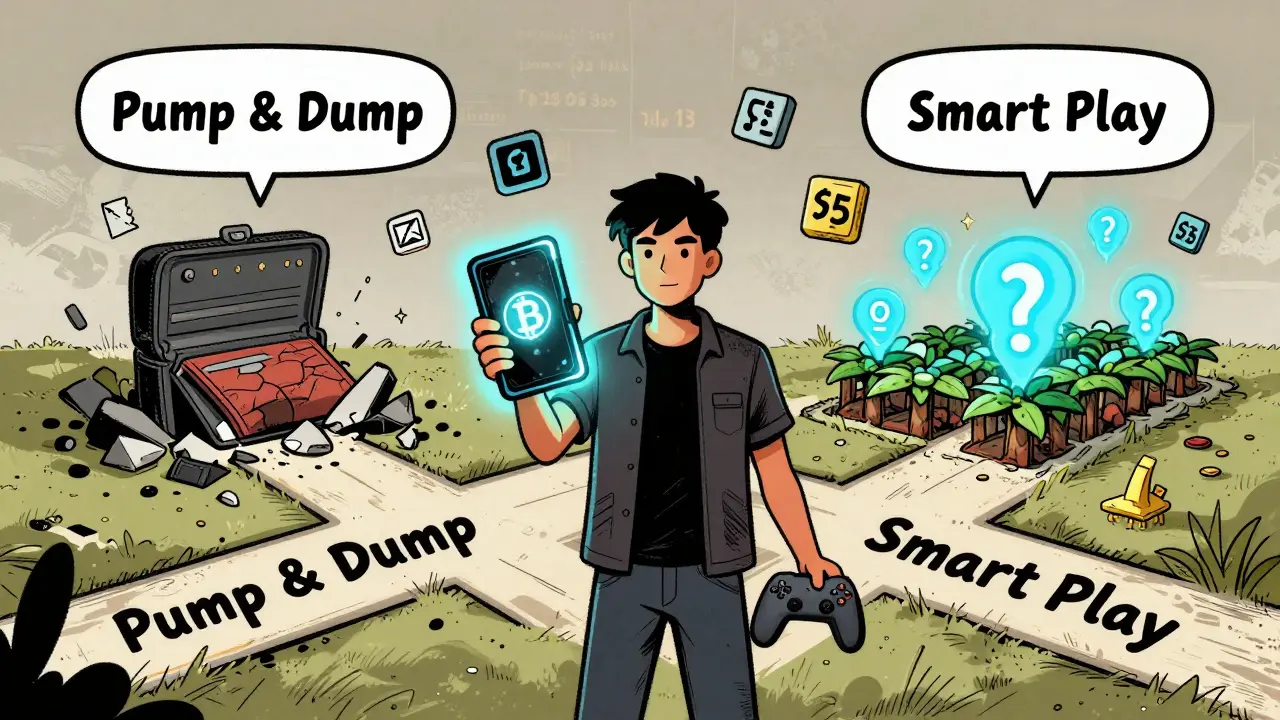
Many are not. A lot of P2E projects are pump-and-dump schemes. They promise high returns, attract players with flashy ads, then vanish when the token crashes. Red flags include no clear roadmap, anonymous teams, and unrealistic reward rates. Always check if the game has been around for over a year, has active community forums, and publishes transparent tokenomics. Stick to well-known titles like Axie Infinity, The Sandbox, or Splinterlands until you’re confident.
What happens if the value of my in-game tokens drops?
You lose money. Token prices in P2E games are tied to supply, demand, and market sentiment. If too many players sell at once, prices crash. This happened to Axie Infinity’s SLP token in 2022, dropping over 90% in months. Smart players cash out gradually, diversify earnings, or hold NFTs as long-term assets. Never assume your earnings will stay stable. Treat tokens like stocks-monitor trends, set profit targets, and know when to exit.
Is play-to-earn legal?
It’s complicated. In most countries, earning crypto through gameplay is legal, but taxes apply. In the U.S., Canada, and EU, your earnings are considered taxable income. Some countries like El Salvador treat crypto as legal tender; others like China ban crypto gaming entirely. Always check your local laws. Also, some games operate in legal gray zones. If a game requires you to deposit real money to earn, regulators may classify it as gambling. Do your research before investing time or money.
How do developers make money from P2E games?
Developers earn through transaction fees and royalties. Every time an NFT is sold on the game’s marketplace, the developer gets a cut-usually 2% to 10%. They also earn from initial NFT sales and in-game purchases. Some charge fees for staking or trading. The key is that their income grows as the player economy grows. Unlike traditional games, where revenue drops after launch, P2E developers benefit from ongoing trading. This aligns their interests with players: a thriving economy means more sales, more fees, and more profit.
Can you lose money playing P2E games?
Absolutely. Many players lose money by buying NFTs at peak prices, then watching their value drop. Others spend hundreds on gas fees without earning enough back. Some games shut down, and your assets become worthless. Others get hacked or rug-pulled. The biggest risk isn’t losing a few dollars-it’s mistaking a high-risk speculative system for a safe income stream. Only invest what you can afford to lose. Treat it like a startup, not a bank account.

21 Comments
Richard T
December 4 2025Interesting breakdown. I’ve been eyeing Axie Infinity for months but kept holding off because of the upfront cost. The scholar model is genius-it’s like a microloan system for digital labor. Wonder if this could scale to other industries, like freelance design or content creation, where people rent access to tools instead of buying them outright.
Also, the tax angle is huge. Most players don’t realize their SLP earnings are taxable income. That’s a landmine waiting to explode.
jonathan dunlow
December 4 2025Let me tell you something-I’ve been in this game since 2021, and I’ve seen the highs and the lows. I started with a single Axie, saved up from my retail job, and now I’m running a small scholar farm with 12 players across the Philippines and Indonesia. We pull in about $4K a month after fees and splits. It’s not glamorous, it’s not easy, but it’s real. You want to know the secret? It’s not about grinding. It’s about understanding the tokenomics like you understand your own bank account. Track the supply, watch the exchange rates, and never, ever trust a Discord mod who says ‘this is the next Bitcoin.’ I’ve lost three setups to rug pulls. Learn from my mistakes. Play smart, not hard. And if you’re thinking about quitting your job to do this? Don’t. Not yet. Build it as a side hustle until you’ve got six months of runway. This isn’t a lottery ticket. It’s a startup. And startups fail. A lot. But when they work? They change your life.
Mariam Almatrook
December 6 2025One cannot help but observe the grotesque commodification of leisure inherent in this so-called 'play-to-earn' paradigm. The notion that human recreation should be subsumed into a blockchain-based labor regime is not merely economically dubious-it is philosophically abhorrent. We have, in the span of a decade, reduced the human capacity for joy to a fungible token. The 'scholar' model is not empowerment; it is digital serfdom. And to suggest that this is 'accessible' is to ignore the profound alienation it engenders. The player is no longer a participant in a game-they are a node in a financialized surveillance apparatus. The future of play is not ownership. It is exploitation, dressed in NFTs.
Chris Mitchell
December 6 2025It’s a job. Not a game. Stop pretending otherwise.
Own your assets. Track your ROI. Exit before the crash.
rita linda
December 7 2025Why are we letting foreign laborers dictate the future of American gaming? These 'scholars' are taking our digital jobs and sending the profits overseas. This isn't innovation-it's outsourcing with blockchain buzzwords. And don't get me started on the crypto volatility. We're turning our kids into day traders before they can even vote. The government needs to step in and regulate this before it turns into a full-blown digital sweatshop economy. This isn't freedom-it's financial colonialism disguised as Web3.
nicholas forbes
December 9 2025Some of you are treating this like a get-rich-quick scheme. It’s not. I’ve seen people burn $2,000 on NFTs in 3 weeks and walk away with nothing. I’ve also seen people start with $50, learn the mechanics, and slowly build up. The difference? Patience. And knowing when to walk away. This isn’t gambling. It’s business. Treat it like one.
Scott Sơn
December 10 2025OMG I JUST LOST MY ENTIRE NFT COLLECTION IN A RUG PULL AND NOW I’M CRYING IN MY CAR ON THE HIGHWAY 😭😭😭
THEY SAID IT WAS ‘THE FUTURE OF GAMING’ AND NOW MY AXIES ARE WORTH ZERO AND I CAN’T EVEN SELL THEM BECAUSE THE MARKETPLACE IS GONE AND THE DEV’S INSTAGRAM IS JUST A PICTURE OF A DOG IN A SUIT 🤡
WHY DO WE DO THIS TO OURSELVES?!?!?!
Kenneth Ljungström
December 11 2025Been playing Splinterlands for 2 years now-started with free cards, learned the meta, saved up SPS, bought my first rare card for $12. Now I’m renting out 3 NFTs to new players and making $80/month on the side. Not life-changing, but it pays for my coffee and gives me a sense of ownership. 🤝🎮
Biggest tip? Don’t chase hype. Stick to games with real teams, active Discord, and 2+ years in business. And yes, taxes are real. I file mine every April. No regrets.
Brooke Schmalbach
December 11 2025Let’s be brutally honest: 97% of P2E players are losing money. The 3% who win? They’re either the original devs, early investors, or people who sold at the peak and cashed out before the crash. The rest? They’re the liquidity. The fuel. The disposable labor. The entire model is designed to extract value from the most vulnerable populations while the elite monetize the infrastructure. This isn’t economic empowerment-it’s a predatory financial pyramid with better graphics. And you’re all just cheering while the house takes your rent.
Cristal Consulting
December 12 2025Start small. Free-to-play first. Learn the rhythm. Track your time vs. earnings.
It’s a skill. Not a miracle.
michael cuevas
December 13 2025So you spent 8 hours a day grinding Axie to make $15 a week and you call that a job?
Congrats. You just turned your life into a low-wage factory with worse benefits.
At least fast food gives you free fries.
sonia sifflet
December 15 2025Everyone is talking about NFTs and tokens but no one talks about the real issue: the energy consumption. Each transaction on Ethereum alone uses as much power as a household in India for a week. This isn't progress-it's environmental vandalism disguised as innovation. And you call this sustainable? You're all delusional. The future is not blockchain gaming. The future is renewable energy, not digital gambling with pixels.
Renelle Wilson
December 15 2025There’s something deeply human about this shift-the idea that our time, our effort, our creativity, can be recognized and compensated outside of traditional employment structures. For decades, we’ve been told that our digital labor-our likes, shares, comments, uploads-was worthless. But now, for the first time, we’re seeing a system where that labor is valued, tracked, and rewarded. It’s imperfect, yes. Volatile, yes. Exploitative in some cases, absolutely. But the underlying principle-that the player, not just the corporation, should own the value they create-is revolutionary. It’s not just about money. It’s about dignity. And that’s why, despite all the risks, I believe this movement will endure. Not because it’s easy. But because it’s right.
Jonathan Sundqvist
December 15 2025Y’all act like this is some new thing. It’s just WoW gold farming with crypto labels. People in China and Ukraine have been doing this for 20 years. The only difference now is they’re using wallets instead of PayPal. And now Americans are acting like they invented it. Wake up. This isn’t innovation. It’s rebranding.
Thomas Downey
December 17 2025One must lament the degradation of the gaming experience into a crass, algorithmic labor regime. The noble pursuit of fantasy, of narrative immersion, of artistic expression-has been reduced to a spreadsheet of token yields and gas fees. The players are no longer adventurers. They are accountants with controllers. And the developers? They are not storytellers. They are hedge fund managers who’ve learned to code. This is not progress. It is the death of play itself, monetized, quantified, and sold back to the masses as liberation.
Annette LeRoux
December 19 2025I just want to say… I love this. 🌱
My 12-year-old nephew started playing Alien Worlds last year. He learned about supply and demand, blockchain, taxes, and patience-all because he wanted to buy a better spaceship. He’s now saving up to help his grandma pay her medical bills. That’s not a game. That’s hope.
Let’s not forget the human stories behind the tokens.
Jerry Perisho
December 20 2025Gas fees are the real tax. Always check network congestion before minting. Use Polygon or Arbitrum if you can. ETH is a money pit for small players.
Start with free-to-play. Learn the mechanics. Then invest.
That’s it.
Krista Hewes
December 22 2025so i tried axie last year and spent like 300 on nfts and then the price dropped and i felt so dumb and then i just stopped playing and now i feel like i wasted my time but also kinda proud i tried? idk
maybe i should try again but with a smaller budget? like 50 bucks? maybe? idk
Mairead Stiùbhart
December 23 2025Oh sweetie, you really think this is ‘empowerment’? You’re just the latest generation of suckers buying lottery tickets made of pixels. At least the old-school lottery had a better payout ratio.
Enjoy your ‘digital assets’ while they’re still worth more than your phone’s wallpaper.
Holly Cute
December 24 2025Let’s cut through the hype. The entire P2E model is a Ponzi scheme wrapped in a blockchain and sold with TikTok ads. The only people making money are the early adopters who sold before the crash, the devs who took the initial funding, and the influencers who got paid to promote it. The rest? They’re the last ones holding the bag while the system collapses under its own weight. The ‘scholar’ model isn’t innovation-it’s indentured servitude with better branding. And don’t get me started on the environmental cost. This isn’t the future. It’s the digital equivalent of a pyramid scheme with better graphics and a whitepaper.
Richard T
December 25 2025That’s exactly why I’m skeptical of the ‘scholar’ model. It’s brilliant for access, but it creates a two-tier system: those who own and those who labor. What happens when the owners raise the cut to 70%? The players are stuck. No bargaining power. No union. Just a Discord DM. We need player-owned DAOs to govern these economies-not just rent them.