Shield DAO SLD Airdrop: How It Worked and What Happened to the Tokens
Back in 2021, Shield DAO dropped one of the more quietly significant airdrops in DeFi. It wasn’t the biggest. It didn’t make headlines like Uniswap or Polygon. But for those who were early in the game, it was a real chance to get in on something new - a protocol built to fix how derivatives work on-chain. The token? SLD. And the airdrop? It was tight, targeted, and only for people who actually helped build it.
Shield, originally called ShieldEX, was trying to solve a real problem in DeFi: perpetual options. Most options on-chain are a mess. You have to roll them manually. Pay gas fees. Watch expiration dates. Shield wanted to change that. Their idea? Perpetual Options - options that don’t expire, don’t need rolling, and work like a futures contract but with clear, on-chain rules. No middlemen. No counterparty risk. Just math and smart contracts.
The SLD token was meant to be the backbone of this system. A governance token. A reward for those who tested the early versions. A way to give power back to users, not just investors. The airdrop wasn’t about giving away free tokens to anyone with a wallet. It was about rewarding people who did the hard work.
Who Got the SLD Airdrop?
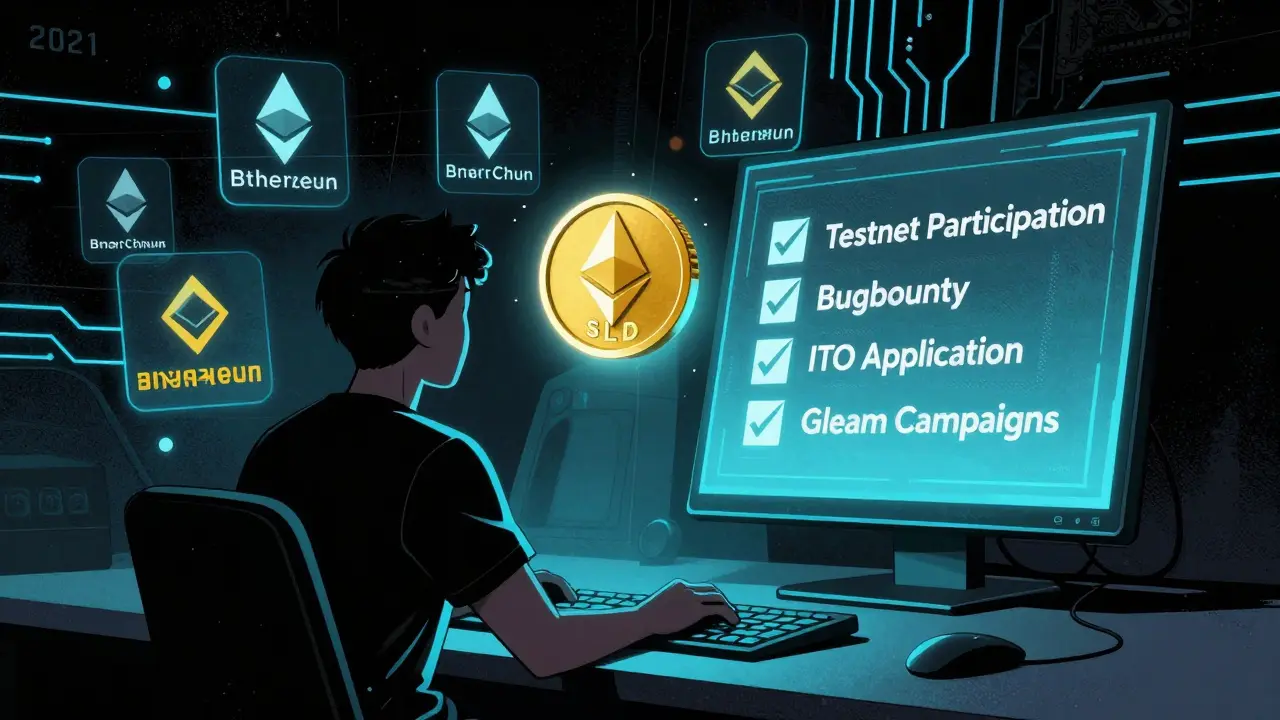
The Shield DAO airdrop didn’t go out to thousands of random addresses. It went to a few hundred who actually showed up. Here’s who qualified:
- Users who participated in the Shield Kovan testnet - the Ethereum test version of the platform
- Those who joined the Binance Smart Chain (BSC) testnet activities
- People who submitted applications for the Shield ITO (Initial Token Offering - a precursor to the token launch)
- Contributors to the 1st and 2nd Bug Bounty Programs - security researchers who found real vulnerabilities
- Participants in the Shield Gleam Series campaigns - community challenges and social media tasks
That’s it. No random airdrops. No “join our Telegram” giveaways. No bot farms. If you didn’t test the code, report a bug, or help build the foundation, you didn’t get a token. It was clean. It was fair. And honestly? It was rare.
The total number of SLD tokens distributed? 4,085,754. That’s not a huge number by today’s standards, but in 2021, for a niche derivatives protocol, it was meaningful. Each eligible participant received a portion based on their contribution level - testers got less than bug hunters, for example. The system was designed to value quality over quantity.
How to Claim the SLD Airdrop
Claiming wasn’t simple. It required technical steps most beginners wouldn’t handle. Here’s how it worked:
- Visit the official Shield airdrop claim page (hosted on shielddao.io)
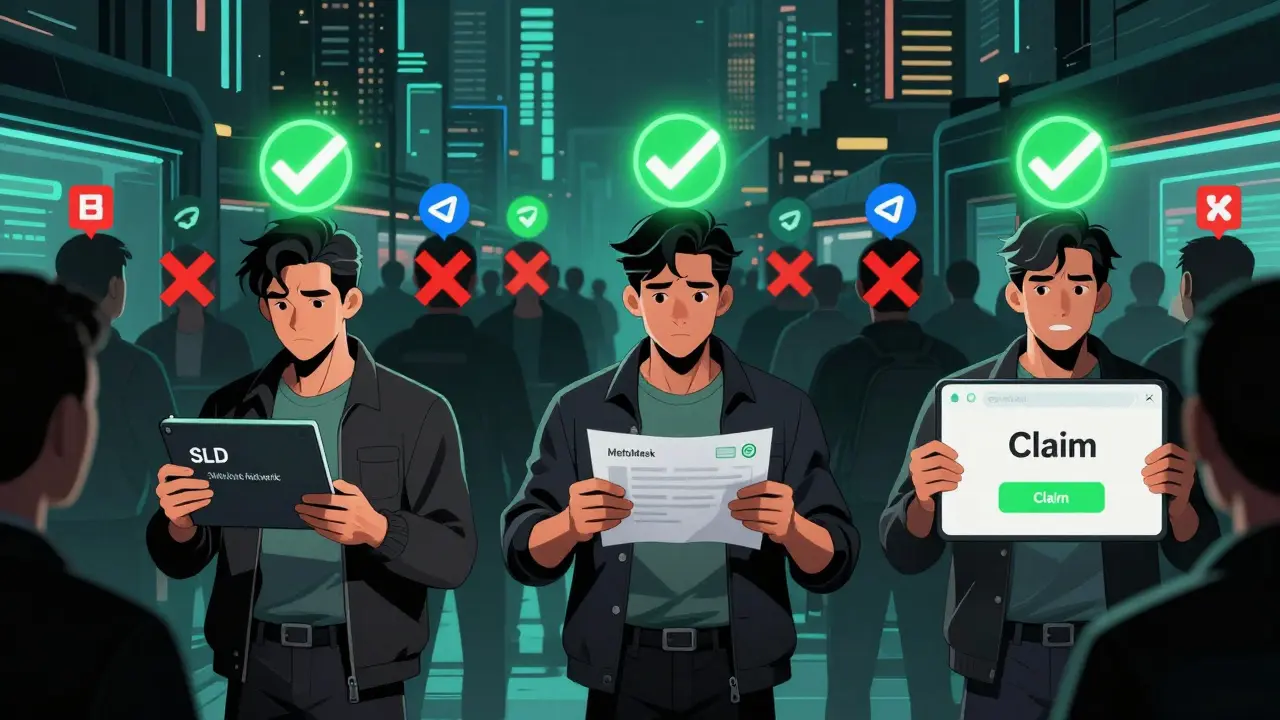
- Connect your MetaMask wallet - the one you used during testnet or bounty activities
- Switch your network from Ethereum Mainnet to Binance Smart Chain (BSC) - even though the contract was on Ethereum, rewards were distributed on BSC
- Click “Claim” if eligible
Why BSC? Because Shield wanted to reduce gas costs for users. Claiming on Ethereum in 2021 could cost $20-$50 in fees. On BSC? Under $1. Smart move.
But here’s the catch: many users got stuck. They didn’t know how to switch networks. They used the wrong wallet. They missed the deadline. So Shield added a second claiming round on August 12, 2021, at 12 PM UTC. That gave another shot to people who ran into issues.
The claiming window stayed open until September 12, 2021. After that, any unclaimed SLD tokens were moved into a community pool - not redistributed to new users, but held for future protocol development. No refunds. No extensions.
What Happened to the SLD Tokens?
Here’s where things get weird.
According to CoinMarketCap, the maximum supply of SLD is 1 billion tokens. But as of now, the circulating supply is listed as 0 SLD. That doesn’t mean the tokens vanished. It means something else happened.
The original SLD contract on Ethereum (0x1ef6...95a084) still exists. But the Shield team never listed SLD on any major exchange. No trading pairs. No liquidity pools. No price chart. The token was never meant to be traded. It was meant to be used - for governance, for staking, for voting on protocol upgrades.
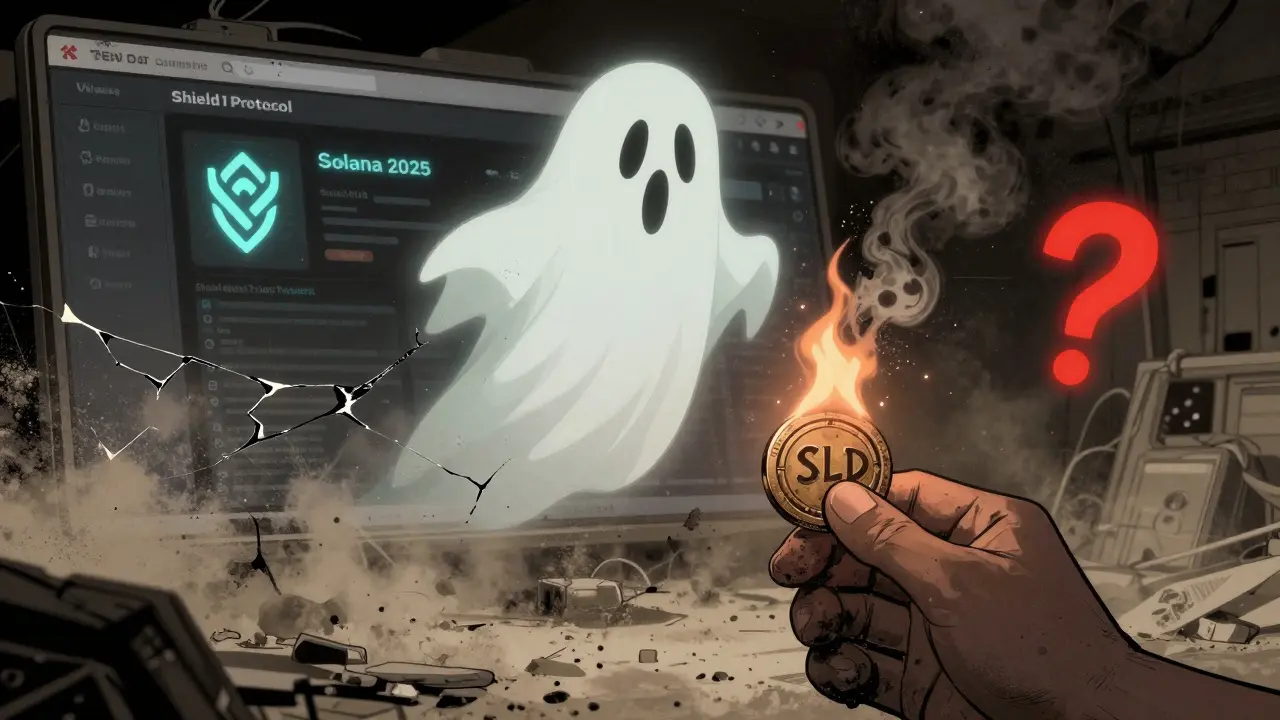
But here’s the twist: Shield never fully launched the governance system. The team kept building. They updated the UI. They renamed ShieldEX to Shield. They worked on Perpetual Options. But the SLD token never got its full utility. No staking. No voting. No yield. It became a ghost token.
Some holders still have SLD in their wallets. Some sold it on obscure decentralized exchanges. Others just forgot about it. A few even burned their tokens as a symbolic gesture - saying the project never delivered on its promise.
Why the Confusion with Shield Protocol?
Today, you’ll find another project called Shield Protocol. It’s not the same thing. This new Shield Protocol is a blockchain-based 2FA system. It replaces Google Authenticator with a decentralized authentication layer. It’s built on Solana and Polygon. It has its own token. It does NFT airdrops. It even has a gaming platform called Shield SWAG.
Same name. Totally different team. Totally different tech. Totally different tokenomics.
Because of the naming overlap, people still mix them up. Search “Shield airdrop” today, and you’ll see posts about NFT drops from 2025 - not the 2021 SLD distribution. It’s a mess. But if you’re looking for the original Shield DAO airdrop? You need to focus on 2021. On SLD. On the testnet participants. On the bug bounties.
How It Compared to Other DeFi Airdrops
In 2021, most airdrops were wide-open. You got tokens for joining Discord. For retweeting. For holding a specific NFT. Shield did none of that.
Compare it to Skyren DAO - a newer model that launched in 2023. Skyren lets you farm airdrops from dozens of projects at once. It uses AI to track eligibility. It promises 216% APY. It’s a machine.
Shield was the opposite. It was handmade. It was slow. It was small. But it was honest. You didn’t get tokens because you were lucky. You got them because you helped build something.
That’s why the Shield DAO airdrop still matters. It’s a reminder that not every token needs to be traded. Not every community needs to be massive. Sometimes, the best projects are built by a few people who cared enough to test, report, and improve - not just collect.
What You Can Learn Today
If you’re looking at airdrops in 2026, here’s what Shield teaches you:
- Don’t chase every airdrop. Look for ones tied to real development - testnet participation, bug bounties, code contributions.
- Check the contract address. If it’s on Ethereum and the team moved rewards to BSC? That’s a sign they care about user costs.
- Read the fine print. If the airdrop says “no trading,” it might not be meant for speculation.
- Names change. Projects evolve. Shield DAO is gone. Shield Protocol is new. Don’t assume they’re the same.
The SLD token may not be worth anything today. But the lesson is. Real value in DeFi doesn’t come from airdrop farming. It comes from building - even if no one else sees it.
14 Comments
Brian Lemke
February 22 2026Shield DAO’s airdrop was one of the few times DeFi actually felt human. No bot farms. No Discord begging. Just people who showed up, broke things, and helped fix them. That’s the spirit we lost when airdrops turned into gambling lotteries.
I still have my SLD tokens. Not because I’m holding for a pump - I don’t even know if they’re worth anything. But because they’re a reminder that real innovation doesn’t need hype. It just needs people willing to test the code at 2 a.m. on a Tuesday.
And yeah, the fact that they moved rewards to BSC? Genius. Gas fees in 2021 were a joke. Shield didn’t just build a protocol - they thought about the user. That’s rare.
People keep asking why Shield faded. It wasn’t because the tech failed. It was because the community didn’t scale. And honestly? Maybe that’s okay. Not every movement needs to go viral. Some just need to be done right.
I’ll never forget the bug bounty thread where someone found a reentrancy flaw in the perpetual options engine. The dev replied with a GIF of a dancing cat and a thank you. That’s the culture they built. No corporate tone. Just gratitude.
Now we get AI-driven farming bots that auto-claim 17 airdrops and then dump them. Shield was the opposite. It was slow. It was quiet. And it meant something.
Reggie Fifty
February 23 2026Let’s be real - this whole Shield thing was just a vanity project for crypto bros who thought they were engineers. You didn’t ‘build’ anything. You clicked a few buttons on a testnet and called it a day. Meanwhile, real devs were building on Bitcoin Cash and Solana while you were playing pretend.
And now you’re acting like this ghost token is some sacred relic? Please. The fact that it’s worth zero is the universe’s way of saying: ‘You didn’t earn this.’
Also, BSC? You’re proud of moving rewards to a chain that’s basically a honeypot for rug pulls? That’s not smart. That’s lazy. Shield was a half-baked idea wrapped in nostalgia.
Vishakha Singh
February 23 2026Thank you for this thoughtful breakdown. It’s refreshing to see a post that doesn’t just chase price charts but honors the process behind the technology.
Shield DAO’s approach was a masterclass in community-driven development. Too often, we equate value with market capitalization - but true value lies in contribution, not speculation.
I’ve followed several DeFi protocols since 2021, and none have matched Shield’s integrity. The decision to restrict airdrops to actual contributors wasn’t just fair - it was visionary.
Even today, when projects flood wallets with tokens they never intend to use, Shield’s restraint feels radical. It’s a lesson in humility.
And yes - the BSC gas optimization was brilliant. Many projects overlook the real pain points of users. Shield didn’t.
Let’s not forget: the future of DeFi isn’t in viral campaigns. It’s in the quiet, persistent builders who show up when no one’s watching.
I hope this post inspires a new generation to value substance over spectacle.
Don B.
February 23 2026Okay but like… why does anyone still care about this? I mean, I saw this post and thought ‘oh cool, another ghost token’ and then I remembered I had SLD in my wallet from like… 2021?
I forgot I even had it. I thought it was some scam token. Then I Googled it and realized - oh right, that weird thing where you had to switch networks and your MetaMask kept crashing.
Anyway. I sold mine for 0.000003 ETH. Not because I was smart. Because I didn’t want it taking up space.
Also - Shield Protocol? That’s the one with the NFT cats, right? I got one. It’s my profile pic. So yeah. That’s the real Shield. Not this ghost thing.
Also also - why is everyone acting like this was revolutionary? It was just another Ethereum project that got bored and quit.
Arya Dev
February 25 2026Ugh. Another ‘remember when crypto was pure’ post? Seriously?
Shield DAO? The one that vanished after 6 months? The one where the devs disappeared after the second bug bounty round? The one where the ‘governance’ was just a Google Form?
And now you’re romanticizing it? Like, wow. You really believe that ‘testing testnets’ = building? That’s like saying you ‘built’ a car because you drove a toy one.
Also - BSC? You think moving to BSC was ‘smart’? It was a cop-out. They didn’t want to deal with Ethereum fees - so they kicked the can down the road. Classic crypto move.
And the ‘community pool’? That’s just a fancy way of saying ‘we stole the unclaimed tokens.’
Stop pretending this was noble. It was sloppy. And now it’s dead.
Also - why are you even talking about this in 2026? Move on.
Leslie Cox
February 25 2026Let me be clear - I don’t care about your ‘honest’ airdrop. You think rewarding 400 people who ‘helped’ is moral? That’s exclusionary elitism dressed up as meritocracy.
Who decided who was ‘worthy’? Some anonymous dev team? You didn’t democratize anything. You created a gated club.
And now you’re acting like this is a lesson for ‘future airdrops’? No. It’s a warning. The moment you say ‘only builders get rewarded,’ you’re saying ‘everyone else is trash.’
DeFi should be open. Inclusive. Accessible. Not some secret society where you need to have submitted a GitHub PR in 2021 to be worthy of breath.
Also - ‘ghost token’? That’s not poetic. That’s pathetic. You’re clinging to a dead asset like it’s a religious relic. Grow up.
Derek Sasser
February 26 2026Man, I actually had a SLD token. I forgot about it until last week when I was cleaning out my old wallets.
I remember the claim process - I had to switch networks 3 times, my MetaMask crashed, and I almost gave up. But I stuck with it because I’d found a bug in the liquidity pool logic. I didn’t even know I was eligible until I saw a post on Reddit.
And yeah, the fact that they moved it to BSC? I didn’t realize it at the time, but that saved me like $40 in gas. I didn’t even know that was a thing back then.
Now I don’t even know if it’s worth anything. But I still have it. Not because I’m holding. Just because… I don’t know. It feels like a trophy. Like I did something real.
Also - Shield Protocol? I thought that was the same thing for a minute. Took me 20 minutes to realize they’re totally different. Same name. Different universe.
Anyway. Just wanted to say… thanks for reminding me I was part of something once. Even if no one else remembers.
Neeti Sharma
February 26 2026Shield DAO? LOL. You people are so delusional. You think you built something? You tested a testnet on Kovan. Big deal. I’ve tested 100 projects. None of them mattered.
And now you’re calling this ‘fair’? Only 400 people got tokens? What about the 10,000 who tried? You didn’t reward effort. You rewarded luck.
Also - BSC? You think that’s smart? That chain is a graveyard. Half the tokens there are rugs. You’re proud of that?
And the ‘community pool’? That’s just a scam tactic. They stole the tokens. Simple.
Stop romanticizing failure. This was a flop. And you’re just sad because you didn’t get rich.
Nadia Shalaby
February 28 2026Wow. I didn’t even know this existed until I read this. I’m just here for the vibes.
I’ve been in crypto since 2017 and I’ve seen so many ‘revolutionary’ projects die. Shield is just one of them. But I like that someone took the time to write this. It’s nice to remember the quiet ones.
I didn’t get SLD. I didn’t even know what perpetual options were back then. But I’m glad someone did.
Also - the fact that they moved rewards to BSC? That’s actually kind of sweet. They cared about the user’s wallet. Not just the token price.
Anyway. I’m just here to say: thank you for writing this. It made me smile.
Fiona Monroe
March 1 2026While the narrative presented here is emotionally compelling, it is analytically flawed. Shield DAO’s decision to restrict token distribution to a minuscule subset of participants constitutes a violation of the fundamental principle of decentralization - which requires broad, equitable access.
The migration of rewards to Binance Smart Chain, while economically pragmatic, introduced a centralized point of failure: BSC’s validator set is controlled by a handful of entities. This undermines the very ethos of permissionless innovation.
Furthermore, the non-listing of SLD on any major exchange, while perhaps ideologically consistent, rendered the token functionally inert. A governance token without liquidity is not governance - it is a tokenized monument.
One must question whether aesthetic purity in tokenomics outweighs utility. The answer, empirically, is no.
This post, while nostalgic, serves as a cautionary tale: idealism without scalability is merely a footnote in blockchain history.
Lucy Simmonds
March 2 2026Okay but what if this was all a front? What if the ‘bug bounties’ were just a way to get free code? What if the ‘testnet’ was a honeypot to steal wallets? What if the ‘community pool’ was actually a rug pull?
I’ve seen this before. The devs disappear. The forum goes dark. The GitHub stops updating. Then someone writes a ‘nostalgic’ article like this to make it look noble.
And now you’re saying ‘real value is in building’? Yeah. But what if the building was a lie?
I’m not saying it was. I’m just saying - don’t trust anything in crypto. Not even the ‘honest’ ones.
Also - why is there a Shield Protocol with NFTs now? Coincidence? I think not.
They’re still out there. Watching. Waiting. To do it again.
Maggie House
March 3 2026This made me cry a little. Not because I had SLD - I didn’t. But because I remember testing Shield’s testnet back in 2021. I was just a college student. I didn’t know what I was doing. I just wanted to learn.
I found a bug where the option expiry didn’t update properly. I reported it. They replied with a GIF of a dog wearing sunglasses.
I didn’t get a ton of tokens. Maybe 120. But I still have them. In a folder labeled ‘remember this.’
Now I’m in grad school studying DeFi. And I still tell my classmates about Shield. Not because it worked. But because it tried.
Maybe that’s enough.
Dana Sikand
March 3 2026I had SLD. I sold it for 0.0001 ETH. I didn’t care. But I still think about that claim page. The way the button said ‘Claim’ in bold. The way it said ‘No refunds’ in tiny text. I remember thinking - this feels real.
I didn’t get rich. I didn’t even understand what perpetual options were. But I felt like I was part of something. Like I mattered.
Now I work at a crypto startup. We don’t do airdrops. We do hackathons. We pay people to break our code. We don’t care if they’re famous. We care if they show up.
Shield taught me that. Not the token. The way they treated people.
So yeah. It’s gone. But it changed me.
And that’s worth more than any price chart.
Brian Lemke
March 5 2026Just read your comment, Dana - and I’m smiling. That’s exactly it. Not the token. The way they treated people.
I still have a screenshot of the first comment a dev left on my bug report: ‘You found it. We didn’t. Thank you.’
That’s what’s missing now. Not the tech. The humanity.