Swop.fi Review 2026: Is This Waves DEX Worth Your Time?
Most people looking for a place to trade crypto in 2026 are chasing one thing: seamless cross-chain swaps. You want to move assets from Ethereum to Solana or Polygon without jumping through hoops. If that’s your goal, Swop.fi is probably not the tool you need. But if you are already deep in the Waves ecosystem, this platform offers something specific and surprisingly efficient.
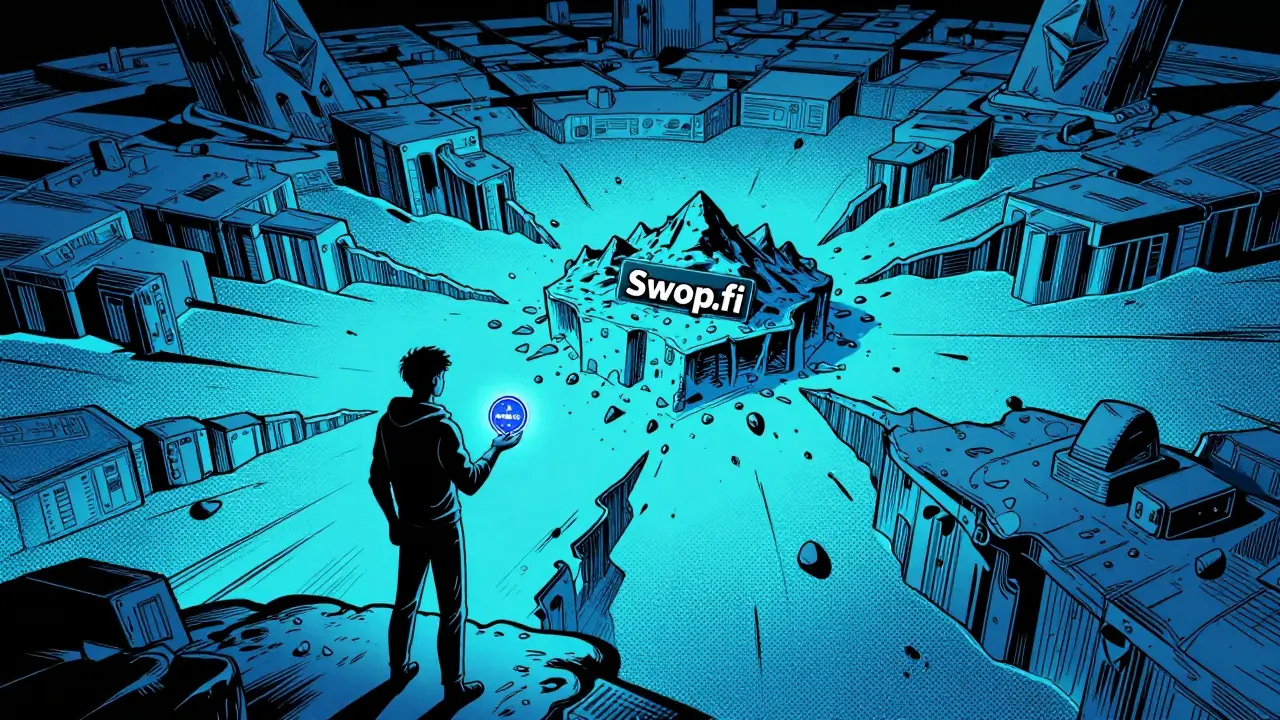
Swop.fi is a decentralized exchange (DEX) built exclusively on the Waves blockchain. It launched in 2020 as an automated market maker (AMM), meaning it doesn’t use an order book like Binance or Coinbase. Instead, it uses smart contracts and liquidity pools to set prices. While giants like Uniswap dominate the headlines with billions in daily volume, Swop.fi operates in a quiet corner of the market. As of March 2025 data from CoinGecko, its 24-hour trading volume sits around $1,091-a tiny fraction of major competitors. That low number tells us right away: this is a niche tool, not a mainstream powerhouse.
How Swop.fi Actually Works
To understand Swop.fi, you have to look at how it handles pricing. Most DEXs use a standard formula called Constant Product Market Maker (x*y=k). It works fine for most tokens, but it creates high slippage when swapping stablecoins against each other. Why? Because USDT and USDC should always be worth roughly $1. The standard formula treats them as volatile assets, which hurts traders.
Swop.fi solves this by using a specialized 'Flat formula' for stablecoin pairs. According to technical analysis from Slashdot in early 2025, this approach reduces slippage by 60-75% compared to standard models. For users who frequently swap between different stablecoins on the Waves network, this is a genuine advantage. For everything else-like swapping WAVES for Bitcoin-it falls back to the classic constant product model.
The platform runs entirely on the Waves blockchain. This means:
- You need a Waves-compatible wallet (like Waves Keeper).
- You cannot connect MetaMask or Trust Wallet directly unless they support Waves integration.
- All transactions happen on the Waves network, so you pay fees in WAVES.
This single-chain focus is both its strength and its weakness. It eliminates complex bridge risks, but it also locks you out of the rest of the crypto world.
Fees, Speed, and Costs
Cost matters in DeFi. On Swop.fi, every transaction costs a fixed fee of 0.005 WAVES. At current exchange rates, that is negligible-often less than a penny. The underlying network fee for the Waves blockchain averages around 0.001 WAVES (approximately $0.0004).
Speed is another strong point. Waves processes blocks quickly. You can expect transaction confirmations in under 15 seconds. Compare that to Ethereum-based DEXs, where congestion can push wait times to minutes or even hours during peak periods. If you are trading within the Waves ecosystem, Swop.fi feels snappy and cheap.
| Feature | Swop.fi | Uniswap v3 | Symbiosis.finance |
|---|---|---|---|
| Blockchain | Waves only | Ethereum + L2s | Cross-chain (Multi) |
| 24h Volume (Mar 2025) | $1,091 | $1.2 Billion | $50 Million+ |
| Trading Pairs | 72 pairs | 6,500+ tokens | 100+ chains |
| Stablecoin Slippage | Low (Flat Formula) | Medium/High | Variable |
| KYC Required | No | No | No |

Liquidity and Token Selection
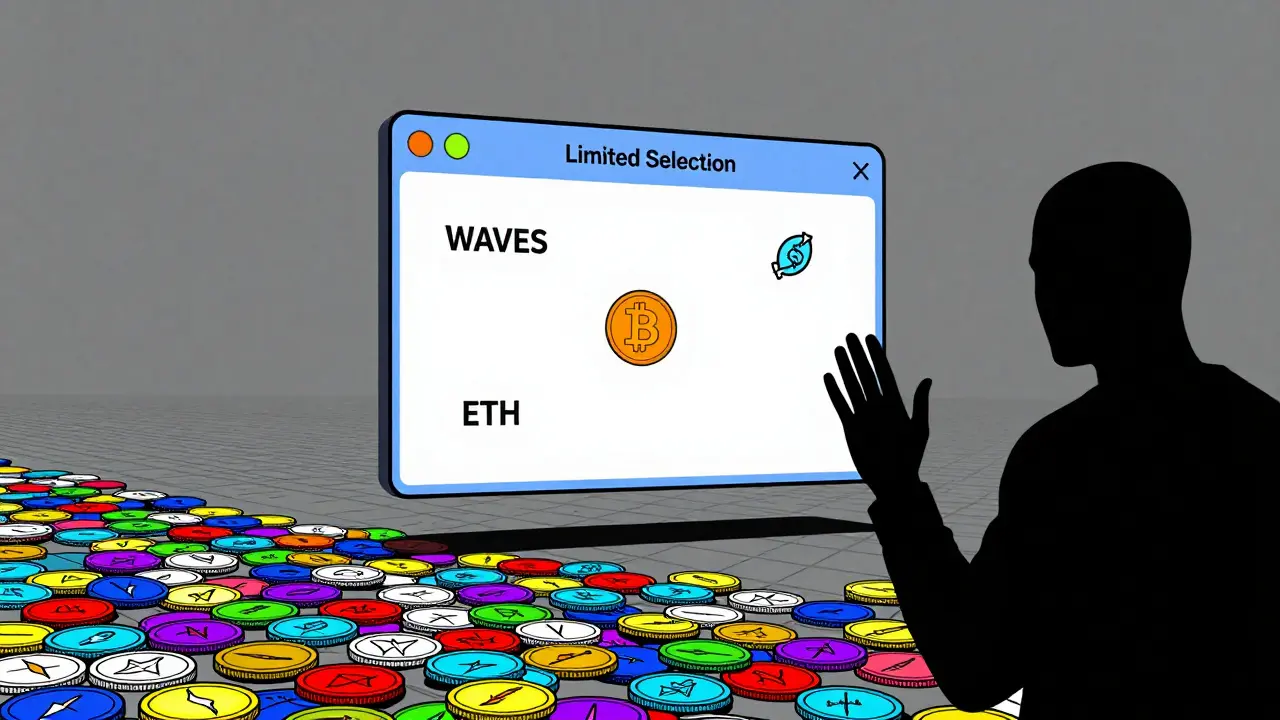
Here is where Swop.fi shows its limits. The platform supports only 22 coins across 72 trading pairs. If you are holding obscure altcoins or new meme tokens, you likely won’t find them here. The most active pair is USDT/USDC, which accounts for nearly half of the daily volume ($471.52 in March 2025).
For a general trader, this selection is frustratingly small. However, for a Waves native user, it covers the essentials: WAVES, USDT, USDC, BTC, and ETH (wrapped on Waves). If your portfolio lives entirely within these assets, the liquidity is sufficient for small to medium trades. Large institutional-sized orders might still face slippage, but for retail users, the depth is adequate.
Security and Trust Factors
When you use a DEX, you trust the code, not a company. Swop.fi relies on standard smart contract implementations on the Waves platform. Waves has a solid reputation for security since its launch in 2016, having never suffered a critical protocol-level hack.
However, transparency is a concern. There are no widely publicized independent security audit reports for Swop.fi’s specific smart contracts in recent years. In the DeFi world, regular audits from firms like CertiK or Trail of Bits are the gold standard. Their absence doesn’t mean the code is bad, but it means you are taking more risk than you would on a heavily audited platform.
User sentiment is mixed. TrustFinance gives Swop.fi a score of 2.6 out of 5 based on very few reviews. One verified user praised the "secure Web3 transactions" and "attractive yields," but the low score suggests many users feel disconnected from the platform. There is almost no discussion of Swop.fi on Reddit or Twitter compared to major DEXs. This silence can be a red flag for some investors who rely on community feedback to gauge safety.
Who Should Use Swop.fi?
Let’s be clear about who this is for. Swop.fi is not for beginners trying to buy their first Bitcoin. It is not for traders who want to access the latest trending tokens on Solana or Base.
It is designed for:
- Waves Ecosystem Users: If you hold WAVES and want to swap to stablecoins efficiently.
- Stablecoin Arbitrageurs: Those who profit from tiny price differences between USDT and USDC will appreciate the Flat formula’s low slippage.
- Liquidity Providers: Users willing to lock up assets in Waves pools to earn SWOP token rewards and trading fees.
If you fall into any of these categories, Swop.fi is a competent, fast, and cheap tool. For everyone else, you will likely find yourself frustrated by the lack of cross-chain options and limited token list.
The Future Outlook
The broader DeFi landscape is moving toward cross-chain interoperability. In 2025, platforms like Symbiosis.finance allow users to swap assets across dozens of blockchains seamlessly. Swop.fi remains stuck on Waves. Industry analysts predict that single-chain DEXs will shrink to just 4.2% of the market by 2026.
Without a roadmap for cross-chain expansion or significant updates in 2025, Swop.fi faces a challenging future. Its survival depends entirely on the health of the Waves blockchain itself. If Waves grows, Swop.fi may thrive as its primary internal exchange. If Waves stagnates, Swop.fi will likely fade into obscurity.
Is Swop.fi safe to use?
Swop.fi operates on the secure Waves blockchain, but it lacks recent public security audits. While the underlying infrastructure is robust, you should exercise caution and never invest more than you can afford to lose. Always verify contract addresses before interacting.
Can I connect MetaMask to Swop.fi?
Not directly. Swop.fi requires a Waves-compatible wallet such as Waves Keeper. Standard Ethereum wallets like MetaMask do not support the Waves blockchain natively without complex bridging setups, which Swop.fi does not facilitate.
What are the trading fees on Swop.fi?
Each transaction incurs a fixed fee of 0.005 WAVES. Additionally, you must pay the standard Waves network gas fee, which averages around 0.001 WAVES. These costs are extremely low compared to Ethereum-based exchanges.
Why is Swop.fi's volume so low?
Swop.fi is limited to the Waves blockchain, which has a smaller user base than Ethereum or Solana. Combined with a limited selection of only 22 coins, it attracts fewer traders. Most volume comes from stablecoin swaps within the niche Waves community.
Does Swop.fi offer margin trading?
No. Swop.fi is a simple spot exchange using automated market makers. It does not offer leverage, margin trading, or derivatives products. It is strictly for swapping tokens and providing liquidity.